ホーム
» Linux
»
Fix Screen Tearing on Intel Graphics in Pardus Linux: A Result-Focused Guide
Fix Screen Tearing on Intel Graphics in Pardus Linux: A Result-Focused Guide
What a good fix should look like
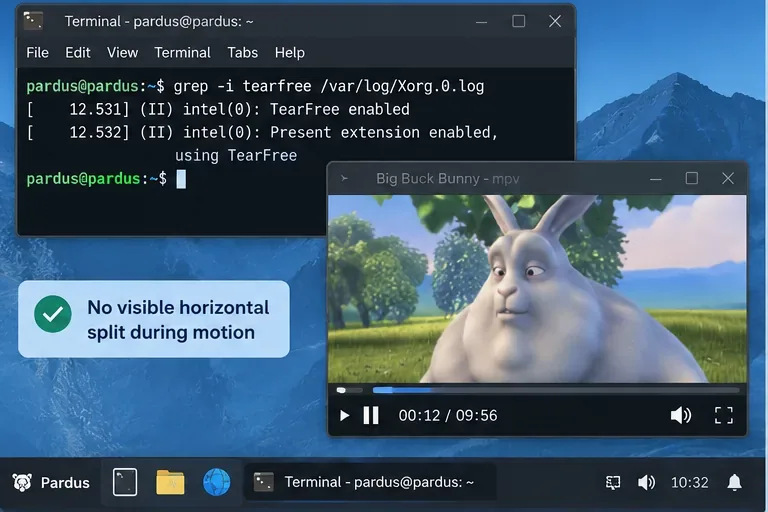
A useful screen-tearing fix is not simply a configuration change that makes one video look better. The result should be repeatable: horizontal splits should disappear during window dragging, page scrolling, and full-screen video; the desktop should remain responsive; the correct refresh rate should stay selected after login; and the change should not introduce black screens, stutter, or higher-than-expected latency.
On current Pardus releases, start by identifying the display session and the Xorg driver actually in use. Pardus 25 ships with Xfce 4.20.2 as its lightweight desktop option and GNOME 48.4 as its other main desktop, while Pardus 25.1 includes Debian 13.4 maintenance updates and Linux kernel 6.12.74. That matters because an X11-specific Intel configuration should not be applied blindly to a Wayland session. See the Pardus 25 release notes and Pardus 25.1 release notes.
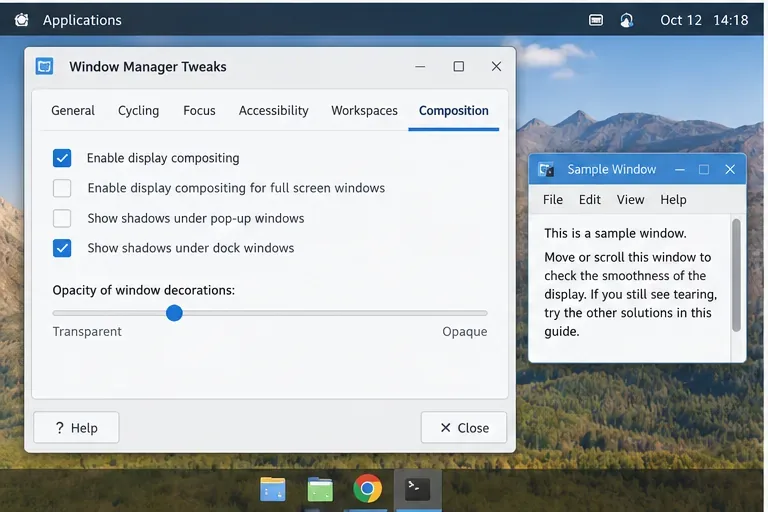
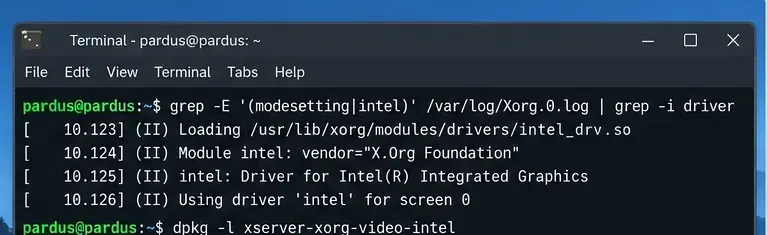
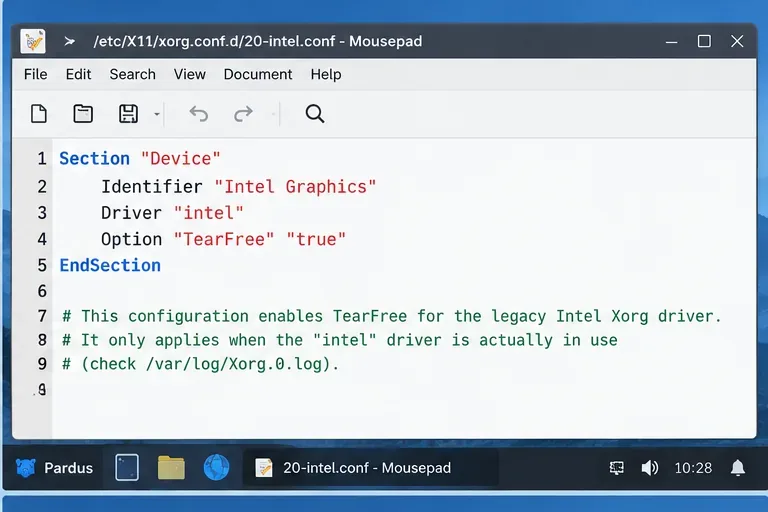
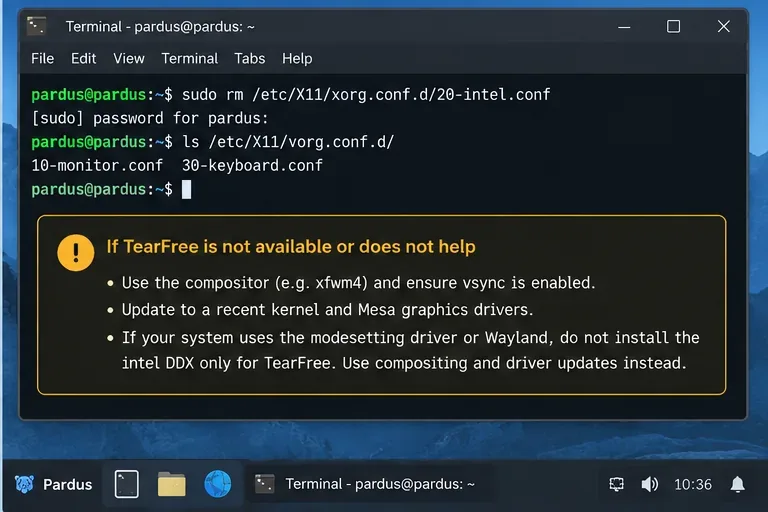
The practical order is: identify the session and driver, update the graphics stack, confirm compositor and monitor settings, then use the Intel Xorg TearFree option only when the legacy intel DDX is actually active. Debian currently recommends the built-in Xorg modesetting driver for Intel hardware from roughly 2007 onward rather than installing xserver-xorg-video-intel by default. The Debian GraphicsCard documentation is useful context for this distinction.
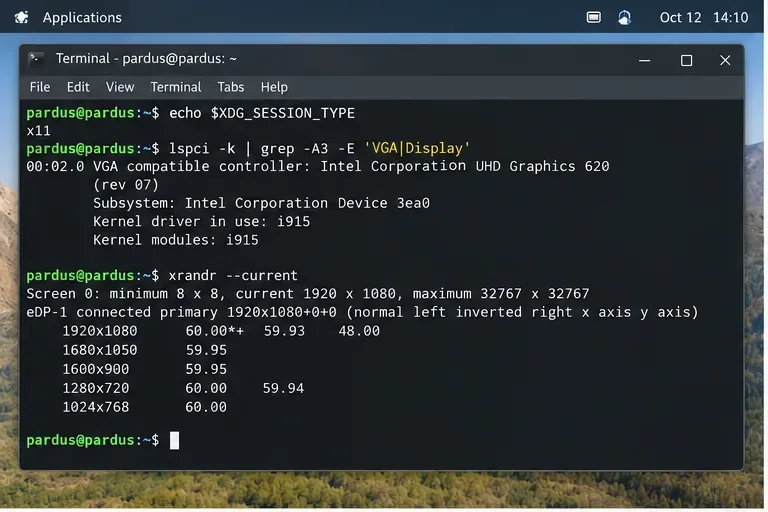
If the first command returns x11, the Xorg-specific checks in this guide apply. If it returns wayland, do not create an Xorg device file just to solve tearing; update the system and troubleshoot the compositor/session instead. The second command should show an Intel display controller and typically a kernel driver such as i915 on many Intel systems.
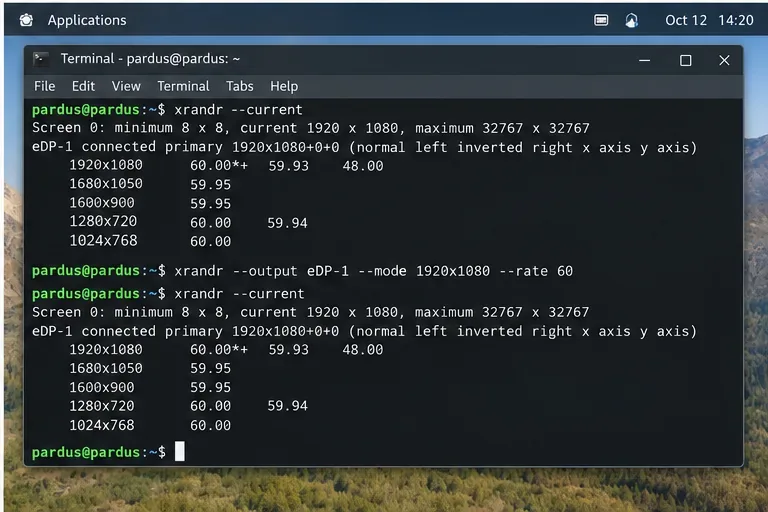
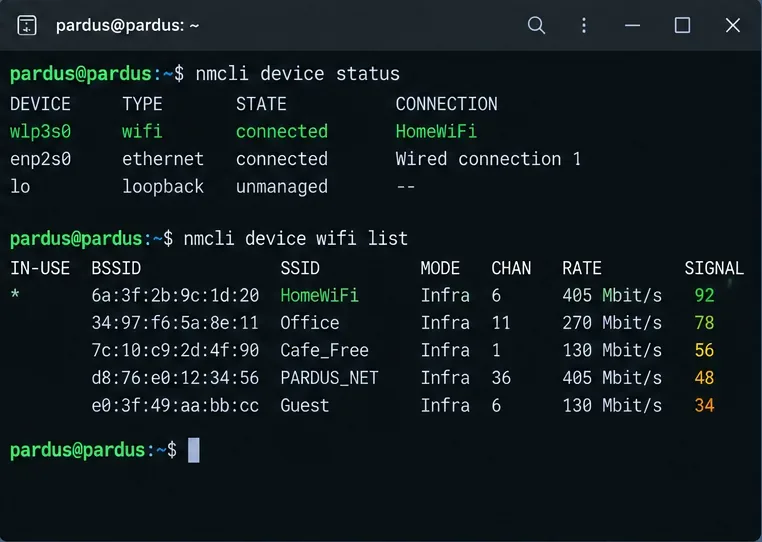
Check the session type, Intel kernel driver, output name, current resolution, and refresh rate before changing anything.
Quality check: write down the output name, such as eDP-1, and the mode marked with an asterisk by xrandr. You will use those values to verify that later changes did not alter the display unexpectedly.
2. Update Pardus before adding driver overrides
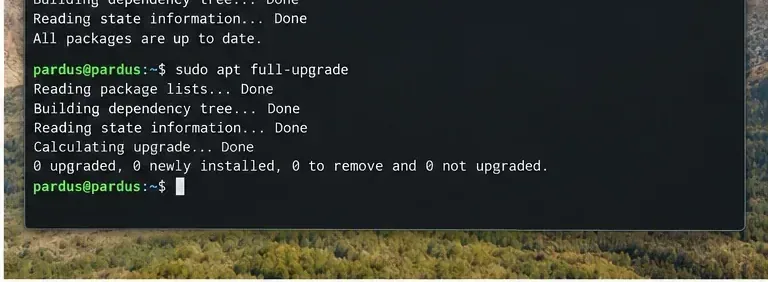
Graphics tearing can come from the window manager, Mesa, Xorg, or the kernel display driver. Before adding a permanent override, install the updates already provided for your Pardus release:
sudo apt update
sudo apt full-upgrade
Reboot if the update installs a new kernel, Mesa stack, or X server components. This is especially important on Pardus 25 because the current point releases have continued to receive kernel and Debian-base updates.