Home
» MEDIA STREAMING
»
How to Watch the Transformers Movies in Order: Release and Timeline Guides
How to Watch the Transformers Movies in Order: Release and Timeline Guides
The simplest way to watch the Transformers movies in order is by release date. There are nine theatrical features, from The Transformers: The Movie (1986) through Transformers One (2024). If you prefer story order, start the live-action marathon with Bumblebee and Rise of the Beasts, then watch the five Michael Bay movies.
One important catch: these films do not all share a single, consistent timeline. The 1986 animated film and Transformers One belong outside the modern live-action sequence, while the connection between the newer live-action movies and the Bay films is not seamless.
Choose release order for a first viewing or follow the story-era order for a different movie night.
All nine Transformers movies in release order
This is the best approach if you're new to the franchise and want to see how its characters, storytelling, and effects evolved. The years below refer to theatrical release, not when the story takes place.
The Transformers: The Movie (1986) — An animated Generation 1 adventure featuring Unicron and the struggle for Cybertron.
Transformers (2007) — Sam Witwicky discovers Bumblebee as the Autobots and Decepticons search for the AllSpark on Earth.
Transformers: Revenge of the Fallen (2009) — Sam becomes involved in a threat from an ancient Decepticon called the Fallen.
Transformers: Dark of the Moon (2011) — A Cybertronian spacecraft on the moon draws the Autobots into another conflict.
Transformers: Age of Extinction (2014) — Inventor Cade Yeager encounters Optimus Prime as humans begin hunting Transformers.
Transformers: The Last Knight (2017) — Cade returns in a story connecting Cybertron to legends from Earth's past.
Bumblebee (2018) — A teenage girl named Charlie Watson befriends the Autobot in a 1987 California setting.
Transformers: Rise of the Beasts (2023) — Set in 1994, the Autobots join the animal-themed Maximals against a world-threatening enemy.
Transformers One (2024) — An animated Cybertron origin story about Orion Pax and D-16 before they become Optimus Prime and Megatron.
The five Michael Bay-directed live-action movies form a continuous sequence released from 2007 through 2017.
If you're only interested in the connected Michael Bay storyline, begin with Transformers (2007) and stop after The Last Knight. The original animated movie isn't required to understand those five films.
Transformers movies in chronological story order
For a practical live-action watch order, follow the main Earth-based settings below. This is a convenient viewing sequence, not an official claim that the seven films have a contradiction-free shared canon.
Bumblebee (1987; released 2018): B-127 takes refuge on Earth and meets Charlie Watson. This is the earliest modern live-action story.
Transformers: Rise of the Beasts (1994; released 2023): Noah Diaz and Elena Wallace become involved in the Autobots' alliance with the Maximals.
Transformers (2007): Sam's first encounter with Bumblebee introduces the Michael Bay series.
Transformers: Revenge of the Fallen (2009): A direct continuation of Sam and the Autobots' story.
Transformers: Dark of the Moon (2011): The third Sam Witwicky adventure centers on a secret connected to the moon.
Transformers: Age of Extinction (roughly five years after Dark of the Moon; released 2014): The focus shifts to Cade Yeager, but the previous conflict remains part of the backstory.
Transformers: The Last Knight (released 2017): Cade's storyline continues with a new threat involving Cybertron.
A yellow compact car evokes the 1980s setting of Bumblebee; in the film, the character disguises himself as a Volkswagen Beetle.
Bumblebee and Rise of the Beasts are often placed ahead of the Bay movies because their main events happen earlier. However, details of the older movies do not always line up with the newer interpretations. Treat the two newer films as their own pair if strict continuity matters to you.
Where do the two animated Transformers movies fit?
Transformers One (2024)
Transformers One takes place on Cybertron before Optimus Prime and Megatron become enemies. You can watch it first for an introduction to their origins, or last in release order. It is not necessary viewing before Bumblebee. Paramount describes it as a fully CG-animated origin film; see the official film synopsis.
The Transformers: The Movie (1986)
The 1986 feature belongs to the original Generation 1 animated continuity and is set in a future era of that cartoon's story, commonly identified as 2005. It features a different continuity from the 2007 live-action film. For the fullest context, watch the early Generation 1 cartoon episodes before it; otherwise, enjoy it as a separate classic. Hasbro’s anniversary announcement confirms its place as the original animated feature.
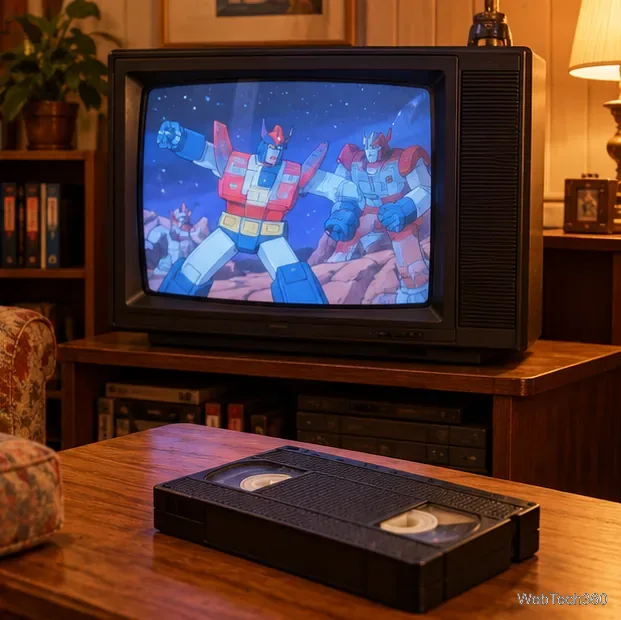
A vintage television and VHS tape evoke the franchise’s earlier animated era.
Where can you stream the Transformers movies?
Availability changes by country and over time. In its U.S. catalog update published August 19, 2026, Paramount+ listed seven of the nine movies: Transformers (2007), Revenge of the Fallen, Dark of the Moon, Age of Extinction, Bumblebee, Rise of the Beasts, and Transformers One. Its October 23, 2026 sci-fi collection still listed those seven.
At that time, The Last Knight and the 1986 animated movie were not in that U.S. Paramount+ selection. Check the official Paramount+ Transformers viewing guide and updated sci-fi collection before subscribing. Digital rental or purchase options may also appear through Apple TV, Prime Video, or other stores, depending on your location.
Which order should you choose?
First-time viewer: Follow release order, optionally skipping the separate 1986 animated film until later. Rewatching the live-action movies: Use the seven-film story order beginning with Bumblebee. Interested in Cybertron's backstory: Start with Transformers One, but don't mistake it for a direct prequel to every other film.
Whichever route you choose, keeping the animated continuities separate is the easiest way to avoid confusion.