How to Check Hard Drive Health in Windows Server
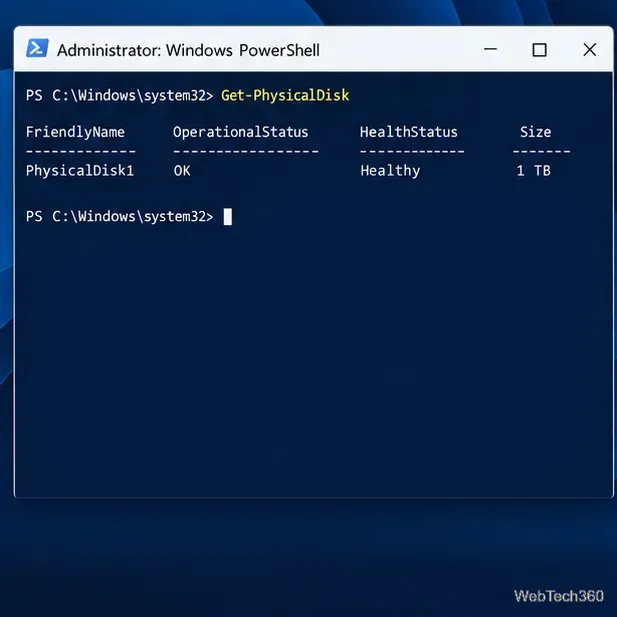
Check Windows Server disk status and reliability counters, verify SMART data when available, and separate hardware warnings from NTFS errors.
Are you a gamer who's noticed frustrating stutters and drops in frame rates on Windows 11? You're not alone. Many players blame hardware, but the real culprit often hides in your system's security features: VBS (Virtualization-Based Security) and HVCI (Hypervisor-protected Code Integrity). These built-in protections are great for security but can tank your gaming performance by up to 25% in demanding titles. 😩 Don't worry—this guide will walk you through understanding and troubleshooting Windows 11 gaming lag caused by VBS and HVCI, so you can reclaim those silky-smooth frames. Let's dive in and get your rig running like new!
Before we troubleshoot, let's break it down simply. VBS is a Windows security feature that uses hardware virtualization (like your CPU's hypervisor) to create isolated environments for sensitive processes. It's enabled by default on modern PCs to protect against malware and exploits. HVCI, often paired with VBS, enforces stricter code integrity by running system processes in a protected mode, blocking unsigned or tampered code.
These sound amazing for security, right? But here's the catch: They add overhead. Virtualization isolates code, which means extra CPU cycles for context switching and memory management. In games, where every millisecond counts, this translates to gaming lag—lower FPS, input delays, and inconsistent performance. According to Microsoft's own benchmarks, VBS can reduce gaming performance by 5-25%, especially in CPU-bound scenarios like strategy games or open-world adventures.
🕹️ Imagine loading into your favorite shooter only to feel like you're wading through molasses. That's VBS and HVCI at work. The good news? You can tweak or disable them for gaming without leaving your system vulnerable forever. We'll cover safe methods next.

Not sure if VBS and HVCI are the issue? Look for these telltale signs:
To confirm, check if VBS is active: Press Win + R, type msinfo32, and hit Enter. In the System Summary, look for "Virtualization-based security Services Running" under "Virtualization-based security." If it's "Yes," VBS is on. For HVCI, search for "Core isolation" in Settings > Privacy & security > Windows Security > Device security. If "Memory integrity" is enabled, that's HVCI.
Spot these? Time to troubleshoot. Follow these steps carefully to minimize risks.
We'll start with the easiest fixes and escalate to more advanced ones. Always back up your system before changes—use Windows Backup or an external drive. And remember, disabling these reduces security, so re-enable them for everyday use. 👍
This is the quickest win for HVCI-related lag. It stops the hypervisor from protecting code integrity, freeing up resources.
Test a game afterward. Many users report 10-15% FPS gains immediately. If drivers complain (e.g., antivirus conflicts), update them via Device Manager.
For full VBS troubleshooting, disable it at the boot level. This method works on most Windows 11 setups.
msconfig, and press Enter.Pro tip: If the option isn't there, your BIOS might enforce it—jump to the next section. After reboot, verify in msinfo32; it should now say "No."
Sometimes, VBS is locked in firmware. Enter your BIOS (usually Del or F2 during boot) and look for:
Save and exit. This fixed gaming lag for countless users on newer Intel 13th/14th-gen or AMD Ryzen 7000-series CPUs. ⚙️
If the above don't stick, try these for stubborn setups. Warning: Registry edits can brick your system—create a restore point first (search "Create a restore point" in Start).
Registry Method for VBS:
regedit, and Enter.HKEY_LOCAL_MACHINE\SYSTEM\CurrentControlSet\Control\DeviceGuard.HKEY_LOCAL_MACHINE\SYSTEM\CurrentControlSet\Control\Lsa and set "LsaCfgFlags" to 0.Group Policy for HVCI: (Pro/Enterprise editions only)
gpedit.msc.These tweaks target the root of HVCI performance issues. Test with benchmarks like 3DMark to quantify improvements.
Disabling VBS and HVCI is a start, but pair it with these tips for peak performance:
| Optimization | How to Do It | Expected Benefit |
|---|---|---|
| Update Graphics Drivers | Use GeForce Experience or AMD Software for latest versions. | Up to 20% FPS boost in DirectX 12 games. |
| Enable Game Mode | Settings > Gaming > Game Mode > On. | Reduces background interference. |
| Disable Full-Screen Optimizations | Right-click game exe > Properties > Compatibility > Disable. | Fixes input lag in older titles. |
| Close Unnecessary Apps | Use Task Manager to end RGB software or overlays. | Frees 5-10% CPU for gaming. |
✨ With these, your Windows 11 gaming setup will feel revitalized. For example, in Cyberpunk 2077, users have seen FPS jump from 60 to 90+ after VBS tweaks.
Disabling VBS and HVCI boosts performance but exposes you to threats like kernel-level attacks. It's fine for gaming sessions, but re-enable via the same menus for browsing or work. Microsoft recommends keeping them on unless performance is critical—balance is key.
For deeper reading, check Microsoft's official guide on Windows Security features. If issues persist, it might be hardware—consider a clean Windows install or GPU upgrade.
There you have it—a straightforward path to conquering Windows 11 gaming lag from VBS and HVCI. By following these steps, you'll not only fix the problem but also learn to fine-tune your system like a pro. Fire up that game, hit those high scores, and enjoy lag-free adventures. If this helped, drop a comment below—what game are you optimizing for? Let's keep the discussion going! 🎮
Check Windows Server disk status and reliability counters, verify SMART data when available, and separate hardware warnings from NTFS errors.
Create, grant admin rights to, disable, or remove local Windows Server users with Computer Management or PowerShell. Learn when to use Active Directory instead.
Install Serviio on Windows Server, share local or NAS media folders, and test DLNA playback. Learn how to check the Windows service, firewall, and Pro-only browser features.
Convert PNG, JPG, or BMP files to Windows ICO with GIMP. Prepare a square image, keep transparency when needed, add standard sizes, and check the export.
Clear thumbnail, DNS, Internet Explorer, Microsoft Store, Search, and Live Tile data with Windows 8’s built-in tools, and learn what each cleanup removes.
Turn off Windows 10 item check boxes in File Explorer with the View ribbon, or use Folder Options if the toggle is missing. See what changes and how to select multiple files without boxes.
Install VMware Workstation Pro on a compatible Windows Server host, from checking support and downloading the right build to creating your first VM.
Browse and copy Ext2, Ext3, or Ext4 files on Windows with a read-only workflow. See what Linux Reader’s free edition supports and when WSL fits.
Install Caddy’s native Windows binary, serve a test site, enable automatic HTTPS for a domain, and run Caddy as a Windows Server service.
Run Linux Docker containers alongside Windows Server by creating an Ubuntu Hyper-V VM, installing Docker Engine, and publishing a test service safely.