How to Check Hard Drive Health in Windows Server
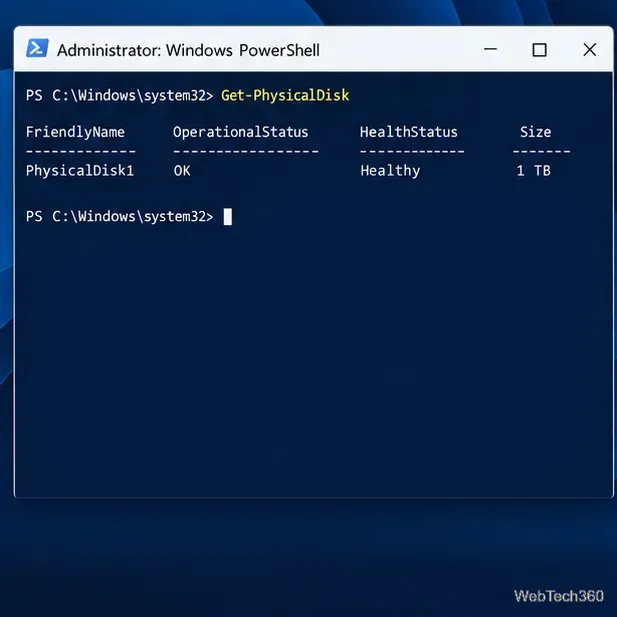
Check Windows Server disk status and reliability counters, verify SMART data when available, and separate hardware warnings from NTFS errors.
Are you hitting roadblocks while trying to install Windows 11? The infamous "This PC can't run Windows 11" message often points to UEFI and GPT requirements for Win 11. Don't worry—thousands face this, but with the right steps, you'll breeze through. This guide demystifies these essentials, offering practical troubleshooting to get your system upgraded. Let's turn frustration into success! 🚀
UEFI (Unified Extensible Firmware Interface) is the modern replacement for the old BIOS, providing faster boot times and better security for Windows 11. Microsoft mandates UEFI mode—no legacy BIOS allowed. On the storage side, GPT (GUID Partition Table) is required for drives over 2TB and enables features like Secure Boot. MBR (Master Boot Record) won't cut it anymore.
Why these rules? They ensure stability, security, and future-proofing. If your setup doesn't match, installation halts. But fear not—troubleshooting UEFI and GPT requirements for Win 11 is straightforward once you know the checks. Ready to verify? Let's dive in.
First things first: Is your PC in UEFI mode? Boot into Windows (or your current OS) and follow these steps:
msinfo32, and hit Enter.If it's not UEFI, enter your BIOS/UEFI settings (usually by pressing Del, F2, or F10 during boot). Disable CSM (Compatibility Support Module) and enable Secure Boot. Save and exit. Pro tip: Back up data first—changes can be finicky! 😊
Still stuck? Use the PC Health Check tool from Microsoft. Download it from their official site and run the scan—it flags UEFI issues instantly. If your hardware is older, consider if it's truly compatible; Windows 11 demands TPM 2.0 alongside UEFI.
Next, inspect your disk partitioning. GPT is non-negotiable for UEFI and GPT requirements for Win 11. Here's how to confirm:
Converting MBR to GPT without data loss? Use the built-in DiskPart tool or third-party software like EaseUS Partition Master (always verify compatibility). Warning: This process wipes the drive if not done right, so backup everything! Here's a safe method via Command Prompt (run as admin):
diskpart
list disk
select disk 0  (your system disk—double-check!)
clean  (erases everything—backup first!)
convert gpt
exit
After conversion, reinstall Windows 11. If you're dual-booting, tools like MiniTool Partition Wizard can help resize without chaos.
Errors pop up, but they're fixable. Let's tackle the big ones:
| Error Message | Cause | Quick Fix |
|---|---|---|
| "Windows cannot be installed to this disk. The selected disk has an MBR partition table." | MBR instead of GPT | Convert to GPT during installation (Shift+F10 in setup, then run DiskPart commands above). |
| "This PC can't run Windows 11" (Secure Boot/TPM error tied to UEFI) | UEFI not enabled or CSM active | Disable CSM in BIOS, enable Secure Boot, and ensure TPM 2.0 is on. |
| Boot loop after changes | Incorrect UEFI settings | Reset BIOS to defaults, then reconfigure step-by-step. Use a bootable USB for recovery. |
| "Access Denied" on conversion | Third-party tools or permissions | Run as admin or use Windows Recovery Environment (boot from install media). |
For deeper dives, check Microsoft's support page on Windows 11 system requirements. It's gold for official specs.
Want to go pro? If your hardware barely misses the mark, registry tweaks can bypass checks (use at your own risk—Microsoft doesn't recommend it for stability). Create a bootable USB with Rufus, selecting GPT and UEFI options during creation.
Post-install, optimize: Enable BitLocker for GPT drives and update your firmware via the manufacturer's site (e.g., Dell, HP). This keeps your Windows 11 setup secure and snappy. Feeling empowered? You're almost there!
Troubleshooting UEFI and GPT requirements for Win 11 doesn't have to be a nightmare. With these steps, you'll diagnose, fix, and install confidently. Remember, patience pays off—your upgraded PC awaits with better performance and features. If issues persist, community forums like Reddit's r/Windows11 are lifesavers. What's your next move? Drop a comment below and let's troubleshoot together! 👏
Stay tuned for more guides on Windows 11 tweaks—your tech journey just got easier.
Check Windows Server disk status and reliability counters, verify SMART data when available, and separate hardware warnings from NTFS errors.
Create, grant admin rights to, disable, or remove local Windows Server users with Computer Management or PowerShell. Learn when to use Active Directory instead.
Install Serviio on Windows Server, share local or NAS media folders, and test DLNA playback. Learn how to check the Windows service, firewall, and Pro-only browser features.
Convert PNG, JPG, or BMP files to Windows ICO with GIMP. Prepare a square image, keep transparency when needed, add standard sizes, and check the export.
Clear thumbnail, DNS, Internet Explorer, Microsoft Store, Search, and Live Tile data with Windows 8’s built-in tools, and learn what each cleanup removes.
Turn off Windows 10 item check boxes in File Explorer with the View ribbon, or use Folder Options if the toggle is missing. See what changes and how to select multiple files without boxes.
Install VMware Workstation Pro on a compatible Windows Server host, from checking support and downloading the right build to creating your first VM.
Browse and copy Ext2, Ext3, or Ext4 files on Windows with a read-only workflow. See what Linux Reader’s free edition supports and when WSL fits.
Install Caddy’s native Windows binary, serve a test site, enable automatic HTTPS for a domain, and run Caddy as a Windows Server service.
Run Linux Docker containers alongside Windows Server by creating an Ubuntu Hyper-V VM, installing Docker Engine, and publishing a test service safely.