Home
» INTERNET
»
How to Clean a Bidet Nozzle: From Light Buildup to Clogged Spray Holes
How to Clean a Bidet Nozzle: From Light Buildup to Clogged Spray Holes
A bidet nozzle that suddenly sprays unevenly, looks crusty around the holes, or no longer retracts as smoothly as it used to usually does not need an aggressive cleaner. The problem is more often a layer of dried residue, mineral deposits from hard water, or debris around the spray openings. The safest fix is to start with the bidet's built-in cleaning function and only move to deeper cleaning if the simple steps do not restore normal flow.
Because nozzle designs vary, the owner's manual matters. TOTO, Kohler, and Brondell all publish model-specific maintenance instructions, and those instructions do not always allow the same cleaners or disassembly steps. The method below follows the least aggressive approach first, then explains when to stop and check the manual instead of forcing the nozzle.
Quick diagnosis: what does the symptom suggest?
What you notice
Common cause
First action
Light film or visible residue
Normal surface buildup
Run nozzle-clean mode, then wipe gently
White crust around spray holes
Mineral scale
Soft-brush cleaning; use descaling only if the manual allows it
One jet is weak or sprays sideways
Partially blocked outlet
Clean the outlet holes without inserting sharp objects
All spray pressure is weak
Nozzle buildup, low supply flow, or clogged inlet filter
Clean the nozzle first; then inspect the filter if the problem remains
Nozzle sticks or retracts slowly
Residue on the wand or mechanical issue
Clean the exposed wand gently; do not force it
Before cleaning: know what your bidet allows
Most electric bidet seats have a nozzle-cleaning or wand-cleaning function that extends the wand while the seat is unoccupied. Kohler's current care guidance, for example, tells users to raise the cover and seat, press the wand icon to extend the spray wand, clean it with a soft-bristled brush and hot water, and press the wand icon again to retract it. See Kohler's official bidet-seat cleaning guidance.
TOTO's 2024 WASHLET care booklet similarly instructs users to activate the wand-cleaning function, wipe the wand gently with a soft damp cloth, and use a neutral detergent for stubborn stains. It specifically warns against applying force or using abrasive materials. See TOTO's official WASHLET cleaning booklet.
Important: do not unplug an electric bidet before activating a powered nozzle-cleaning mode unless your manual tells you to. Some models need power to extend the wand for cleaning. If you later need to remove a part or disconnect the water supply, follow that model's shutdown instructions first.
How to clean a bidet nozzle, from easiest to deeper cleaning
1. Use the built-in nozzle-cleaning cycle first
Raise the lid and seat and make sure no one is sitting on the seat sensor. Activate the nozzle-cleaning or wand-cleaning function exactly as the manual describes. On many models, the wand extends and either rinses itself or stays extended long enough for manual cleaning.
Let the rinse run before touching the nozzle. This can remove loose debris without scrubbing and gives you a clearer view of any remaining deposits. Do not grab the wand and pull it out manually unless your manual specifically says that is allowed.
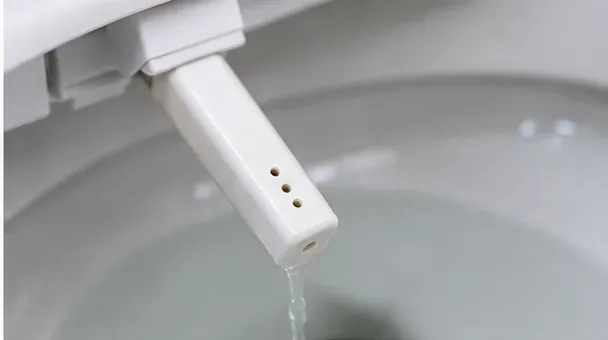
Start with the bidet's own nozzle-cleaning function so loose residue can rinse away before you scrub anything.
2. Wipe the exposed nozzle with a soft damp cloth
For ordinary film and light residue, a soft microfiber or lint-free cloth dampened with clean water is usually enough. Support the wand lightly with one hand if needed and wipe along the nozzle without bending, twisting, or pulling it.
Pay attention to the underside and the area around the outlet holes. Avoid paper towels, abrasive pads, scouring powders, and stiff brushes. TOTO's U.S. owner guidance for WASHLET plastic parts warns against dry cloths, nylon scrubbing brushes, powdered cleanser, paint thinner, and benzene because they can damage surfaces. See TOTO USA's WASHLET owner manual.
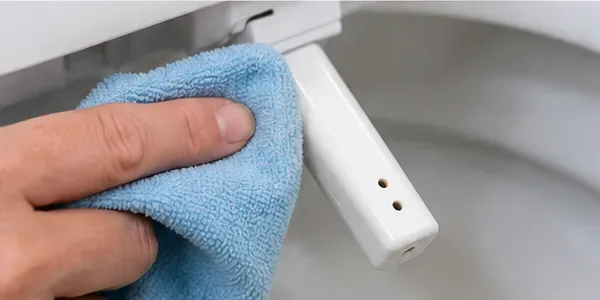
Use a soft damp cloth and light pressure; the goal is to lift residue without bending or scratching the wand.
3. For stubborn residue, add a mild cleaner only if the manual permits it
If water alone does not remove the film, apply a small amount of diluted neutral detergent to the cloth rather than flooding the nozzle assembly. Wipe the buildup, then wipe again with a clean water-dampened cloth so no detergent remains.
Do not assume that bleach, toilet-bowl cleaner, descaler, or strong bathroom cleaner is safe. Bidet seats combine plastic, rubber seals, metal parts, electronics, and sometimes specialty coatings. A cleaner that is fine for porcelain can damage the seat or nozzle components.
Also avoid spraying liquid directly into gaps around the wand opening or electrical housing. TOTO warns that water or detergent entering the main unit can damage plastic parts or cause a malfunction.
4. If the spray holes are crusted, use a soft brush rather than a sharp tool
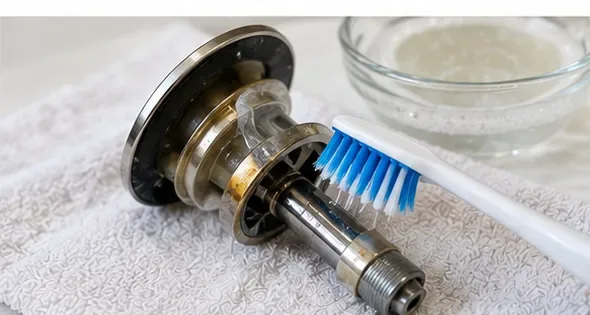
For visible mineral crust around the outlet holes, use a soft-bristled toothbrush or similarly gentle brush. Brush across the surface; do not push needles, pins, wire, toothpicks, or metal picks into the spray openings. A sharp object can enlarge or deform the opening and permanently change the spray pattern.
Kohler specifically recommends a soft-bristled brush for spray-wand cleaning. On some Kohler models, the spray tip can be removed and cleaned with hot water, but that removal step is model-specific. If your nozzle tip does not clearly detach according to the owner's manual, leave it in place.
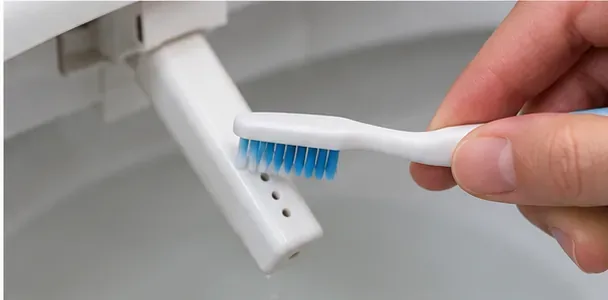
A soft toothbrush can loosen mineral buildup around the spray holes without the damage risk of pins or metal tools.
5. Treat persistent mineral blockage as a model-specific maintenance job
If the nozzle is still partly blocked after gentle cleaning, stop before soaking parts in vinegar or using a generic descaler. This is where manufacturer instructions differ.
For example, some Brondell non-electric bidet manuals permit a diluted vinegar-and-water mixture on the product, while Kohler cautions that harsh chemicals such as bleach or undiluted vinegar may damage finishes. Some TOTO models go further and specify a particular descaling agent for a blocked nozzle while warning against other detergents. The safe conclusion is not that vinegar is always good or always bad; it is that descaling chemistry must match the model.
If your manual explicitly says the nozzle tip can be removed, follow its removal, soaking, rinsing, and reinstallation procedure. If it does not, do not pry the tip off. When a manufacturer provides a dedicated descaling process, use that process instead of an internet recipe.
As one example of that model-specific approach, see the blocked-nozzle maintenance section in TOTO's official WASHLET RG instruction manual, which calls for the specified descaling agent and warns against using other detergents for that procedure.
If the nozzle is clean but pressure is still weak
A clean nozzle does not rule out a water-supply problem. Many bidet seats have a small inlet or mesh filter that can collect sediment. Brondell's 2026 troubleshooting guidance lists a clogged mesh filter as one possible cause when wash flow will not start normally and instructs users to shut off the water, disconnect the hose, clean the filter, reinstall it, and verify flow with the nozzle-cleaning function. See Brondell's current troubleshooting guidance.
If your entire spray is weak rather than one outlet being crooked or blocked, check the filter section of your own manual before repeatedly scrubbing the nozzle. A clogged filter, partly closed supply valve, kinked hose, or low household water pressure will not be fixed by more nozzle cleaner.
What not to use on a bidet nozzle
Abrasive pads or powdered cleaners: they can scratch plastic and coatings.
Needles, pins, wire, or metal picks: they can deform the spray holes.
Undiluted bleach or harsh toilet cleaner: these may damage plastic, seals, or finishes.
Vinegar by default: some products allow diluted vinegar in specific contexts; others do not. Check the manual first.
Force: never yank, twist, or hold the wand against its motorized movement.
Direct spray into the housing: keep excess liquid away from electrical gaps and internal components.
How often should you clean the nozzle?
There is no single schedule that fits every bidet. Water hardness, frequency of use, bathroom humidity, and the bidet's automatic rinse system all matter. Kohler suggests light bidet-seat cleaning about weekly and deeper cleaning monthly, but the nozzle itself is best cleaned when you notice visible residue, mineral crust, a changed spray pattern, or slower movement.
If you live in a hard-water area, inspect the nozzle more often. Frequent gentle wiping is safer than waiting for a thick mineral layer and then reaching for a stronger chemical.
Final check: did the cleaning actually work?
Retract the nozzle using the normal cleaning control, then run a brief wash or nozzle-cleaning cycle according to the manual. Keep the seat unoccupied unless the model specifically requires the seat sensor to be activated for testing.
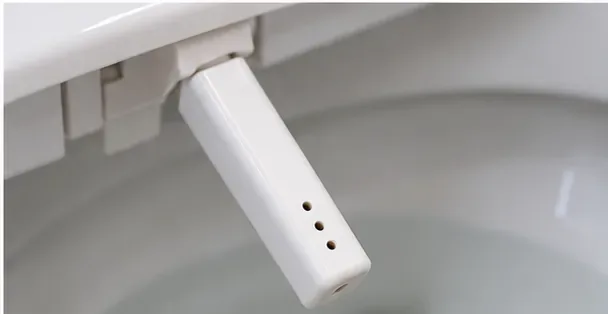
After cleaning, the nozzle should look free of visible film or crust and move normally without being forced.
Use this checklist to judge the result:
The nozzle extends and retracts smoothly.
The spray openings are visibly clear.
The water pattern is even rather than sharply deflected to one side.
Spray pressure is back to the model's normal level.
No detergent residue remains on the wand.
There are no leaks around any part you disconnected or removed.
If one outlet is still blocked, the wand will not retract, the whole spray remains weak, or the unit leaks after reassembly, stop escalating the cleaning. Check the model's filter and descaling instructions or contact the manufacturer. At that point, the problem may be deeper than surface buildup, and forcing the nozzle can turn a maintenance issue into a repair.