Home
» INTERNET
»
How to Wash a Leather Jacket Safely: What to Check Before You Clean
How to Wash a Leather Jacket Safely: What to Check Before You Clean
If your first instinct is to put a leather jacket in the washing machine, stop and check the care instructions first. For most genuine leather jackets, a full water wash is not the default. Water, detergent, agitation, heat, and rapid drying can change the leather’s color, finish, shape, or flexibility. The safest approach is usually to follow the garment label, remove surface dirt gently, spot-clean only when the jacket’s maker allows it, and use a professional leather cleaner for finishes or stains that are easy to damage.
That caution is not just conservative advice. The U.S. Federal Trade Commission’s care terminology defines “leather clean” as cleaning by a professional who uses special leather or suede methods. Jacket makers also vary by material: Schott NYC notes that cleaning and conditioning methods depend on the specific leather and recommends testing products on a hidden area before broader use, while Belstaff’s current product-care guidance allows controlled spot cleaning on some leather but tells owners to avoid machine washing, tumble drying, harsh chemicals, and forced heat. See the FTC Care Labeling Rule, Schott NYC repair and care guidance, and Belstaff product-care guidance.
Can You Put a Leather Jacket in the Washing Machine?
Usually, no. Do not machine-wash a leather jacket unless its own care label explicitly says that machine washing is permitted. The same rule applies to hand soaking: “hand wash” is not automatically safer if the leather was never designed to be saturated.
Many leather garments are made from cowhide, lambskin, goatskin, sheepskin, suede, nubuck, waxed leather, or leather with a special surface finish. They may also include textile linings, padding, knit cuffs, adhesives, coatings, or metal hardware. A cleaning method that is harmless to one component may still damage another. For that reason, the jacket’s own label and manufacturer instructions outrank generic internet advice.
What Kind of Leather Are You Cleaning?
This is the most useful question to answer before you touch the jacket with water or a cleaner.
Smooth, finished leather: Often the best candidate for cautious surface cleaning if the maker permits it.
Suede or nubuck: Their raised surface can mark, flatten, or develop water spots more easily. Specialist cleaning is the safer choice unless the maker provides a specific home-care method.
Waxed or oiled leather: Ordinary soap or conditioner can alter the finish. Some makers specify rewaxing or specialist reconditioning instead.
Shearling or leather with fur/wool attached: Treat it as a specialty garment. The outer leather and inner fleece may require different handling.
Painted, metallic, distressed, or heavily treated leather: Avoid assuming a standard leather cleaner is compatible; finishes can react differently.
If you cannot identify the leather, or the jacket is valuable, vintage, strongly dyed, unusually soft, or already cracked, skip experimentation and use a reputable professional leather cleaner.
What Should You Check Before Cleaning?
Read every care tag, including labels inside pockets or the lining. If the label says “specialist leather clean only,” “do not wash,” or similar wording, do not turn a home spot-cleaning routine into a full wash. Also inspect the jacket for loose dye, peeling finish, cracked areas, mold, damaged seams, or weak leather.
Before using any product, test it on an inconspicuous area such as the inside of a hem or under a flap. Schott NYC advises allowing a hidden-area test to dry for 24 hours so you can check for changes in color and texture. If the test area darkens permanently, becomes tacky, stiffens, lightens, or loses its finish, stop.
How Do You Clean a Smooth Leather Jacket at Home?
The following method is for a smooth leather jacket whose care label or manufacturer permits gentle surface cleaning. It is not a substitute for the label, and it is not appropriate for suede, nubuck, shearling, or special finishes unless their maker says otherwise.
1. Remove Dry Surface Dirt First
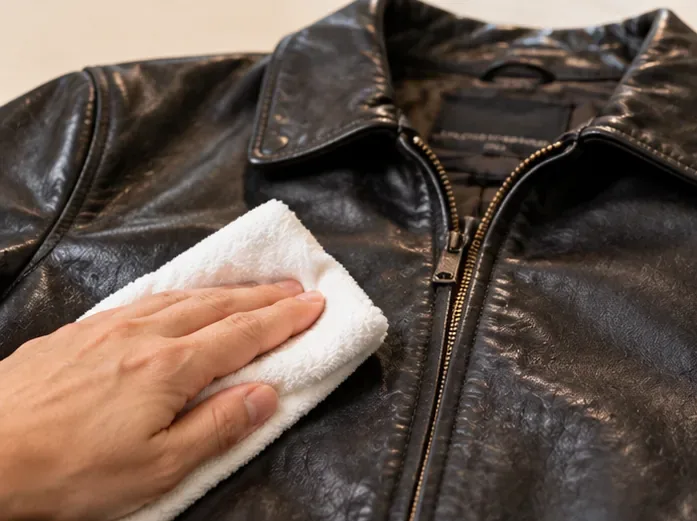
Lay the jacket flat on a clean towel or place it on a broad hanger. Empty the pockets and fasten or protect loose hardware. Use a dry, soft cloth or a soft-bristle brush to remove dust and dried dirt before adding moisture. This prevents loose grit from being rubbed across the leather.
Start with a dry, soft cloth so loose dust and grit are removed before any damp cleaning.
2. Use the Least Moisture Needed
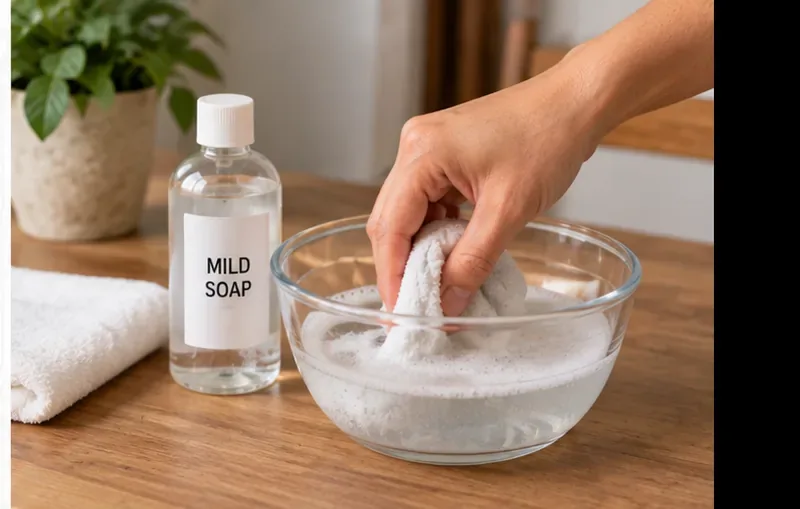
If the maker allows damp cleaning, prepare a small amount of cold or lukewarm water with a mild neutral soap rather than soaking the jacket. Belstaff’s leather-care guidance, for example, describes dampening a clean cloth or sponge with neutral soap and cold water for soiled areas. Wring the cloth thoroughly: it should be damp, not dripping.
Work on a small area at a time with light pressure. Do not pour cleaner directly onto the jacket and do not scrub aggressively. Pay extra attention to the collar, cuffs, pocket edges, and other high-contact areas, but stop if you see dye transferring heavily to the cloth or the finish changing.
Use only a lightly damp cloth and a mild solution when the jacket’s care instructions allow surface cleaning; do not soak the leather.
3. Decide Whether Conditioning Is Actually Appropriate
Conditioner is not automatically the next step for every leather jacket. Some smooth leathers benefit from a compatible conditioner after cleaning, but waxed, oiled, suede, nubuck, coated, or specialty finishes may need a different product or no conditioner at all. Belstaff specifically distinguishes waxed leather from standard conditioning because the finish relies on its own oils and waxes.
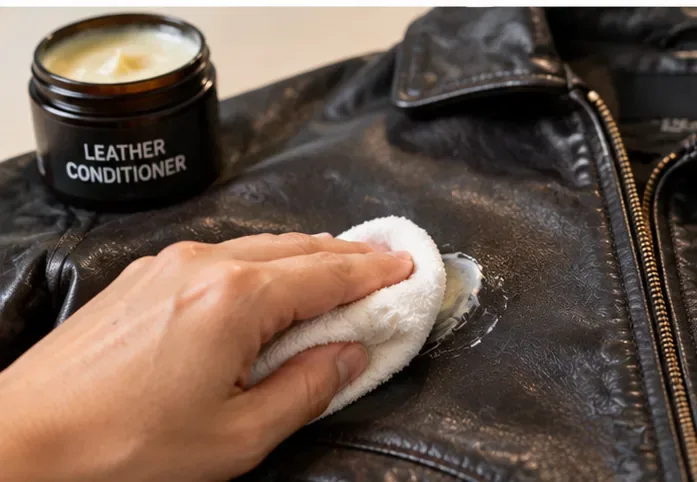
If your jacket maker recommends a conditioner, patch-test it first. Apply a small amount with a clean cloth and use a thin, even layer rather than saturating the surface. More product is not better: excess conditioner can leave leather greasy, uneven, or darker than intended.
Condition only when the manufacturer recommends it, and patch-test first because conditioners can alter color, sheen, and texture.
4. Let the Jacket Dry Naturally
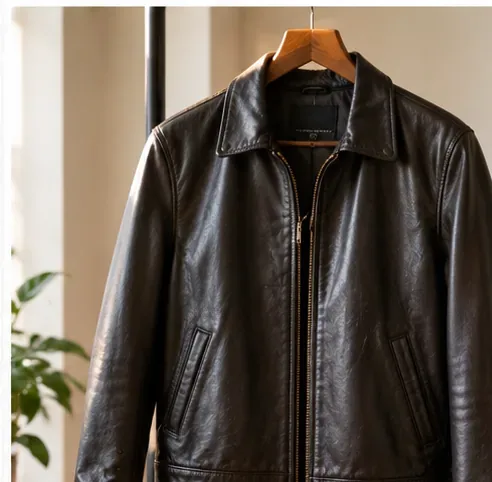
Hang the jacket on a strong, broad wooden or padded hanger in a well-ventilated indoor area. Keep it away from radiators, hair dryers, tumble dryers, open flames, and prolonged direct sunlight. Forced heat can dry leather too quickly and may contribute to stiffness, shrinkage, distortion, or finish damage.
Allow it to become fully dry before wearing, conditioning further, or putting it into storage. Belstaff’s guidance specifies natural drying in a ventilated area away from direct heat and sunlight and, for its method, allows about 24 hours.
Air-dry the jacket on a supportive hanger in a ventilated room, away from forced heat and prolonged direct sunlight.
What About the Lining?
A dirty lining creates a common dilemma: you may want to wash the inside even when the leather shell should not be soaked. First check whether the lining has separate care instructions. If the lining can be spot-cleaned, turn the jacket inside out as far as practical, protect the leather from excess moisture, and work with a barely damp cloth on the lining only. Avoid saturating seams where moisture can migrate into the leather.
For strong sweat odor, widespread staining, padded linings, fixed insulation, or a lining that cannot be separated from the leather, professional cleaning is usually the lower-risk option.
Which Stains Should You Not Experiment With?
Home spot cleaning is most suitable for light surface soil when the finish is known and the care instructions permit it. Escalate to a leather specialist for:
ink, paint, dye transfer, or permanent marker;
oil or grease that has soaked into the leather;
mold or mildew;
large water marks or a jacket that has been soaked;
salt or chemical contamination;
suede, nubuck, shearling, or special decorative finishes;
vintage leather that is dry, brittle, cracked, or flaking;
stains that cross from leather into fabric lining, padding, or glued components.
Aggressive stain removers, household solvents, bleach, alcohol, and strong detergents can remove more than the stain: they may also strip dye, oils, waxes, or protective finishes. If a product is not specifically approved for your jacket’s leather, do not assume that “leather safe” on a generic bottle means it is safe for every finish.
Should You Dry-Clean a Leather Jacket?
Do not take “dry-clean only” to mean any ordinary dry cleaner can safely process leather. Leather requires specialist methods. The FTC’s care terminology distinguishes “leather clean” as professional cleaning by someone using special leather or suede care methods. Many manufacturers likewise direct owners to a professional leather-care center.
When choosing a cleaner, ask whether they routinely handle the same leather type and finish, whether they clean the whole garment including lining and hardware, and whether they can discuss expected changes in color, hand feel, or finish before starting.
How Can You Tell the Cleaning Worked?
Do not judge success only by whether a stain is lighter. Once the jacket is completely dry, check the whole garment in even light.
The leather should feel flexible rather than hard, papery, sticky, or unusually soft.
The color and sheen should look even from panel to panel.
No new tide marks, cloudy patches, or cleaner residue should appear.
The jacket should hang in its original shape without puckered seams or warped panels.
Zippers, snaps, knit cuffs, and the lining should still work and sit normally.
There should be no strong chemical or musty odor after drying.
If the leather has changed noticeably after cleaning, stop applying additional products. A second round of soap, conditioner, or solvent can compound the problem. At that point, a leather-care professional is the better next step.
How Should You Store It After Cleaning?
Store the jacket only when it is fully dry. Use a supportive hanger so the shoulders keep their shape, choose a cool and dry location with ventilation, and avoid prolonged sunlight. Do not compress the jacket under heavy clothing or seal damp leather in plastic. Good storage reduces how often the jacket needs intensive cleaning in the first place.
The practical rule is simple: “washing” a leather jacket usually means controlled cleaning, not laundering. Start with the care label, identify the leather, use the least aggressive method that is explicitly compatible, and stop when you reach a stain or finish that needs specialist care. That approach is slower than tossing the jacket into a washer, but it gives the leather, its color, and its construction a much better chance of staying intact.