Home
» INTERNET
»
How to Wash Suede Safely: A 2026 Guide to Cleaning Without Flattening the Nap
How to Wash Suede Safely: A 2026 Guide to Cleaning Without Flattening the Nap
There is no newly discovered way to make genuine suede behave like ordinary washable fabric. In fact, a newly published official Timberland suede-care guide dated May 15, 2026 reinforces the same durable principle that established manufacturer guidance has used for years: start dry, use tools made for suede, introduce moisture carefully, and let the material dry naturally. That matters because “how to wash suede” is often searched as if suede could simply go into a sink or washing machine. For most genuine-suede footwear and accessories, that is the wrong starting point.
Timberland’s current guidance emphasizes brushing, an eraser for scuffs, suede-compatible cleaner when needed, and restoring the surface afterward. Nike explicitly says it does not recommend putting suede shoes in a washing machine or hand-washing them in soap and water. UGG likewise tells owners of its sheepskin and suede footwear not to machine wash and to dry naturally away from direct heat. Those instructions apply to the products those companies make, so your own care label still takes priority. See the official Timberland suede-cleaning guide, Nike suede-care guide, and UGG sheepskin and suede care instructions.
First: make sure you are actually cleaning genuine suede
Genuine suede is leather with a soft, fibrous surface called the nap. Leather Naturally describes suede as leather from the lower split portion of a hide that has been sanded. Because suede and nubuck are absorbent, its care guide recommends brushing away dust, using moisture cautiously, and testing any cleaner or protector on a hidden area first. See the Leather Naturally care guide.
Faux suede is different. It is often a synthetic textile and may tolerate cleaning methods that genuine leather cannot. If the label says polyester, microfiber, microsuede, or another synthetic material, follow that item’s care label rather than assuming the genuine-suede method below applies.
Before cleaning, identify the material, read the care label, and inspect the suede for mud, oily marks, loose dye, or damaged areas.
What you need
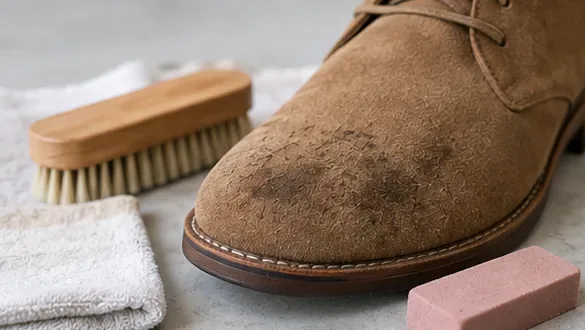
A suede brush or clean soft-bristle brush
A clean suede eraser or plain clean pencil eraser
A white or colorfast lint-free cloth
A suede cleaner approved for the item, when dry methods are not enough
Plain room-temperature water for limited dampening when the manufacturer permits it
White paper or a shoe tree for structured footwear
White vinegar or rubbing alcohol are sometimes used for stubborn suede stains; Nike specifically lists both as options for its suede-shoe method. They are not universal treatments for every suede finish or dye, so test first and stop if color transfers or the surface changes unexpectedly.
How to clean suede in five controlled steps
1. Let wet suede or mud dry before you touch the stain
If the suede is wet, do not begin by scrubbing it. Nike advises allowing mud and moisture to dry before brushing because working wet contamination into the fibers can make the mark worse. For shoes or boots, insert a shoe tree or loosely stuff the interior with plain white paper so the item keeps its shape. Avoid printed newspaper because ink can transfer when damp.
If the item is a jacket, handbag, or another structured piece, check the care label before applying any liquid. A “professional leather clean only” instruction is a good reason to stop and use a specialist cleaner.
2. Brush away loose dirt and lift the nap
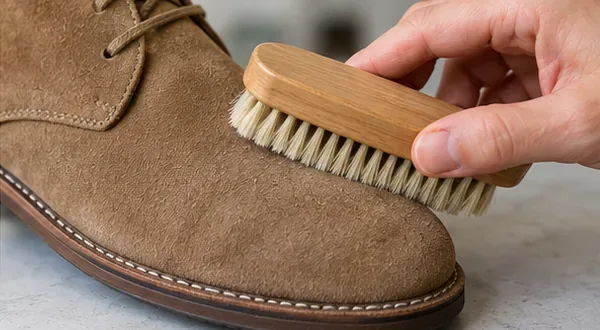
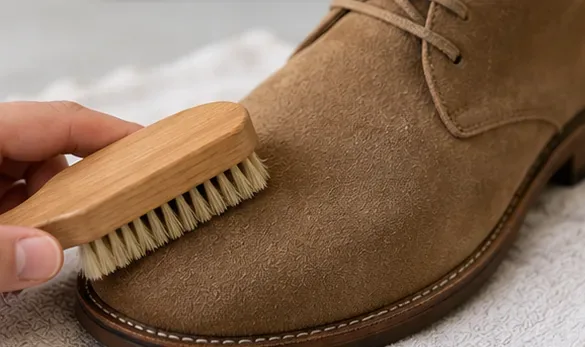
Once the suede is dry, use a suede brush with light pressure. For routine dirt, brush in the natural direction of the fibers. On a flattened scuff, a short back-and-forth motion can help lift the nap, but do not grind the brush into one spot.
Timberland’s 2026 guide starts with brushing off excess mud and dirt. Nike likewise recommends a suede brush, soft brush, toothbrush, or clean cloth for surface debris. If ordinary brushing noticeably improves the area, stop there rather than escalating to liquid cleaner.
Start with a dry suede brush and light pressure; many dusty marks disappear without adding moisture.
3. Use an eraser on dry scuffs and surface marks
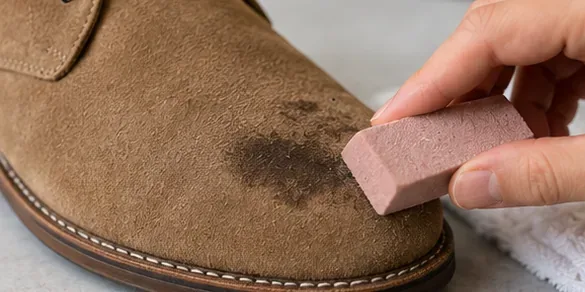
For a localized scuff that survives brushing, use a clean suede eraser. Rub gently across the mark, then brush away eraser crumbs and reassess. Timberland recommends an eraser bar for stubborn scuffs, and Nike suggests a suede eraser or clean pencil eraser for surface marks.
Do not keep rubbing simply because a faint shadow remains. Suede has a textured surface, and aggressive erasing can thin or polish the nap. If the mark is no longer improving after a few gentle passes, move to a suede-specific cleaner or consider professional cleaning for a valuable item.
A suede eraser can lift dry scuffs without soaking the leather, but excessive pressure can flatten or damage the nap.
4. Escalate to minimal moisture only when dry methods are not enough
This is the step people often interpret as “washing,” but the goal is controlled cleaning, not saturation. Use the item manufacturer’s suede cleaner when available. Apply it exactly as directed and test a hidden area first.
Some brands recommend cleaning more than the single stain to avoid a visible color boundary. Timberland, for example, instructs users of its Renewbuck foaming cleaner to clean the entire boot rather than spot-cleaning because spot treatment can create color differences. UGG’s Cleaner & Conditioner directions tell users to moisten the outer surface, apply diluted cleaner to a damp sponge rather than directly to the footwear, clean gently, rinse with clean cold water, and then dry naturally. These methods are brand- and product-specific; do not copy them onto an unrelated suede handbag or jacket unless its care instructions allow similar treatment.
For a stubborn mark on suede shoes, Nike recommends lightly dampening the corner of a cloth with suede cleaner, white vinegar, or rubbing alcohol rather than drenching the shoe. Work the area gently and then let it dry before judging the result.
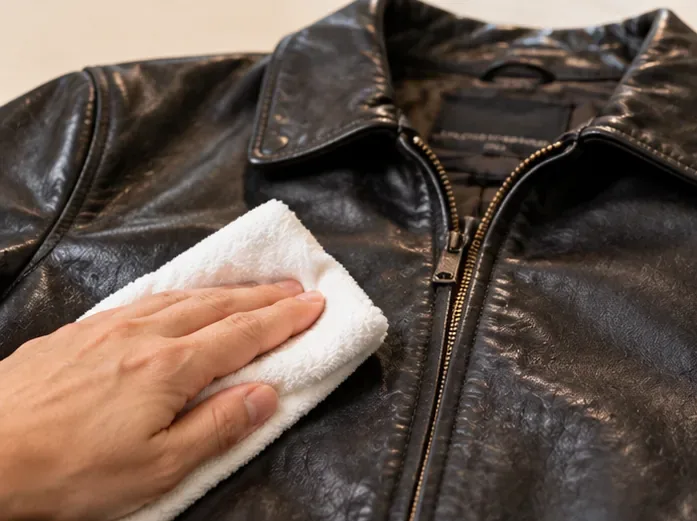
When liquid cleaning is appropriate, use the smallest amount needed and avoid soaking the suede.
Quick stain guide
Problem
Start with
When to escalate
Dry mud or dust
Let dry completely, then brush
Use a suede eraser if a dry shadow remains
Scuff
Brush, then suede eraser
Use suede cleaner only if the mark persists
Water mark
Follow the maker’s instructions; controlled, even dampening may help on some footwear
Stop if dye transfers or the surface dries unevenly
Oil or grease
Absorb before rubbing; Nike suggests cornstarch for suede shoes
Use a suede specialist if the oil has penetrated deeply
Unknown stain on expensive suede
Dry brush only
Use a professional leather/suede cleaner rather than experimenting
5. Air-dry, reshape, then restore the nap
After any damp cleaning, reshape the item and let it dry naturally in a cool, ventilated place. Keep it away from radiators, hair dryers, clothes dryers, fireplaces, and strong direct sunlight. UGG’s instructions specify natural drying away from direct heat and sunlight, and Nike warns against putting suede shoes in a dryer.
Do not judge the color or texture while the suede is still damp. Moist suede often looks darker and flatter. Wait until it is fully dry, then brush lightly to raise the nap and make the surface look more uniform.
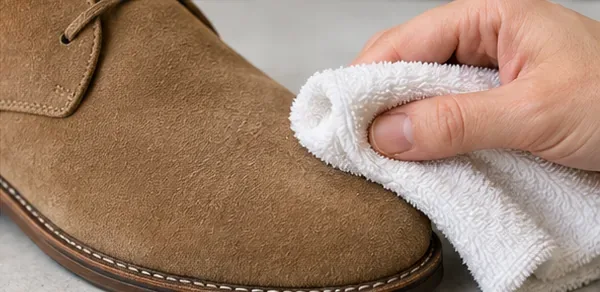
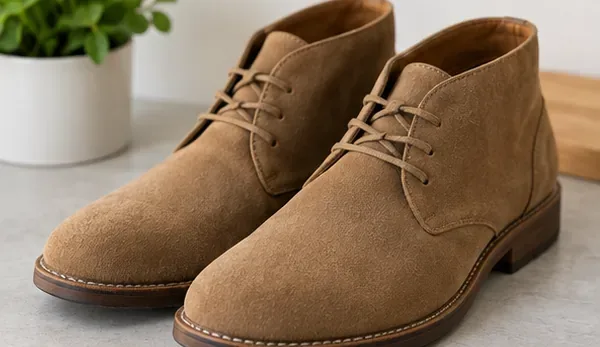
Once the suede is completely dry, brush lightly to restore the soft, even nap.
Can suede go in the washing machine?
For genuine suede, the safe default is no unless the specific manufacturer explicitly says otherwise. Nike states that it does not recommend machine-washing suede shoes or hand-washing them in soap and water. UGG’s care instructions for its sheepskin footwear also say not to use a washing machine. A machine cycle can expose suede to more water, detergent, agitation, and uncontrolled drying than the material needs.
If a care label on a synthetic “suede-look” item says machine washable, follow that label. The material may be faux suede rather than leather, so the rules can be different.
Should you use soap and water?
Not as a generic home recipe. Ordinary soap can leave residue, alter color, or change the feel of the nap. Some manufacturers do use water in carefully defined cleaning methods, but they pair it with a compatible cleaner, controlled dilution, limited agitation, and natural drying. That is very different from soaking suede in a sink.
When you do not know the tanning, dye, finish, adhesive, or backing used in an item, start with the least aggressive method and stop as soon as the result is acceptable.
How to protect suede after cleaning
Once the item is completely clean and dry, a suede-compatible protector can reduce future water and stain problems. Test it on a hidden area first because protectors can sometimes darken pale suede. Timberland specifically notes that its protector may darken lighter suede in rare cases, and UGG instructs users to spray evenly, avoid soaking, dry naturally, and brush afterward.
A protector does not make ordinary suede waterproof. It simply adds a layer of resistance, and its effect depends on the product and the suede finish.
Final result check: did the cleaning work?
Wait until the suede is fully dry before deciding. A good result should meet four tests:
Color: the cleaned area is reasonably even with the surrounding material, without a sharp wet-looking ring.
Nap: the surface feels soft rather than slick, crusty, or matted.
Shape: shoes, bags, and structured items have not warped or collapsed.
Residue: there is no powdery cleaner, sticky film, or strong remaining odor.
The finished suede should be dry, evenly colored, properly shaped, and softly brushed rather than stiff or matted.
If the suede is still blotchy after drying, do not repeatedly wet the same spot. Brush once more and reassess in good light. If color loss, deep oil staining, dye transfer, stiffness, or structural damage remains, professional suede cleaning is the safer next step.
The simple rule to remember
For genuine suede, “washing” should usually mean the least amount of cleaning needed to restore the surface—not immersion. Dry first, brush first, erase dry marks second, add only controlled moisture when the care instructions support it, and let the item dry naturally before restoring the nap. That sequence matches the direction of current 2026 manufacturer guidance without pretending every suede product has the same construction or finish.