Home
» INTERNET
»
How to Get Gum Out of Sheets Without Damaging the Fabric
How to Get Gum Out of Sheets Without Damaging the Fabric
Finding a wad of chewing gum stuck to a bed sheet is frustrating because the obvious response—pulling it off while it is soft—can make the mess worse. Warm, pliable gum stretches, smears across a wider area, and can grip individual fibers. The safest first move for most washable sheets is the opposite: cool the gum until it hardens, lift away as much as possible, treat the residue, wash according to the care label, and do not machine-dry the sheet until the spot is truly clean.
This approach matches the fabric-care sequence recommended by the University of Georgia Cooperative Extension, which advises hardening gum with ice, scraping off the excess, treating remaining residue, and laundering. A current manufacturer guide from Tide similarly recommends freezing or chilling the gum, scraping carefully, pretreating, washing on an appropriate cycle, and checking the stain before drying.
Why Gum Sticks So Stubbornly to Sheets
Chewing gum is designed to stay flexible rather than dissolve quickly. When it is warm, it can spread into the small spaces between woven fibers. Pressure from sleeping, sitting, folding, or putting the sheet through a washer can flatten the gum and increase the contact area. Heat can make the residue even harder to deal with later, which is why the final inspection before the dryer matters.
Sheet construction also changes how cautious you should be. A sturdy cotton or cotton-polyester sheet may tolerate gentle scraping better than a very fine, loosely woven, embellished, silk, or dry-clean-only sheet. Always let the care label override a general cleaning method. If the label prohibits washing or the fabric is especially delicate, professional cleaning is the safer choice.
What You Need
Ice cubes in a small plastic bag, or a reusable cold pack
A dull table knife, spoon edge, or plastic card
Liquid laundry detergent suitable for the sheet
A soft-bristled toothbrush or clean soft cloth for stubborn residue
A washing machine or hand-washing setup that matches the care label
A clean white towel or absorbent cloth
Avoid starting with aggressive solvents, sharp blades, or high heat. They can introduce a second problem—color loss, fiber damage, or a larger smear—before the gum itself is under control.
Step 1: Check the Care Label and Stop the Gum From Spreading
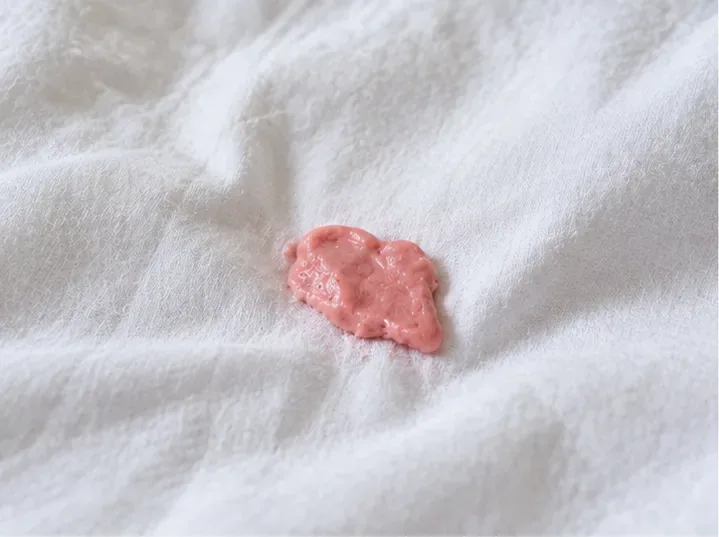
Start by identifying the gum and checking the sheet’s care label before you pull, rub, or apply a cleaner.
Take the sheet off the bed and lay the affected area flat. Do not stretch the fabric around the gum. If the gum is still very soft, resist the urge to rub it with a towel or pick at it repeatedly with your fingers; both can push it deeper into the weave.
Read the sheet’s care label before applying detergent, stain remover, vinegar, or any other treatment. The University of Georgia guidance specifically warns that stain-removal methods should not conflict with the care label and that cleaning products should be pretested on an inconspicuous area for colorfastness.
For ordinary washable cotton, polyester, microfiber, or blends, the cold-and-scrape method is a sensible first attempt. For silk, highly delicate specialty fabrics, sheets with fragile decorative finishes, or items marked dry clean only, stop and follow the manufacturer’s care instructions instead of escalating at home.
Step 2: Harden the Gum With Ice
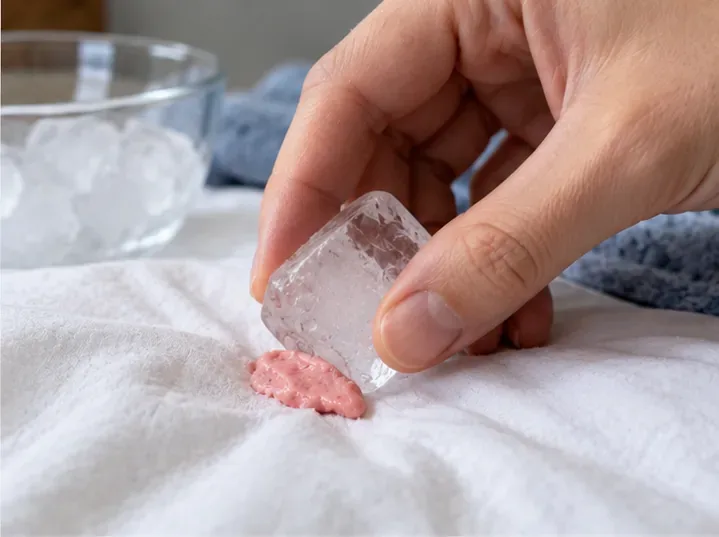
Cold makes soft gum firmer and easier to lift away without stretching it farther into the fabric.
Put several ice cubes in a small plastic bag so melting water does not soak the sheet. Hold the cold bag directly on the gum until the gum becomes firm and much less flexible. Tide’s fabric guide suggests using a small bag of ice to harden soft gum; its published method gives about 15 minutes as a starting point, although the exact time will depend on the size and thickness of the gum.
A whole bed sheet is usually too bulky for a freezer, so localized icing is more practical. The goal is not to freeze the fabric solid. You simply want the gum to become brittle enough that it lifts in pieces instead of stretching into strings.
If the gum starts to soften while you work, stop and reapply the ice. Re-chilling is safer than forcing a soft patch off the sheet.
Step 3: Gently Scrape Away the Hardened Gum
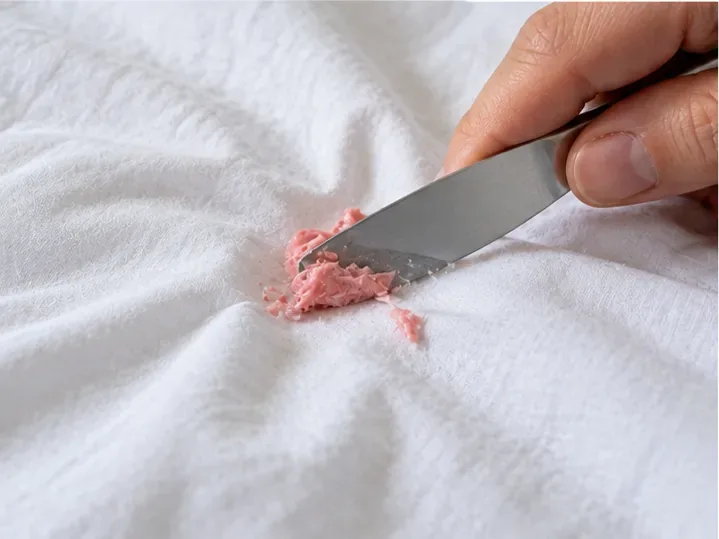
Work slowly with a dull edge, lifting the hardened gum instead of digging into the sheet’s fibers.
Once the gum is firm, slide a dull edge under one side and lift a little at a time. Work from the outside of the gum toward the center so you are not pushing residue into clean fabric. A dull table knife, spoon edge, or rigid plastic card is better than a razor blade or sharp kitchen knife because you are less likely to cut threads.
Do not press down hard. The aim is to separate the hardened gum from the fabric surface, not shave the sheet. If a piece refuses to lift, chill it again and try from another edge.
Remove every loose fragment you can before moving to detergent. This physical removal step matters because detergent is better suited to treating the thin residue left behind than dissolving a thick wad of gum all at once.
Step 4: Pretreat, Wash, and Inspect Before Drying
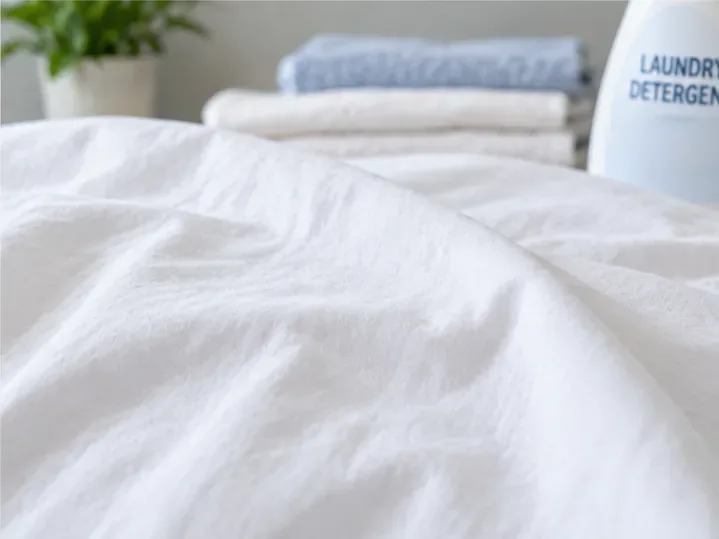
After washing, inspect the sheet before machine drying; repeat treatment if any tackiness or discoloration remains.
After the bulk of the gum is gone, check for a tacky film or colored mark. Spot-test your liquid laundry detergent on a hidden area if you have any concern about colorfastness. Then apply a small amount to the residue and work it in gently with your fingers, a soft cloth, or a soft-bristled toothbrush. Avoid aggressive scrubbing, especially on lightweight or loosely woven sheets.
Let the pretreatment sit according to the detergent label. Tide’s gum-removal guide recommends a detergent pretreatment after scraping, followed by washing on a cycle appropriate for the fabric. Wash the sheet according to its own care label, using the recommended water temperature and cycle rather than assuming hotter is always better.
When the wash cycle ends, inspect the exact area while the sheet is still damp. Do not put it in a heated dryer simply because the gum itself is no longer visible. Feel the fabric with clean fingers and look at it under bright light. If you notice tackiness, a greasy-looking patch, or lingering color, repeat the pretreatment and wash before drying. Tide specifically cautions that drying a remaining stain can make it more difficult to remove.
If the Gum Is Still There: Escalate Gradually
Repeat the cold-and-scrape cycle first
A thick or smeared deposit may take more than one round. Reapply ice, lift off newly hardened residue, and pretreat again. Repetition is often safer than jumping directly to a stronger chemical.
Use a fabric-safe stain remover only if the label allows it
The University of Georgia’s apparel guidance allows for a commercial fabric or upholstery cleaner after excess gum has been scraped away, while also emphasizing care-label restrictions, pretesting, and ventilation. If you choose a commercial spot treatment, use one that explicitly says it is appropriate for washable fabric, follow its label exactly, and test it first where a color change would not be noticeable.
Consider warm vinegar only as an optional, tested method
Tide lists warm distilled white vinegar as an alternative gum-removal technique, but it also instructs users to test for colorfastness first. Because sheet materials and dyes vary, vinegar should be considered an optional escalation rather than a universal first step. If the care label or manufacturer warns against acidic treatments, skip it.
Stop if the fabric is weakening
If scraping causes fuzzing, pulled threads, thinning, color transfer, or distortion, further home treatment may do more harm than the stain. That is the point to stop and consult a professional cleaner, especially for valuable or delicate bedding.
What Not to Do
Do not yank soft gum. Pulling can stretch both the gum and the fabric.
Do not use a sharp blade. It is easy to nick or sever sheet fibers.
Do not scrub a thick wad of gum with detergent first. Remove the bulk mechanically before treating residue.
Do not use an untested solvent. Strong products can affect dyes or finishes and may require special ventilation or handling.
Do not machine-dry until the area passes inspection. Heat can make a remaining stain harder to remove.
Do not ignore the care label. Fabric-specific instructions take priority over general stain-removal advice.
How to Tell Whether the Sheet Is Really Clean
Before you declare the job finished, perform three simple checks. First, look at the area from an angle under bright light. You should not see a glossy or darker patch where gum residue remains. Second, run clean fingertips lightly over the fibers. The spot should feel like the surrounding sheet, not sticky, stiff, or waxy. Third, gently flex the fabric. No hidden gum should crack, flake, or reappear between the threads.
If the sheet passes all three checks, dry it according to the care label. If it fails even one check, repeat the detergent pretreatment and wash rather than applying dryer heat.
Quick Decision Guide
What you see
Best next move
Soft, fresh gum
Chill with bagged ice until firm; do not rub.
Hard gum sitting on the surface
Lift gently with a dull edge.
Thin sticky residue after scraping
Spot-test, pretreat with suitable liquid detergent, then wash.
Residue after one wash
Repeat pretreatment and washing before any heated drying.
Delicate, damaged, or dry-clean-only sheet
Stop home treatment and follow the care label or use a professional cleaner.
The Bottom Line
For most washable sheets, the least risky way to remove chewing gum is to work from cold to clean: harden the gum with ice, scrape gently with a dull edge, pretreat the remaining film with a fabric-appropriate detergent, wash according to the care label, and inspect before drying. The method works because it separates the mechanical problem—the sticky mass—from the stain problem—the thin residue left in the fibers.
If the first pass does not remove everything, repeat the gentle steps before trying anything stronger. A little patience is usually better for the sheet than more heat, more force, or a harsher chemical.