Home
» INTERNET
»
How to Clean a Dehumidifier Filter: A Beginner-Friendly 8-Step Guide
How to Clean a Dehumidifier Filter: A Beginner-Friendly 8-Step Guide
A dehumidifier can keep running even when its air filter is dusty, so a dirty filter is easy to overlook. The problem is that lint and dust restrict airflow through the machine. That can reduce performance, and manufacturers specifically warn against operating some dehumidifiers without the filter installed.
This beginner-friendly guide explains how to clean a typical reusable mesh air filter on a portable dehumidifier. A mesh air filter is the removable screen that catches dust and lint before room air reaches the internal coils. The exact filter location, removal direction, cleaning method, and reminder-reset procedure vary by model, so your owner's manual always takes priority over a general guide.
For example, Midea instructs owners of several current portable models to disconnect power, remove the air filter, wash it with clean water, dry it, and reinstall it. GE gives similar guidance and says very dirty filters on some models can be washed with dish soap and warm—not hot—water. You can compare those instructions in the GE Appliances dehumidifier cleaning guidance and the Midea dehumidifier user manual.
Before You Start: Confirm That Your Filter Is Washable
Do not assume every filter should go under the faucet. Many portable dehumidifiers use a washable plastic or mesh screen, but other dehumidifiers may use a different filter design or a replaceable filter. Look up your exact model number and read the care section of the owner's manual before adding water or detergent.
If the manual describes the filter as washable, reusable, or instructs you to rinse it, the process below is appropriate. If it says to replace the filter, follow that instruction instead. Whole-house products can also differ from portable units; for example, AprilAire publishes model-specific cleaning instructions for its washable dehumidifier filters, including rinsing and, for deeper cleaning, mild detergent. See the manufacturer's AprilAire EZ Kleen filter instructions.
What You'll Need
Your dehumidifier owner's manual or model-specific support page
A vacuum cleaner with a soft brush attachment
Clean running water for a washable filter
A small amount of mild dish soap only if your manual permits it and the filter needs deeper cleaning
A clean towel and a well-ventilated place for drying
A soft cloth or vacuum attachment for the intake grille
Avoid bleach, abrasive cleaners, stiff wire brushes, solvents, and very hot water unless your manufacturer's documentation explicitly says otherwise. GE specifically advises against chemical cleaners on the filter, while Midea tells users not to use bleach or abrasives on the unit.
How to Clean a Dehumidifier Filter in 8 Steps
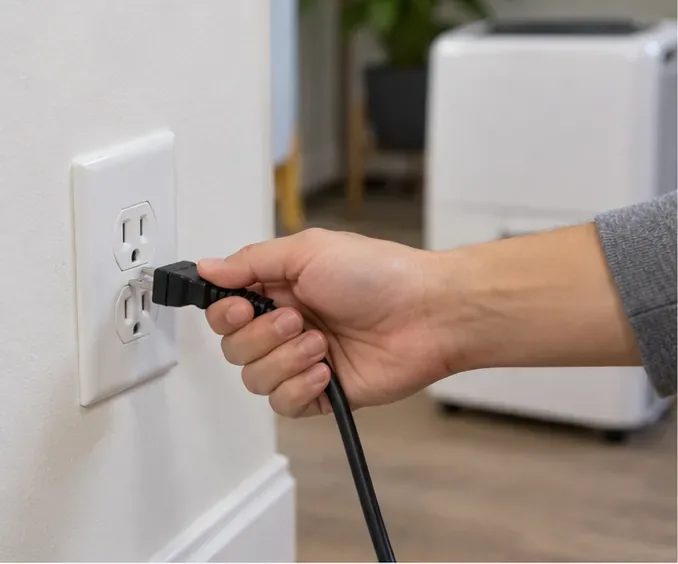
1. Turn the Dehumidifier Off and Unplug It
Switch the unit off, then remove the power plug from the wall before you open a grille or remove a filter. This is the first step in manufacturer maintenance instructions because a dehumidifier contains electrical components and moving parts. Do not clean the filter while the appliance is connected to power.
Disconnect the dehumidifier from the wall outlet before removing or cleaning the filter.
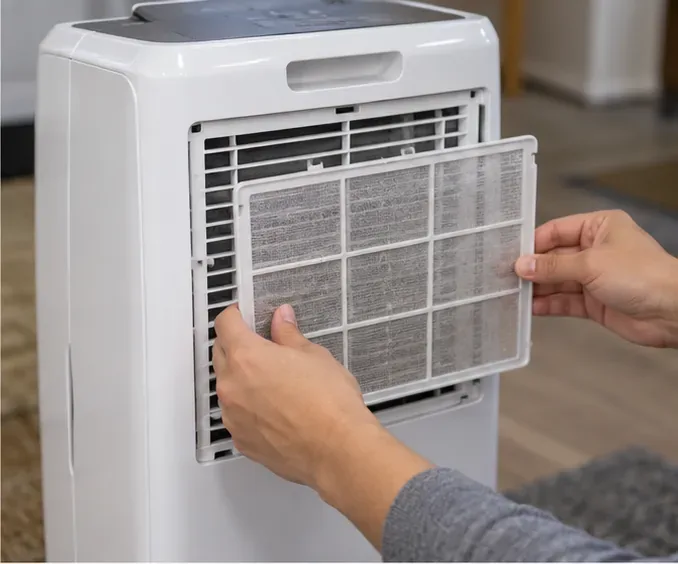
2. Locate and Remove the Air Filter
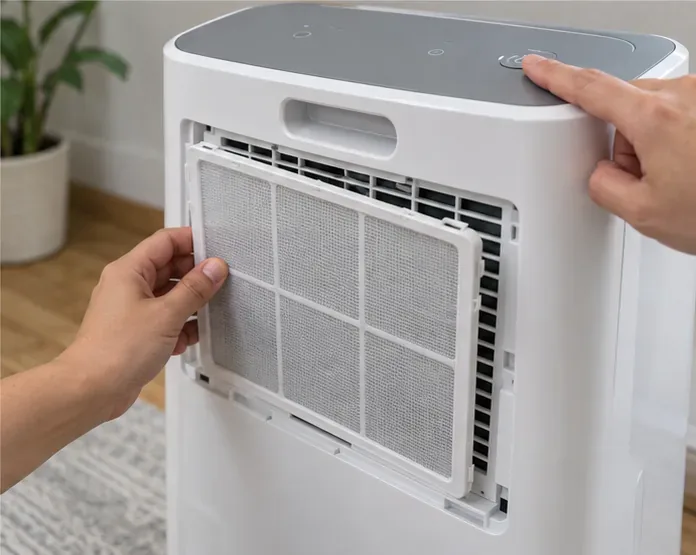
Find the air-intake grille, usually on the rear or front of a portable unit. The filter may slide out by a small tab, sit behind a removable grille, or be accessible only after the water bucket is removed. Do not force it. If it does not move with light pressure, stop and check the manual for the correct release direction.
Remove the filter gently in the direction specified for your model; this example shows a rear-mounted mesh screen.
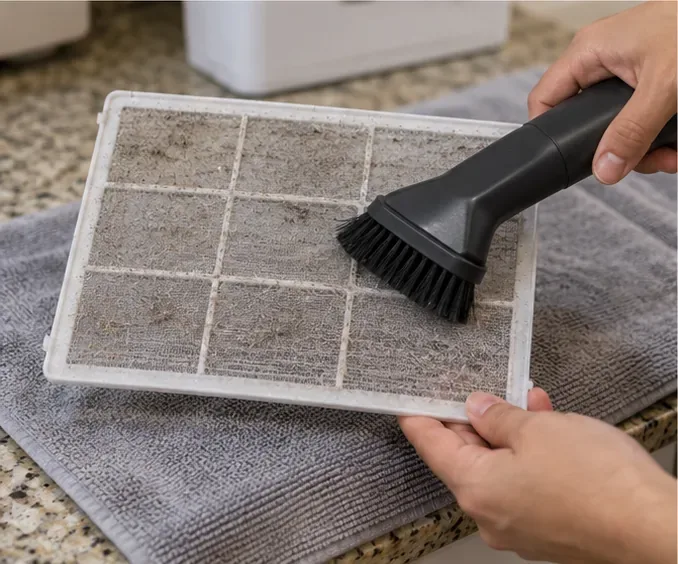
3. Remove Loose Dust Before Washing
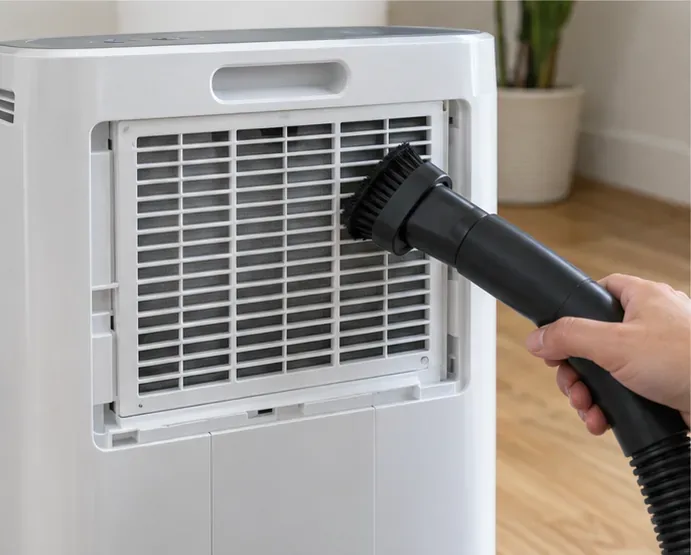
For a filter coated with dry lint or surface dust, start with the least aggressive method. Vacuum the dirty side with a soft brush attachment using light pressure. This removes loose debris without immediately turning the dust into muddy residue. If the filter looks clean after vacuuming and your manual does not require washing every time, you may be able to stop here.
Use a soft vacuum attachment for loose dust, keeping pressure gentle so the mesh and frame are not distorted.
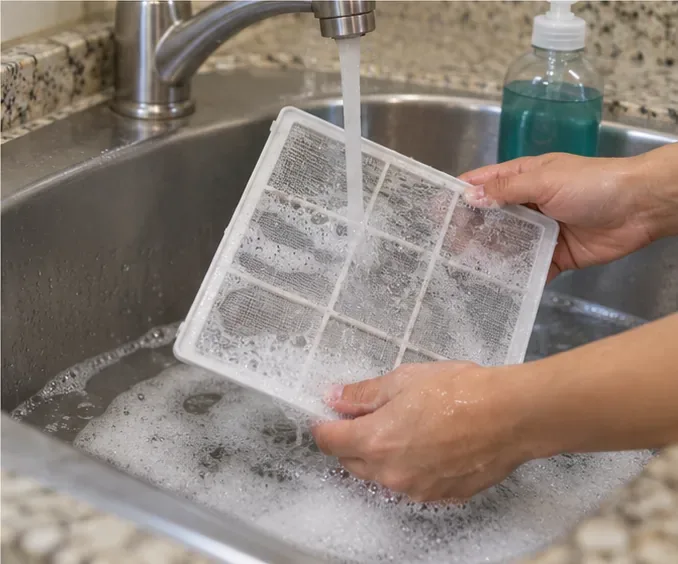
4. Wash With Mild Soap Only When the Manual Allows It
If the filter is still visibly dirty, wash it according to the manufacturer's instructions. GE says that very dirty filters on some dehumidifiers can be washed with dish soap and warm—not hot—water. AprilAire likewise describes a mild-detergent wash for deeper cleaning on specific washable filters. Midea's cited portable-dehumidifier manual simply calls for clean water.
That difference matters. Use plain water when that is what your manual specifies. Add only a small amount of mild detergent when the manufacturer permits it. Avoid scrubbing aggressively; a soft mesh can stretch, tear, or separate from its frame.
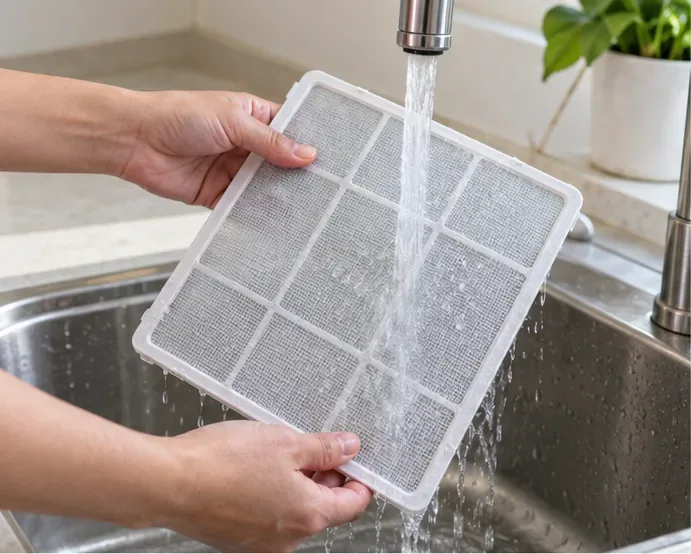
For a washable filter, use clean water; add mild dish soap only when the model's care instructions allow it.
5. Rinse Until the Water Runs Clear
Rinse the filter with clean water from both sides so loosened dust and any permitted detergent are carried away. Gentle water pressure is enough. Do not use a pressure washer, high-pressure spray nozzle, or very hot water. Check corners and the edges of the frame, where lint can remain trapped.
Rinse the washable screen thoroughly with gentle running water to remove remaining dirt and soap residue.
6. Let the Filter Dry Completely
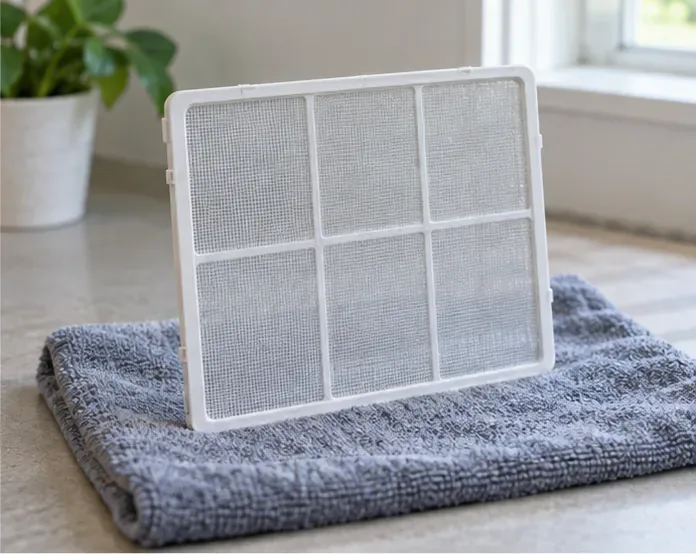
Shake off excess water without bending the frame, then set the filter in a clean, ventilated location to air-dry. GE explicitly says to allow the filter to dry completely before reinstalling it. Avoid reinstalling a dripping-wet filter, and avoid high heat from a hair dryer, radiator, oven, or clothes dryer unless your manual specifically approves a method.
Air-dry the filter fully on a clean towel before it goes back into the appliance.
7. Clean Dust From the Intake Grille
While the filter is drying, inspect the grille and the accessible area immediately around the filter opening. Use a vacuum brush or a soft, slightly damp cloth on surfaces the manual allows you to clean. Do not push tools deep into the appliance, bend metal fins, or spray water into the cabinet. Midea warns against splashing water directly onto the main unit because of electrical and corrosion risks.
Vacuum the accessible intake grille while the filter is out, without reaching into internal electrical or coil areas.
8. Reinstall the Dry Filter and Reset the Reminder if Required
Slide the completely dry filter back into its guides in the same orientation it came out. Reattach any grille and reinstall the water bucket if you removed it. Make sure everything seats normally before reconnecting power.
Some dehumidifiers have a filter-reminder light rather than a sensor that measures actual dirt. On newer GE models, the reminder can illuminate after 250 operating hours and GE instructs users to hold the filter button for three seconds after cleaning. Do not copy that reset procedure blindly: use the button sequence specified for your model.
Reinstall the dry filter securely, then reset the filter reminder only if your model's instructions call for it.
How Often Should You Clean a Dehumidifier Filter?
There is no single interval that fits every dehumidifier. The best schedule is the one in the manual for your exact model and your actual environment.
Midea's cited manual says to remove and clean the air filter every two weeks under normal operating conditions. GE says filters on some older models should be checked every two to three weeks, while newer GE models may use a 250-hour filter reminder. A basement with pets, renovation dust, lint, or frequent operation can make a filter dirty faster than a lightly used unit in a clean room.
A practical beginner routine is to inspect the filter every couple of weeks until you learn how quickly it collects dust in your home. If airflow looks restricted or the screen is visibly covered, clean it sooner even if a reminder has not appeared.
Common Mistakes to Avoid
Running the unit without its filter: Midea cautions that dirt and lint can clog the dehumidifier and reduce performance.
Washing a non-washable filter: always verify the filter type first.
Using bleach, solvents, or abrasive cleaners: these can damage filter materials or appliance surfaces.
Using hot water: GE specifically calls for warm, not hot, water when washing very dirty filters on applicable models.
Reinstalling the filter while wet: let it dry completely before replacement unless your model's manual explicitly states otherwise.
Forcing the filter out: models use different tabs, tracks, grilles, and bucket-access arrangements.
Spraying water into the machine: clean only the removable washable filter and manufacturer-approved surfaces.
Assuming the filter light measures dirt: on some models it is simply an operating-hours reminder.
How to Check That You Did the Job Correctly
Before plugging the dehumidifier back in, confirm that the filter is fully dry, flat, undamaged, and seated in its tracks. The grille and bucket should be securely in place, and there should be no water on or inside the electrical housing.
After restarting the appliance, listen for normal fan operation and check that airflow is unobstructed. If the unit shows an error, makes an unusual sound, leaks, or the filter will not stay in place, turn it off and consult the model-specific manual or manufacturer support rather than continuing to run it.
Quick Reference
Question
Beginner-safe answer
Can I vacuum the filter?
Yes for loose dust if the filter and manual allow it; use a soft brush attachment and light pressure.
Can I rinse it?
Only if the filter is identified as washable or the manual instructs you to rinse it.
Can I use dish soap?
Only when manufacturer instructions permit mild detergent; plain water is enough for some models.
Can I put it back wet?
Not when the manual says it must dry first; GE specifically requires complete drying before reinstallation.
How often should I clean it?
Follow the model manual. Examples range from about every two weeks to an operating-hours reminder.
Should I run the dehumidifier without the filter?
No when the manufacturer warns against it; reinstall the correct filter before normal operation.