Home
» INTERNET
»
How to Clean a Garbage Disposal With Ice: What It Helps, What It Doesn’t
How to Clean a Garbage Disposal With Ice: What It Helps, What It Doesn’t
Ice can be a useful maintenance tool for a garbage disposal, but it is easy to expect too much from it. Grinding ice can help dislodge light food residue inside the grind chamber and can be part of an odor-control routine. It does not replace cleaning the splash baffle, it does not dissolve grease in the drain line, and it is not the correct fix for a jammed or mechanically damaged disposal.
The most important practical point is that manufacturers do not all publish exactly the same ice-cleaning sequence. InSinkErator tells owners to run a medium stream of cold water, turn on the disposal, and feed ice—optionally with lemon or lime wedges. GE Appliances has support instructions for some disposers that call for grinding ice with baking soda or scouring powder without water during that particular cleaning step. Whirlpool currently recommends a few ice cubes with citrus peel as periodic maintenance and then a cold-water rinse. Your model’s manual therefore outranks any generic internet recipe.
Quick reference: when is ice the right tool?
Problem
Will ice help?
Better next step if not
Light food residue in the grind chamber
Often useful as routine maintenance when the manufacturer permits it
Repeat only as directed; do not overfill the disposal
Mild stale odor
May help, especially with manufacturer-approved citrus
Clean the splash baffle and upper chamber lip with power disconnected
Greasy film
Limited help
Avoid putting fats, oils, or grease down the disposal; use the maker’s approved cleaning method
Mechanical jam
No
Turn off power and use the manufacturer’s jam-release procedure
Slow sink drain or downstream clog
No reliable fix
Troubleshoot the trap or drain line; do not rely on more ice
Leak, electrical issue, or abnormal grinding noise
No
Stop using the unit and follow service or troubleshooting guidance
Before you start: check the disposal brand and feed type
Find the model number if you can. Continuous-feed disposals usually run from a wall switch. Batch-feed models start only when their stopper is positioned correctly. The cleaning sequence can differ because the safety interlock and feed opening are different.
InSinkErator’s current official FAQ explicitly allows its ice method and says there are also better ways to clean the disposal when odor or buildup persists. GE’s disposer cleaning and deodorizing guidance provides a different ice routine for its products. That difference is a good reason not to copy exact quantities or timing from another brand.
How to clean a garbage disposal with ice
1. Clear the sink and start the water sequence your manufacturer specifies
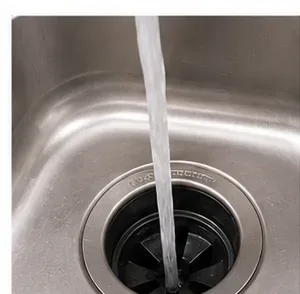
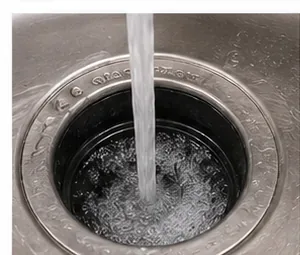
Remove dishes, utensils, drain baskets, and anything else that could fall into the opening. If you are following the InSinkErator method, start a medium stream of cold water. InSinkErator’s general operating guidance also recommends cold water before and during grinding and says to let the water run for a few seconds after grinding to flush the drain pipe.
Do not put your hand into the disposal. If you can see an object that should not be there, turn the unit off and disconnect power before attempting removal with the tool or tongs specified by the manufacturer.
For InSinkErator’s published ice method, start a medium stream of cold water before feeding ice. Other brands may specify a different sequence, so check your model manual.
2. Add a modest amount of ice gradually
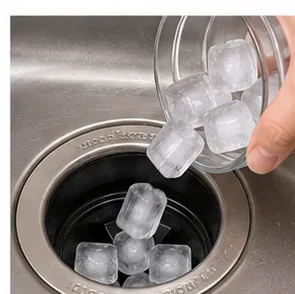
Feed ice a little at a time rather than packing the opening solid. The objective is to let the disposal process the ice while maintaining normal rotation and flushing. Ice is hard enough to knock loose some residue but softens and melts as it is ground, which is why manufacturers such as InSinkErator, GE, and Whirlpool include ice in maintenance guidance.
You do not need to believe the common “ice sharpens the blades” claim. InSinkErator describes its current system as a bladeless grind system. On that design, ice is a cleaning and freshening aid, not a sharpening treatment.
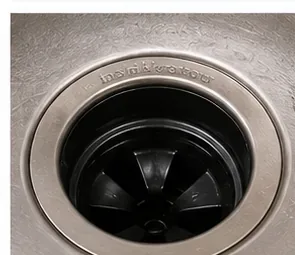
Feed ice gradually instead of dumping a large mass at once. Ice can help knock loose light residue inside the grind chamber, but it is not a fix for a mechanical jam.
3. Add citrus only if your manufacturer allows it
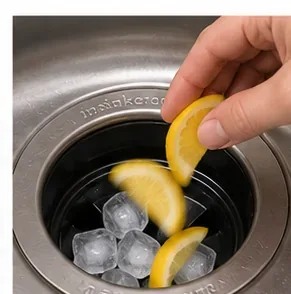
InSinkErator says ice can be mixed with lemon or lime wedges to freshen the disposal. Whirlpool also recommends a few citrus peels for odor control. Treat citrus as optional: it can improve smell, but it does not replace removal of buildup under the splash baffle.
Keep pieces small enough for your disposal’s normal feed instructions. Do not stuff the chamber with a large quantity of peel or fibrous material just because citrus is allowed in small maintenance amounts.
Lemon or lime is optional and mainly helps freshen odor. InSinkErator permits small citrus wedges with ice; do not treat citrus as a substitute for cleaning the baffle.
4. Turn on the disposal using the correct feed procedure
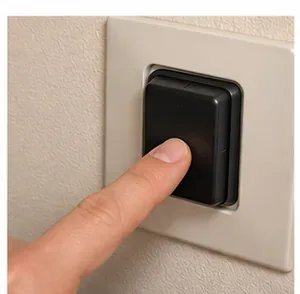
For a continuous-feed InSinkErator, the published ice method is to have the cold water running, switch the disposal on, and then feed the ice. A batch-feed model may require its stopper to be engaged before the motor can run. Follow the control sequence printed in the owner’s manual rather than bypassing a safety feature.
Keep fingers, utensils, brushes, and cleaning cloths away from the opening while the unit is energized.
Turn the disposal on only after following your model’s operating sequence. Keep hands and utensils out of the disposal opening while it is energized.
5. Let the ice process, then flush as directed
The sound will usually change as the large pieces disappear. Do not keep adding ice indefinitely. Once the load has been processed, follow your manufacturer’s flushing instruction.
InSinkErator recommends continuing a moderate flow of cold water for a few seconds after grinding is complete. Whirlpool’s current product-help guidance says to keep cold water running after use as well. GE’s model-specific ice-cleaning instructions can differ, so GE owners should use the sequence in their own manual rather than automatically copying the InSinkErator method.
Continue the manufacturer-specified water flow while the ice is being processed, then let the system flush as directed before shutting everything down.
6. Check the result with the disposal off
Turn the disposal off. The goal is normal sound and operation, no obvious food residue at the visible upper opening, and reduced stale odor. Do not expect the chamber to look polished or brand-new; ice does not scrub every hidden surface.
If the odor remains strong, InSinkErator says buildup often collects under the rubber sink baffle and along the upper lip of the grind chamber. That area needs separate cleaning.
When the disposal is off, look and listen for normal operation. Persistent odor, slow drainage, or abnormal noise points to a different problem than light chamber residue.
7. If odor remains, clean the splash baffle safely
This is the point where the ice method stops and a more complete cleaning method begins. InSinkErator’s odor instructions say to turn off the disposal and disconnect the power supply before cleaning the underside of the baffle and the inside upper lip of the grind chamber with a scouring pad. Its procedure then uses warm sink water mixed with baking soda to wash away loosened particles.
Do not reach into an energized garbage disposal. The safe sequence is power off first, physical cleaning second. If your baffle is removable, use the removal and cleaning instructions for your model.
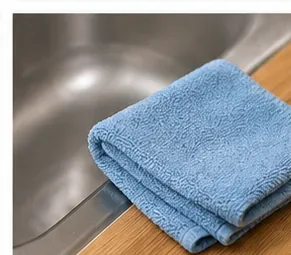
Wipe the sink rim and surrounding area after the disposal is off. If you need to clean the splash baffle itself, disconnect power first and follow the manufacturer’s directions.
8. Finish by checking the sink, drainage, and normal operation
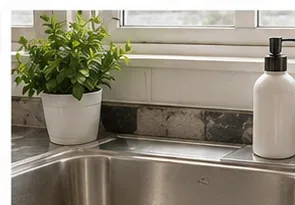
Wipe splashes from the sink rim, remove any stray citrus pieces, and make sure water drains normally. If the disposal now runs smoothly and the odor is reduced, the maintenance session is complete.
If water backs up, the motor hums without grinding, the unit trips repeatedly, or you hear metal-on-metal or other abnormal noises, stop. Those symptoms point to a jam, blockage, foreign object, or mechanical issue rather than a dirty chamber.
Routine ice cleaning is maintenance, not repair. Use it periodically if your manufacturer recommends it, and address jams, clogs, leaks, or recurring odors separately.
How much ice should you use?
There is no single universal amount that applies to every disposal. GE’s support material mentions roughly a dozen ice cubes in one of its cleaning procedures; other manufacturer pages simply say “a few” or instruct users to feed ice cubes without a fixed count. Use the amount your model documentation specifies, or use a small batch and avoid overloading.
If the disposal slows dramatically, stop adding material. Let the current load clear rather than forcing more ice into the chamber.
Cold water or no water? Why the advice conflicts
This is one of the most important details to get right. InSinkErator’s published ice method says to run a medium stream of cold water while grinding the ice. GE’s current support page for cleaning and deodorizing says to grind its ice-and-baking-soda mixture without water for that specific procedure. Both are manufacturer instructions, but they are not interchangeable.
That means the correct answer is not “always use water” or “never use water.” The correct answer is: use the procedure for the disposal you own. When the disposal is grinding ordinary food waste, both InSinkErator and other major manufacturers generally emphasize cold-water flushing, but a specialized cleaning step may have its own directions.
Should you add salt, baking soda, or citrus?
Add-in
When it makes sense
Limit
Citrus
InSinkErator and Whirlpool both allow small citrus amounts for freshening
Freshens odor; it is not a substitute for baffle cleaning
Baking soda
Used in official GE and InSinkErator cleaning procedures
Follow the brand’s exact sequence rather than improvising quantities
Salt
Appears in some household methods
It is not needed for the manufacturer-backed procedure described here
Chemical drain cleaner
Not recommended as an ice-cleaning add-in
GE warns that caustic drain cleaners can damage internal components
What ice cleaning cannot fix
A jam: If the motor hums or will not rotate, turn off power and use the maker’s jam-release method. InSinkErator manuals use a dedicated wrench on applicable models; Whirlpool likewise provides a reset and jam-clearing process. Ice should not be used as a forceful attempt to break a jam.
A clogged drain: Ice may clean chamber surfaces, but a blockage in the P-trap or downstream drain line needs plumbing troubleshooting. Adding more ice can make a backup messier.
A greasy drain line: Avoid sending fats, oils, and grease into the disposal. InSinkErator specifically tells users not to put them down the unit. Preventing grease buildup is more effective than trying to grind it away later.
Persistent odor under the baffle: This is where a power-off manual cleaning is more effective. InSinkErator itself says there are better ways to clean a disposal than the simple ice method when buildup is the real issue.
Maintenance checklist
Check your exact model manual before copying a generic ice recipe.
Use cold water when your manufacturer specifies it.
Feed ice gradually rather than packing the chamber.
Add citrus only in the amount and form your manufacturer permits.
Never put your hand into an energized disposal.
Disconnect power before manually cleaning the splash baffle or upper chamber lip.
Do not use chemical drain cleaner unless your manufacturer explicitly says it is compatible.
Treat jams, clogs, leaks, and abnormal noises as separate troubleshooting problems.
How often should you clean with ice?
Frequency depends on brand and use. GE says a few ice cubes can be run through the disposer from time to time and gives “every few weeks or so” as an example depending on usage. Whirlpool’s current Product Help recommends a monthly ice-and-citrus maintenance routine. InSinkErator describes periodic ice and citrus grinding for odor prevention without imposing one universal schedule.
If you rarely use the disposal and it stays odor-free, frequent ice cleaning may not add much. If the unit handles food waste daily, light periodic maintenance plus regular baffle cleaning may be more useful than waiting for a strong odor to develop.
Final result check
After cleaning, the disposal should start normally, sound consistent with its usual operation, drain freely, and smell neutral or at least noticeably fresher. There should be no new vibration, repeated reset trips, standing water, or metallic noise.
If those checks pass, the ice method did what it is meant to do: light maintenance. If not, switch to the appropriate next task—baffle cleaning, jam removal, drain troubleshooting, leak inspection, or service—rather than repeating ice indefinitely.