Home
» INTERNET
»
How to Clean a Grill Pan Without Damaging the Surface
How to Clean a Grill Pan Without Damaging the Surface
The safest way to clean a grill pan is to let it cool, identify the cooking surface, loosen residue with the gentlest method that works, wash between the ridges, and dry it completely. The final step depends on the material: bare cast iron should get a very thin coat of oil, while enameled cast iron and nonstick pans generally should not be treated like bare iron.
That material check matters more with grill pans than with many flat skillets because grease and browned food collect in the channels between raised ribs. Scrubbing harder is not always the answer. A stiff metal pad may remove residue quickly, but it can also scratch enamel or nonstick coating and strip seasoning from bare cast iron.
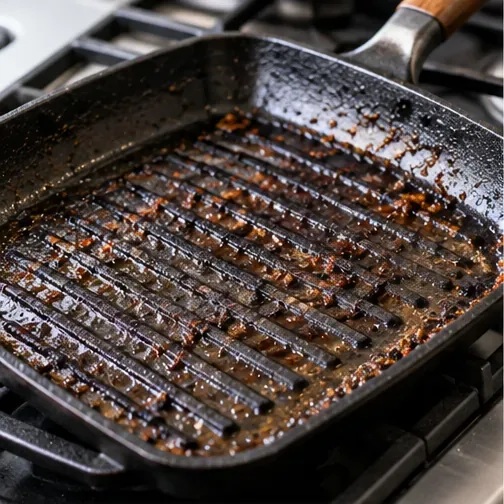
A dirty grill pan often has two separate problems: loose grease on the surface and cooked-on residue trapped between the ridges. Treat the pan according to its material before choosing a scrubber or cleaner.
First, identify what your grill pan is made of
Before adding water or reaching for a scrub pad, check the product label, manual, or manufacturer page if you still have it. Four common grill-pan surfaces need slightly different care.
Grill pan surface
Best everyday cleaning approach
Main thing to avoid
Bare seasoned cast iron
Warm water, a small amount of dish soap if needed, nylon brush or pan scraper, immediate drying, then a very thin layer of oil
Long soaking and the dishwasher
Enameled cast iron
Cool first, then warm soapy water and a soft non-abrasive sponge or brush; soaking can help stubborn residue
Thermal shock, metal scouring pads, harsh abrasives
Nonstick or ceramic-coated
Mild detergent, warm water, soft sponge or non-metal brush
Metal scrubbers, abrasive cleaners, overheating
Stainless steel
Warm soapy water for routine cleaning; baking soda and water can help with burnt-on food
Putting a very hot pan under cold water; harsh cleaners not approved by the maker
For seasoned cast iron, Lodge's current care instructions say warm soapy water is acceptable, followed by complete drying and a thin layer of oil. Lodge also warns against soaking the pan or putting it in a dishwasher because moisture can promote rust. See Lodge's official cast iron cleaning guide.
For enameled cast iron, Le Creuset instructs users to let the cookware cool to room temperature, clean it with warm soapy water and a soft non-abrasive sponge or brush, and use a warm soak for stubborn residue. Its guidance also warns against plunging hot enamel into cold water. See Le Creuset's official care and use instructions.
Step 1: Let the grill pan cool before cleaning
Do not take a smoking-hot grill pan from the burner and run cold tap water into it. Rapid temperature change can warp some metals and can damage enamel. Let the pan cool until it is safe to handle. You do not need to wait until every trace of warmth is gone; a slightly warm pan is often easier to clean because grease has not fully hardened.
If there is a pool of cooking fat, wipe out the excess with a paper towel once the pan is cool enough to handle safely. Do not pour large amounts of grease down the drain.
Step 2: Remove loose residue before you scrub
Use a silicone or wooden utensil, a manufacturer-approved pan scraper, or a nylon brush to lift large food particles from the valleys between the grill ridges. Work both along the ridges and across them so the tool reaches the corners where browned juices collect.
For bare cast iron, avoid turning this into a long soak. Lodge specifically advises against soaking seasoned cast iron. For enameled cast iron, however, a warm soapy soak is an approved way to soften stubborn residue. The difference is the protective enamel layer.
Step 3: Wash between the ridges with the right tool
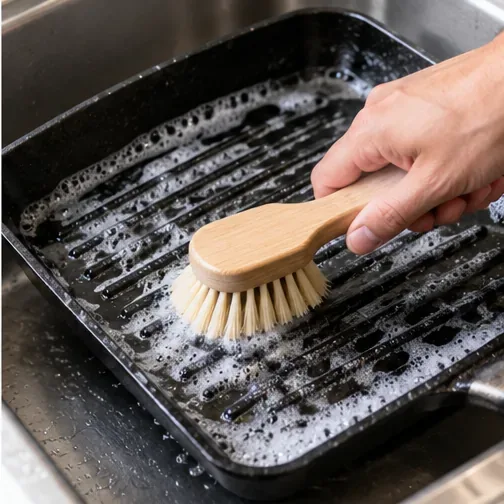
Add warm water and a small amount of mild dish detergent where the manufacturer permits it. A dish brush with medium nylon bristles is especially useful on grill pans because the bristles reach down beside each rib more easily than a flat sponge.
Use a non-metal brush to work soap and water through the channels between the raised ribs. The goal is to lift residue without scratching enamel or coated surfaces.
On bare cast iron, ordinary dish soap is not automatically off-limits. Lodge states that modern dish soap is acceptable for routine cleaning. What matters is avoiding long exposure to water, drying immediately, and maintaining the seasoning afterward.
For nonstick pans, keep the cleaning pressure light. All-Clad recommends mild detergent and a soft sponge for nonstick cookware and warns against metal scrubbers, metallic brushes, and abrasive cleaners. Its guidance is available on the All-Clad product support page.
Step 4: Treat stubborn burnt-on food according to the surface
For seasoned cast iron
Start with a nylon brush or pan scraper and warm water. If the pan is rusty rather than merely dirty, the job changes from normal cleaning to restoration. Lodge permits steel wool for rust removal, followed by washing, thorough drying, oiling, and reseasoning as needed. Do not use steel wool as your everyday cleaning tool.
For enameled cast iron
Let the cooled pan sit with warm soapy water to soften residue, then use a soft sponge or brush. Le Creuset advises against metal cleaning pads and harsh abrasive cleaning agents on enamel. Lodge's enameled cast iron guidance also recommends non-abrasive cleaning and allows a pan scraper for stuck food. See Lodge's enameled cast iron care guide.
For nonstick grill pans
Do not compensate for stuck food by switching to a harsh scrubber. All-Clad recommends a paste of equal parts baking soda and water for residue on its nonstick surfaces, used with a non-metal cleaning pad or soft brush, followed by a thorough rinse. Because coatings vary by brand, check your own manufacturer's care instructions before using any cleaner beyond mild dish soap.
For stainless steel grill pans
All-Clad's stainless steel care guide recommends warm soapy water for daily cleaning. For burnt food, it suggests adding baking soda and water, bringing the mixture to a boil, and using a wooden spoon to loosen particles. Its guide also warns against steel wool, oven cleaner, bleach-containing detergent, and putting a hot pan under cold water. See All-Clad's official care and use guide.
Step 5: Rinse, dry completely, and finish the surface correctly
Rinse away detergent and loosened debris, then dry the pan completely. Pay attention to corners, pour spouts, handle joints, and the valleys between ridges where water can remain.
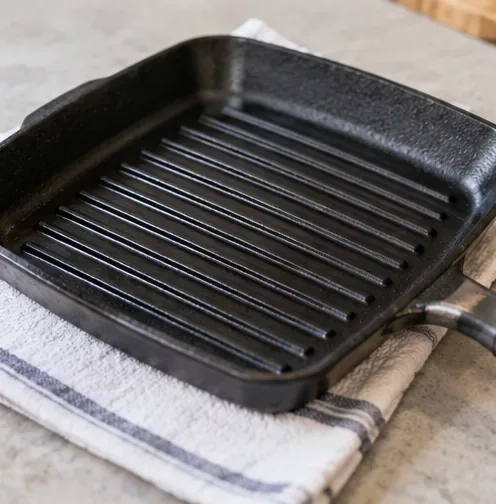
Dry the grill pan completely before storage. Moisture left in ridges and corners is especially important to remove from bare cast iron because it can lead to rust.
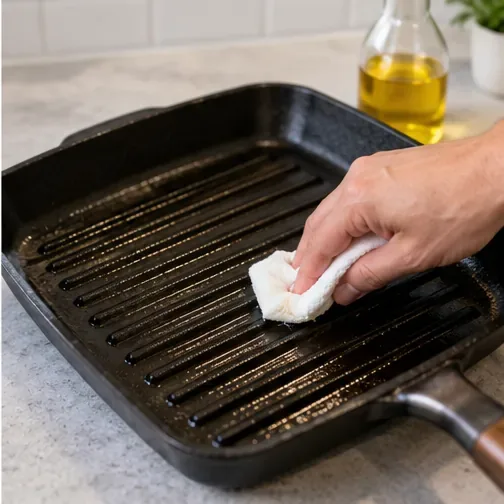
If the pan is bare seasoned cast iron, finish with an extremely thin layer of cooking oil over the cooking surface after it is dry. Wipe off visible excess. Lodge describes the correct routine as wash, dry, then oil; too much oil can leave a sticky or gummy finish.
Bare seasoned cast iron benefits from a very thin oil film after drying. Wipe away excess so the pan does not feel greasy or sticky in storage.
If the pan is enameled cast iron, stainless steel, or nonstick, do not automatically oil it as though it were bare iron. Follow the maker's instructions. Some manufacturers recommend occasional conditioning for certain nonstick surfaces, while others do not require it.
How to clean a grill pan faster after the next meal
The easiest grill pan to clean is one that never develops a thick layer of carbonized residue. A few habits make a large difference:
Use only as much cooking oil as the recipe needs; excess oil can bake onto ridges.
Do not leave sugary marinades, cheese, or sauce residue in the pan for hours after cooking.
Use low to medium heat on nonstick cookware unless the manufacturer explicitly allows more; overheating can damage the coating and make residue harder to remove.
On seasoned cast iron, dry promptly after washing instead of letting the pan air-dry while wet.
Keep a nylon brush or grill-pan scraper nearby so you are less tempted to use a metal tool.
Can you soak a grill pan?
It depends on the surface. Do not soak bare seasoned cast iron for an extended period; Lodge says soaking can lead to rust. Enameled cast iron is different: Le Creuset specifically recommends filling stubborn residue with warm soapy water and allowing it to soak. Nonstick and stainless pans may also tolerate soaking, but check the maker's instructions because handles, coatings, and construction vary.
Can you use baking soda on a grill pan?
Yes on some surfaces, but use it according to manufacturer guidance. All-Clad recommends a baking-soda-and-water paste for residue on its nonstick coating and a baking-soda-and-water boil for burnt food on stainless steel. Lodge also lists baking soda as an option for stubborn baked-on food in enameled cast iron. Do not assume that a strong abrasive baking soda scrub is appropriate for every decorative enamel or specialty coating.
Can you put a grill pan in the dishwasher?
Bare cast iron should not go in the dishwasher; Lodge warns that the dishwasher can strip seasoning and promote rust. Some enameled cast iron is technically dishwasher-safe, but Le Creuset notes that repeated dishwasher use can dull the enamel finish. Many nonstick manufacturers recommend hand washing to preserve the coating. When in doubt, the product manual should override generic advice.
What if the pan still feels sticky after cleaning?
On bare cast iron, stickiness after cleaning may come from too much oil rather than leftover food. Lodge says a sticky or gummy surface can result from excess oil buildup. Clean the pan, dry it, and use only a very thin oil film.
On nonstick cookware, a greasy or tacky feel can indicate an invisible layer of cooking residue. All-Clad recommends cleaning that residue with its baking-soda-and-water method rather than attacking the coating with a metal scrubber.
When should you stop scrubbing and replace the pan?
Cleaning can remove food, grease, stains, and surface rust, but it cannot repair a damaged coating. If a nonstick coating is peeling, flaking, or deeply scratched, check the manufacturer's replacement guidance. If enameled cast iron is chipped on the interior cooking surface, Le Creuset instructs users to stop using the product because pieces of damaged enamel could be ingested.
The simple rule to remember
A grill pan does not need aggressive cleaning; it needs the right cleaning method for its surface. Let it cool, remove loose residue, use warm water and a non-damaging brush or sponge, escalate only when needed, and dry thoroughly. Then give bare cast iron a whisper-thin coat of oil while leaving enamel, stainless, and nonstick finishes to their manufacturer-specific care routines.
If you follow that sequence, you can remove the burnt bits trapped between the ridges without trading one problem for another—such as rust, scratched enamel, a damaged nonstick coating, or a sticky layer of excess oil.