Home
» INTERNET
»
How to Clean a Grill With an Onion: When It Works and When You Need More
How to Clean a Grill With an Onion: When It Works and When You Need More
Cleaning a grill with an onion is a real manufacturer-supported technique, but it is best understood as a quick grate-cleaning option, not a complete substitute for every grill-maintenance method. Traeger specifically recommends rubbing half an onion or lemon along grill grates because the acidity can help loosen stuck-on food. It also suggests coarse salt as an optional abrasive aid. For heavy grease, carbon buildup, or a full seasonal clean, grill makers still recommend purpose-built scrapers, brushes, degreasers, or warm soapy water depending on the grill and grate material.
The practical choice therefore depends on your goal. If you want a fast, bristle-free way to loosen light residue before or after cooking, an onion can be useful. If the grate has thick black deposits, sticky grease below the grate, rust, or clogged components, use the deeper-cleaning method specified for your grill.
Onion vs. Brush vs. Scraper vs. Deep Cleaner
Method
Best for
Main advantage
Main limitation
Half an onion
Light to moderate stuck-on food on grates
Simple, bristle-free, food-based option
Not a complete degreasing or deep-cleaning method
Nylon or bristle-free scraper/brush
Routine residue and more stubborn deposits
More mechanical cleaning power
Must match the grill maker's surface and temperature guidance
Wire-bristle grill brush
Grates where the manufacturer approves it
Strong scraping action
Loose bristles can become a food-safety hazard; inspect carefully
Manufacturer-approved cleaner or soapy-water clean
Heavy grease and periodic deep cleaning
Better at grease and broad surface cleaning
Usually requires a cool grill, more time, rinsing, and drying
Traeger's official grill-rust prevention and cleaning guidance specifically lists onion as a grate-cleaning hack and says its acidity can loosen stuck-on messes. Traeger's grill-cleaning support page also lists onion among household cleaning options while recommending a grate scraper or nylon-bristle brush for routine cleaning.
Step 1: Check Your Grill's Cleaning Instructions and Heat the Grates Only If Appropriate
Before turning on the grill, check the owner's manual or support page for your specific grill. Manufacturers do not all give identical temperature instructions for grate cleaning. Traeger says food residue is easiest to scrape from its grill grates while the grill is still hot. Weber likewise instructs owners of some models to heat the grate so fats and juices carbonize and become easier to remove.
Other manufacturers or particular models may tell you to clean cooking surfaces after they cool. For example, a Char-Broil use-and-care manual for one product line says it does not recommend cleaning the cooking surfaces while the grill is hot. That difference is why “always scrub a blazing-hot grate” is not a universal rule.
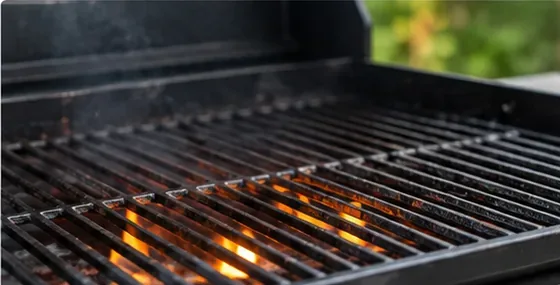
If your grill's instructions support hot-grate cleaning, preheat or use the residual heat after cooking so stuck-on food loosens. Keep the lid and burner settings consistent with the manufacturer's procedure. You do not need to make the grate hotter than the grill maker recommends merely because you are using an onion.
Use heat to loosen grate residue only when your grill's care instructions support cleaning the grates hot or warm.
Step 2: Cut a Fresh Onion in Half and Choose a Safe Holder
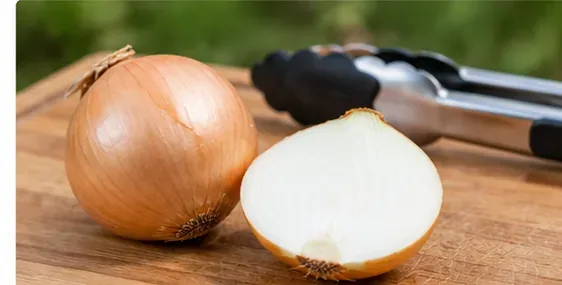
Cut a fresh onion crosswise so you have a broad, flat cut surface. A yellow or white onion is easy to hold and provides a large cleaning face; Traeger's guidance does not require a special onion variety.
Do not hold the onion in your bare fingers over a hot grill. Grip it firmly with long-handled tongs, or use another heat-safe holder that keeps your hand away from the grate. The onion will soften and char as it contacts the hot metal, so a secure grip matters more than trying to preserve the onion.
Traeger suggests that you can dip the cut onion or lemon in a little coarse salt for added abrasion. Treat that as an optional technique rather than a requirement. If your grate has a delicate coating or your manual cautions against abrasive materials, skip the salt and use the plain onion.
Use a fresh onion half with a wide cut face and long-handled tongs so your hand stays well away from the heated grate.
Step 3: Rub the Cut Side Across the Grates
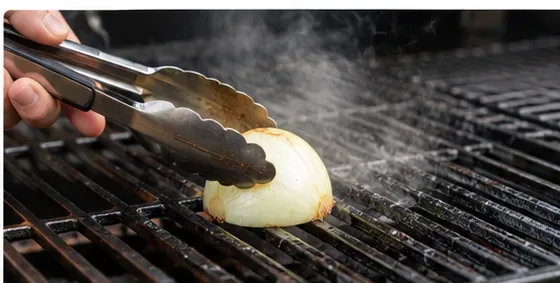
Place the cut side of the onion against the grate and move it back and forth along the bars. Apply enough pressure to contact the stuck-on residue without forcing the onion into gaps or breaking it apart. Work section by section so you can see whether food particles are loosening.
This is where the onion method has a clear tradeoff. The moist, acidic cut surface can help loosen residue, and the onion itself acts as a disposable rubbing surface. It also avoids the loose-wire-bristle issue associated with damaged wire grill brushes. The U.S. Department of Agriculture's Food Safety and Inspection Service notes that injuries have been reported from accidentally ingesting wire grill-brush bristles and advises users of wire brushes to inspect the grill surface carefully for stray bristles or consider other cleaning products and methods. See the USDA FSIS wire grill-brush safety guidance.
What the onion method does not establish is sanitization. The manufacturer sources reviewed for this guide describe onion as a way to loosen stuck-on messes; they do not present an onion as a food-surface sanitizer. Food safety still depends on clean utensils, avoiding cross-contamination, and cooking foods to safe internal temperatures.
Rub the cut side along the grate bars to loosen stuck-on food while keeping your hands away from the hot surface.
Step 4: Inspect the Grate and Decide Whether the Onion Was Enough
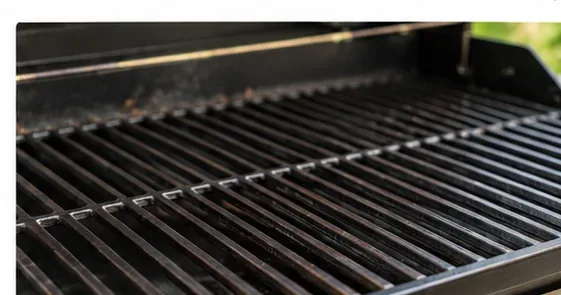
Stop when the grate is free of loose food particles and the remaining surface looks like normal seasoning or discoloration rather than removable debris. If the onion has shredded, remove visible onion pieces before cooking.
If thick deposits remain, switch methods rather than rubbing indefinitely. Traeger recommends a wood scraper or nylon-bristle grill brush for grate cleaning and an all-natural degreaser for tougher grease. Weber recommends purpose-built brushes for its grates, while Char-Broil instructions for some models call for warm soapy water or a baking-soda-and-water solution and nonabrasive cleaning for stubborn stains.
If you use a wire-bristle brush because your grill manufacturer recommends one, inspect both the brush and cooking surface before food goes onto the grate. Weber's current brush warnings say to check for loose or broken bristles and to make sure the cooking surface is free of bristles before cooking. USDA gives the same basic safety concern from the food-safety side.
After the onion pass, inspect the grate for remaining food debris, heavy grease, or any foreign material before deciding whether deeper cleaning is needed.
When the Onion Method Is a Good Choice
You want a quick pre-cook or post-cook grate cleanup.
The residue is mainly stuck-on food rather than thick grease throughout the cookbox.
You prefer a bristle-free rubbing method.
You have a fresh onion available and do not need a dedicated cleaner.
Your grill's instructions allow cleaning the grate at the temperature you plan to use.
For these situations, onion cleaning is low-effort and easy to repeat. It is especially useful as a maintenance habit that prevents light residue from becoming a larger job.
When a Scraper, Brush, or Deep Clean Is Better
Choose a stronger method when you see heavy carbon buildup, grease coating areas below the cooking grate, clogged drain paths, significant smoke from old residue, or performance problems linked to poor maintenance. An onion only contacts the top and sides of the grate bars; it cannot clean the entire grill interior.
Traeger recommends periodic deeper cleaning with a cleaner/degreaser after the grill has cooled. Napoleon's official grill cleaner for grids and barbecue interiors is designed to loosen stubborn grease and residue, followed by gentle scrubbing and wiping or rinsing. Weber similarly publishes separate procedures for cooking grates, cookboxes, lids, burners, and exterior surfaces. Those are broader maintenance jobs than rubbing the cooking grate with an onion.
If your goal is a seasonal teardown or grease-management clean, choose the manufacturer-approved deep-clean procedure rather than trying to make the onion method do a job it was not designed for.
Does an Onion Replace Seasoning the Grates?
No manufacturer source reviewed here supports onion rubbing as a substitute for seasoning where seasoning is required. Traeger's rust-prevention guidance separately recommends vegetable oil for seasoning and protection after cleaning. Onion is presented as a cleaning aid, not as the protective oil layer itself.
If you have bare cast iron or another surface that requires oiling after cleaning, follow the oiling or seasoning directions for that grill. Porcelain-enamel and stainless-steel grates can have different care requirements, so do not apply a cast-iron routine automatically.
Common Mistakes to Avoid
Assuming “Natural” Means It Can Replace Every Cleaner
An onion can loosen stuck-on food, but it is not a complete degreaser for the cookbox, drip system, or heavily carbonized surfaces. Use it for the job it performs well, then escalate when the residue requires more cleaning power.
Holding the Onion by Hand Over Hot Grates
The onion method should not put your fingers near heated metal. Use long-handled tongs or another appropriate heat-safe holder.
Using an Onion on a Grill Without Checking the Manual
The onion itself is simple, but grill surfaces and cleaning-temperature instructions vary. Verify whether your grill should be cleaned hot, warm, or cool and whether the grate has a coating that limits abrasive cleaning.
Treating Onion Juice as a Sanitizer
The official grill-cleaning sources reviewed support onion as a residue-loosening method, not as a sanitizing claim. Keep normal food-safety practices in place.
Ignoring Heavy Grease Below the Grates
A clean-looking grate can sit above a dirty cookbox or grease system. Follow your grill's periodic-maintenance schedule for internal components.
Quick Recommendation by Need
Your goal
Recommended approach
Fast cleanup of light stuck-on food
Half an onion on appropriately heated grates
Bristle-free routine cleaning with more leverage
Manufacturer-approved wood scraper or nylon/bristle-free brush
Heavy grate buildup
Approved brush, scraper, or grate-cleaning procedure for that surface
Grease inside the grill body
Cool the grill and follow the manufacturer's deep-cleaning procedure and approved degreaser
Using a wire brush
Only where permitted; inspect the brush and grate carefully for loose bristles before cooking
Final Check Before You Start Cooking
Look across the entire grate in good light. There should be no loose chunks of old food, shredded onion, cleaner residue, or foreign material. If you used a wire brush, check carefully for loose bristles. If the grate still has a thick sticky or flaky layer, the onion pass was not enough; move to the stronger method recommended for your grill.
The onion technique is best viewed as one tool in a cleaning toolkit. Choose it when you want a quick, bristle-free way to loosen ordinary grate residue. Choose a scraper or brush when you need more mechanical force, and choose a proper deep clean when grease and carbon have moved beyond the cooking surface. That tradeoff-based approach keeps the method useful without asking a half onion to solve every grill-cleaning problem.