Finding head lice can make an ordinary hairbrush feel like something that needs to be sterilized, sprayed, or thrown away. In most cases, the practical answer is much simpler. The U.S. Centers for Disease Control and Prevention (CDC) recommends soaking combs and brushes used by an infested person in hot water at least 130°F for 5 to 10 minutes. That targeted step matters more than aggressive whole-house cleaning.
The important questions are whether the brush can safely tolerate that temperature, whether it has been cleared of trapped hair first, and whether the person with lice is also being treated correctly. Cleaning a brush can help reduce the chance of re-exposure, but it does not treat lice on the scalp.
Do You Need to Throw Away a Hairbrush After Lice?
Usually, no. For a conventional plastic or metal comb or brush that can tolerate hot water, the CDC gives a straightforward disinfestation method: soak it in water that is at least 130°F for 5 to 10 minutes. The CDC's Treatment of Head Lice page, updated November 12, 2024, lists this as an additional measure to help avoid reinfestation.
Replacement becomes more reasonable when the brush cannot safely be submerged or exposed to that temperature. Examples can include some wooden brushes, glued or cushioned designs, natural-bristle brushes with delicate construction, and powered or heated styling brushes. The CDC does not provide one universal substitute disinfection method for every heat-sensitive brush. In that situation, follow the manufacturer's cleaning instructions. If you cannot verify a safe way to clean it, replacing the brush is a more defensible choice than improvising with pesticides, harsh chemicals, or boiling water.
What Should You Do Before Soaking the Brush?
Stop sharing the brush immediately and remove as much trapped hair as you reasonably can. Head lice spread mainly through direct head-to-head contact, while sharing personal items such as combs and brushes is a less common route. The CDC still advises against sharing brushes and combs during an infestation, so keep the exposed brush separate until it has been cleaned.
Step 1: Remove Hair and Visible Debris
Pull out loose strands with your fingers or use a clean wide-tooth comb or another simple tool to lift hair from between the bristles. Removing the hair first makes the brush easier to inspect and allows the hot water to contact the brush surfaces rather than leaving a dense mat of hair wrapped around the bristles.
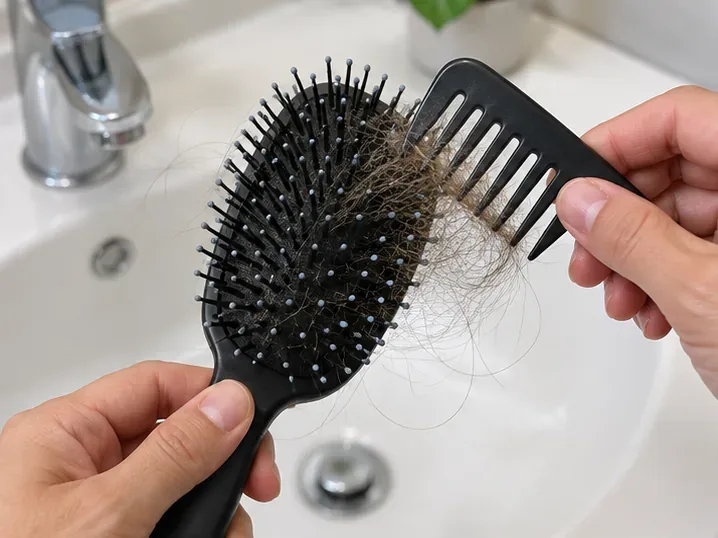
Caption: Remove trapped hair from the bristles before the hot-water soak so the brush is easier to clean and inspect.
How Hot Should the Water Be, and How Long Should the Brush Soak?
The CDC specifies hot water of at least 130°F for 5 to 10 minutes. You do not need boiling water. If you use a thermometer, measure the water itself rather than guessing based on steam or tap position. A heat-safe bowl or container large enough for the bristle area is useful.
Be careful when handling hot water. Children should not perform this step. Also confirm that the brush is designed to be immersed in water. If the brush is powered, contains electronics, or the manufacturer warns against soaking, do not submerge it.
Step 2: Soak a Heat-Safe Brush for 5 to 10 Minutes
Place the brush in the hot water so the bristles and areas that contacted hair are thoroughly exposed. Keep the water at or above the CDC minimum of 130°F during the soak as practical. A 5- to 10-minute soak is the CDC-recommended range; extending the time far beyond that is not necessary to follow this guidance.
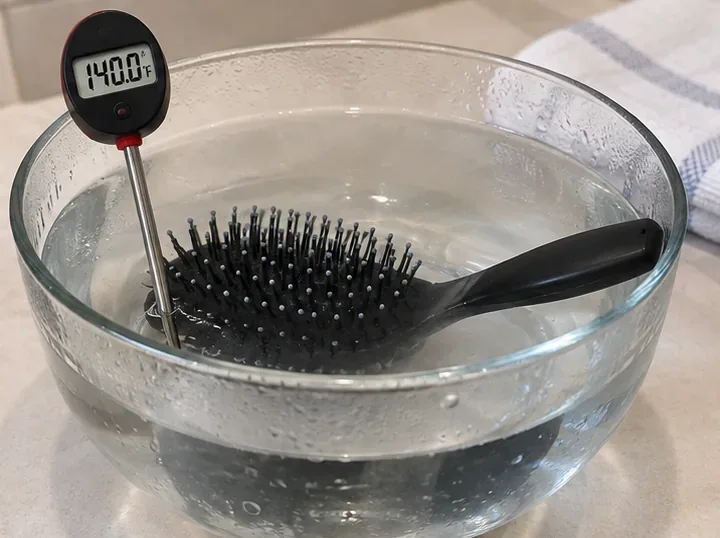
Caption: A heat-safe brush is soaked in hot water above the CDC minimum of 130°F for the recommended 5 to 10 minutes.
Should You Use Bleach, Alcohol, Lice Spray, or Boiling Water?
None of those is required to follow the CDC's brush-cleaning guidance. The CDC specifically advises against fumigant sprays and fogs for head lice because they are not necessary and can be toxic if inhaled or absorbed through the skin. Its recommended method for combs and brushes is hot water, not household pesticide treatment.
Boiling water is also unnecessary. It can deform plastic, loosen adhesive, damage cushioning or bristles, and create an avoidable burn hazard. If 130°F water would damage your brush, that is a sign to check the manufacturer's care instructions or replace the brush rather than escalating to a harsher method.
Step 3: Remove the Brush Carefully and Let Excess Water Drain
After 5 to 10 minutes, remove the brush carefully, keeping hands away from hot water. Let excess water drain onto a clean towel. At this point, the lice-related hot-water step is complete; the remaining work is ordinary brush care and drying.
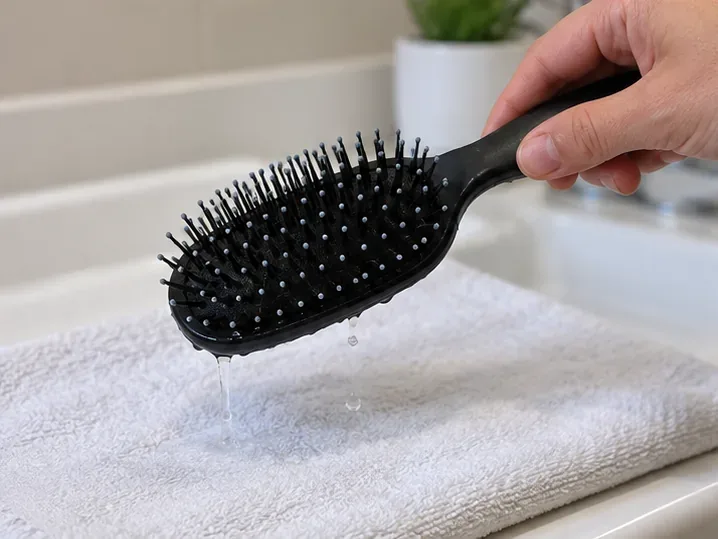
Caption: After the timed soak, let the brush drain over a clean towel and cool before handling it normally.
When Is the Hairbrush Ready to Use Again?
Let the brush air-dry completely in a clean area, especially if water can collect around a cushioned base or inside a hollow handle. Drying is not a substitute for the CDC's timed hot-water soak, but it helps prevent ordinary moisture-related problems and gives you a chance to inspect the brush for warping, loosened bristles, cracked plastic, or trapped hair.
Step 4: Air-Dry and Store the Brush Separately Until Treatment Is Underway
Place the brush on a clean towel with good airflow and keep it separate from other family brushes. Once it is dry, intact, and has completed the hot-water soak, it can return to normal use. Do not resume sharing personal hair tools while an active infestation is being treated.
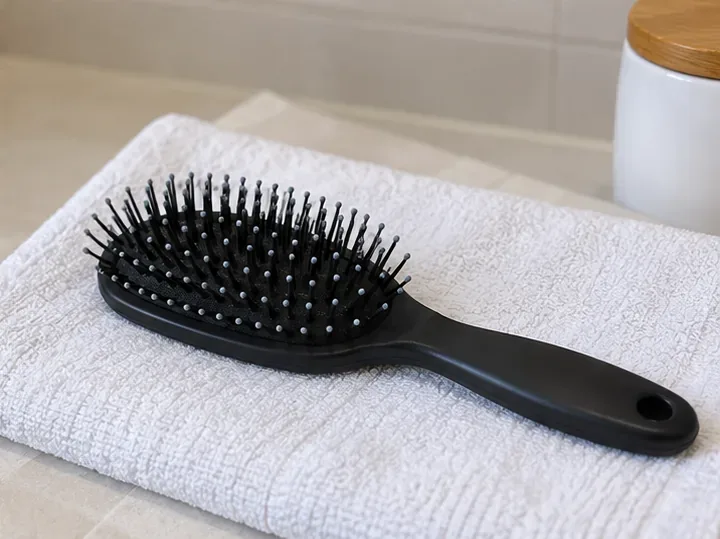
Caption: Let the cleaned brush dry fully on a clean towel before returning it to regular use.
What If the Brush Cannot Be Submerged?
This is the main situation where a simple universal answer is not available. The CDC's public guidance gives the hot-water method for combs and brushes but does not publish a single alternative procedure that is safe for every wooden, delicate, glued, cushioned, or electronic brush.
Check the care instructions from the brush manufacturer. If those instructions allow a cleaning method that is compatible with the brush, follow them. If the brush was used heavily during an active lice infestation and there is no manufacturer-approved way to clean it at the CDC-recommended temperature, replacement may be the simpler option. Do not spray an electrical brush with lice pesticide or immerse a powered brush unless its manufacturer explicitly states that it is safe to do so.
Do You Need to Deep-Clean the Entire House Too?
No. The CDC says head lice do not survive long after falling off a person because they cannot feed. Its current guidance recommends focusing on items used by the infested person during the two days before treatment, while noting that the risk from lice that have fallen onto rugs, carpets, or furniture is very small. It also says that spending a lot of time and money on housecleaning is not necessary.
For context, the CDC recommends washing and drying recently used clothing, towels, and bed linens with hot water and high heat, and vacuuming areas where the infested person sat or lay. You can review those measures on the CDC's About Head Lice page. The goal is targeted cleaning, not turning the home into a decontamination project.
How Can You Check That You Did the Brush-Cleaning Step Correctly?
Use a simple result check rather than relying on how “sterile” the brush looks. A successful brush-cleaning routine should meet all of these points:
- The brush was no longer being shared once lice were identified.
- Trapped hair and visible debris were removed as much as practical.
- The brush was confirmed to be safe for hot-water immersion.
- The water was at least 130°F.
- The brush soaked for 5 to 10 minutes.
- The brush was allowed to cool, drain, and dry in a clean area.
- The brush was checked for damage before reuse.
If you could not meet the temperature or immersion requirement because of the brush's materials or construction, do not assume a quick wipe is equivalent to the CDC method. Follow the manufacturer's instructions or replace the brush.
Does Cleaning the Hairbrush Mean the Lice Problem Is Solved?
No. Cleaning the hairbrush is only an environmental support step. The person with head lice still needs appropriate treatment. The CDC notes that over-the-counter and prescription medications are available and that treatment directions should be followed carefully. Its head lice treatment guidance also explains retreatment timing, combing considerations, and reasons treatment can fail.
If you are not sure whether what you found is actually head lice, or if live lice continue after correctly used treatment, consult a healthcare professional. The CDC's care guidance for head lice explains how to check the scalp and when household members should be examined.
Bottom Line
For a washable, heat-safe hairbrush exposed to head lice, the clearest evidence-based approach is uncomplicated: remove trapped hair, soak the brush in water at least 130°F for 5 to 10 minutes, let it drain and dry, and keep it from being shared while treatment is underway. Avoid unnecessary pesticide sprays, foggers, and extreme cleaning measures. If the brush cannot safely tolerate the CDC method, use the manufacturer's verified care instructions or replace it rather than guessing.