Home
» INTERNET
»
How to Clean a Hydro Flask Straw Lid: Hand Wash, Dishwasher, or Deep Clean?
How to Clean a Hydro Flask Straw Lid: Hand Wash, Dishwasher, or Deep Clean?
Hydro Flask’s current Flex Straw Cap pages still point to the same core care routine: removable parts, hot soapy water, top-rack dishwasher cleaning, complete drying, and careful reassembly. The company’s cap-specific cleaning guide, published August 28, 2024, shows the sequence in detail, while the current Wide Mouth Flex Straw Cap listing continues to describe the components as removable and dishwasher safe. For most owners, that means you do not need a complicated cleaning hack; the real choice is how much control, convenience, and detail cleaning you want.
This guide focuses on the bottle-style Hydro Flask Flex Straw Cap, which many people casually call a “straw lid.” Hydro Flask also sells Press-In Straw Lids for tumblers, and those have a different shape and part layout. If your lid is a press-in tumbler lid rather than a screw-on Flex Straw Cap, use the care directions for that exact product.
The short answer: choose the cleaning method by what you need
Method
Best for
Main advantage
Main tradeoff
Hand washing
Routine cleaning and careful inspection
You can target the seal, straw, nozzle, and grooves directly
Takes more hands-on time
Top-rack dishwasher
Convenience when parts are otherwise in good condition
Least manual effort
Small parts can be easier to misplace unless secured
Brush-assisted deep cleaning
Residue inside the straw or hard-to-reach crevices
Reaches narrow passages that a sponge cannot
Requires a straw/detail brush and a little more time
Hydro Flask specifically says the Flex Straw Cap can be cleaned with hot, soapy water and is top-rack dishwasher safe. Its official Flex Straw Cap cleaning guide also recommends a straw brush and detail cleaner when you want a deeper clean.
What you need
Warm or hot water suitable for hand washing
Mild dish soap
A clean soft brush or sponge
A narrow straw brush for the inside of the straw, if needed
A small detail brush for crevices, if needed
A clean drying rack or towel
You do not need a branded cleaning kit. However, Hydro Flask’s current Straw Cleaning Set confirms the type of tools the manufacturer considers useful: a narrow straw brush for the tube and a detail cleaner for cap and lid crevices.
Step 1: Take the straw lid apart
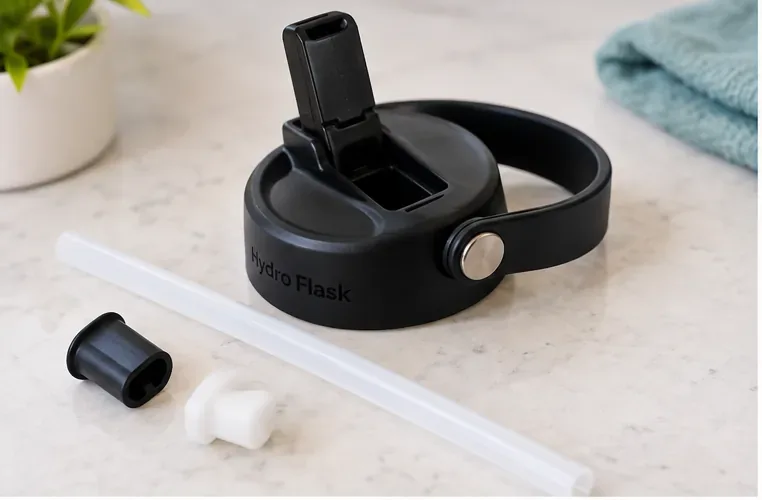
Open the straw nozzle. Pull the long straw off the underside of the lid, then remove the silicone seal by its pull tab. Hydro Flask’s official guide describes the seal as red on the current Flex Straw Cap, although color can vary across generations or markets. The important point is to separate the removable pieces rather than trying to wash the whole assembly as one unit.
Disassembly gives you two benefits. First, soapy water can reach surfaces that are hidden when the straw and seal are installed. Second, you can inspect the parts for residue, deformation, or damage before putting everything back together.
The lid, straw, and removable small parts are separated so water and soap can reach the areas that are hidden during normal use.
When you might stop here
If you only rinsed the bottle after plain water and the parts look clean, a quick hand wash is usually the most controlled option. If you see residue in the nozzle, inside the straw, or around the seal channel, plan on using a brush in Step 3.
Step 2: Wash every removable part with soapy water
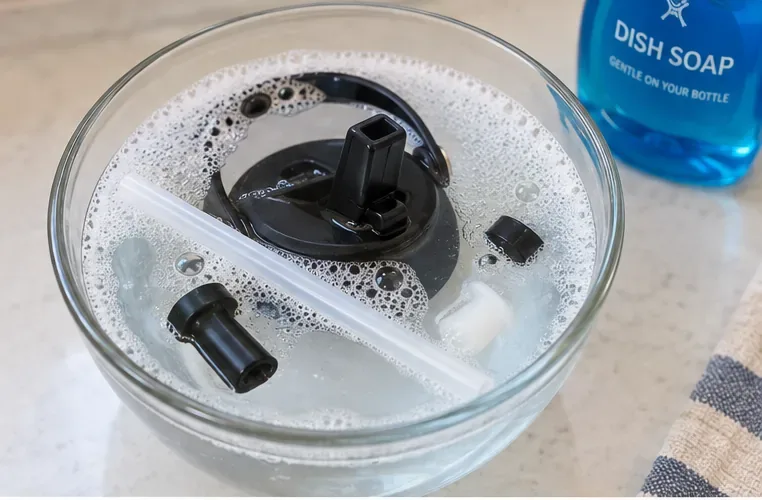
Wash the cap, straw, seal, and other removable pieces in hot, soapy water. Work soap around the underside of the lid, the hinge area of the straw nozzle, the seal channel, and the connection point where the straw meets the cap.
For hand washing, the advantage is visibility: you can keep scrubbing until the surfaces no longer feel slick and no visible residue remains. The tradeoff is time. For people who use the bottle daily and want the quickest routine, the top rack of the dishwasher is a valid manufacturer-approved alternative for the Flex Straw Cap.
Warm soapy water loosens residue on the lid, straw, seal, and other removable pieces before rinsing.
Hand wash or dishwasher?
Choose hand washing when you want to inspect every surface, when only one bottle needs cleaning, or when you are targeting a specific spot. Choose the dishwasher when convenience matters more and the parts are already free of stubborn buildup. Hydro Flask says to separate straws, caps, and lids and place them on the top rack. Its broader cleaning guidance also says to avoid dishwasher detergents containing bleach or chlorine. See Hydro Flask’s official bottle cleaning guidance for that recommendation.
Step 3: Brush the straw and tight crevices when needed
A straw can look clean from the outside while still holding residue along the inner wall. If water flow seems reduced, the straw has been used with flavored drinks, or you can see residue inside, run a narrow straw brush all the way through the tube. Rinse the brush between passes.
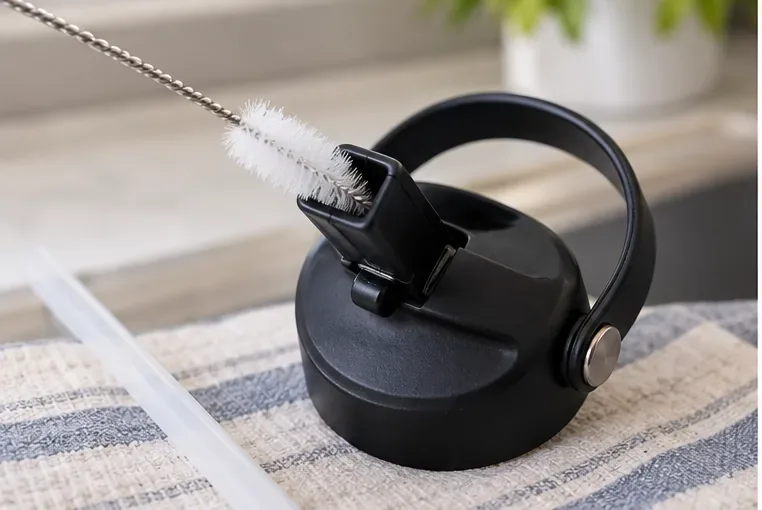
Use a smaller detail brush around grooves and the drinking opening. The goal is contact with surfaces that a sponge cannot reach, not aggressive scraping. A soft nylon brush is usually a better fit than a sharp pick because it can follow the shape of the passage without gouging plastic or silicone.
A narrow brush reaches the drinking passage and other tight areas that are difficult to clean with a sponge alone.
Is a deep clean always necessary?
No. A brush-assisted clean is most useful when routine washing leaves residue behind or when the inside of the straw needs direct contact. For everyday water use, regular disassembly plus soapy water may be enough. This is a good example of the tradeoff: the brush adds cleaning reach, but it also adds another tool to store and clean.
Step 4: Rinse, dry completely, and reassemble
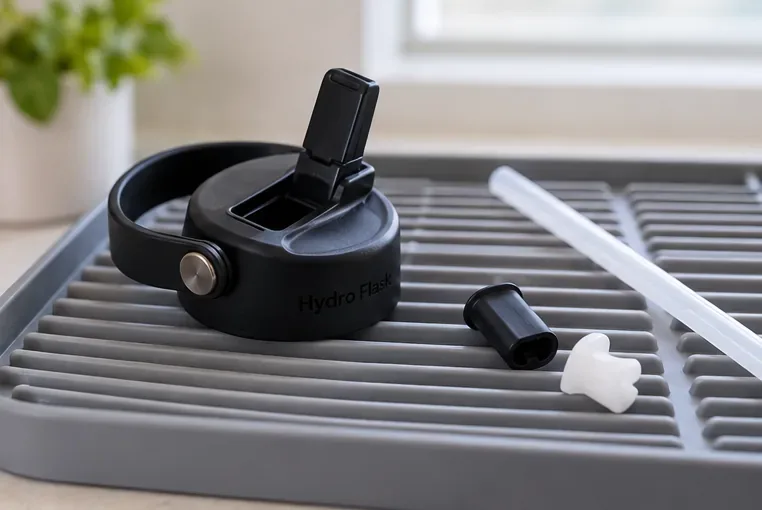
Rinse every part thoroughly so no soap remains. Then let the cap, straw, and seal dry completely before reassembly. Hydro Flask’s cap-specific instructions explicitly call for complete drying before the seal is pressed back into the cap.
Once dry, press the silicone seal back into its seat. Then hold the straw near its flat tip and push it firmly into the seal until it is fully inserted. Check that the straw is straight, the seal sits evenly, and the drinking nozzle opens and closes normally.
Dry the lid, straw, and seal as separate pieces before reassembly so hidden surfaces are not trapped while still wet.
Which cleaning option is best for your situation?
If you only drink water
Start with disassembly and a simple hand wash. It gives you good control with minimal setup, and you can quickly confirm that the straw and seal are clear. A dishwasher cycle is also reasonable when you are already running a load and can keep the small parts secure on the top rack.
If you use flavored drinks
Choose hand washing plus a straw brush more often. Flavorings and other beverage ingredients can leave more noticeable residue than plain water, especially inside a narrow straw. Cleaning soon after use is easier than waiting for residue to dry.
If convenience matters most
The top-rack dishwasher is the easiest choice because Hydro Flask specifically approves it for the Flex Straw Cap. Separate the components first rather than dropping the intact lid into the machine. Small parts should be positioned so they cannot fall through the rack.
If you are dealing with stubborn residue or odor
Use a brush-assisted clean first. Rewash the components with hot, soapy water, brush the straw interior and cap crevices, rinse thoroughly, and let everything dry completely. If a part remains damaged, permanently distorted, or impossible to seat correctly after cleaning, replacement is more practical than forcing it back into service.
What should you avoid?
Do not treat the Flex Straw Cap as a hot-drink lid. Hydro Flask’s current Wide Mouth Flex Straw Cap product page states that it is not intended for hot liquids.
Avoid bleach- or chlorine-containing dishwasher cleansers. Hydro Flask explicitly cautions against them in its cleaning guidance.
Do not reassemble the lid while the hidden parts are still wet. Complete drying is part of Hydro Flask’s own cap-cleaning sequence.
Do not assume every Hydro Flask “straw lid” is the same. Press-In Straw Lids for tumblers use a different construction than the screw-on Flex Straw Cap.
How often should you clean it?
Hydro Flask’s Flex Straw Cap article uses a week of daily water use as its example for when the cap is ready for a refresh, and it recommends cleaning regularly so residue is removed. That is a useful baseline rather than a universal schedule. If you use anything other than plain water, see visible residue, notice an odor, or the straw feels sticky or slow, clean it sooner.
A practical routine is to inspect the lid every time you refill or wash the bottle. If the seal area, straw connection, and drinking opening look clean, a normal wash may be enough. If not, take the extra minute to disassemble and brush the narrow areas.
Frequently asked questions
Can a Hydro Flask straw lid go in the dishwasher?
For the current Flex Straw Cap, yes. Hydro Flask says the cap is dishwasher safe and its cleaning guide specifies the top rack. Separate the parts first so water can reach them and so small components can be secured.
Do I have to remove the silicone seal?
For the Flex Straw Cap cleaning procedure, Hydro Flask says to remove the seal by its tab before washing. That exposes the area underneath and lets the seal dry independently.
Do I need a special Hydro Flask brush?
No. The manufacturer sells a straw cleaning set because the shapes are useful, not because the brush has to be proprietary. Any appropriately sized, clean, soft straw brush can serve the same mechanical purpose.
What if my lid still smells after washing?
Disassemble it again and focus on the straw interior, seal channel, nozzle, and connection points. Rinse well and allow every piece to dry separately. Persistent odor after a thorough wash can be a sign that residue is still hiding in a narrow passage or that a worn component is no longer cleaning easily.
Bottom line
There is no single “best” way to clean a Hydro Flask straw lid for every owner. Hand washing gives the most control, the top-rack dishwasher gives the most convenience, and a straw/detail brush gives the best access to narrow passages. Whichever route you choose, the manufacturer-backed fundamentals are the same: take the Flex Straw Cap apart, clean all removable pieces, rinse them thoroughly, let them dry completely, and reassemble them carefully.