Home
» INTERNET
»
How to Clean a lululemon Yoga Mat Without Damaging the Grip
How to Clean a lululemon Yoga Mat Without Damaging the Grip
A lululemon yoga mat can start feeling grimy long before it looks dirty. After hot yoga or a sweaty flow, you may notice handprints, a slightly oily film, a musty smell, or a surface that does not feel as clean and grippy as it did when new. The temptation is to scrub harder, soak the mat, or reach for a strong disinfectant. With current lululemon mats, that can be the wrong direction.
As of September 12, 2026, lululemon's current care instructions for The Mat 5mm and The Mat 3mm say to wipe the mat clean with a damp cloth, use a natural cleanser after practice, make sure the mat is dry before rolling it, and store it out of direct sunlight. The current product care section also says not to wash or bleach the mat and to lay it flat to dry. You can verify those instructions on the official lululemon The Mat 5mm product page and the official lululemon The Mat 3mm product page.
Why does a lululemon yoga mat get dirty so quickly?
The top surface on current versions of The Mat is designed to absorb moisture so you can maintain grip during sweaty practice. That is useful during yoga, but it also means perspiration, skin oils, dust, lotion residue, and floor debris can remain on the surface after class. If the mat is rolled while still damp, moisture can stay trapped between layers and contribute to odor.
Current The Mat models use a combination of natural rubber, synthetic rubber, polyurethane, polyester, and nylon. lululemon also says these mats contain an antimicrobial additive intended to inhibit bacteria and mold. That does not make routine cleaning unnecessary; it simply means the material system has an additional protective feature.
If your mat is new rather than dirty, a rubber-like smell can also be normal. lululemon notes that the initial odor should fade and suggests unrolling the mat and airing it out before use.
What do you need?
Keep the setup simple. The current manufacturer guidance does not require a complicated homemade solution.
A soft, clean microfiber or lint-free cloth
Clean water for dampening the cloth
A natural cleanser that is suitable for yoga-mat materials, if plain damp wiping is not enough
A clean indoor area where the mat can lie flat and dry away from direct sunlight
One important limitation: lululemon's current product pages use the phrase “natural cleanser,” but they do not publish a specific DIY recipe or mixing ratio. That means there is no manufacturer basis for assuming that popular internet mixtures involving vinegar, alcohol, essential oils, baking soda, or other household chemicals are automatically safe for every lululemon mat. If you use a cleaner beyond water, follow the cleaner manufacturer's compatibility directions and test a very small, inconspicuous area first.
Step 1: Wipe the mat after practice
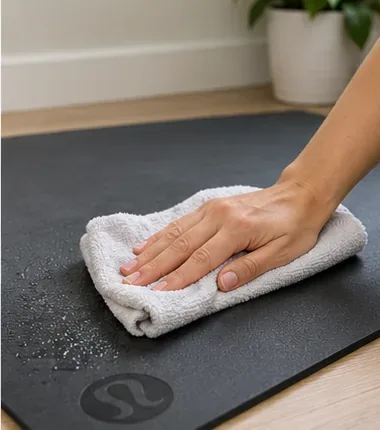
Start with the easiest treatment. Unroll the mat fully on a clean floor. Dampen a soft cloth with clean water and wring it out so it is moist rather than dripping. Wipe the practice surface with broad, overlapping passes. Pay extra attention to the areas where your hands, feet, forehead, or knees usually make contact.
You do not need to flood the surface. The goal is to lift fresh sweat and surface residue before it dries into a film. If one side of your mat was on a dusty studio floor, flip the mat and wipe that side separately with a clean section of the cloth.
Step 1: Wipe the mat with a soft damp cloth, using light pressure across the surface.
Step 2: Treat stubborn sweat or oily residue gently
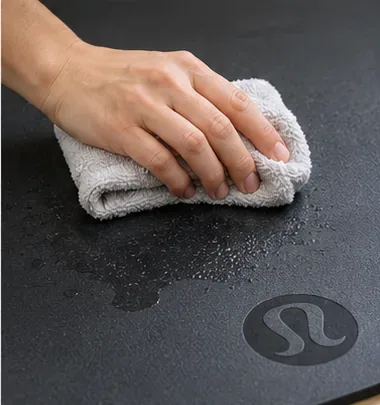
If a damp cloth leaves behind a visible handprint, oily patch, or sticky-feeling area, move to the next level rather than scrubbing aggressively. lululemon's current care instructions permit a natural cleanser. Use only enough product to help loosen residue, then wipe the area with a soft cloth.
Work a small section at a time. Light pressure and repeated passes are safer than hard scrubbing, abrasive pads, or soaking the mat. When you are finished, wipe the area again with a clean damp cloth if needed so you do not leave a heavy cleaner film behind.
If you own an older, discontinued, travel, or specialty lululemon mat, check its specific care instructions before following this step. Care language can differ by model. For example, lululemon's Reversible (Un) Mat product page has historically specified spot cleaning rather than washing.
Step 2: Give stubborn sweat or body-oil residue a second gentle pass rather than soaking or scrubbing the mat.
Step 3: Let the mat dry completely while flat
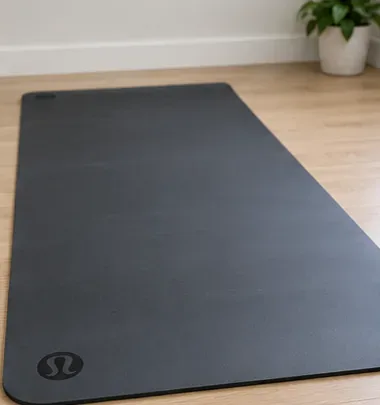
Do not roll the mat immediately after wiping it. lululemon specifically says to ensure the mat is dry before rolling and to lay it flat to dry. Place it flat in a well-ventilated indoor area and keep it out of direct sunlight.
If the underside also became damp, turn the mat over after the first side has had time to dry so air can reach both surfaces. Drying time will vary with humidity, room temperature, how wet the cloth was, and how much cleaner was used. There is no need to guess a fixed number of minutes; the mat is ready when both surfaces feel fully dry and no dampness remains near the edges.
Step 3: Leave the mat flat until both sides are fully dry before rolling it up.
Step 4: Roll and store it only when fully dry
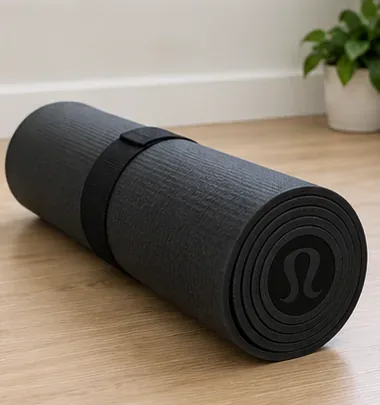
Once the mat is dry, roll it for storage and keep it away from direct sunlight. Sun exposure can affect rubber and color over time, and current lululemon care instructions specifically call for storage out of direct sunlight.
Store the mat somewhere dry rather than in a hot car, damp locker, or closed gym bag. If you practice frequently, leaving the mat unrolled for a little while after cleaning can help confirm that there is no trapped moisture before storage.
Step 4: Roll the mat only after it is dry and store it away from direct sunlight.
What should you avoid?
Cleaning method
Why to avoid or limit it
Washing machine or soaking
Current care instructions for The Mat state “Do Not Wash.” Use surface cleaning instead.
Bleach
lululemon explicitly says not to bleach current The Mat models.
Direct sun for drying or storage
The manufacturer says to store the mat out of direct sunlight.
Rolling while damp
lululemon says to ensure the mat is dry before rolling.
Abrasive scrubbing
It is unnecessary for routine care and can be harder on the surface than repeated gentle wiping.
Unverified DIY chemical mixtures
lululemon does not publish a universal vinegar, alcohol, essential-oil, or baking-soda recipe for current mats.
How often should you clean a lululemon yoga mat?
For regular use, the best baseline is the manufacturer's own wording: wipe the mat after practice. That does not mean every session requires an intensive cleaning. A quick damp-cloth wipe may be enough after a light practice, while a sweaty hot-yoga session may justify using the natural cleanser referenced in lululemon's care instructions.
If you share the mat, practice outdoors, use a lot of body lotion, or sweat heavily, clean it promptly after each use rather than waiting for visible dirt. The longer oils and sweat remain on an absorbent surface, the more work it may take to remove the residue later.
What if the mat still smells after cleaning?
First, make sure the odor is not simply the normal smell of a relatively new natural-rubber mat. lululemon says that initial odor should fade over time and recommends airing the mat out.
If an older mat develops a persistent odor, repeat the manufacturer-supported routine: wipe it thoroughly, use a compatible natural cleanser if needed, and let it dry fully while flat. Avoid responding by soaking the mat or using bleach, because those approaches conflict with current care instructions.
If the smell remains strong despite complete drying, or if the surface has started peeling, bubbling, cracking, transferring material to your hands, or becoming unusually slick, stop escalating the cleaning method. At that point, contact lululemon support or take the mat to a store for product-specific guidance. A cleaning routine cannot repair material deterioration.
How do you know the mat is actually clean?
Finish by checking the result rather than relying only on appearance. Run a clean, dry hand over the areas where you usually place your palms and feet. The surface should feel dry and consistent rather than greasy or coated. Look across the mat in side light for obvious sweat rings or cleaner streaks. Press a clean white cloth onto a few high-contact areas; it should not pick up visible grime or excess cleaner.
Then check the underside and edges for moisture. If any part still feels cool and damp, leave the mat flat longer. Only roll it when it is dry on both sides.
A successful cleaning is therefore simple to recognize: visible residue is gone, no cleaner film remains, both sides are fully dry, and the mat is ready to store without trapping moisture. If you can reach that result with a damp cloth, stop there. Use a natural cleanser only when the easier method does not fully remove the residue.
Care instructions and material information were checked against current lululemon U.S. product pages on September 12, 2026. Product construction and care guidance can change, so check the specific product page or care information for your exact mat model if it differs from The Mat 3mm/5mm or Align 5mm.