Home
» INTERNET
»
How to Clean a Patagonia Down Sweater Without Flattening the Down
How to Clean a Patagonia Down Sweater Without Flattening the Down
A Patagonia Down Sweater can be machine-washed, but the drying step is what most often determines whether the jacket comes out lofty or flat. Patagonia’s current U.S. Down Sweater care instructions, checked September 12, 2026, say to machine wash cold, avoid bleach, tumble dry low, and dry with two tennis balls for best results. Patagonia’s broader down-care guidance also recommends a down-specific detergent and says a front-loading washer is preferred.
This guide applies to current Patagonia Down Sweater jackets and similar Patagonia down-insulated pieces, but your own white care tag is the final authority. Patagonia has produced this line in different versions over time, so if your label differs from current online instructions, follow the label sewn into your garment. You can compare it with the current Patagonia Down Sweater product care instructions and Patagonia’s Product Care & Repair guidance.
Can You Machine-Wash a Patagonia Down Sweater?
Yes. For the current Down Sweater, Patagonia specifies machine washing in cold water. For down in general, Patagonia prefers a front-loading washer. If you only have a top-loading machine, Patagonia says a top-loader can be used on a hand-wash or delicate setting. A machine with a center agitator is less ideal because the wet jacket is heavier and more vulnerable to snagging or twisting.
Decision
Best choice
Why it matters
Water temperature
Cold
Matches the current Down Sweater care instructions.
Cleaner
Down-specific detergent
Patagonia says conventional detergent can strip natural oils from down and reduce loft and performance.
Washer
Front-loading preferred
Patagonia recommends it for down care; use hand-wash or delicate if using a top-loader.
Dryer
Low heat
Patagonia recommends tumble drying low for the Down Sweater and says machine drying helps down regain loft.
Dryer aids
Two clean tennis balls
The current product page recommends two tennis balls to help restore loft.
What Should You Check Before You Start?
Empty every pocket, remove anything clipped to loops, and inspect the shell for holes, loose seams, or a zipper problem. A small tear is better repaired before washing than after a wet wash cycle has had a chance to pull on it. Close the main zipper and pocket zippers so loose hardware is less likely to catch on the thin shell fabric.
Then read the care label inside your jacket. Do not assume an older Down Sweater has exactly the same instructions as a current one. The label is also the quickest way to confirm whether your particular garment has any special restriction that should override a general guide.
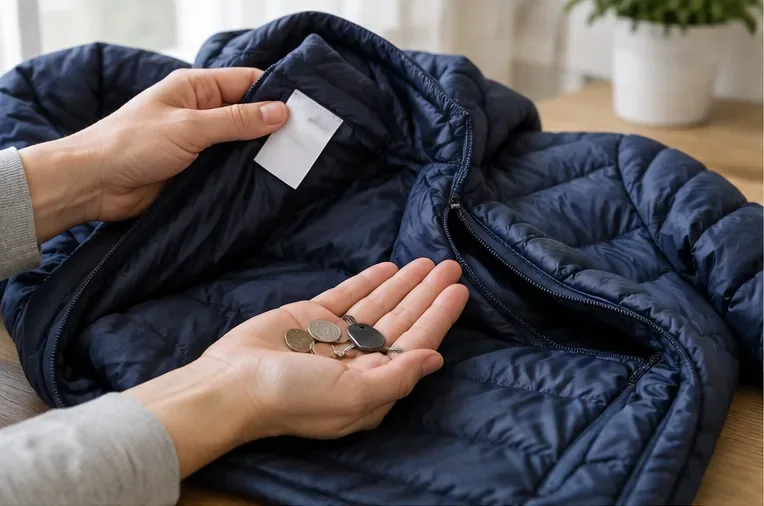
Before washing, check the care label, empty the pockets, close zippers and inspect the shell for damage.
Do You Need a Full Wash or Just Spot Cleaning?
If the jacket is generally clean and only has one dusty or dirty area, spot cleaning may be enough. Patagonia advises washing gear only when necessary and suggests using a rag or sponge for localized dirt rather than automatically running a full machine cycle.
For an ordinary surface mark, start conservatively with a clean damp cloth and avoid soaking a large section of the baffle. For grease, ink, sap or another specific stain, use Patagonia’s stain-specific instructions from its Product Care page rather than improvising with a strong solvent. Some stain treatments can affect color or surface finishes, so test any treatment on an inconspicuous area when the manufacturer’s guidance calls for it.
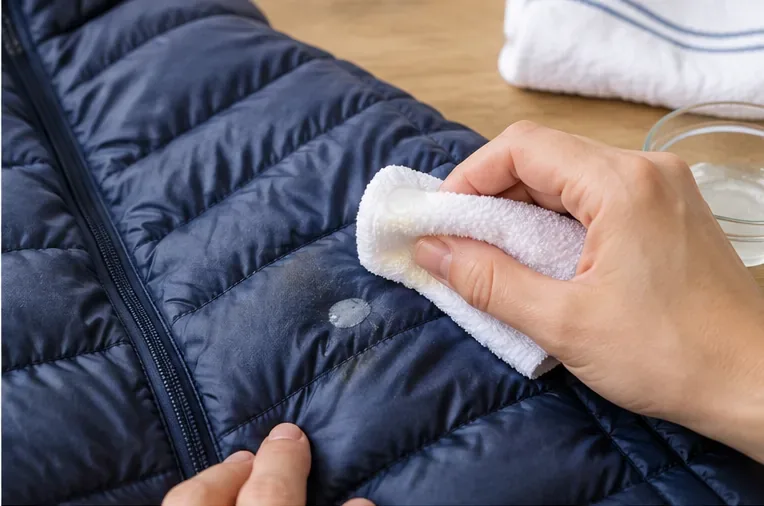
A localized mark may only need spot cleaning, which can avoid an unnecessary full wash.
Should You Use Regular Laundry Detergent?
A down-specific detergent is the safer default. Patagonia’s current down-care guidance says traditional detergent can strip the natural oils from down and negatively affect its loft and performance. Follow the detergent manufacturer’s dosing instructions rather than adding extra cleaner because the jacket looks especially dirty.
Do not add fabric softener, dryer sheets, or bleach. Patagonia specifically warns against fabric softener and bleach for down, and its general care guidance explains that softening products can leave waxy residues on technical fabrics. More detergent is not better: excess product can be difficult to rinse from a thick insulated garment.
How Do You Wash a Patagonia Down Sweater Step by Step?
1. Prepare the Jacket and Washer
After checking the care label, emptying pockets and closing zippers, make sure the washer drum is free of residue from bleach or fabric softener. If your washer’s detergent drawer has visible buildup, clean it before washing the jacket. This reduces the chance that a product Patagonia tells you to avoid gets carried into the cycle.
2. Spot-Treat Only Where Needed
Treat visible problem areas before the full wash. Keep the treatment targeted and gentle. If a mark is complex—such as oil, sap or ink—consult the stain section of Patagonia’s Product Care guidance instead of scrubbing hard at the ripstop shell.
3. Add Down Detergent and Load the Jacket
Use the amount of down-specific cleaner directed on its bottle. Put the jacket in a front-loading washer if one is available. Do not pack the drum with towels, jeans or other heavy clothing; the jacket needs room to move and rinse.
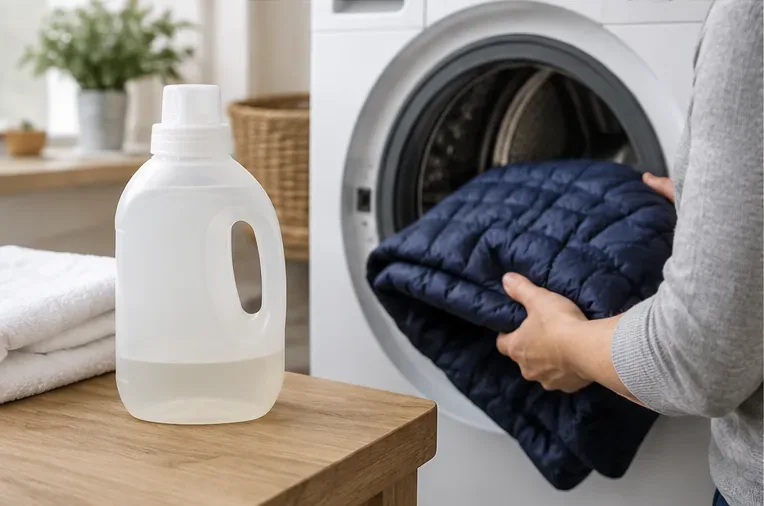
Load the jacket loosely in a front-loading washer and use a down-specific detergent according to its directions.
4. Wash in Cold Water
Run the cold-water setting specified by the current Down Sweater care instructions. If your washer lets you choose a gentle or delicate action without changing the required cold temperature, that is a sensible choice for a lightweight shell. If you are using a top-loader, Patagonia’s down-care guidance specifically points to hand-wash or delicate.
When the cycle ends, look for obvious suds or slippery detergent residue. If your machine has not rinsed cleanly, an additional rinse without adding more detergent can help remove leftover cleaner. Do not wring the jacket.
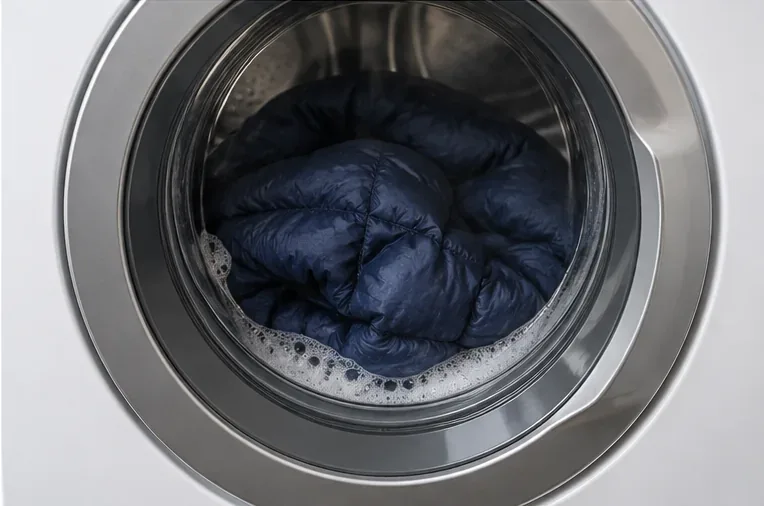
Wash the down jacket in cold water and avoid bleach or fabric softener.
5. Support the Jacket When You Remove It
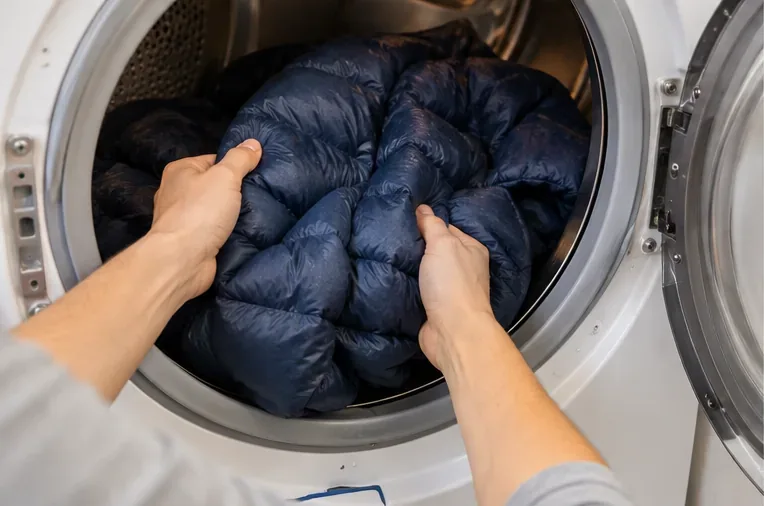
Wet down is heavy. Lift the jacket with both hands and support its weight instead of grabbing one sleeve, the collar, or one baffle and letting the rest hang. Do not twist or wring it. The goal is simply to transfer the wet jacket to the dryer without putting unnecessary stress on wet fabric and stitching.
Support the wet jacket with both hands when moving it from the washer; do not wring or twist it.
6. Tumble Dry on Low With Two Clean Tennis Balls
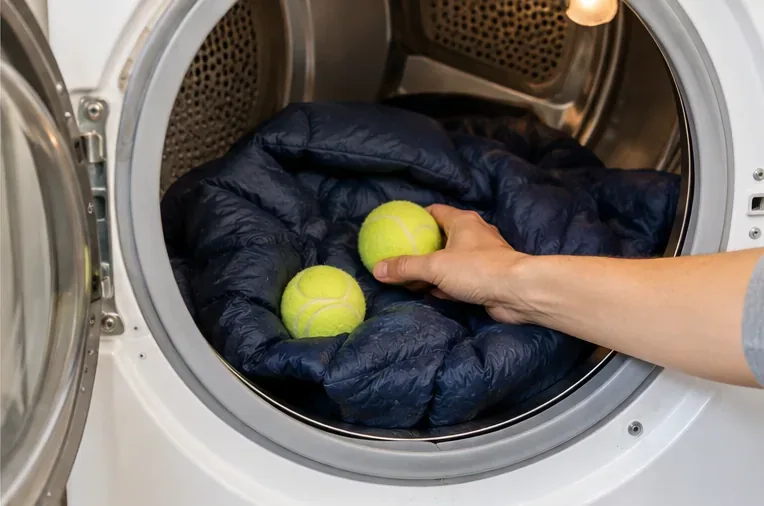
Place the jacket in the dryer and set the heat to low. Add two clean tennis balls, matching the current Patagonia Down Sweater product instructions. The balls move through the jacket as it tumbles, helping separate damp down clumps and restore loft.
Patagonia’s general down-care guidance specifically favors low-heat machine drying over line drying when maximum loft is the goal. This is one reason not to stop the process while the insulation is still damp and clumped.
Tumble dry on low heat with two clean tennis balls to help redistribute the down and restore loft.
7. Pause, Check and Break Up Persistent Clumps
Down can take more than one dryer cycle to become completely dry. Patagonia notes that patience may be required and that several cycles can be necessary. Between cycles, take the jacket out, feel the baffles, and gently massage any dense clumps apart with your fingers. Then return it to the dryer on low.
Do not raise the heat just to finish faster. The current care instructions call for low heat, and a thin synthetic shell is not a good place to experiment with high temperature.
Check the baffles between low-heat cycles and gently break apart any remaining clumps before drying again.
8. Finish Only When the Down Is Fully Dry and Evenly Lofted
Do not judge dryness only by the shell. Feel across the chest, shoulders, sleeves and lower baffles. The jacket should feel consistently light and puffy, without cool, dense or heavy areas that suggest moisture remains inside. Once fully dry, lay it out briefly and make sure the fill looks evenly distributed before wearing or storing it.
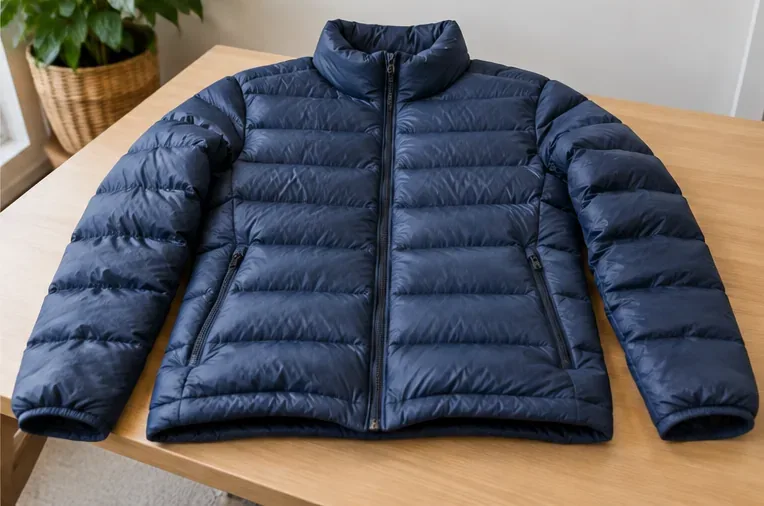
The finished jacket should be completely dry, evenly lofted and free of dense damp clumps.
Why Is Drying the Most Important Part?
Down insulates by trapping air in a three-dimensional structure. Washing temporarily collapses that structure because wet clusters stick together. If the jacket is removed from the dryer while those clusters are still damp, it can feel thin, lumpy and colder than it did before washing.
That appearance does not automatically mean the down has been ruined. In many cases it simply needs more low-heat drying, more tumbling with the tennis balls and gentle manual separation of stubborn clumps. Patagonia explicitly says down may require a few dryer cycles before it is completely dry and lump-free.
What If the Jacket Is Still Clumpy After Drying?
First, check whether the clumps are actually dry. A dense spot that feels cool or heavy usually needs more time. Run another low-heat cycle with the tennis balls, then gently work the baffle with your fingers. Repeat until the fill is loose and evenly distributed.
If the shell is dry but a section of insulation will not redistribute after repeated low-heat cycles, stop escalating heat or adding chemicals. A damaged baffle, migrated fill, seam problem or another mechanical issue may need repair rather than more washing. Patagonia’s Product Care & Repair page includes repair options for insulated garments.
How Often Should You Wash a Patagonia Down Sweater?
There is no useful universal “every X wears” rule. Patagonia’s general care advice is to wash less and clean gear only when necessary. For a Down Sweater, that usually means a full wash when dirt, body oils or odor have built up enough that spot cleaning is no longer adequate.
If you wear the jacket over clean layers and it is only dusty on the outside, wiping the shell may be all it needs. If the collar and cuffs are visibly grimy, the jacket smells after airing out, or dirt is widespread, a full wash is more reasonable. The goal is not to avoid washing forever; it is to avoid unnecessary cycles while still keeping the insulation clean and functional.
What Should You Avoid?
Do not use bleach. The current Down Sweater care instructions explicitly prohibit it.
Do not use fabric softener or dryer sheets. Patagonia warns against softeners in its down and technical-garment care guidance.
Do not iron or steam the current Down Sweater. The current product page says not to iron and not to steam.
Do not use high dryer heat to save time. Patagonia specifies tumble drying on low.
Do not wring the wet jacket. Support it and let the washer and dryer handle water removal.
Do not put the jacket away damp. Continue low-heat drying until the insulation is completely dry and lump-free.
How Do You Know the Cleaning Worked?
A successful wash should leave the jacket clean without changing its basic shape or producing permanently flat areas. Use this quick self-check before you store it:
The shell looks clean and has no obvious detergent residue.
The jacket no longer has the dirt or odor that prompted the wash.
Every baffle feels dry, including the shoulders, cuffs and lower hem.
The down feels light and springy rather than cool, dense or matted.
Loft looks reasonably even from panel to panel.
Zippers, seams and the shell show no new damage.
If those checks pass, the jacket is ready to wear again. If it still feels heavy or clumpy, the next action is usually more low-heat drying—not more detergent.