Home
» INTERNET
»
How to Clean a Range Hood Filter: Remove Grease and Restore Airflow Safely
How to Clean a Range Hood Filter: Remove Grease and Restore Airflow Safely
A range hood can sound perfectly normal while doing a worse job of capturing smoke, steam, and cooking odors. One common reason is easy to miss: the grease filter above the cooktop has gradually loaded up with oil and food residue. The filter is supposed to trap airborne grease before it reaches the blower and ductwork, so buildup is expected. The problem starts when the mesh or baffle surfaces become so coated that air has a harder time passing through.
The fix is usually straightforward if you have a washable metal grease filter. The safest approach is to identify the filter type first, switch the hood off, remove the filter according to the owner's manual, loosen the grease with warm detergent solution, rinse it thoroughly, let it dry completely, and reinstall it securely. Manufacturer instructions differ by model, so the manual for your exact hood always takes priority over a generic cleaning routine.
First, make sure you have a washable filter
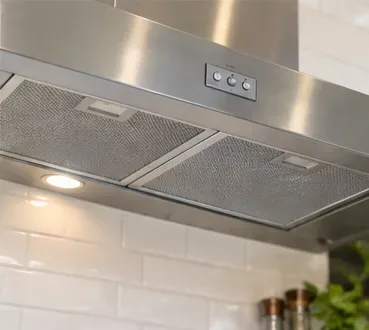
Most ducted range hoods use a removable metal grease filter. It may look like layered aluminum mesh or a stainless-steel baffle panel with channels that capture grease. These filters are designed to be cleaned and reused.
A recirculating, or non-ducted, hood may also contain a charcoal or carbon filter. That second filter is used to reduce odors before air returns to the room. It is not the same thing as the metal grease filter. Whirlpool states that its non-vented charcoal filters are not washable, while Bosch likewise tells owners to replace carbon filters rather than wash them. Replacement timing varies by model and usage, so check your manual instead of assuming one universal interval.
Warm or hot tap water, as allowed by your sink and filter
Mild dishwashing detergent or another cleaner approved by the hood manufacturer
A sink, basin, or tub large enough to hold the filter
A soft-bristle cleaning brush or nonabrasive sponge for stubborn grease
Clean towels or a drying rack
Your range hood owner's manual, especially if the filter release mechanism is unfamiliar
Avoid reaching for steel wool, harsh abrasives, or improvised solvents unless the manufacturer specifically permits them. Metal filters can have thin mesh layers, coatings, clips, or frames that are easier to bend or damage than they appear.
How to clean a metal range hood filter
1. Turn off the hood and let the cooking area cool
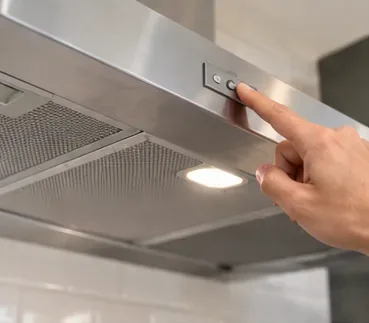
Turn off the range hood before handling the filter, and wait until the hood and nearby cooking surfaces are cool.
Switch off the fan and lights before touching the filter. If your model's instructions call for disconnecting electrical power before service or maintenance, follow that direction as well. At minimum, you do not want the blower starting while your hands are inside the filter area.
This is also a good moment to look at how the filter is mounted. Some filters use a spring-loaded tab, some have a small latch, and others slide into a channel. Do not force anything that does not move easily.
2. Remove the metal grease filter carefully
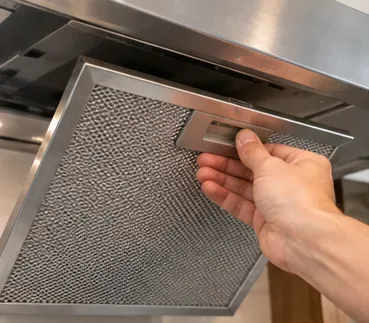
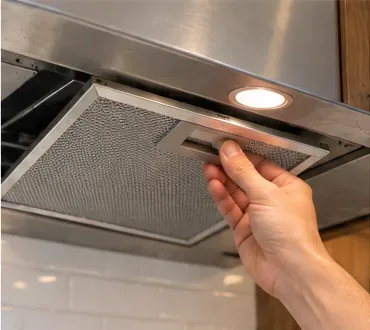
Support the filter with both hands as you release its latch or handle so it does not drop onto the cooktop.
Release the latch or handle while supporting the panel with your other hand. Metal filters can be heavier and more slippery than expected when they are coated with grease. Lower the filter gently and note which edge goes into the hood first; that will make reinstallation easier.
If you discover a charcoal pad attached behind the metal filter, check the manual before getting it wet. A washable metal screen and a replaceable odor filter can sit very close together.
3. Start with the easiest cleaning method: a warm detergent soak
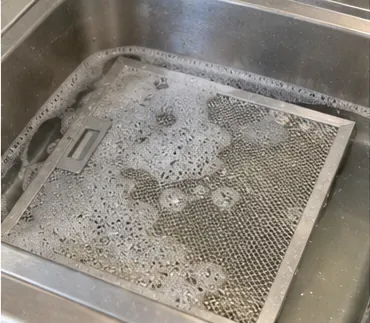
A warm detergent soak loosens the film of cooking grease before scrubbing.
Place the metal filter in a sink or basin and cover as much of it as possible with warm, soapy water. Bosch's current support guidance recommends soaking grease filters in hot, soapy water for 10 minutes before scrubbing. Broan-NuTone suggests a warm mild-detergent soak and notes that some filters benefit from 15 to 20 minutes per side. Those differences are a reminder to use your model's documentation when it gives a specific method.
If the filter is only lightly dirty, the soak may remove most of the residue by itself. For a very greasy filter, refresh the water if it becomes heavily clouded with oil instead of trying to clean in a bath that is already saturated with grease.
4. Scrub gently where grease remains
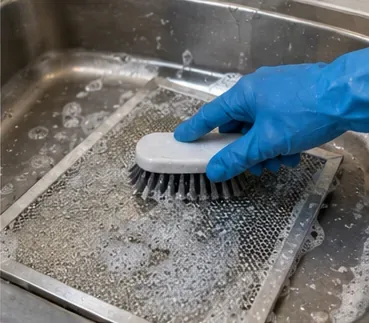
Use a soft brush or nonabrasive sponge on stubborn greasy areas without crushing or distorting the metal mesh.
After soaking, use a soft-bristle brush or nonabrasive sponge to work detergent through the surface. Brush both sides, paying extra attention to the center of the filter and the edges near the frame, where sticky residue often remains.
More pressure is not necessarily better. Fine aluminum mesh can deform, and baffle assemblies can have narrow seams that are easier to damage with aggressive tools. If grease is still stubborn, another soak is usually safer than escalating immediately to a harsher abrasive.
5. Rinse until the water and filter are free of detergent
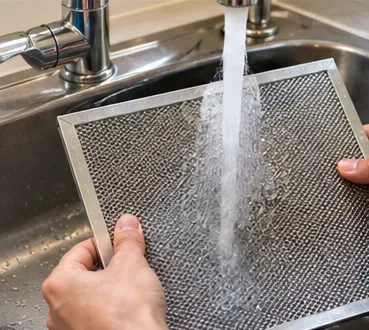
Rinse both sides with clean water until loosened grease and soap are gone.
Rinse both faces of the filter with clean water. Turn it so the water can move through the mesh or baffle passages rather than only across the surface. Continue until you no longer see suds or greasy runoff.
At this point, inspect the filter in bright light. A clean filter does not have to look brand-new; some metals can discolor with age, detergent, or local water conditions. Broan-NuTone specifically notes that dishwasher-related discoloration can occur without affecting filter performance. What matters more is that the air passages are open and not coated with tacky grease.
6. Let the filter dry completely
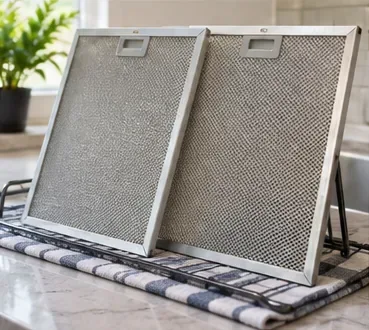
Air-dry the cleaned filters completely before putting them back under the hood.
Shake off excess water, then place the filter upright on a clean towel or drying rack. Give trapped water time to drain from the frame and internal layers. Bosch directs users to dry grease filters thoroughly before reinserting them, and Zephyr similarly advises complete air-drying before the hood is used again.
Do not reinstall a filter just because the exterior feels dry. Water can remain between mesh layers or inside a hollow frame longer than it remains on the visible surface.
7. Reinstall the filter in the same orientation
Insert the clean, dry filter into its track and engage the latch or spring handle securely.
Insert the correct edge into its track, lift the filter into place, and release the latch or spring handle only when the panel is fully seated. It should sit evenly without a loose corner or obvious gap.
If the filter will not latch, remove it and check the orientation rather than forcing it. A bent tab, reversed panel, or filter that is not fully inside its upper track can prevent a secure fit.
8. Turn the hood on and check the result
After reinstallation, verify that the filters sit flat and the hood runs normally at several fan speeds.
Turn the hood back on and listen for anything unusual. Run the blower at low speed first, then increase the setting. A properly installed filter should remain stable without rattling or shifting.
The practical result to look for is not a dramatic sound change. Instead, check whether the hood now captures steam or light cooking vapor more readily than it did with the dirty filter. If performance is still poor, the filter may not be the only cause; a blocked exterior vent, dirty blower, closed damper, duct restriction, or undersized ventilation system can also reduce airflow.
Can you put a range hood filter in the dishwasher?
Sometimes, but not automatically. Whirlpool says removable metal grease filters on supported models may be cleaned in the sink or dishwasher. Broan-NuTone says some grease filters are dishwasher safe and recommends checking the owner's manual for confirmation. Its support guidance also advises a non-phosphate detergent for all-metal filters and warns that cosmetic discoloration may occur.
That makes the decision simple:
Use the dishwasher when the owner's manual explicitly identifies your metal filter as dishwasher safe.
Hand-wash when you cannot verify dishwasher compatibility, when you want to minimize discoloration, or when the filter has delicate mesh or parts you do not want knocked around.
Do not wash a charcoal/carbon filter unless the manufacturer specifically describes that exact filter as washable.
For old, sticky grease, repeat the warm detergent soak and give the cleaner time to work before scrubbing again. This is safer than immediately moving to an abrasive pad. Some manufacturers also sell or approve specific degreasers, but compatibility depends on the filter material and finish.
If the mesh remains blocked after repeated cleaning, the frame is badly bent, the filter is torn, or the latch no longer holds securely, replacement may be more sensible than increasingly aggressive cleaning. A damaged filter cannot reliably do its job even if the remaining metal looks clean.
Common mistakes that make the job harder
Washing the wrong filter: metal grease filters are commonly washable; charcoal odor filters are commonly replaceable rather than washable.
Forcing the release tab: filter latches vary by hood, so use the manual if the panel does not come down easily.
Using very abrasive tools: they can distort mesh, scratch frames, or damage finishes.
Skipping the soak: softened grease is easier to remove and requires less scrubbing pressure.
Reinstalling while wet: water can remain hidden between layers even when the outside looks dry.
Assuming all filters are dishwasher safe: confirm this for your specific model first.
Waiting until airflow is obviously poor: cleaning is easier before grease has hardened into a thick film.
How often should you clean a range hood filter?
There is no single interval that fits every kitchen. Broan-NuTone says aluminum mesh filters may need washing about monthly depending on use, and it specifically recommends more frequent cleaning for cooking that produces more grease, such as frying or wok cooking. Other manufacturers use broader wording such as cleaning “frequently” or “as needed.”
A practical schedule should therefore follow two signals: the interval in your owner's manual and the actual condition of the filter. If the surface feels tacky, the mesh looks visibly loaded, odors linger longer than usual, or steam capture seems weaker, inspect the filter even if your normal cleaning date has not arrived.
Final self-check: how to know the cleaning worked
Before calling the job finished, use this short check:
The filter is fully dry.
There is no sticky grease film on the accessible metal surfaces.
Mesh openings or baffle passages are visibly open rather than filled with residue.
The filter sits flat and the latch is fully engaged.
The fan runs without a new rattle or vibration.
Cooking vapor is drawn toward the hood more readily than before cleaning.
If the filter passes those checks, routine cleaning is complete. If airflow still seems weak, stop treating the filter as the only suspect and inspect the rest of the ventilation path according to your hood's service documentation. A clean filter can restore lost performance caused by grease buildup, but it cannot correct a blocked duct, failed blower, or installation problem.