Home
» INTERNET
»
How to Clean a Retainer Case: A Practical Guide to Washing, Drying, and Replacement
How to Clean a Retainer Case: A Practical Guide to Washing, Drying, and Replacement
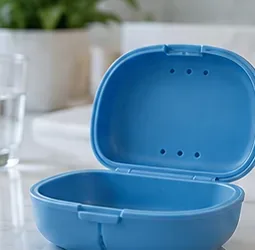
For a standard non-electronic plastic retainer case, the safest practical routine is simple: empty it, hand-wash it with cool or lukewarm water and a small amount of mild soap, use a soft brush for seams and corners, rinse away all residue, and let the case air-dry fully before storing a clean retainer inside. Avoid the dishwasher unless the case manufacturer specifically says it is dishwasher-safe.
This approach matches current orthodontic guidance on gentle cleaning and dry, ventilated storage. The American Association of Orthodontists (AAO) advises cleaning removable retainers with cool water, a soft toothbrush, and mild soap, then allowing them to air-dry in a ventilated case. Invisalign also states that its standard aligner cases should be hand-washed rather than cleaned in a dishwasher. See the AAO orthodontic FAQs and the Invisalign case care instructions.
Important: this guide is for ordinary plastic storage cases. If your case contains electronics, UV-C lights, a battery, charging contacts, a mirror assembly that cannot get wet, or another special component, follow that product's instructions instead of using a generic soap-and-water wash.
Quick reference: what to use
Item
Use it?
Why
Cool or lukewarm water
Yes
Suitable for routine hand-washing without unnecessary heat.
Mild liquid soap
Yes
Helps remove saliva film, skin oils, and visible residue.
Soft toothbrush or small soft brush
Yes
Useful for hinges, grooves, vents, and corners.
Clean towel
Yes
Useful for blotting the outside before air-drying.
Dishwasher
Usually no
Invisalign specifically says its cases are not designed for dishwasher cleaning; heat may damage some cases.
Boiling or very hot water
No
Heat can damage plastics and is unnecessary for routine cleaning.
Bleach, strong disinfectants, or alcohol by default
No
Do not improvise with harsh chemicals unless the case manufacturer explicitly approves them.
Step-by-step: how to clean a retainer case
1. Gather simple cleaning supplies
Set up at a clean sink or counter with cool or lukewarm water, mild liquid soap, a soft toothbrush or small soft cleaning brush, and a clean towel. You do not need a strong disinfectant for ordinary routine cleaning.
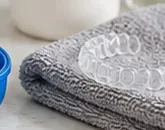
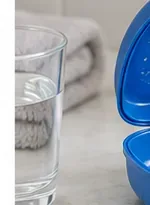
Start with clean water, a clean towel, mild soap, and a soft brush. Keeping the setup simple reduces the chance of leaving harsh chemical residue in the case.
2. Remove the retainer and empty the case
Take the retainer out before cleaning the case. Remove any visible debris, pooled moisture, paper, or lint. If the case has removable inserts, follow the manufacturer's directions before separating them.
Clean the storage case while it is empty. An open case also makes it easier to reach the base, lid, and hinge areas.
3. Rinse away loose residue
Rinse an ordinary washable plastic case with cool or lukewarm water. This helps remove loose saliva residue and particles before brushing. Do not use very hot or boiling water.
If you have a branded case, check its care page first. Invisalign's current case guidance says to hand-wash the case and not use a dishwasher. That is a good reminder that the case itself can have material-specific limits.
4. Add a small amount of mild soap and brush gently
Apply a small amount of mild liquid soap to the damp case or soft brush. Clean the inside and outside using light pressure. Pay attention to corners, seams, the latch, hinge area, and any ventilation openings where dried residue can collect.
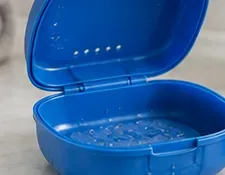
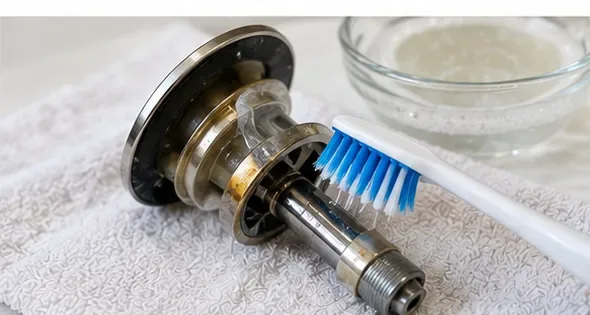
A small soft brush is useful for grooves, corners, and hinge areas where a cloth may not reach well.
Do not scrub aggressively just to remove cosmetic scuffs. Scratches and roughened surfaces are harder to keep clean, so gentle mechanical cleaning is preferable.
5. Check the hinge, vents, and hard-to-reach areas
Open and close the case while cleaning so you can inspect the hinge and any small air holes. A ventilated case is useful because orthodontic guidance recommends allowing oral appliances to air-dry rather than trapping them in a closed damp environment.
Inspect ventilation openings and the hinge while the case is open; these small areas are easy to overlook during a quick wash.
6. Rinse thoroughly until no soap remains
Rinse the case carefully with clean water until you can no longer feel or see soap. Residual cleaner has no benefit once the dirt has been removed, and a storage case should not leave a noticeable soap film or taste on an oral appliance.
Use only a small amount of mild soap, then rinse it away completely rather than leaving cleaner inside the case.
If you are using a case with metal, magnets, electronics, or a specialty lining, do not assume that it can be fully submerged. Use the manufacturer's method for that model.
7. Shake off water and let the case dry completely while open
Shake off excess water, blot the exterior with a clean towel if useful, and leave the case open in a clean place until it is dry. AAO guidance emphasizes air-drying removable appliances in a ventilated case and warns against leaving oral appliances in a closed, damp environment.
After rinsing, leave the case open until the interior and hinge area are fully dry. Closing a wet case traps moisture.
Do not put a clean retainer straight into a visibly wet case and snap the lid shut for hours.
8. Store only a clean retainer, then inspect the case periodically
Once the case is dry, return a clean retainer to it. The AAO recommends a sturdy, ventilated case for safe storage. If your retainer itself is damp after cleaning, allow it to dry according to your orthodontist's instructions rather than creating a persistently wet storage environment.
A clean retainer and a clean, dry case work together; cleaning one while neglecting the other defeats the purpose of the routine.
Inspect the case for cracks, a failing hinge or latch, persistent odor, staining that will not clean away, or rough damaged areas. AAO's current FAQ says a case should be replaced when it has visible cracks or wear, still smells after cleaning, or has been used for a few months.
Keep the case in a clean, dry place between uses and include it in the same maintenance routine as the retainer itself.
How often should you clean the case?
There is no single universal professional schedule for every retainer case material. A practical rule is to clean it often enough that saliva residue, visible debris, odor, or persistent moisture never builds up. If you wear a removable retainer nightly, it makes sense to inspect the case whenever you clean the retainer and hand-wash the case whenever it is dirty, sticky, damp, or odorous.
Clean it immediately if:
you can see dried saliva, plaque-like film, crumbs, dust, or makeup residue;
the case smells different after the retainer is removed;
the case stayed closed while wet;
it fell onto a dirty floor or other contaminated surface;
the retainer was stored in it while visibly dirty.
Do you need to disinfect a retainer case?
Routine cleaning and disinfection are not the same thing. For an ordinary storage case, thorough hand-washing, complete rinsing, and full drying are the conservative default unless the manufacturer gives a separate sanitizing method.
Do not automatically copy a retainer-soaking recipe onto the case. AAO discusses retainer-cleaning tablets and peroxide solutions for the retainer, but that does not prove every storage case material is compatible with the same chemicals. Likewise, an electronic UV-C case is a different product category. Invisalign's UV Sanitizing Case, for example, contains powered UV-C hardware and should be handled according to its own instructions, not treated like a plain plastic box.
Common mistakes to avoid
Mistake
Better choice
Putting a standard case in the dishwasher without checking
Hand-wash it unless its manufacturer explicitly approves dishwasher cleaning.
Closing the lid while the case is still wet
Leave it open until fully air-dried.
Using bleach, alcohol, or another strong chemical by default
Use mild soap for routine cleaning and follow case-specific instructions for anything stronger.
Cleaning the retainer but never the case
Inspect and clean both so residue is not transferred back and forth.
Keeping a cracked or permanently smelly case
Replace it rather than trying increasingly aggressive cleaning methods.
Using very hot water
Use cool or lukewarm water for ordinary plastic cases.
When should you replace the retainer case?
AAO's 2026 FAQ gives three useful replacement triggers: visible cracks or wear, odor that remains after cleaning, and having used the same case for a few months. The exact useful life will still depend on the case, hinge design, material, and how it is used.
Replace sooner if the lid no longer closes securely, the hinge is separating, a rough edge could damage the retainer, or a damaged surface is difficult to clean. A case is inexpensive compared with replacing a lost or damaged orthodontic appliance.
Practical checklist
Remove the retainer before washing the case.
Use cool or lukewarm water.
Use a small amount of mild liquid soap.
Use a soft brush for corners, vents, and hinges.
Rinse until no soap remains.
Leave the case open until fully dry.
Store a clean retainer in a clean, ventilated case.
Replace a cracked, worn, or persistently smelly case.
For electronic, UV, or specialty cases, follow the manufacturer's instructions instead of this generic routine.
Keeping the case clean is a small part of retainer care, but it prevents a freshly cleaned appliance from going straight back into a dirty or damp container. The simplest reliable routine is also the easiest to repeat: gentle hand-washing, thorough rinsing, complete drying, and timely replacement when the case is damaged or no longer stays fresh.