Home
» INTERNET
»
How to Clean an Ooni Pizza Stone Without Cracking It
How to Clean an Ooni Pizza Stone Without Cracking It
The short answer: keep the stone dry and let heat do most of the cleaning
The safest way to clean an Ooni pizza stone is to use the oven’s heat to carbonize stuck-on food, let the oven and stone cool completely, then brush or scrape away the dry ash. Do not wash the stone with water, dish soap, detergent, or a dishwasher. Ooni’s current care guidance says the porous stone can absorb moisture or cleaning chemicals, and moisture can contribute to cracking when the stone is heated again.
For a typical dirty stone, you do not need to make it look new. Brown, gray, and black discoloration is normal. The goal is a dry, reasonably smooth cooking surface without raised chunks of burned cheese, dough, flour, or grease. That distinction matters: a stained stone can still be ready to cook on, while a stone with crusty deposits may need another burn-off.
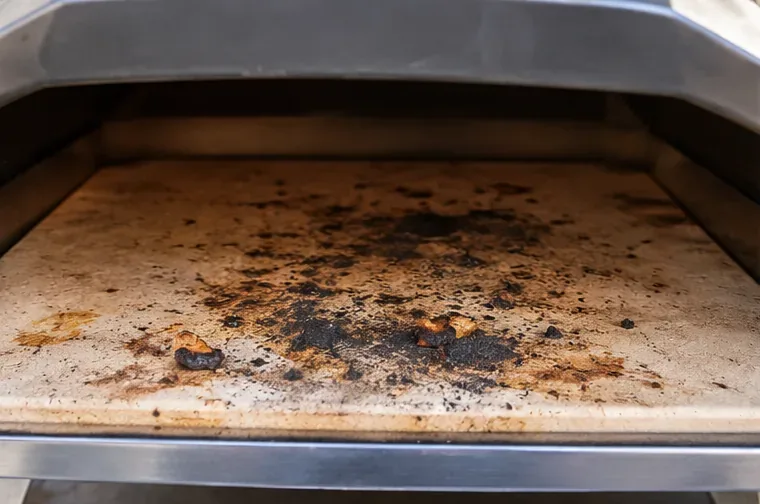
A used pizza stone may look heavily stained before cleaning. Focus on removing raised food residue rather than trying to restore the original color.
How to clean an Ooni pizza stone in five practical steps
1. Burn off stuck-on residue at high heat
If cheese, sauce, oil, dough, or excess flour has baked onto the stone, the most effective first move is heat rather than liquid. Ooni’s pizza-stone guidance recommends running the oven around 850–900°F (450–500°C) for roughly 20–30 minutes so residue can carbonize. Ooni’s broader cleaning guide also recommends running the oven at top temperature for about 30 minutes when food debris is present.
This step is especially useful after a failed launch, when a pizza tears and toppings spill directly onto the stone. Instead of trying to wipe melted cheese while the stone is hot, let the oven finish the burn-off. The residue should become dry and brittle enough to remove later.
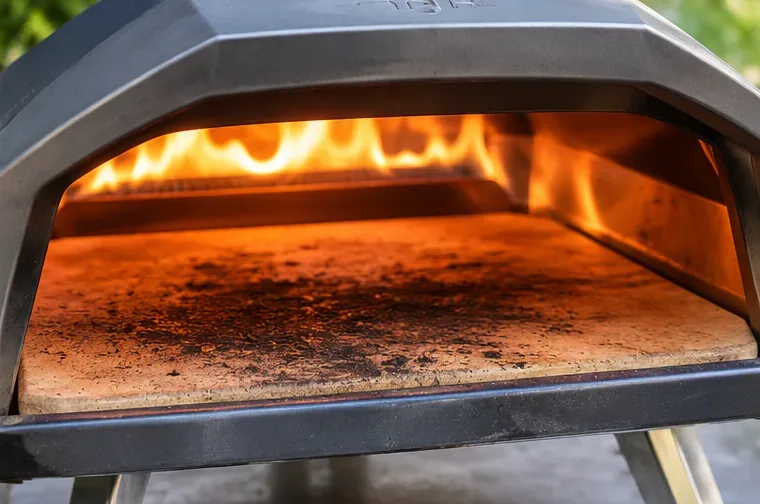
High heat carbonizes stubborn food residue so it can be removed as dry ash after the oven has fully cooled.
2. Turn the oven off and let the stone cool completely
Do not brush, lift, flip, or remove the stone while it is hot. Allow the oven to cool naturally. Cooling time depends on the model, ambient temperature, and how long the oven was running. As one concrete example, Ooni notes that the Volt 12 can take more than 90 minutes to cool after it is switched off.
If you are unsure whether the stone is cool enough to handle, wait longer. The stone retains heat, so the exterior of the oven can feel much cooler before the stone itself is safe to touch.
3. Brush away ash and loosened debris while everything is cold
Once the stone is fully cool, use a stiff pizza-oven brush or a suitable scraper to loosen the carbonized material. Ooni recommends working with a sideways motion as well as back-and-forth scrubbing, then sweeping the debris toward the sides and out through the oven opening. A clean, dry cloth or dry paper towel can remove the final loose dust.
Use enough pressure to lift the residue, but do not aggressively gouge the stone. Ooni specifically advises against harsh metal scourers because they can damage the surface and create grooves where food is more likely to catch.
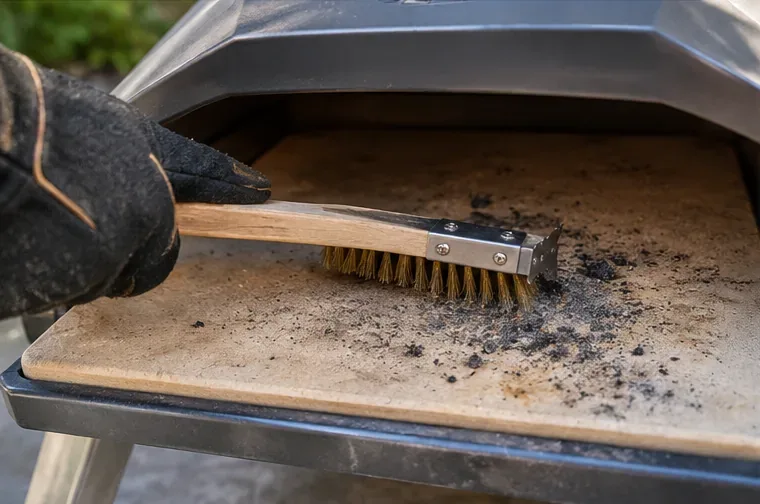
After the stone is fully cool, brush the carbonized residue sideways and back and forth, then sweep the loose ash out of the oven.
4. Flip the cooled stone if stubborn marks remain
If dry brushing leaves stubborn baked-on material, Ooni recommends carefully removing the completely cooled stone, flipping it over, and reinstalling it. During the next cook, the high heat can self-clean the side now facing downward. This is useful when one face has a concentrated patch from spilled toppings or burned flour.
Handle the stone with two hands and support it evenly. Pizza stones are durable in normal cooking but can crack if dropped, knocked against a hard surface, or exposed to thermal shock.
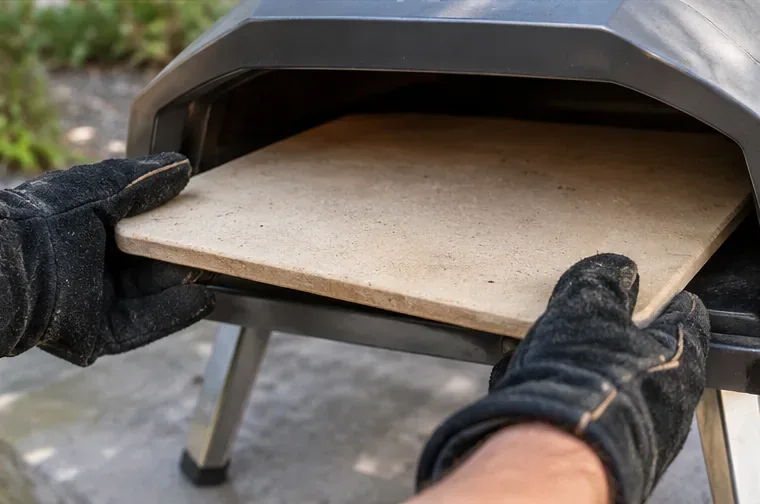
Only flip or remove the stone when it is completely cool, supporting it evenly with both hands.
5. Inspect the surface instead of chasing every stain
After brushing, run your eyes over the cooking surface. A good result is a stone that is dry, stable, and free of thick raised deposits. Dark staining alone is not a cleaning failure. Ooni describes discoloration as normal with use, so there is little benefit in repeatedly scraping a smooth stain.
If the stone still has a strong greasy smell when reheated or still carries thick residue, repeat the high-heat burn-off after confirming your oven model’s operating instructions. If the stone is physically unstable or a crack has made it unsafe to support a pizza, replace the stone rather than continuing to handle a compromised piece.
What you should never use on an Ooni pizza stone
Method
Why to avoid it
Better option
Running water or soaking
The porous stone can absorb moisture, increasing the risk of damage when reheated.
High-heat burn-off, followed by dry brushing after cooling.
Dish soap or detergent
Cleaning chemicals can be absorbed by the stone and may affect later cooks.
Use no cleaner on the stone itself.
Dishwasher
It combines soaking, detergent, and handling stress that the stone is not designed for.
Keep the stone in the oven and clean it dry.
Wet baking-soda paste or other liquid cleaners
Ooni’s guidance says not to apply liquid or cleaning agents to the stone.
Use heat and a dry brush or scraper.
Very harsh metal scouring pads
They can scratch or groove the surface.
Use a pizza-oven brush or appropriate scraper without gouging.
What to do for specific messes
Burnt cheese
Let it carbonize at high heat rather than trying to dissolve it. Once the oven has cooled completely, the cheese should be brittle enough to brush or scrape away. If a thin dark mark remains but the surface is smooth, leave the stain alone.
Burnt flour and semolina
A light dusting usually burns away during normal cooking. A thick layer can become bitter-smelling and smoky, so brush it out after the stone cools. If flour has fused into a hard patch, use the same burn-off-and-brush cycle.
Grease or oil spots
Do not pour water on the spot. Heat is the better fit for an Ooni stone because it can burn off residual grease. A dark spot may remain afterward; that is acceptable if it is smooth and no longer leaves residue.
A black stone that otherwise feels smooth
You probably do not need to do anything. Color change is normal on cordierite pizza stones. Cleaning should be driven by loose ash, thick deposits, smoke, odor, or rough raised material—not by color alone.
How often should you clean the stone?
There is no need for a full cleaning cycle after every pizza. In many cooks, the oven’s normal high heat burns away flour and small food traces on its own. Brush the cold stone when you see loose ash, excess flour, or food fragments. Use a dedicated high-heat burn-off when you have a significant spill, a persistent odor, or a crusted patch that ordinary cooking has not removed.
This keeps maintenance proportional to the problem. For example, after a clean pizza night with only a little flour on the stone, a dry brush once the oven is cold may be enough. After a pizza tears and mozzarella spills across the stone, a 20–30 minute high-heat burn-off is the more appropriate approach.
Can you clean the outside of the oven with water?
Yes, but this is different from cleaning the pizza stone. Ooni says the exterior shell can be wiped with a damp cloth when the oven is completely cool, and a small amount of mild dish soap may be used on the exterior where appropriate. Dry the exterior promptly. Keep that water and soap away from the baking stone and follow any model-specific instructions in your oven manual.
When should you replace an Ooni pizza stone?
Cosmetic staining is not a reason to replace the stone. A small hairline crack may not immediately change performance, but a stone that has become unstable, separated, or difficult to handle safely should be replaced. If you are uncertain about a crack, check the instructions for your exact Ooni model or contact Ooni support before another high-temperature cook.
Bottom line
For most owners, cleaning an Ooni pizza stone is simpler than it looks: burn stubborn debris at high heat, let the stone cool completely, brush away the ash, and flip the cold stone when necessary. Keep water, soap, detergent, and dishwashers away from the stone. Most dark discoloration can stay; a smooth, dry, stable surface is the result that matters.