Home
» INTERNET
»
How to Clean Blinds in a Bathtub Without Damaging Them
How to Clean Blinds in a Bathtub Without Damaging Them
The most important rule is simple: do not put blinds in a bathtub unless the manufacturer says that your exact product can be immersed in water. Some aluminum, vinyl, alternative-wood, and certain shade products can tolerate a bath. Others can be permanently damaged by soaking, especially real wood blinds, fabric components, decorative tapes, motorized headrails, and products with water-sensitive operating hardware.
If your blinds are approved for immersion, the safest general approach is lukewarm water, a small amount of mild detergent, gentle movement rather than hard scrubbing, a clean-water rinse, and complete drying according to the product instructions. If you cannot identify the brand or model and cannot find its care instructions, clean the blinds in place instead of soaking them.
This guide was checked against current manufacturer care information available on September 13, 2026. Hunter Douglas, for example, specifically permits bathtub immersion for certain Modern Precious Metals aluminum blinds, with important exceptions. Graber says its wood blinds should not be cleaned with water and lists only certain products as water immersible. LEVOLOR instructions also show why model-by-model checking matters: some alternative-wood slats can be immersed while other faux-wood products are directed toward damp cleaning rather than full soaking.
Can you clean your blinds in the bathtub?
Sometimes, yes—but material alone is not enough to decide. Two blinds that look similar can have different headrails, tapes, finishes, motors, or internal hardware. The care label or product manual should make the final decision.
Blind type
Bathtub cleaning?
What to check first
Aluminum horizontal blinds
Sometimes
Confirm the exact model. Hunter Douglas allows water immersion for specific Modern Precious Metals products but lists exclusions.
Real wood blinds
Usually no
Wood can swell, discolor, warp, or lose its finish. Graber specifically says never use water on its wood blinds.
Faux or alternative wood blinds
Depends on model
Some LEVOLOR alternative-wood slats may be immersed, while other faux-wood instructions call for damp cleaning only.
Vinyl vertical vanes
Often possible when specified
Bali and Graber care guidance permits immersion for certain vinyl vertical vanes, but not fabric vanes.
Fabric, cellular, or specialty shades
Only when specifically approved
Some products permit immersion, while blackout or opaque fabrics and headrails may be excluded.
Motorized or electronic blinds
Do not assume
Operating headrails and electrical components commonly have special restrictions. Follow the exact manual.
For an official example, see the Hunter Douglas metal blind cleaning instructions. The company says bathtub immersion can be used for its Modern Precious Metals aluminum blinds except the Natural Elements collection, but decorative tapes are not recommended for immersion and several operating-system headrails or rails must stay out of the water.
Graber's current care and cleaning instructions make the contrast clear: its wood blinds should not be cleaned with water, and its water-immersible recommendations vary by product type. LEVOLOR's alternative-wood care instructions permit immersion of the slats and bottom rail for that product while telling users not to immerse the headrail.
Practical example: if you have basic non-motorized aluminum mini blinds and your manual explicitly permits immersion, the bathtub method can be reasonable for greasy kitchen buildup. If you have painted wood blinds, a powered headrail, fabric tapes, or an unknown product, the safer choice is dusting, vacuuming, or damp spot cleaning as allowed by the manufacturer.
What you need
Your blind's care or installation instructions
A clean bathtub
Lukewarm water
A small amount of mild, non-abrasive detergent
Soft microfiber cloths or a soft sponge
Clean towels for draining and protecting nearby surfaces
A handheld shower sprayer or another gentle source of clean rinse water, if available
Avoid assuming that stronger cleaners will work better. Hunter Douglas warns against chemical solvents and scrubbing cleansers on its blinds, and LEVOLOR also warns against abrasive cleaners on products it documents. Mild detergent is enough for the bathtub method described here.
How to clean blinds in a bathtub: 8 careful steps
1. Confirm that immersion is allowed and identify the parts that must stay dry
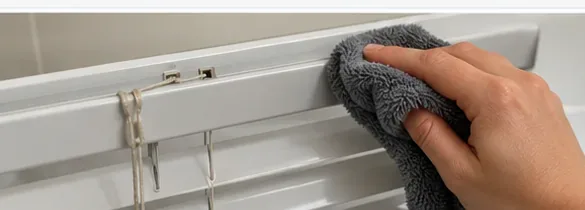
Find the care instructions for your exact blind. Look for terms such as “water immersion,” “bathtub cleaning,” “water immersible,” or “do not immerse.” Then identify the headrail, bottom rail, decorative tapes, motor, battery compartment, and other operating components.
Do not infer that the headrail can get wet just because the slats can. In several manufacturer instructions, the slats may be washable while the headrail must remain dry.
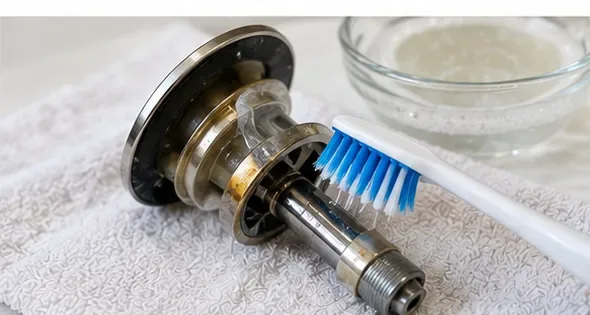
Identify the headrail and operating parts before washing. Many product instructions require these components to stay out of the bath water.
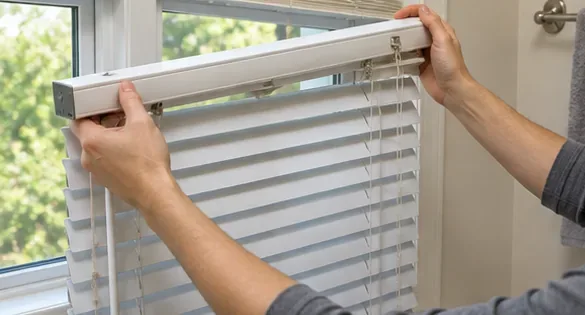
2. Remove the blind carefully
Raise or position the blind exactly as its installation instructions require, remove any valance if necessary, release the brackets, and support the headrail with both hands. Do not pull the blind out by the slats or lift cords.
If you cannot remove the blind confidently, stop here and clean it in place. A deep clean is not worth bending brackets, kinking slats, or damaging the operating mechanism.
Remove the blind according to its installation instructions, supporting the headrail with both hands so the slats and cords are not twisted.
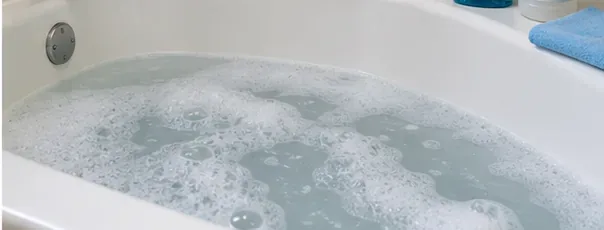
3. Prepare a lukewarm mild-detergent bath
Start with a clean tub so grit from the bathtub itself cannot scratch the finish. Add enough lukewarm water to clean the approved parts of the blind, then add only a small amount of mild detergent.
Do not use hot water unless the manufacturer explicitly permits it. Hot water can affect some finishes, plastics, adhesives, and cords. Also avoid turning the process into a chemistry experiment with strong acids, alkalis, solvents, or abrasive powders.
Use lukewarm water and a small amount of mild detergent when the manufacturer specifically permits water immersion.
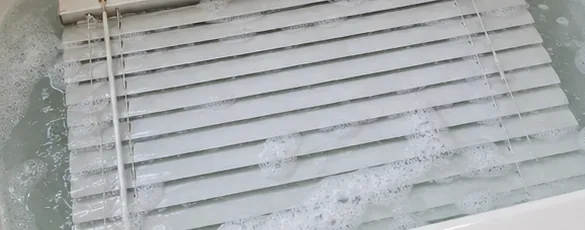
4. Immerse only the parts that are approved for soaking
Place the washable portions of the blind in the water without forcing or sharply bending the slats. If the instructions say the headrail must stay dry, keep it above the waterline or support it outside the tub.
For Hunter Douglas Modern Precious Metals blinds that qualify for immersion, the company says to use lukewarm water with mild detergent and wash for about five minutes by gently moving the liquid around with your fingers. That is a useful reminder that a long soak is not automatically better.
Immerse only the parts the manufacturer allows. Keep excluded headrails, motors, decorative tapes, and other protected components out of the water.
5. Loosen grime gently instead of scrubbing aggressively
Move the water gently around the slats. If the care instructions permit spot cleaning, use a soft cloth or sponge on visible grime. Work with the shape of the slats rather than pressing down on them.
Kitchen blinds can collect a sticky mixture of dust and cooking residue, so several gentle passes may be safer than one hard scrub. If a stain remains after mild cleaning, stop before escalating to a harsh chemical that the manufacturer has not approved.
Let mild detergent and gentle water movement loosen grime. Avoid abrasive cleaners or aggressive scrubbing that can damage finishes.
6. Drain the dirty water and rinse with clean water
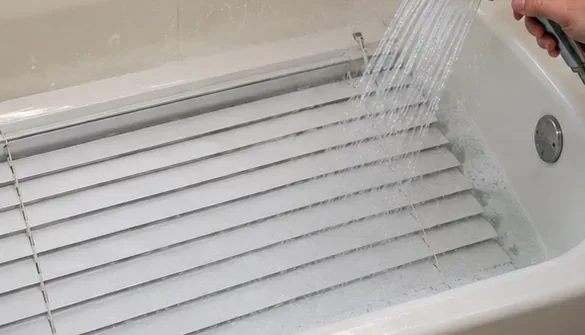
Drain the tub, then rinse the washable portions of the blind with clean water. A gentle shower sprayer can make this easier, but avoid blasting delicate slats, cords, or tapes with high pressure.
Rinse until visible suds are gone. Detergent left behind can dry into streaks or make surfaces attract dirt more quickly.
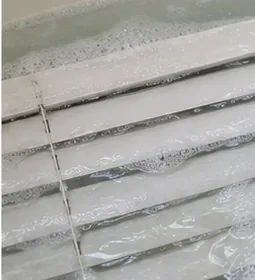
Rinse thoroughly with clean water so detergent does not dry on the slats or leave residue.
7. Let excess water drain and dry the blind as directed
Allow the blind to drain over the tub before moving it. Blot accessible water with a clean towel if the instructions allow it, then follow the manufacturer's drying method. Some products are reinstalled damp and lowered to dry; others should be allowed to dry more fully first.
Do not close up a damp blind and leave it bundled for hours. Trapped moisture around cords, rails, or stacked slats can slow drying and may create water spots or corrosion on susceptible hardware.
Allow excess water to drain, then follow the product instructions for drying before the blind is returned to normal use.
8. Reinstall the blind and check operation
Once drying requirements are met, reinstall the blind, lower it, tilt the slats in both directions, and operate the lift mechanism gently. Check that the slats remain straight, the cords are not twisted, and no water is trapped around the headrail.
If the blind feels stiff or the mechanism behaves differently after cleaning, stop operating it repeatedly and consult the manufacturer rather than forcing it.
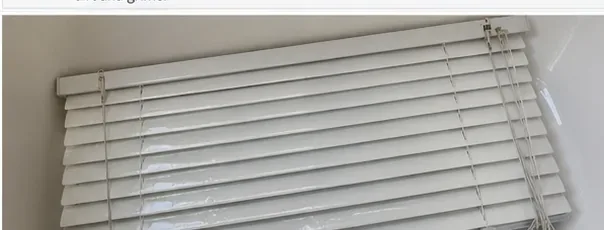
Once the blind is dry enough for its product instructions, reinstall it and lower it fully while checking that the slats and operating mechanism move normally.
What if the blinds are too risky to soak?
Use the least-wet method that the manufacturer allows. For many blinds, regular dusting with a microfiber cloth or duster and gentle vacuuming with a soft brush attachment are the first-line methods. For products that permit damp cleaning, use a well-wrung soft cloth and mild detergent only where needed.
LEVOLOR's current faux-wood blind care instructions, for example, recommend a soft cloth or sponge with warm or cold water rather than hot water. Bali's official cleaning guidance likewise separates cleaning methods by material and product type instead of recommending one universal soaking method.
Common mistakes that can damage blinds
Soaking an unknown blind: if you cannot verify that immersion is allowed, do not use the bathtub method.
Submerging the headrail automatically: many instructions treat the headrail differently from the slats.
Using hot water: lukewarm water is the safer manufacturer-backed default for immersion-approved products.
Using abrasive cleaners or hard scrubbing: these can scratch coatings or alter finishes.
Soaking real wood: follow dry or manufacturer-approved wood-care methods instead.
Ignoring decorative tapes: some manufacturers specifically exclude blinds with fabric tapes from immersion.
Reinstalling with trapped water: drain and dry according to the product instructions before normal operation.
How to tell whether the cleaning worked
A successful bathtub cleaning should leave the slats visibly free of dust film, greasy residue, and soap streaks without changing their color, finish, shape, or movement. After reinstalling, the blind should raise, lower, and tilt as it did before cleaning.
If you see discoloration, swollen material, peeling finish, rust-colored water near hardware, frayed tapes, or a changed operating feel, stop and contact the manufacturer. Those are signs that the product may need a different cleaning method or professional attention.
Bottom line
Cleaning blinds in a bathtub can work very well for products that are explicitly designed to tolerate water immersion. The key is not the bathtub itself; it is matching the method to the exact blind. Verify the care instructions first, keep excluded hardware dry, use lukewarm water and mild detergent, clean gently, rinse thoroughly, and dry according to the manufacturer's directions.
If the manual is missing or the product type is uncertain, skip the soak. A careful in-place cleaning is slower, but it is much less expensive than replacing a warped blind, damaged headrail, or failed motor.