Home
» INTERNET
»
How to Clean Golf Grips Without Damaging Their Traction
How to Clean Golf Grips Without Damaging Their Traction
Cleaning golf grips is useful when sweat, sunscreen, skin oils, dust, and general grime are masking the texture that is still present. It is not a way to rebuild rubber that has hardened, replace worn cord, or restore a polyurethane surface that has started to break down. That distinction matters because the best result is not simply a grip that looks darker or cleaner. A successful cleaning should leave the grip dry, free of slippery residue, comfortable in the hands, and close to the traction the material is still capable of providing.
This guide uses current manufacturer guidance checked in September 2026. Golf Pride recommends cleaning many of its grips with a soft brush, soap, and water, then drying thoroughly. Winn specifically warns against using a brush, soapy water, or immersion on its absorbent grips. SuperStroke recommends a soft cloth and warm water for its putter grips. Because golf-grip materials differ, start by identifying what you own rather than applying one method to every club.
What a Good Cleaning Result Should Look and Feel Like
Check
Good result
Change your approach when...
Surface feel
Dry, clean, and secure in normal grip pressure
It still feels slick after one or two gentle cleanings
Texture
Grooves, pattern, or cord are clear of visible grime
The texture itself is polished flat, frayed, or crumbling
Residue
No soap film, oily shine, or tacky cleaner residue
A cleaner leaves the grip unusually sticky, chalky, or discolored
Material condition
Supple enough for the grip design, with no cracking
Rubber is hard or cracked, cord is failing, or the outer layer is damaged
Drying
Fully dry before play or storage
Moisture remains in the surface, seams, or under an absorbent outer layer
Golf Pride lists a slick, glossy appearance, a firmer-than-normal feel, and crumbling rubber or cord as signs of wear rather than dirt. Its guidance says grips should be checked regularly and recommends regripping at least once a year, with actual timing depending on how much the clubs are used. See Golf Pride's grip-wear guidance.
First, Identify the Grip Material
The cleaning method should follow the grip maker's instructions whenever you can identify the brand and model. That is especially important for soft polymer or polyurethane surfaces.
Typical rubber or rubber-and-cord grips: A mild soap-and-water cleaning with a soft brush is a common manufacturer-supported method. Golf Pride recommends cleaning between rounds with a soft brush, soap, and water, followed by thorough drying. See Golf Pride's grip-care guide.
Winn grips: Use a small amount of water on a soft towel and rub gently. Winn says not to use a brush and soapy water and not to immerse the grip, because saturation or aggressive cleaning can damage the top surface and reduce tackiness and slip resistance. See Winn's grip-care instructions.
SuperStroke putter grips: The manufacturer recommends a soft cloth and warm water, followed by air drying. See SuperStroke's cleaning FAQ.
How to Clean Golf Grips Step by Step
1. Inspect the Grip Before You Add Water
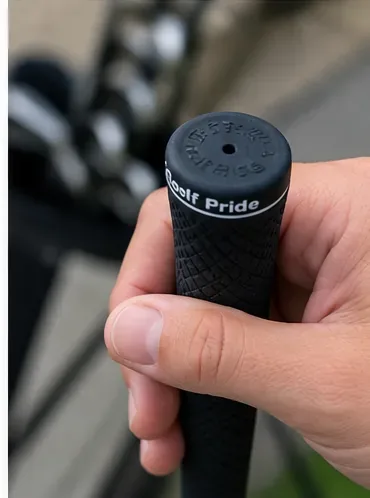
A close view of a golf grip end cap and textured surface being inspected for wear, hardening, cracks, or other damage.
Look at the entire grip in good light. Pay special attention to the thumb areas, the lower hand, any cord sections, seams, and the end cap. Decide whether the problem is removable soil or physical wear. Dirt tends to sit in texture and can often be lifted. Wear looks more like glossy smoothing, hardening, cracking, crumbling rubber, damaged cord, or a peeling outer layer.
If the grip is structurally worn, cleaning may improve appearance but not restore dependable traction. That is the point to consider replacement instead of escalating to stronger chemicals or harder scrubbing.
2. Gather a Small, Controlled Cleaning Kit
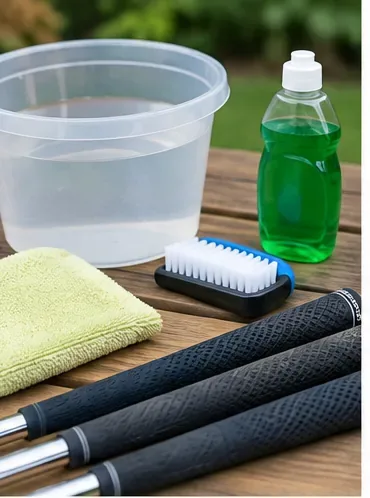
Mild dish soap, a soft brush, clean water, microfiber towels, and several golf clubs arranged for grip cleaning.
For ordinary rubber or cord grips, prepare a bowl or bucket of clean water, a small amount of mild dish soap, a soft nylon brush, and two clean towels. One towel can handle washing and the other can be reserved for final drying. Avoid solvent-based degreasers, abrasive pads, stiff wire brushes, and household cleaners unless the grip manufacturer specifically approves them.
For Winn or another grip with manufacturer instructions that call for a damp-cloth method, skip the brush and soap. For a SuperStroke putter grip, use a soft cloth with warm water as directed by the manufacturer.
3. Lightly Wet a Rubber or Cord Grip
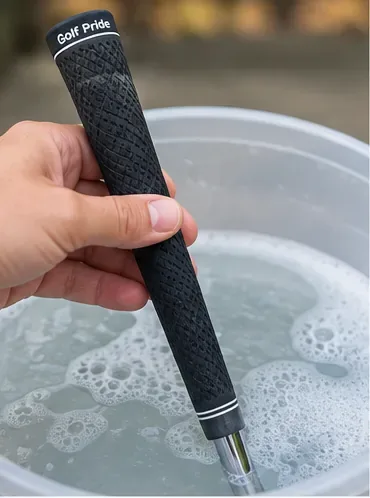
A textured rubber golf grip being lightly wetted over a basin before cleaning, without soaking the entire club.
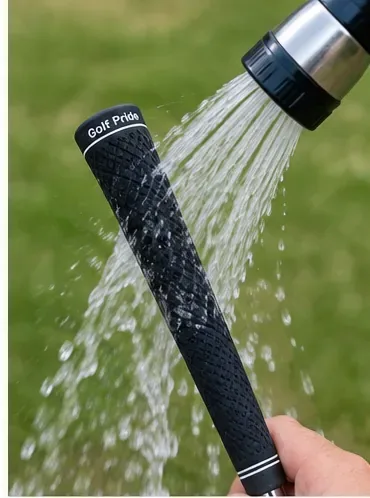
If the grip is a conventional rubber or rubber-and-cord model that permits soap-and-water cleaning, lightly wet the surface. The goal is to loosen surface soil, not to soak the club. Work one grip at a time so water does not sit on the grip longer than necessary.
Do not interpret this step as universal. Winn specifically advises against immersing its grips because the underlying layer can absorb water. If you are uncertain about the construction, use the least aggressive method first: a damp soft towel.
4. Brush Rubber or Cord Gently With Mild Suds
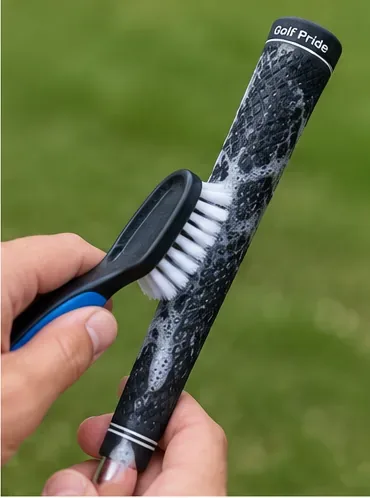
A soft brush working light soap suds into the textured surface of a rubber golf grip.
Apply a small amount of mild soapy water and use a soft brush to work along the grip texture. Short, controlled strokes are usually enough to lift skin oils and dirt from molded patterns and exposed cord. You are cleaning the surface, not trying to abrade it back to a rougher finish.
Stop if you see color transfer, surface peeling, loosened fibers, or rapid material loss. Those are not signs that you need to scrub harder. They indicate that the grip material may be worn or incompatible with the method.
5. Remove Soap Promptly
A rubber golf grip being rinsed promptly with clean water after a brief soap-and-brush cleaning.
Rinse a rubber or cord grip with clean water, or wipe it repeatedly with a clean damp cloth until suds are gone. Keeping soap on the surface can leave a film that defeats the purpose of cleaning. Use a controlled stream rather than soaking the club or leaving the grip submerged.
For a Winn grip, do not use this rinse-and-brush sequence. Follow Winn's damp-towel method instead. For SuperStroke putter grips, use the manufacturer's warm-water-and-soft-cloth approach.
6. Towel Dry Thoroughly
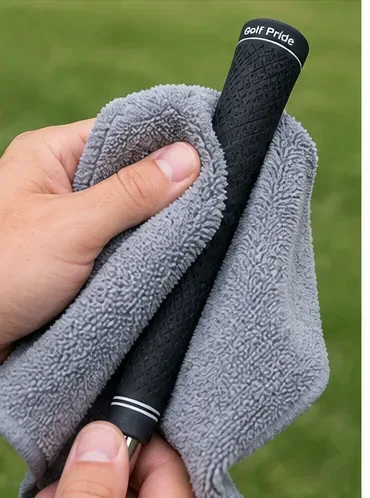
A freshly cleaned golf grip being blotted and wiped dry with a clean microfiber towel.
Use a clean, absorbent towel to remove surface moisture. Blot and wipe rather than twisting the towel aggressively around a soft grip. Winn specifically warns against vigorous rubbing in wet conditions because it can damage the top surface.
A clean grip can still feel slippery if water or soap remains on it, so do not judge the result yet. The meaningful traction check comes after full drying.
7. Let the Grips Air Dry Completely
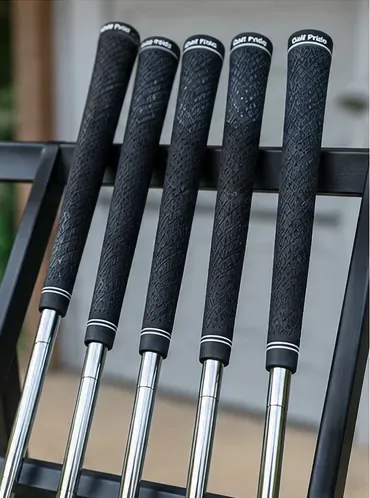
Several cleaned golf clubs resting with their grips exposed to air so the surfaces can dry completely.
Leave the clubs in a dry, ventilated place until the grips are fully dry. Do not speed the process with intense heat or prolonged direct sun. Golf Pride recommends storing clubs in a cool, dry place away from sunlight and heat, while SuperStroke also advises temperature-controlled storage because prolonged heat, humidity, and extreme conditions can degrade grip quality.
Keep freshly cleaned grips out of an enclosed car trunk or hot garage if those areas become very warm. Cleaning removes contamination; it does not protect the material from environmental aging.
8. Test the Dry Grip and Decide Whether Cleaning Was Enough
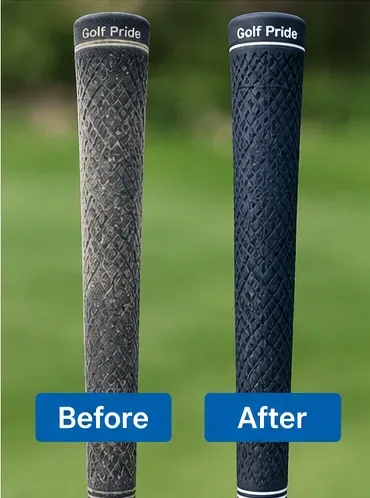
A side-by-side visual check of a visibly dirty grip and a cleaner grip used to judge whether surface soil has been removed.
With clean, dry hands, hold the club using your normal grip pressure. A good cleaning result should feel secure without forcing you to squeeze harder than usual. The pattern should be visibly clearer, and the surface should not feel soapy, greasy, unusually sticky, or chalky.
If the grip is cleaner but still shiny, hard, cracked, crumbling, or noticeably low in traction, do not keep escalating the cleaning process. Golf Pride identifies slickness, firmness, and crumbling as wear indicators. At that stage, replacement is the more appropriate fix.
Rubber, Cord, Winn, and Putter Grips: Which Method Fits?
Grip type
Preferred starting method
Main tradeoff
Rubber
Mild soap, water, soft brush, thorough drying
Effective on oils and embedded dirt, but excessive scrubbing can accelerate cosmetic wear
Rubber + cord
Mild soap, water, soft brush, thorough drying
Brush helps clear texture, but damaged or fraying cord should not be scrubbed aggressively
Winn absorbent grips
Small amount of water on a soft towel
Gentler cleaning protects the top surface; deep scrubbing and soaking are specifically discouraged
SuperStroke putter grips
Soft cloth and warm water, then air dry
Simple and low risk; stronger cleaning is not supported by the cited manufacturer guidance
Unknown material
Damp soft cloth first
May remove less dirt, but reduces the risk of damaging a surface with the wrong cleaner
When a Second Cleaning Makes Sense
A second gentle pass can be reasonable when the first wash clearly removed dirt but some grime remains in the texture. Use the same mild method rather than moving immediately to a stronger chemical. Repeating a manufacturer-approved cleaning method is usually a safer choice than experimenting with alcohol, degreaser, household disinfectant, or abrasive cleaners on an unknown grip compound.
Change course when the material itself is deteriorating. If cleaning exposes cracks, loose cord, peeling layers, or permanent gloss, the remaining problem is wear. More cleaning will not rebuild the surface.
How Often Should You Clean Golf Grips?
There is no single calendar interval that fits every golfer because sweat, weather, sunscreen, practice volume, glove use, and storage conditions vary. Golf Pride recommends cleaning between rounds and also emphasizes keeping hands clean during play. A practical routine is to wipe grips during or after play when they pick up sweat or dirt, then perform a deeper manufacturer-approved cleaning when the surface no longer feels clean.
The important distinction is between cleaning frequency and replacement timing. Regular cleaning can help preserve usable texture, but it does not make grips permanent. Golf Pride recommends checking for wear regularly and regripping at least annually, adjusted for use.
Common Mistakes That Reduce Grip Quality
Using the same method on every grip: Rubber, polyurethane, and absorbent layered grips can have different care requirements.
Soaking an absorbent grip: Winn explicitly warns that immersion can saturate the underlying layer.
Scrubbing harder when traction does not return: Persistent gloss or hardness is more likely a wear problem than a cleaning problem.
Leaving soap behind: Residue can make a freshly washed grip feel slick.
Playing before the grip is dry: Evaluate traction only after the surface has dried completely.
Using heat to speed drying: Manufacturer guidance favors cool, dry storage and avoiding prolonged heat and sunlight.
Quick Quality Checklist
The grip is fully dry.
No soap or cleaner residue is visible or detectable by feel.
Texture and cord channels are clear of surface dirt.
The grip feels secure with normal hand pressure.
No new peeling, fraying, cracks, or discoloration appeared during cleaning.
If the grip remains slick, glossy, hard, or crumbling, replacement is considered instead of more aggressive cleaning.
Cleaning works best as maintenance, not restoration. For compatible rubber and cord grips, mild soap, water, a soft brush, and thorough drying can remove the contamination that masks usable texture. For Winn and some soft putter grips, the safer method is deliberately gentler. The result to aim for is a clean, fully dry grip that uses the texture it still has. When the material itself is worn, the right next step is not a harsher cleaner; it is a new grip.