Home
» INTERNET
»
How to Clean the Inside of a Purse Without Damaging the Lining
How to Clean the Inside of a Purse Without Damaging the Lining
You open your purse to grab your keys and find the usual mix: crumbs in the seams, makeup dust on the lining, a sticky spot from a leaking product, and a faint stale smell that was not there when the bag was new. The inside of a purse gets dirty faster than many people realize because it is a small, enclosed space that collects lint, grit, cosmetics, food particles, loose receipts, and whatever transfers from your hands or daily essentials.
The safest way to clean it is not to start with the strongest cleaner. Start dry, remove loose debris, identify the lining material, then add the smallest amount of moisture or product needed. That order matters because many purse interiors combine fabric, leather, coated canvas, suede, adhesives, dye, and metal hardware in the same tight area.
Manufacturer guidance supports this material-first approach. Coach, for example, says fabric and woven materials can often be cleaned with a soft damp or dry cloth, while suede and several specialty leathers require much more cautious care. Longchamp likewise advises gentle cleaning, limited moisture, and air-drying rather than soaking. For valuable, vintage, or unfamiliar bags, the maker's care instructions should override generic cleaning advice.
What You Need Before You Start
A clean, soft brush or unused soft toothbrush
A handheld vacuum or vacuum with a low-suction attachment
Two or three clean white microfiber or cotton cloths
Cool or lukewarm water
A small amount of mild, pH-neutral soap only if the lining can tolerate damp cleaning
A manufacturer-approved leather or fabric cleaner when the bag requires one
White paper towels or an absorbent white towel for blotting
White cloths are useful because dye transfer from the bag becomes visible immediately. Avoid bleach, harsh solvents, abrasive pads, heavily fragranced sprays, and improvised stain removers unless the bag manufacturer specifically approves them for that material.
How to Clean the Inside of a Purse, From Easiest to Most Involved
1. Empty Every Compartment
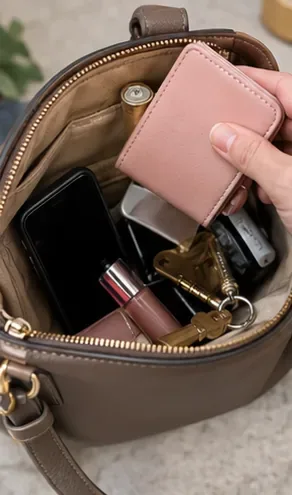
Remove everything from the main compartment and every zippered or slip pocket before you begin cleaning.
Take out wallets, cosmetics, pens, chargers, receipts, tissues, and anything hiding in small pockets. Check for loose caps, broken makeup, leaking hand sanitizer, or melted candy that may explain a stain or odor. If the bag has a removable base insert, organizer, or pouch, take that out too.
Before applying any cleaner, look for a care label or identify the bag model and material. A fabric lining can often tolerate gentle surface cleaning; suede, leather, satin, laminated fabric, metallic finishes, and unknown vintage materials may not.
2. Turn the Bag Open and Remove Loose Debris
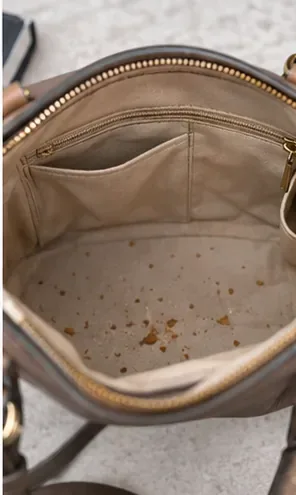
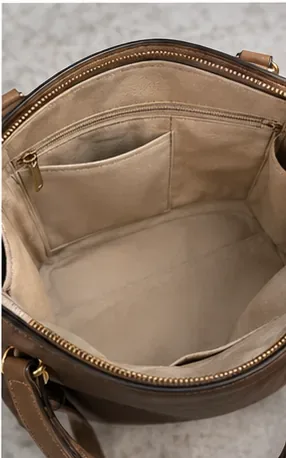
Inspect the empty lining so you can separate loose dirt from stains that will need later treatment.
If the lining is loose enough to pull outward without straining seams, gently bring it out for easier access. Otherwise, leave it in place. Hold the purse open over a trash can and lightly shake or tap it so crumbs and grit fall out.
Do not aggressively turn a structured or vintage purse inside out. Seams, piping, bonded layers, and old adhesives can crack or separate when flexed too far.
3. Vacuum the Lining Gently
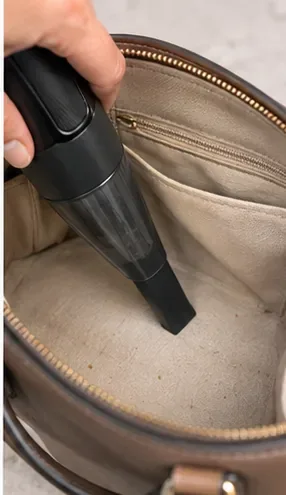
Use low suction to lift dust and crumbs from the lining without dragging hard across the fabric.
Vacuuming is often the best next step because it removes abrasive grit without adding moisture. The Canadian Conservation Institute recommends low suction and gentle handling when vacuuming textiles; it also notes that vacuuming removes loose particulate soil but does not remove oily or chemically bound stains.
Use the lowest practical suction setting and keep the nozzle moving lightly over the surface. For a delicate lining, place a piece of clean mesh or screening over the nozzle opening so loose threads cannot be pulled into the vacuum. Pay special attention to bottom corners, seams, folds, and the edges of pockets.
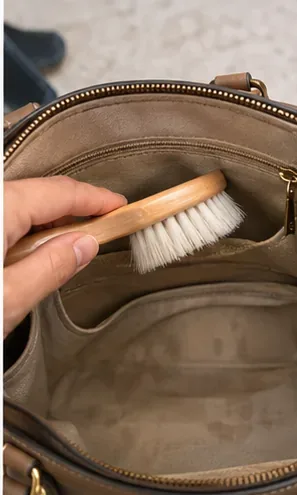
A soft brush can loosen dust in seams and pocket corners that a vacuum nozzle cannot reach directly.
Use a soft brush to sweep dust toward the vacuum nozzle rather than grinding it deeper into the weave. Work gently along stitching, zipper tape, and pocket corners. If the lining is frayed, powdery, splitting, or pulling away from the seam, stop rather than trying to make it perfectly clean.
This dry-cleaning stage is enough for many purses. If the lining now looks clean and smells normal, there is no reason to wet it.
5. Spot-Clean a Washable Fabric Lining
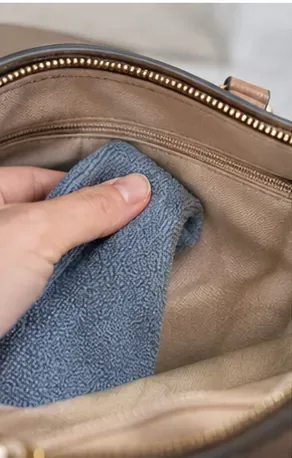
For a compatible fabric lining, use very little moisture and blot rather than saturating the material.
If visible marks remain, first test your cleaning method on a hidden area. Dampen a clean white cloth with water and blot the test spot. If color transfers, the texture changes, or a ring appears after drying, stop and use a professional cleaner.
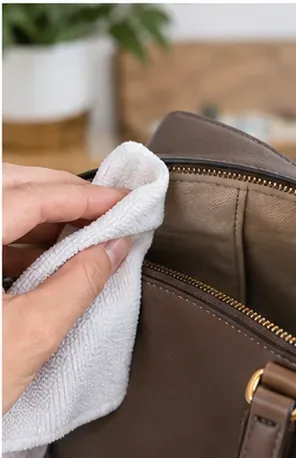
When the manufacturer allows damp cleaning, use a barely damp cloth. For ordinary soil on a sturdy lining, a tiny amount of mild, pH-neutral soap in water may help, but keep the solution on the cloth rather than pouring or spraying it into the bag. Blot from the outside edge of a mark toward the center. Follow with a second cloth lightly dampened with plain water, then blot dry.
Coach's current fabric-cleaner directions illustrate the same basic principle for compatible materials: use a small amount on a soft white cloth, remove excess with a damp white cloth, blot dry, and allow the material to air-dry fully. The company also lists multiple materials on which that cleaner should not be used. See Coach's official fabric-cleaner instructions and exclusions.
6. Treat Leather Trim or a Leather Interior Separately
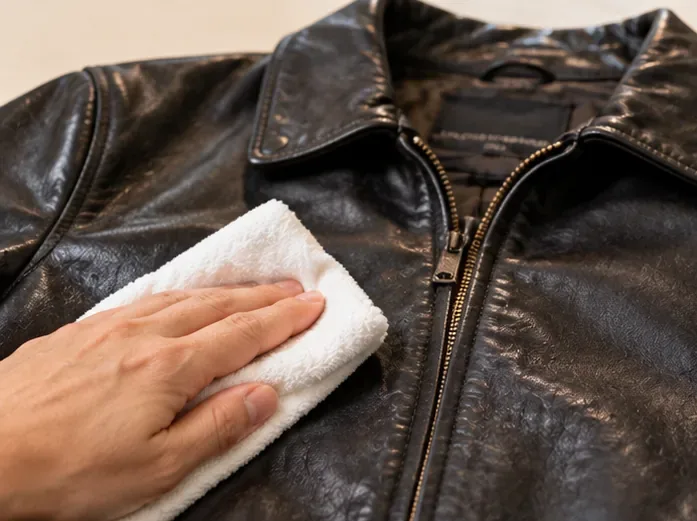
Leather trim should be cleaned separately with a method approved for that specific leather.
Do not assume that a method safe for the fabric lining is safe for leather trim. Some finished leathers tolerate a slightly damp cloth or leather-specific cleaner; suede and other specialty leathers may be damaged by water.
Coach's official product-care guidance says its canvas and fabric products may be cleaned with a damp or dry soft cloth, while suede should not be exposed to water and some specialty materials are better professionally cleaned. Longchamp also recommends gentle cleaning, minimal moisture, and avoiding soaking. Check Coach's official bag-care guidance and Longchamp's official fixing and care guidance for examples of how dramatically recommendations can differ by material.
If you cannot identify the leather, the safest move is usually a dry soft cloth and professional advice rather than experimenting with alcohol, dish degreaser, baby wipes, or household leather conditioners.
7. Air-Dry the Purse Completely
Leave the purse open in a well-ventilated room until the lining and seams are completely dry.
Keep the bag open and let it air-dry at room temperature. Do not close the zipper while the lining still feels cool or damp. Avoid hair dryers, radiators, direct sunlight, and other high heat, which can distort fabric, dry leather, soften adhesives, or change color.
Longchamp specifically advises air-drying away from heat and direct sunlight. That principle is broadly sensible for mixed-material handbags because the interior may contain layers that dry at different rates.
8. Restock Only Clean, Dry Items
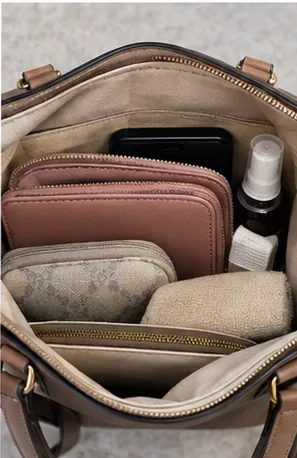
Once the interior is fully dry and odor-free, return clean items and contain products that could leak.
Wipe down the items you plan to put back, especially makeup cases, bottles, pens, and reusable containers. Use small pouches for cosmetics and pens, keep liquids capped tightly, and avoid loose snacks that shed crumbs.
A purse organizer is optional, but it can make future cleaning much easier because many crumbs and small spills stay on a removable insert instead of the lining.
What to Do About Specific Problems
Problem
Safest first move
When to stop
Crumbs, dust, lint
Shake out, brush gently, then vacuum on low suction
If the lining is fragile, frayed, or pulling away
Fresh water-based spill
Blot immediately with a clean absorbent white cloth
If dye transfers or a ring begins to form
General fabric grime
Spot-test, then use a barely damp cloth if the maker allows it
If the material is satin, suede, wool, laminated, metallic, vintage, or unknown
Ink, oil, lipstick, or heavy cosmetic stain
Blot loose residue without spreading it
Before using solvents or strong stain removers on a valuable bag
Musty odor with visible mold
Isolate the bag and address the moisture source
For porous linings, expensive bags, or extensive growth, consult a specialist
When a Stain Is Better Left to a Professional
The hardest stains are not always the ones that look darkest. Ink and oils can migrate into fabric and leather. Heavy wetting can also produce tide marks, dye bleed, stiffness, delamination, or adhesive failure that is harder to reverse than the original spot.
Conservation guidance from the Canadian Conservation Institute makes an important distinction: mechanical surface cleaning is useful for loose dirt, but oily or bound stains may require wet cleaning or dry cleaning, which are more invasive treatments. For a luxury, vintage, collectible, sentimental, or structurally fragile purse, that is a strong reason to stop before escalating to aggressive chemistry.
What If the Inside of the Purse Has Mold?
Visible mold changes the problem from ordinary cleaning to contamination and moisture control. Do not simply spray perfume or bleach into the lining. The U.S. Environmental Protection Agency notes that mold can penetrate porous materials and can be difficult or impossible to remove completely; it also recommends consulting a specialist for expensive or sentimental items when you are unsure how to clean them.
Read the EPA's basic mold-cleanup guidance before attempting mold removal. If the bag was soaked in a flood, has widespread growth, or causes respiratory symptoms when handled, professional cleaning or disposal may be safer than a routine purse-cleaning method.
Common Mistakes That Make the Interior Worse
Soaking the lining: water can migrate into leather, interfacing, cardboard stiffeners, glues, and seams.
Scrubbing hard: friction can fuzz fabric, spread pigment, or enlarge an oily stain.
Using colored cleaning cloths: the cloth itself can transfer dye, and it hides color transfer from the bag.
Spraying cleaner directly inside: overspray can reach incompatible materials and create uneven wetting.
Using heat to hurry drying: heat can distort or dry out materials and may affect adhesives.
Assuming all leather is the same: smooth finished leather, suede, vegetable-tanned leather, patent finishes, and specialty leathers can require different care.
How to Check Your Work Before Using the Purse Again
Do a final check in good light after the bag has dried completely. The goal is not necessarily to make an old lining look brand-new. The goal is to remove loose soil and safely reduce stains without creating new damage.
The lining should feel fully dry, including corners and seams.
No dye should transfer to a clean white cloth rubbed gently over the treated area.
The cleaned area should not have a new stiff, shiny, bleached, or fuzzy texture.
There should be no spreading water ring or new discoloration.
The purse should smell neutral rather than strongly of cleaner or damp fabric.
Zippers, glued edges, leather trim, and pocket seams should look unchanged.
If the purse passes those checks, it is ready to restock. If a stain is lighter but stable, stopping may be the better result. Repeated cleaning passes often add more moisture and friction while delivering smaller gains.
The Short Version
To clean the inside of a purse safely, empty it, shake out debris, vacuum gently, brush seams, identify the lining material, spot-test before adding moisture, treat fabric and leather separately, then air-dry the bag fully before restocking. Move from the least aggressive method to the most targeted one, and stop when the material begins to react. That simple order prevents many of the cleaning mistakes that turn a small interior stain into permanent damage.