Home
» INTERNET
»
How to Get a Lipstick Stain Off Clothes Without Setting It
How to Get a Lipstick Stain Off Clothes Without Setting It
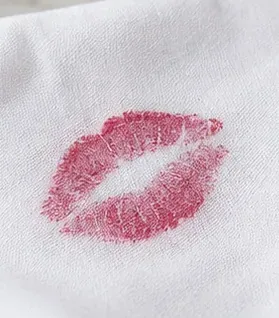
A lipstick mark on a shirt can look worse after the first attempt to clean it: the red color spreads, a greasy shadow remains, or the stain seems gone while wet and reappears after drying. That happens because lipstick is not just “red dye.” Many formulas combine oils or waxes with concentrated pigments, so successful stain removal usually means dealing with both the greasy base and the remaining color.
For a beginner, the safest plan is simple: read the care label, remove excess lipstick without rubbing, pretreat a washable garment, rinse and launder according to the label, then air-dry and check the result before adding heat. The American Cleaning Institute (ACI) lists lipstick under cosmetics stains and recommends pretreating with a prewash stain remover, liquid laundry detergent, a detergent paste, or bar soap before laundering. ACI also warns that a remaining lipstick stain should be treated again before the garment goes into a dryer.
What do you need to know before touching the stain?
Start with the care label. In the United States, the Federal Trade Commission's Care Labeling Rule requires textile apparel to carry care instructions that have a reasonable basis. A label that says “Dry Clean Only” is not just a suggestion: it means the manufacturer has a basis for warning that washing can harm the garment.
If the item says Dry Clean Only, is made from a delicate fiber you are not confident treating, has unstable dye, or includes special trim, stop home treatment after gently removing any surface lipstick. Tell the cleaner what caused the stain and what, if anything, you already applied.
For washable clothing, check these points before choosing a cleaner:
Question
Why it matters
Beginner-friendly choice
Is the garment machine washable?
Water-based treatment can distort or damage some items
Follow the care label; use a professional cleaner for Dry Clean Only items
Is the fabric colorfast?
Alcohol, stain removers, or bleaching products can alter some dyes
Pretest on an inconspicuous area first
Is there thick lipstick on the surface?
Rubbing it immediately can spread wax and pigment
Lift the excess gently with a dull spoon or similar edge
Has the item been tumble-dried?
Heat can make a remaining lipstick stain harder to remove
Expect to repeat pretreatment and avoid more heat until the stain is gone
Start by checking the care label and the fabric. Lipstick is a combination stain with oily or waxy material plus strong pigment, so the safest treatment depends on what the garment can tolerate.
What should you prepare?
You do not need a large collection of chemicals. For most washable everyday clothing, gather a dull spoon, clean white cloths or white paper towels, liquid laundry detergent or a prewash stain remover, access to running water, and your regular laundry detergent. A soft-bristle toothbrush can be useful on sturdy fabric, but it is optional.
Why white cloths? They make it easier to see whether lipstick pigment is transferring out of the garment, and there is no colored towel dye to confuse the result.
If you plan to try rubbing alcohol on a stubborn, colorfast washable item, use it only as a separate, tested step—not mixed into another cleaner. ACI's specific lipstick guidance for cloth napkins uses 70% or 90% rubbing alcohol applied by dabbing, with the stained fabric positioned over absorbent towels. Because garment fibers and finishes vary, spot-test first and skip this route on Dry Clean Only or delicate clothing unless its care instructions support it.
How to get a lipstick stain off washable clothes
1. Lift off excess lipstick instead of wiping it around
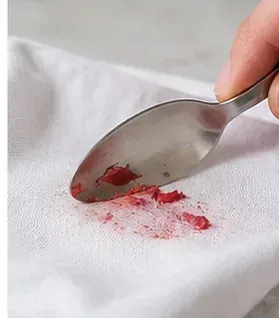
If there is a visible lump, smear, or waxy layer sitting above the fibers, use the edge of a spoon or another dull tool to lift it away. Work from the outside toward the center. Do not use a sharp knife that can cut fibers.
Remove any thick lipstick sitting on top of the fabric with a dull edge. Lift rather than smear so you do not spread pigment into a larger area.
A fresh mark may not have much solid material to lift. In that case, move directly to blotting rather than scraping at the fabric itself.
2. Blot—do not rub
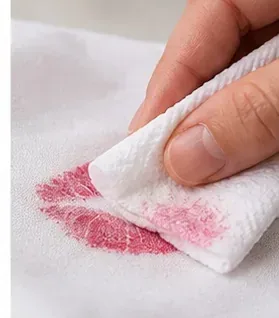
Press a clean white cloth or paper towel against the stain to pick up loose pigment and oil. Rubbing back and forth can enlarge the stained area and push lipstick into neighboring fibers.
Blot instead of rubbing. A clean white cloth lets you see whether color is transferring and reduces the chance of spreading the stain across the fabric.
If the fabric is sturdy and washable, position the stain face-down on a stack of clean white paper towels or an absorbent white cloth. Treating from the back can help transfer lipstick out of the fabric and into the absorbent layer instead of driving it farther through.
3. Pretreat the oily base
Apply a small amount of liquid laundry detergent or a prewash stain remover directly to the stain, following the product directions. ACI's general stain-removal guide lists both as appropriate pretreatments for cosmetics and lipstick.
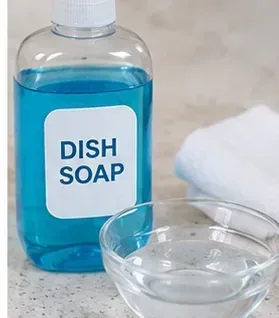
For greasy residue on a washable item, a small amount of mild liquid dishwashing detergent can also be useful. Clorox's current lipstick guidance uses dish detergent while blotting from the back of the stain. If you choose dish soap, rinse it out thoroughly before putting the garment in a washing machine; hand dishwashing products can create excessive suds in a washer.
For a washable garment, use one appropriate pretreatment at a time. Liquid laundry detergent or a prewash stain remover is the simplest default; mild dish soap can help with greasy residue when it is rinsed out before machine washing.
Use one main pretreatment at a time so you know what is acting on the fabric. More chemicals are not automatically more effective.
4. Work the pretreatment gently
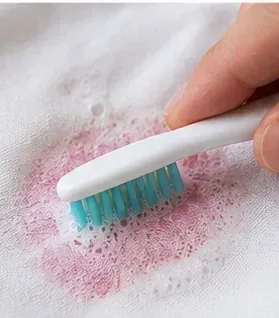
Let the product sit for the time on its label. On sturdy washable cotton or polyester, you can gently work the treatment with clean fingers or a soft-bristle brush. Do not scrub aggressively. The aim is to loosen the oily binder and pigment, not abrade the fibers.
Work the pretreatment gently into sturdy washable fabric with fingers or a soft brush. Aggressive scrubbing can roughen fibers or spread color, especially on delicate fabrics.
For delicate knits, loosely woven fabric, embroidery, or fragile trim, skip the brush. Blotting and professional care are safer when mechanical agitation could change the fabric surface.
5. What if a strong pink or red shadow remains?
If the first pretreatment removes the greasy feel but leaves color, repeat the detergent or prewash treatment before escalating. Lipstick is one of the more stubborn cosmetics stains, and ACI notes that it may require a second round of pretreatment and laundering.
For sturdy, colorfast washable fabric, ACI's lipstick-on-napkins method is another option: place the stain face-down over absorbent towels and dab with a towel dampened with 70% or 90% rubbing alcohol, changing the absorbent material as lipstick transfers. Do not pour alcohol freely through the garment, and pretest first.
The University of Georgia Cooperative Extension also advises pretesting stain-removal agents on an inconspicuous area to check colorfastness. Its textile guidance treats lipstick as a cosmetic stain and distinguishes washable apparel from wool, silk, upholstery, and other materials that may require different solvent-based professional treatment.
6. Rinse the treated area thoroughly
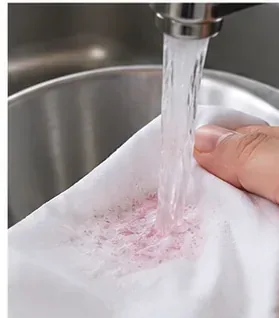
Rinse the stain and pretreatment out of the fabric. When practical, rinse from the back so loosened lipstick moves toward the surface it entered rather than deeper through the textile.
Rinse the treated area thoroughly, preferably from the back of the stain so loosened lipstick is pushed out rather than farther through the fabric.
Use a water temperature that is safe for the fabric. The final wash can use the hottest water permitted by the care label, which is also the wording ACI uses in its makeup-stain advice. “Hottest safe” is more useful than assuming hot water is appropriate for every garment.
7. Launder according to the care label
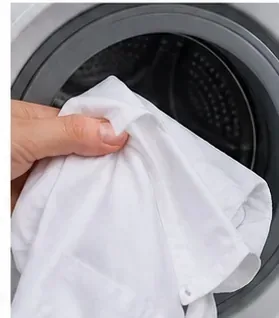
Wash the garment with laundry detergent using the care-label instructions for cycle and water temperature. If the label allows bleach and color remains, ACI notes that an appropriate bleach can be used in laundering. That does not mean chlorine bleach is safe for every white-looking garment; fiber content, dyes, finishes, and spandex can change what is permitted.
Launder only after pretreatment, using the hottest water and cycle that the garment's care label safely allows.
Do not add unapproved household chemicals to the washer. In particular, never mix chlorine bleach with ammonia or other incompatible cleaners.
8. Air-dry first, then inspect in good light
This is one of the most important beginner steps. Do not assume a stain is gone just because it looks faint while the fabric is wet. Let the garment air-dry and inspect both the color and any remaining greasy shadow.
Air-dry and inspect the fabric before using a dryer. If any color or oily shadow remains, repeat treatment first because dryer heat can make a remaining stain much harder to remove.
ACI specifically recommends making sure makeup and lipstick stains are gone before the garment goes into the dryer because dryer heat can set what remains. If you still see pink, red, brown, or an oily translucent patch, repeat the pretreatment and wash process before machine drying.
What mistakes make lipstick stains harder to remove?
Rubbing the fresh stain
Rubbing can enlarge the mark and drive pigment into more fibers. Lift excess and blot first.
Going straight to the dryer
Heat is convenient, but it removes your easiest checkpoint. Air-drying lets you see whether another treatment is needed before heat makes the remaining stain more stubborn.
Ignoring the care label
A treatment that works well on a washable cotton napkin is not automatically appropriate for silk, wool, acetate, structured garments, or items labeled Dry Clean Only.
Using every cleaner at once
Do not combine stain remover, alcohol, bleach, ammonia, dish soap, and other chemicals in an improvised mixture. Use a known treatment, rinse as directed, then decide whether another step is necessary.
Scrubbing delicate fabric with a toothbrush
A brush is a tool, not a requirement. On delicate fabric, friction can create fuzzing, shine, distortion, or visible wear even if the color stain improves.
What if the lipstick stain has already been through the dryer?
It is still reasonable to try again, but plan on more than one treatment. Start with the same basics: remove any solid residue, pretreat the oily area, launder according to the label, and air-dry to inspect. Clorox's guidance for lip balm and lipstick-type oily stains notes that dryer heat can melt greasy material into fibers and make complete removal more difficult, though pretreatment can still help.
Do not compensate by immediately using a stronger solvent or hotter wash than the garment allows. Repetition with a fabric-safe method is usually a better first escalation than risking permanent fiber or dye damage.
What about lipstick on silk, wool, upholstery, or carpet?
Treat those as separate cleaning problems rather than extensions of the washable-clothing method. The University of Georgia's textile stain-removal guidance gives different procedures for wool, silk, upholstery, carpet, and other surfaces, and warns that solvent cleaners can damage carpet backing or upholstery foam if overapplied.
For expensive upholstery, silk, wool, vintage textiles, or anything whose label restricts water washing, professional cleaning is a sensible choice. Blot excess lipstick, avoid heat, and tell the cleaner exactly what the stain is and what you have already tried.
How do you know you are finished?
Use a simple four-part check after the garment has air-dried:
No visible lipstick pigment remains when viewed in bright neutral light.
No greasy or translucent shadow remains when the fabric is held at an angle.
The fabric color and texture look unchanged in the treated area.
The garment has been washed and rinsed according to its care label with no pretreatment residue left behind.
If all four are true, normal drying is reasonable. If the stain is lighter but still visible, repeat the safest successful pretreatment rather than reaching immediately for a harsher chemical.
For a first attempt, keep the process controlled: care label, lift, blot, pretreat, rinse, wash, air-dry, inspect. That sequence gives you several chances to stop or repeat without turning a lipstick mark into fabric damage.