Home
» INTERNET
»
How to Get Fabric Glue Off Clothes Without Damaging the Fabric
How to Get Fabric Glue Off Clothes Without Damaging the Fabric
The most important rule is to match the removal method to the glue’s condition and the garment. If a water-based fabric glue is still wet, remove the excess promptly and rinse it before it cures. If the glue is already dry, gently lift off as much as you can, then use water and detergent first. Move to a solvent such as acetone only when the glue manufacturer recommends it, the garment can tolerate it, and a hidden-area test shows no color or fiber damage.
Do not expect every dried fabric glue stain to disappear completely. Many products sold specifically as permanent fabric adhesive are designed to survive laundering. Aleene’s, for example, says its water-based fabric glues rinse out easily while still wet, but notes that once fabric glue has dried or cured, soaking in acetone may remove some products and still may not remove all of the adhesive. That limitation is worth knowing before you scrub hard enough to damage the clothing.
Start by Identifying the Glue and the Garment
If you still have the glue bottle, read its label before doing anything else. “Fabric glue” is a category, not a single chemistry. Water-based craft and fabric adhesives can behave differently from solvent-based fabric adhesives, hot glue, super glue, or flexible repair adhesives.
Aleene’s official FAQ distinguishes between water-based fabric glues and solvent-based fabric glues. It says wet water-based products such as Fabric Fusion, OK to Wash-It, and Permanent Fabric Glue can rinse out with water or a wash cycle while still wet. For its solvent-based fabric adhesives, Aleene’s says wet glue is harder to remove and may require a solvent such as acetone, with testing first.
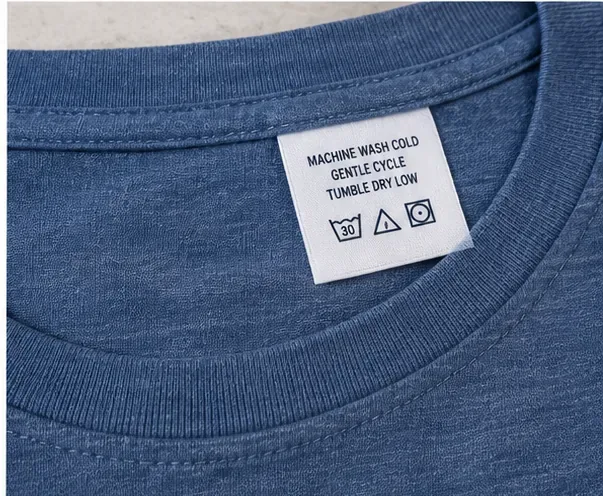
Check the clothing care label at the same time. The U.S. Federal Trade Commission’s Care Labeling guidance explains that garment care labels are intended to tell consumers which normal cleaning procedures can be used without substantial harm. If a garment says “Dry Clean Only,” or if it is made from a delicate or unfamiliar fiber, home solvent experiments are a poor first choice.
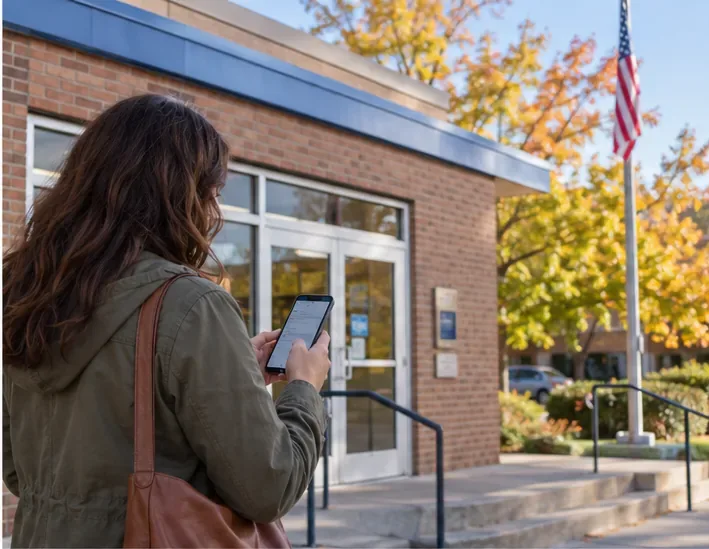
Identify the adhesive if possible before treating it. Water-based, solvent-based, temporary, and permanent fabric glues do not all respond to the same removal method.
If the Fabric Glue Is Still Wet, Act Before It Cures
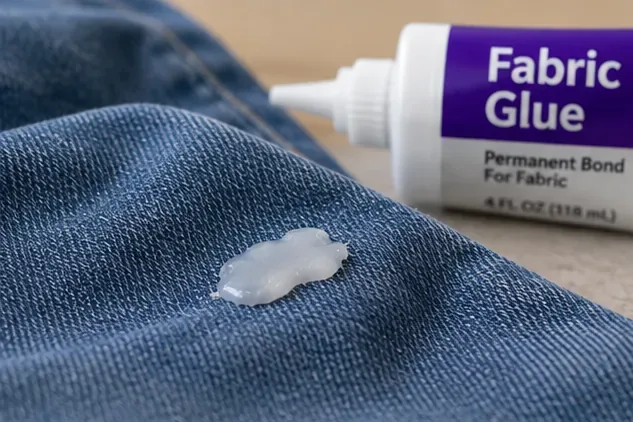
Wet glue is the best-case situation. Do not spread it by rubbing back and forth. Lift or blot away as much excess as possible with a clean cloth, paper towel, or cotton swab, working from the outside of the spill toward the center.
For a water-based fabric glue whose maker says it is water-removable while wet, rinse the affected area and use a small amount of mild detergent if the garment’s care label permits washing. Aleene’s specifically recommends removing excess wet glue and cleaning with a damp, soapy cloth in its general residue guidance, and says its wet water-based fabric glues can be rinsed or washed out.
If the product is solvent-based, do not assume water will dissolve it. Check the adhesive manufacturer’s removal guidance. If that guidance calls for acetone or another solvent, first confirm that the clothing is compatible and test an inconspicuous area.
If the Fabric Glue Is Dry, Remove the Raised Layer First
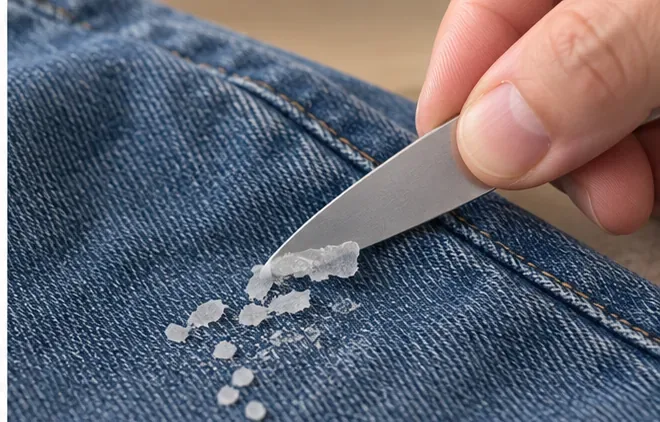
When the glue has cured into a raised patch, resist the urge to saturate it immediately. First remove only what is sitting above the fabric surface.
Use a spoon edge, dull table knife, or another blunt edge and work slowly. Keep the tool nearly parallel to the fabric so you lift the adhesive rather than cut the fibers. Stop if the fabric begins to fuzz, stretch, snag, or lose color.
Loctite’s fabric-glue guidance recommends cold-water soaking and careful scraping after the adhesive has started to cure. Its broader fabric adhesive removal guide also emphasizes a gentle scraping step for dried adhesive before escalating treatment.
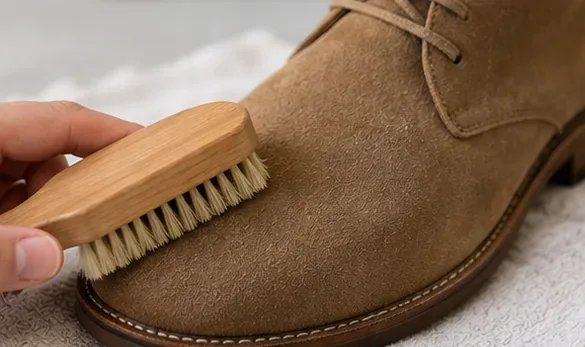
Lift dried glue gently with a dull edge. The goal is to remove the raised adhesive without scraping hard enough to damage the fibers.
Soak and Use Laundry Detergent Before Reaching for Solvent
For washable clothing, cold-water soaking is a sensible next step when the dried adhesive remains. Loctite advises soaking cured fabric glue in cold water, then scraping again. In its general fabric-glue removal guidance, it recommends working liquid laundry detergent into stubborn residue and laundering according to the garment’s normal instructions.
This stage is most appropriate when:
the care label permits washing;
the adhesive is water-based or its manufacturer recommends water treatment;
the fabric is not visibly weakening or losing dye; and
you have already removed the thickest surface layer.
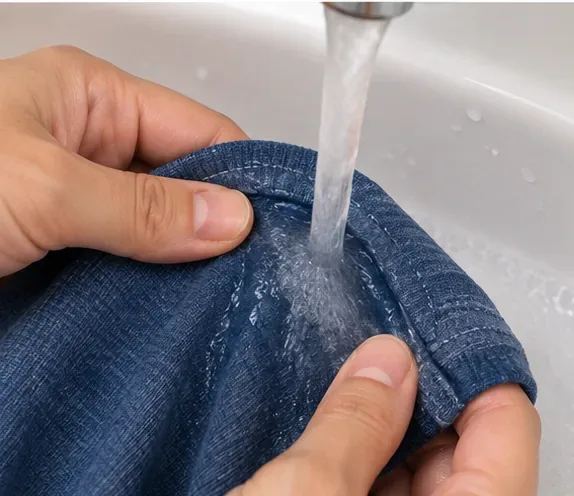
Rinse from the back of the stained area when practical so loosened material is encouraged away from the fabric rather than pushed deeper into it. Avoid aggressively twisting or wringing delicate garments.
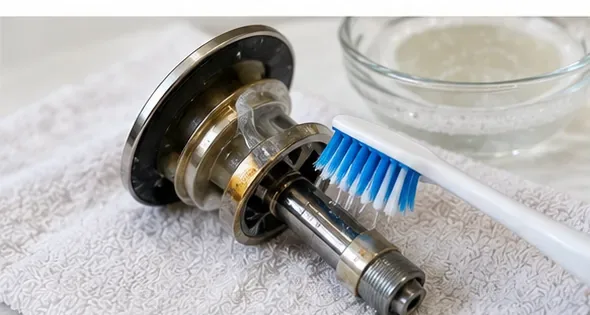
Rinse a washable garment after loosening the glue. Follow the garment’s care label for water temperature and washing method.
When Is Acetone Appropriate?
Acetone can be useful for some fabric adhesives, but it is an escalation step, not a universal answer. Aleene’s says acetone may remove some dried fabric glues but may not remove all of the adhesive. For its solvent-based wet fabric glues, Aleene’s also lists acetone as a possible removal solvent and explicitly says to test first.
Loctite likewise recommends testing acetone on a hidden area before using it on stubborn glue and warns that acetone can discolor or damage some fabrics. Its fabric-removal guidance specifically notes that acetone can dissolve certain synthetic fibers.
Use acetone only if all of these conditions are met:
The glue manufacturer recommends acetone or a compatible solvent for that adhesive.
The garment is not labeled dry-clean-only or otherwise unsuitable for home spot treatment.
A hidden-area test shows no color transfer, whitening, texture change, or weakening.
You can work in a well-ventilated area away from ignition sources.
Apply a small amount to the adhesive with a cotton swab or clean white cloth rather than soaking a large area. Blot softened residue away and repeat cautiously. If the fabric color transfers to the cloth, the surface becomes tacky, or the fibers change texture, stop immediately.
Wash the Garment and Inspect It Before Using the Dryer
Once you have removed as much adhesive as safely possible, wash the garment according to its care label. Use the detergent and cycle appropriate for the fabric rather than automatically choosing the hottest or strongest setting.
After washing, inspect the area while the garment is still air-dryable. If a visible or stiff patch remains, repeat only the treatment that proved safe for that fabric. Do not keep escalating just because a faint shadow remains.
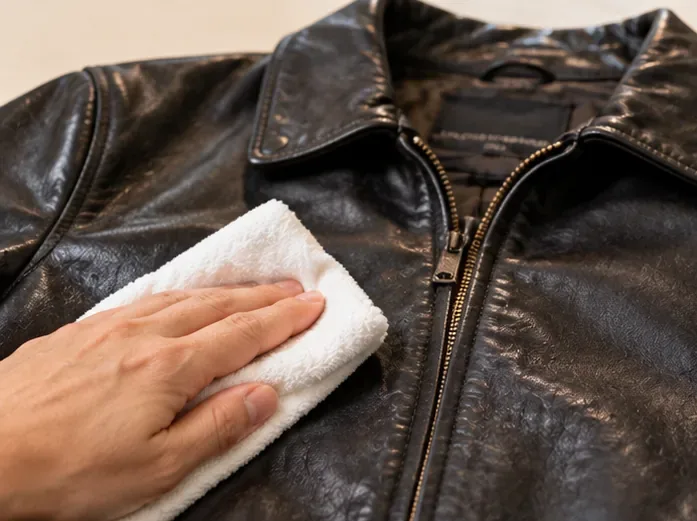
Check the garment’s care label before laundering or drying. Inspect the treated area before deciding whether another removal attempt is worth the risk.
Loctite advises making sure stubborn glue residue is removed before high-heat drying in its fabric adhesive guidance. Even apart from that recommendation, inspecting before machine drying gives you a chance to retreat the area without adding another variable.
What if the Glue Is a Permanent Fabric Adhesive?
Permanent fabric glue is designed to remain bonded through wear and laundering, so complete removal is not guaranteed. Aleene’s Permanent Fabric Glue, for example, is marketed as a permanent, flexible, machine-washable bond. Its product instructions call for a 24-hour dry period and a waiting period before laundering after the intended bond is made.
If the adhesive has fully cured into the fibers, you may reach a point where further chemical treatment poses more risk to the garment than the remaining spot does. A small stiff patch on work jeans may be acceptable; the same patch on silk, acetate, embellished clothing, or a structured garment may justify professional cleaning instead.
Special Cases That Need a Different Approach
Delicate, Dyed, or Dry-Clean-Only Clothing
Take these items to a professional cleaner, especially if you cannot identify the glue. Tell the cleaner what adhesive was spilled and what treatments, if any, you already tried. That information helps avoid incompatible chemical combinations.
Hot Glue
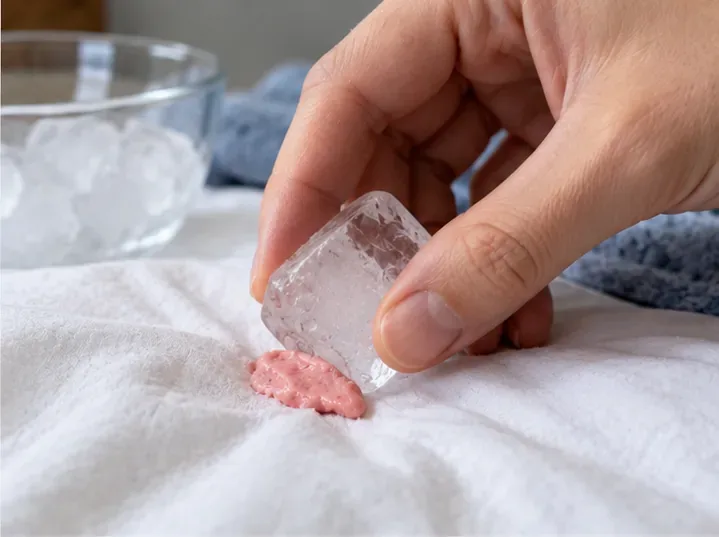
Hot-melt adhesive is not the same as liquid fabric glue. Loctite’s fabric guide suggests freezing hot glue so it becomes brittle enough to lift away with a dull tool. Do not automatically use the same water-and-detergent sequence intended for a water-based liquid fabric adhesive.
Super Glue or Cyanoacrylate
Cyanoacrylate is also a different adhesive family. Loctite recommends allowing super glue to dry, gently scraping away the raised material, then testing acetone in a hidden area before using it on compatible fabric. A fabric-glue article should not treat super glue and washable craft glue as interchangeable stains.
Common Mistakes That Make the Damage Worse
Rubbing wet glue: this can spread the adhesive over a larger area and drive it deeper into the weave.
Using a sharp blade aggressively: scraping should remove glue, not shave or cut the fabric.
Starting with acetone: some glue does not require solvent, and some fabrics do not tolerate it.
Ignoring the care label: a treatment that is safe for cotton denim may be inappropriate for acetate, silk, wool blends, coatings, or embellishments.
Assuming “machine washable glue” means it will wash out: for permanent fabric adhesives, machine washable generally describes the durability of the intended bond after curing.
Continuing after the fabric changes: discoloration, fuzzing, thinning, tackiness, or texture change are signs to stop.
When Should You Stop and Change Strategy?
Stop home treatment when the adhesive has flattened into the fibers and further scraping is damaging the weave; when a solvent test changes the color or texture; when the garment is valuable or delicate; or when you do not know which adhesive was used and the first gentle treatment fails.
At that point, the next best outcome may be professional cleaning, a repair or patch, or accepting a faint residual mark. Successful stain removal is not just about making the glue disappear. It is about improving the garment without creating a larger, more permanent form of damage.
Bottom Line
For most fabric-glue accidents, start with the least aggressive method. If the glue is wet and water-based, remove the excess and rinse it before it cures. If it is dry, gently lift the raised adhesive, use cold water and detergent on washable clothing, and reassess. Use acetone only when the adhesive instructions support it and the fabric passes a hidden-area test.
If the glue was designed to be permanent and has already cured, complete removal may not be possible. Knowing when to stop is part of a good result: preserving the color, texture, and strength of the clothing matters more than forcing out the last trace of adhesive.