Home
» INTERNET
»
How to Get Glue Off Clothes Without Damaging the Fabric
How to Get Glue Off Clothes Without Damaging the Fabric
Glue on clothing is not one stain with one universal fix. A washable school glue, cyanoacrylate super glue, hot-melt adhesive, and sticker residue can respond very differently to water, detergent, alcohol, acetone, cold, and heat. The safest approach is to identify the adhesive first, check the garment's care label, remove as much solid glue as you can without stretching the fibers, and then escalate only as far as the fabric can safely tolerate.
This guide is designed as a practical reference. Use the quick table first, then follow the detailed steps for your glue type. The most important rule is simple: do not put the garment in a hot dryer until the glue and visible residue are gone. Both Loctite and Tide advise checking the stain before high-heat drying because heat can make a remaining adhesive problem harder to reverse.
Quick reference: which method should you use?
Glue type
Best first move
Escalation if needed
Main caution
Washable school or white craft glue
Water soak, then gently lift or scrape
Laundry detergent and a normal wash allowed by the care label
Do not aggressively scrub delicate fibers
Super glue / cyanoacrylate
Let it dry, scrape gently, then try water or soapy water
Spot-tested acetone only when the fabric can tolerate it
Never use acetone on acetate; be cautious with synthetics and dyes
Hot glue
Harden it with cold, then peel or scrape
Spot-tested isopropyl alcohol on compatible fabric
Do not rub hot glue while it is soft
Sticker or tape residue
Lift excess adhesive mechanically
Spot-tested rubbing alcohol or another manufacturer-approved remover
Alcohol can affect some dyes and fibers
Construction adhesive, epoxy, unknown glue
Check the adhesive manufacturer's removal instructions
Professional cleaning or a product-specific remover
Do not guess with strong solvents on valuable or delicate garments
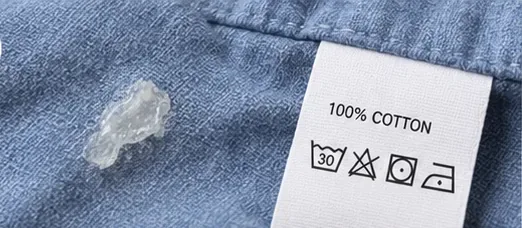
Why start with the care label? The U.S. Federal Trade Commission's Care Labeling Rule requires regular care instructions and warnings for covered garments. That does not mean the care label tells you how to remove every glue, but it does tell you which washing, drying, bleaching, or dry-cleaning procedures the manufacturer has determined are appropriate for the garment.
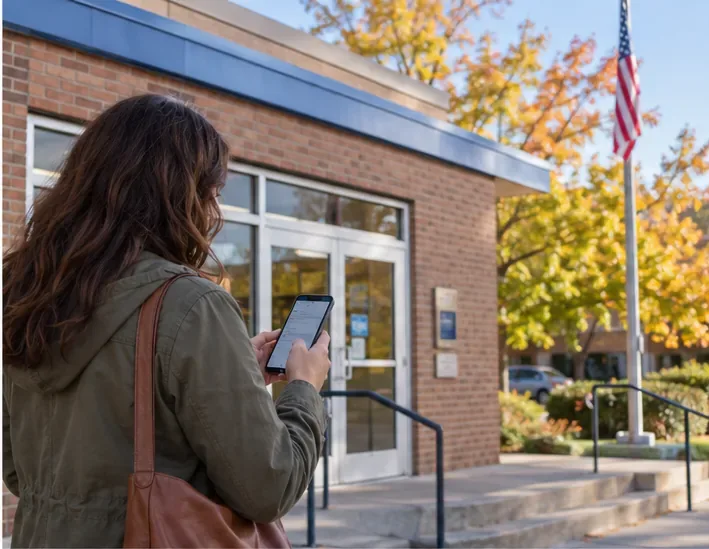
Start by identifying the glue if possible and checking the garment care label before adding water, solvent, or heat.
Core workflow for removing glue from clothes
1. Identify the adhesive before choosing a cleaner
Look at the glue bottle, packaging, project materials, or residue. If it came from a child's school-glue bottle, the adhesive may be water-based and washable. Elmer's, for example, describes its washable school glue as specifically formulated to be washable; its own fabric craft instructions also note that soaking dried glue on fabric in warm water can help it peel away. See the manufacturer's washable school glue product information and fabric craft guidance.
If you cannot identify the glue, treat it as unknown rather than automatically reaching for acetone. Start with the least aggressive method that fits the fabric, or contact a professional cleaner for silk, embellished clothing, structured garments, or anything labeled dry-clean-only.
2. Let many thick glue deposits dry, then remove the excess gently
For super glue, hot glue, and many thick adhesive blobs, rubbing the wet material can push it farther between fibers. Loctite's fabric guidance recommends allowing super glue to dry before carefully removing the solid excess with a dull edge. Its hot-glue guidance similarly warns against rubbing soft hot glue into fabric.
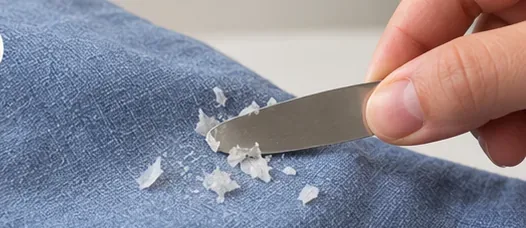
Lay the garment flat. Use the edge of a spoon, a dull table knife, or a plastic card. Work from the outside of the deposit toward the center. Stop if threads begin to pull, fuzz, or distort.
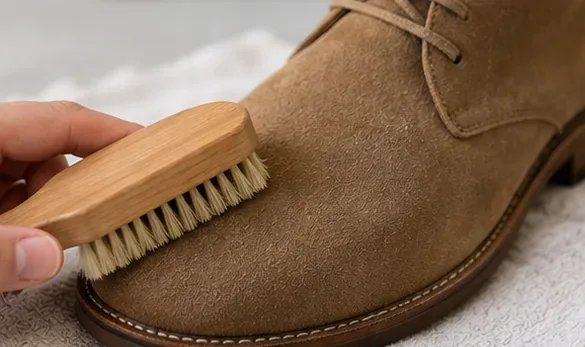
A dull edge can lift brittle dried glue without the cutting risk of a sharp blade; stop if the fabric begins to snag or stretch.
3. Use water first for washable, water-based glue
Washable school glue is the simplest branch. After removing surface buildup, soak or flush the stained area with water, then work the loosened glue away gently. Elmer's fabric craft instructions say a warm-water soak of about 15 to 30 minutes can help release dried washable glue. Tide's general glue-stain guidance uses a short cold-water soak as a conservative starting point before laundering. Those directions are not identical because formulas and situations differ, so the glue label and garment care label should take priority.
After soaking, blot rather than grind the stain. If glue remains, apply a small amount of liquid laundry detergent to the affected area, work it in gently, and wash using a cycle and temperature permitted by the garment label.
Water is the appropriate first-line treatment for many washable, water-based craft glues before moving to stronger products.
4. Treat stubborn residue only with a fabric-compatible product
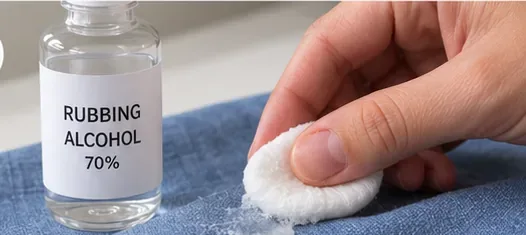
Rubbing alcohol is useful for some adhesive residue and is specifically listed by Loctite as an option for hot-glue removal from textiles. However, it is not universally fabric-safe. The University of Georgia Cooperative Extension's textile-care reference notes that alcohol can fade some dyes and can damage acetate, triacetate, modacrylic, and acrylic fibers. Always test a hidden seam or hem first.
Use a white cotton pad or clean white cloth so transferred dye is easy to see. Dab a small hidden area, wait briefly, then blot. If the fabric color transfers, the texture changes, or the finish becomes dull, stop.
Rubbing alcohol is a conditional option for some residues, not a universal glue remover; pretest it and avoid fibers the textile guidance warns it can damage.
5. For super glue, acetone is an escalation—not the default
Current Loctite support pages are not perfectly uniform on acetone for fabric. One detailed fabric guide says dried super glue can be scraped, soaked, and then treated with a small amount of acetone if necessary, with a hidden-area test first. Another Loctite page favors warm soapy water and says acetone is not recommended because it may discolor some fabrics. The practical takeaway is to start with the gentler route and use acetone only when the garment and adhesive guidance support it.
The University of Georgia source is more specific about one major limit: do not use acetone on acetate fabric. Its textile-care page also warns that acetone is flammable and should be used with ventilation. If the fiber content is unknown, the garment is delicate, or the finish is special, professional cleaning is safer than experimenting.
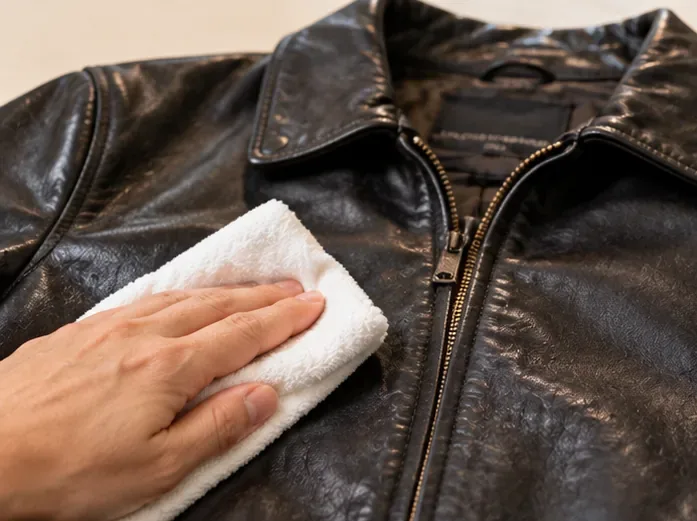
If acetone is appropriate, place an absorbent white cloth behind the stain, use a cotton swab to apply a very small amount around the edge of the dried super glue, and blot as the bond softens. Do not saturate the whole garment.
6. Work detergent into the remaining washable residue
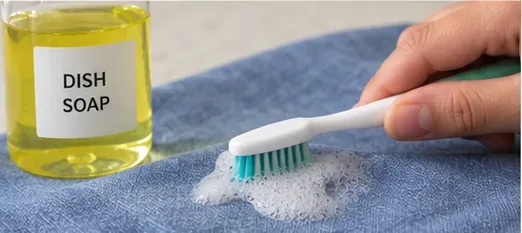
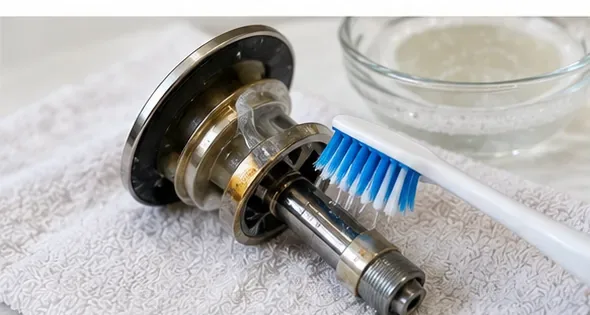
Once the bulk of the adhesive is gone, liquid laundry detergent can help remove the remaining soil and residue on washable clothing. Use your fingers or a very soft brush and light pressure. A toothbrush is useful on sturdy woven fabric such as denim, but it can roughen knits, fleece, brushed fabrics, and delicate fibers.
On sturdy washable fabric, use light mechanical action only after the bulk of the glue has been removed; delicate fabrics need a gentler touch.
7. Wash only as the care label allows
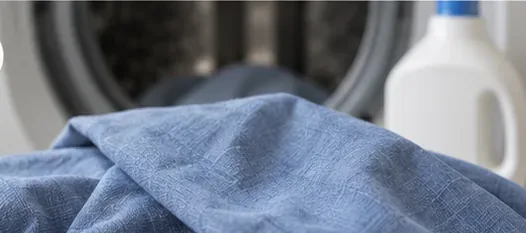
After spot treatment, wash the garment using the care-label instructions. Tide's current glue-stain guidance specifically tells users to follow the garment label for water temperature and to repeat treatment before drying if the stain remains. Do not assume hotter water is always better: heat-sensitive fabrics, elastane blends, prints, coatings, and trims may require cooler treatment.
Machine-wash only when the garment's care label allows it, using the permitted cycle and water temperature.
8. Inspect before using the dryer
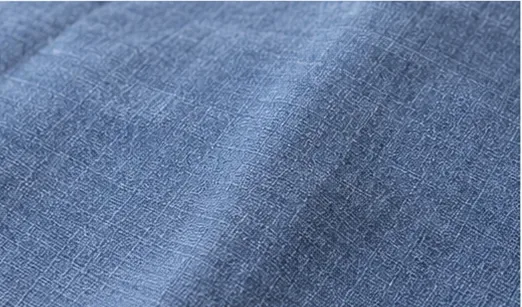
After washing, examine the stained area in good light while the garment is still damp. Feel for a hard ridge, tackiness, stiffness, or a glossy film. If you can still see or feel adhesive, repeat the appropriate treatment rather than exposing the area to dryer heat.
Check both appearance and texture before drying; a clear residue can still feel stiff or tacky even when it is hard to see.
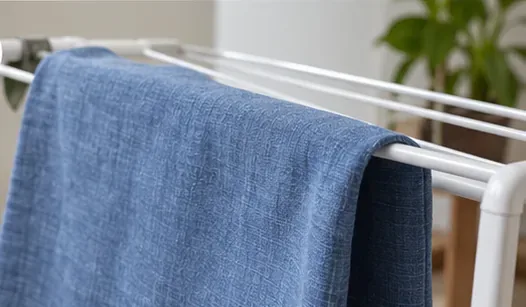
If the area looks and feels clean, air-drying is the cautious final step after stain treatment. Once completely dry, inspect again. If no residue remains, future laundering can return to the garment's normal care routine.
Air-drying lets you verify the result without immediately exposing a questionable adhesive spot to high dryer heat.
Glue-specific instructions
Washable school glue and common white craft glue
Remove excess glue without spreading it.
Soak or flush with water. Warm water may help with some washable school glues; follow the product and garment instructions.
Gently peel or blot loosened glue.
Apply liquid laundry detergent to the remaining spot.
Wash according to the care label.
Inspect before drying.
Because Elmer's explicitly markets its school glue as washable, this is a good example of why identifying the product matters. A method suitable for washable school glue should not automatically be used for epoxy or construction adhesive.
Super glue
Let the glue fully harden.
Scrape off raised material with a dull edge.
Try a water or warm-soapy-water treatment first.
If residue persists, review the fabric content and the adhesive maker's instructions.
Only if compatible, spot-test a tiny amount of acetone and dab the glue rather than soaking the garment.
Apply detergent, wash as permitted, and inspect before drying.
Loctite's fabric glue-removal guide provides the scrape, soak, acetone-if-needed sequence, while its general super-glue removal page advises warm soapy water for fabric and cautions against acetone because of possible discoloration. That difference is a good reason to treat acetone as an escalation rather than a routine first step.
Hot glue
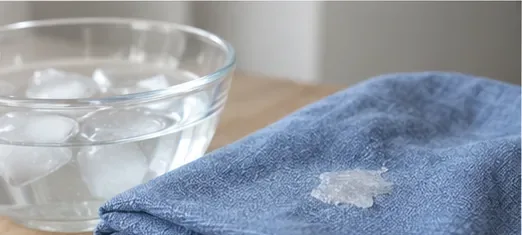
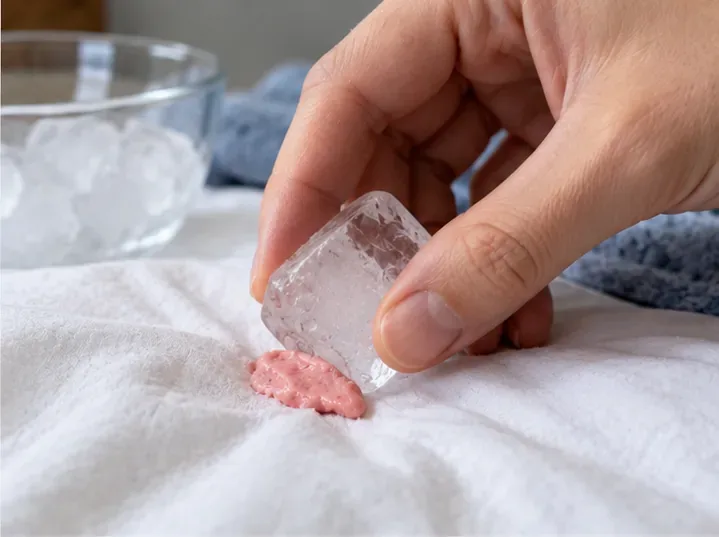
Hot-melt adhesive is easiest to remove when it is hard and brittle rather than warm and stretchy. Loctite's hot-glue textile guidance recommends freezing the garment for about 30 minutes, then gently peeling the hardened glue. For a large item, an ice-filled bag can chill the spot. The same source lists isopropyl alcohol as another option, but delicate textiles need extra caution and a hidden-area test.
Sticker, label, or tape residue
Start by rolling or scraping away what you can without stretching the cloth. Loctite's fabric guide lists warm white vinegar or rubbing alcohol as options for sticker residue, followed by rinsing. Because alcohol can affect dyes and some fibers, test first. If the garment has a coating, metallic finish, bonded decoration, or unknown fiber content, skip the solvent experiment and ask a professional cleaner.
Epoxy, construction adhesive, or an unknown industrial glue
Do not assume household stain-removal advice applies. These adhesives may cure permanently, react with fabric finishes, or require a product-specific remover. Check the adhesive manufacturer's technical or support information. If the garment is valuable, lined, structured, delicate, or dry-clean-only, professional treatment is the safer route.
What not to do
Do not mix cleaning chemicals. Use one method at a time, rinse as appropriate, and never improvise chemical combinations.
Do not use acetone just because the stain is glue. It can damage acetate and may discolor or alter other fabrics and finishes.
Do not scrub aggressively. Glue removal is not worth permanently fuzzing, stretching, or thinning the textile.
Do not iron a glue stain unless a manufacturer specifically instructs you to use heat. Different adhesives react differently to heat.
Do not tumble-dry while residue remains. Recheck the spot first.
Do not ignore a dry-clean-only label. Tell the cleaner what adhesive was spilled if you know.
Five-minute decision checklist
Can you identify the glue from the bottle, package, or project?
What fiber is the garment, and what does the care label allow?
Is the glue still soft, or has it fully hardened?
Can you remove raised glue mechanically before adding any liquid?
Would water alone be appropriate for a washable glue?
If considering alcohol or acetone, have you checked fiber compatibility and spot-tested a hidden area?
Is all residue gone before the garment goes near dryer heat?
When to stop and use a professional cleaner
Stop home treatment if the garment is silk, acetate, heavily embellished, coated, structured, vintage, or labeled dry-clean-only; if the adhesive is unknown and very hard; if color transfers during a solvent test; or if the fabric texture changes. A professional cleaner has a better chance of choosing a solvent and process that fits the textile construction rather than just the stain.
For a broader manufacturer reference, Tide's glue-stain guide covers general glue, school glue, super glue, hot glue, and commercial adhesive. For solvent compatibility, the University of Georgia Cooperative Extension textile-care reference is especially useful because it separates the behavior of acetone and rubbing alcohol by fiber type.
Bottom line
The safest way to get glue off clothes is to match the treatment to both the adhesive and the fabric. Start mechanically and with water when possible, escalate to detergent, alcohol, or acetone only when the product and textile can tolerate them, and keep heat out of the process until the residue is gone. That approach takes a little longer than reaching immediately for the strongest solvent, but it gives you a much better chance of removing the glue without creating a second problem in the fabric.