Home
» INTERNET
»
How to Get Gum Off Jeans: Compare the Safest Methods Before You Scrape
How to Get Gum Off Jeans: Compare the Safest Methods Before You Scrape
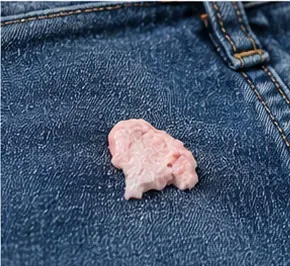
Chewing gum on jeans creates two different problems at once: a thick, stretchy mass sitting on top of the denim and a thinner sticky residue that can work into the weave. The best method depends on which problem you have. For a fresh blob, your priority is to harden it so it can be lifted cleanly. For the film left behind, your priority is stain treatment that will not strip dye or roughen the denim.
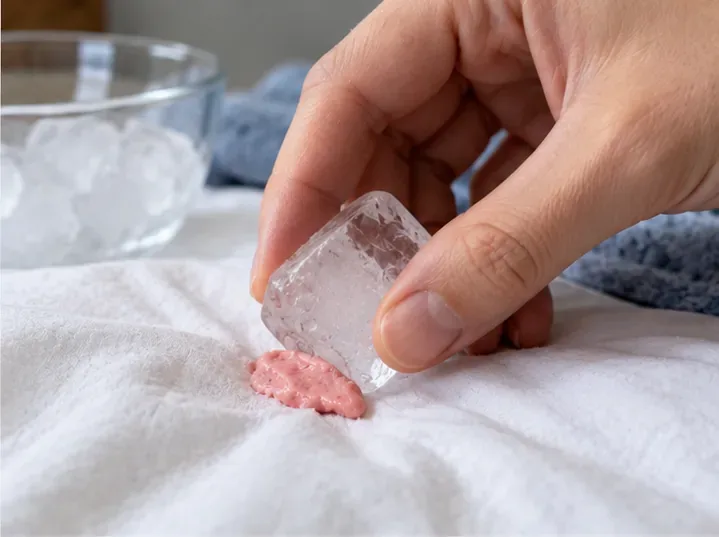
The lowest-risk starting point is cold. The University of Georgia Cooperative Extension recommends applying ice to chewing gum on apparel to harden it, scraping off the excess, then treating any remaining stain before laundering. Mississippi State University Extension gives a similar sequence: harden with ice, scrape with a dull knife, use a prewash stain remover or cleaning fluid, rinse, then launder. These sources also stress reading the care label and testing cleaning agents for colorfastness first.
That does not mean every pair of jeans should be treated exactly the same way. Dark indigo, black denim, raw denim, stretch denim, coated denim, and heavily distressed jeans can react differently to rubbing, solvents, and repeated washing. The goal is not simply to make the gum disappear; it is to remove it without creating a lighter patch, fuzzy abrasion, shrinkage, or a new solvent stain.
Start by checking how much gum is sitting on the surface versus worked into the weave. The less you spread it, the easier the next step will be.
Which method should you choose?
Method
Best for
Main advantage
Main tradeoff
Bag of ice
Small or localized gum spot
Fast, targeted, no chemical cleaner needed for the first step
You may need to reapply ice as the gum warms up
Freezer
Large, soft, or awkwardly placed gum
Hardens the whole contaminated area evenly
Takes more time and freezer space; put jeans in a clean bag
Prewash stain remover
Thin residue after the bulk gum is removed
Designed for laundering workflows
Can affect dye or finish; hidden-area testing is important
Commercial fabric/upholstery cleaner
Persistent residue when its label permits use on the denim
Matches the type of follow-up cleaner named in UGA guidance
Stronger chemistry and greater colorfastness risk than cold treatment
Liquid laundry detergent
Final residual soil before washing
Convenient and compatible with normal laundering when the garment allows
Not a substitute for first removing the bulk gum
For most ordinary washable jeans, start with ice because it gives you the best risk-to-benefit ratio: it changes the gum's texture without introducing another chemical. Move to a stain product only if residue remains. For expensive raw denim, special finishes, or jeans labeled dry clean only, a professional cleaner may be the better tradeoff than experimenting with stronger products.
Option 1: Use a bag of ice for a small gum spot
This is the most direct version of the Extension guidance. Put several ice cubes in a sealed plastic bag and press the bag against the gum until the gum becomes firm and brittle rather than stretchy. Keeping the ice in a bag prevents meltwater from soaking the denim unnecessarily.
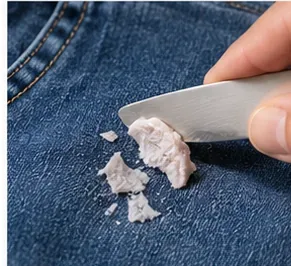
Once the gum hardens, use a dull table knife, spoon edge, or plastic card to lift it. Work in short strokes and try to get underneath the gum rather than grinding the edge across the denim. Thick cotton denim is durable, but abrasion can still create a visibly lighter or fuzzy spot, especially on dark washes.
This method is best when the gum is localized and you do not want to chill the entire garment. It is also the method most directly supported by the University of Georgia and Mississippi State stain-removal guidance.
Option 2: Freeze the jeans when the gum is very soft or spread out
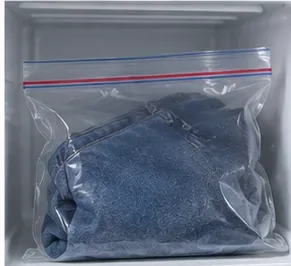
If the gum has smeared over a larger area, chilling the entire section can be easier than holding ice in several places. Fold the jeans loosely so the gum does not touch another part of the fabric, place them in a clean plastic bag, and put them in the freezer until the gum is hard.
This is an adaptation of the same cold-hardening principle rather than a separate chemical treatment. Its advantage is even hardening. Its disadvantage is convenience: you need space, and you should avoid folding the sticky area onto itself.
Freezing the whole pair is an option when the gum patch is large or very soft; bag the jeans so they stay clean. A bag of ice on the spot is faster for a small area.
How should you scrape hardened gum?
Use a dull edge, not a razor blade. The University of Georgia and Mississippi State both specify a dull knife after the gum is hardened. A plastic card is a lower-scratch alternative if the gum lifts easily.
Hold the denim flat with one hand. Slide the tool under the edge of the hardened gum and lift small pieces. If the gum becomes stretchy again, stop and rechill it instead of smearing it across the fibers.
There is a practical stopping point: when the visible lump is gone and only a thin, tacky film remains in the weave, more scraping is likely to damage the denim faster than it removes residue.
Once the gum is hard, lift it with a dull edge using short, controlled strokes. Stop scraping when the remaining residue is level with the denim fibers.
What should you do with the sticky film left behind?
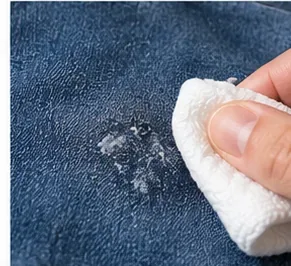
This is where your options involve more tradeoffs. University of Georgia guidance for apparel says to place the stained area face down on absorbent paper towel or clean cloth, sponge with a commercial fabric or upholstery cleaner, change the absorbent material as it picks up the stain, let the area dry, then launder. Mississippi State lists a prewash stain remover or cleaning fluid after scraping.
For everyday washable jeans, a prewash stain remover that is labeled safe for colored washable fabrics is often the simpler escalation. Before applying it to the visible stain, test a tiny amount inside a hem or waistband. Let the test area sit for the product's instructed time, rinse if directed, and check for blue dye transfer, lightening, stiffness, or a shiny patch.
If a commercial fabric cleaner is used, follow its label exactly and provide the ventilation it requires. Do not assume that a stronger solvent is automatically more effective or safer. Dark denim can reveal even subtle dye loss.
For residue that remains after scraping, use a care-label-compatible prewash stain remover or fabric cleaner, and test it first on a hidden area for dye transfer.
Where does liquid laundry detergent fit in?
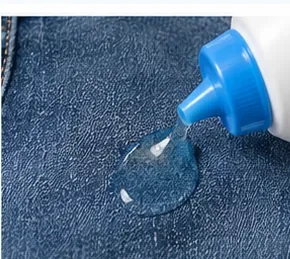
Liquid detergent is useful after the bulk gum has been removed and any specialized pretreatment has done its job. Apply a small amount to the remaining mark if the detergent label allows direct pretreatment, gently work it into the area with your fingers or a soft brush, and avoid aggressive scrubbing.
The advantage is familiarity: you are using a product designed to rinse out in the washer. The limitation is that detergent alone is not particularly good at removing a thick, elastic gum mass. Cold-and-scrape first, detergent later, is a more controlled sequence.
Liquid laundry detergent can be worked into residual soil after the bulk of the gum is gone, following the detergent label and the jeans' care instructions.
Should you use vinegar, rubbing alcohol, peanut butter, or heat?
These are common household suggestions, but they are not equal to the ice-and-pretreat sequence supported by the textile-care sources above.
Vinegar: it may appear in household advice, but it is not necessary for the Extension method cited here. On dyed or specially finished jeans, adding another treatment without a clear need increases uncertainty.
Rubbing alcohol: it can interact with dyes and finishes. If a product manufacturer specifically recommends it for the stain chemistry, test it in a hidden area first; otherwise a labeled fabric stain product is easier to evaluate.
Peanut butter or cooking oil: the oil may soften gum, but it can replace one stain with a grease stain. That is a poor tradeoff when cold can harden gum without adding oil.
Hair dryer or hot water: warming gum makes it softer and easier to smear. Heat also brings a denim-care tradeoff: Levi's current care guidance recommends cold water and air drying to help preserve color, fit, and fabric life.
The practical recommendation is to use ice first, then a fabric-safe pretreatment if needed. Household chemistry is not automatically gentler just because it is already in the kitchen cabinet.
How should you wash the jeans afterward?
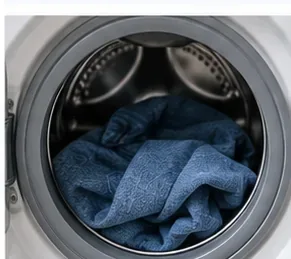
Once the gum mass is gone and the residue has been treated and rinsed as directed, launder the jeans according to their care label. Levi's current denim-care guidance recommends turning denim inside out, closing the zipper, washing in cold water on a gentle cycle, and using a mild detergent. It also recommends air drying when possible to help reduce fading, shrinkage, and wear.
That makes cold, gentle laundering a sensible choice for color preservation when the jeans' own care label allows it. If your stain-removal product instructs you to rinse or wash differently, reconcile those directions with the garment care label rather than blindly choosing the hottest setting.
New, very dark, or black jeans may release dye during washing, so wash them separately or with similar dark colors.
Launder only after the bulk gum and pretreatment residue have been removed. Cold water and a gentle cycle help preserve denim color and fit when the care label allows.
Why should you air-dry before using the dryer?
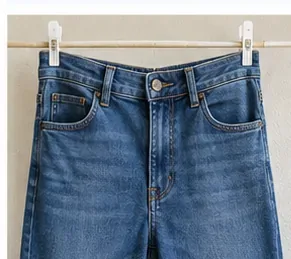
Air drying gives you a chance to inspect the stain before exposing the jeans to dryer heat. Hang the jeans or lay them flat and let the treated section dry completely. Then check both appearance and feel.
If the area is still tacky, rubbery, or coated, repeat the cold-scrape and pretreatment process rather than putting the jeans in the dryer. If the gum is gone but the spot looks lighter, further chemical treatment may make the color difference worse.
Levi's recommends air drying denim whenever possible, so this inspection step also aligns with conservative denim care.
Air-dry the jeans and inspect the treated area before using dryer heat. Repeat treatment if the spot is still sticky or visibly coated.
What does a successful result look like?
Do not judge only by whether you can see pink or white gum. Run your fingers lightly across the dry denim. The fibers should feel flexible and similar to the surrounding area. A faint color variation from the jeans' original wear pattern can be normal; a hard or tacky film means residue remains.
No raised gum is left on the surface.
The fabric is not sticky when dry.
The treated spot is not noticeably lighter from over-scraping or an incompatible cleaner.
The weave is not fuzzy, cut, or thinned.
The jeans have been rinsed and washed according to the care label.
The area has been inspected after air drying, before any dryer heat.
A successful result is denim that feels flexible, has no tacky gum residue, and has not developed a faded ring or damaged surface from treatment.
What if the gum is on raw, coated, stretch, or distressed denim?
These jeans deserve a more conservative approach. Raw denim can show water marks and color change more readily. Coated denim may have a finish that reacts badly to solvents. Stretch denim contains elastane or similar fibers that do not benefit from unnecessary heat, and distressed denim is already mechanically weakened at tears and abrasions.
For these types, use localized ice and a dull scraper first, then stop if the remaining residue would require a product not clearly allowed by the care label. A professional cleaner is a reasonable choice when preserving the finish is worth more than the cost of cleaning.
When is a commercial cleaner worth using?
Use one when the gum has been mechanically removed but a persistent sticky shadow remains, and when the cleaner's label lists the fabric or garment type as compatible. The benefit is stronger residue removal. The cost is a higher chance of dye or finish change, plus the need for ventilation and more careful handling.
The University of Georgia explicitly recommends pretesting cleaning agents on an inconspicuous area for colorfastness. That is particularly important for dark jeans, where even a small amount of dye loss can be more visible than the original stain.