Home
» INTERNET
»
How to Get Ink Out of a Pen: Safe Fixes for a Pen That Won’t Write
How to Get Ink Out of a Pen: Safe Fixes for a Pen That Won’t Write
Updated September 12, 2026: there is no major new manufacturer-approved trick for making a dry or clogged pen write again. Current care guidance from Parker, Cross, and LAMY still points to a simple rule: first identify the writing system, then use the least invasive fix. Sealed ballpoint and rollerball refills are usually replaced rather than opened or soaked, while a fountain pen nib and feed can often be restored by flushing with plain cool water.
If you searched “how to get ink out of pen” because your pen has ink inside but nothing reaches the paper, this guide is for you. The safest solution depends on whether you have a ballpoint, gel pen, rollerball, or fountain pen. Trying random heat, alcohol, needles, or aggressive shaking can turn a minor flow problem into a damaged tip, leaking refill, or stained desk.
Start by identifying what kind of pen you have
A ballpoint normally uses a thicker oil-based ink inside a replaceable refill. Gel pens and rollerballs use different refill systems and generally should not be treated as interchangeable. Cross specifically notes that ballpoint and rollerball refills use different mechanisms and housings, while LAMY publishes separate refill instructions for its ballpoint systems. See the Cross Help Center and LAMY ballpoint care guidance.
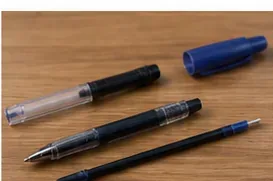
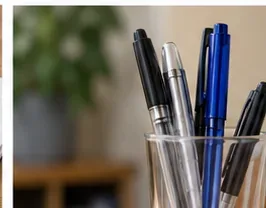
Identify the pen type before troubleshooting. Ballpoint, gel, rollerball, and fountain-pen systems should not all be cleaned the same way.
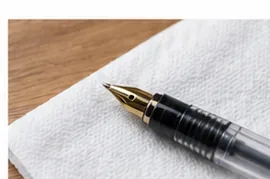
A fountain pen is easiest to recognize by its metal nib. It may use an ink cartridge, converter, piston, or another filling system. If the pen has a visible nib, skip the ballpoint-refill tricks and follow the fountain-pen section below.
Quick diagnosis before you take anything apart
What you see
Best first move
Ballpoint or gel pen makes a faint, broken line
Test it on clean paper, wipe the exposed tip, then replace the refill if flow does not return.
Retractable pen tip does not extend correctly
Check the spring, refill seating, and click/twist mechanism before blaming the ink.
Rollerball has a removable refill and still will not write
Confirm the correct refill model and replace the refill rather than opening the sealed reservoir.
Fountain pen has ink but the nib is dry or irregular
Confirm the cartridge or converter is seated; if needed, flush the nib and gripping section with cool water.
Step 1: Test the pen on clean paper
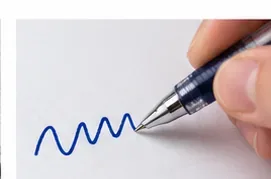
Start with the simplest check. Make several slow loops, figure eights, and straight lines on ordinary clean paper. Rotate a ballpoint slightly as you write so the ball contacts the page from different angles. You are not trying to grind the tip into the paper; light, normal writing pressure is enough.
Test with a few normal writing strokes first. A partially dry tip may begin writing without any disassembly.
If the pen begins writing consistently, stop there. If the line remains blank or skips badly, move to the next check.
Step 2: For a ballpoint, gel pen, or rollerball, inspect the refill
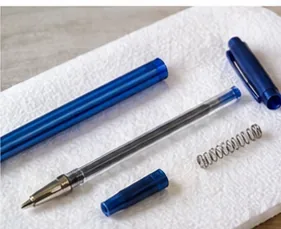
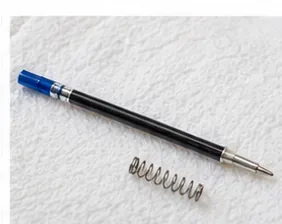
Retract the tip, then open the barrel according to the pen’s design. Keep track of any spring or small spacer. Look for an obviously empty refill, a cracked tube, ink leakage inside the barrel, or a refill that is not seated correctly.
Open only the parts intended to be user-serviceable. Keep the refill and spring in order so they can be reinstalled correctly.
Do not cut open a sealed refill to “release” ink. A damaged refill is much more likely to leak than to become usable again.
Step 3: Wipe the exposed writing tip
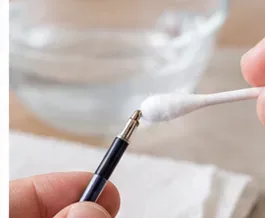
If there is visible lint, dried ink, or paper fiber on the metal tip, wipe it gently with a clean, dry, lint-free cloth. A dry cotton swab can help around the outside of the tip, but do not force fibers into the ball socket or push anything inside a rollerball or gel tip.
Use a light touch around the outside of the tip. The goal is to remove surface lint or residue, not to pry open the writing mechanism.
Avoid the popular lighter, candle, boiling-water, and solvent hacks. They are not part of the manufacturer care guidance reviewed for this article, and heat or chemicals can damage plastics, seals, ink chemistry, or finishes.
Step 4: Re-seat the refill, then decide whether to replace it
Put the spring and refill back in their original positions and close the pen. Test again. If a ballpoint, gel, or rollerball refill still produces no line, replacement is usually the cleanest next step. LAMY’s current ballpoint support is built around replacing model-specific refills, and Cross likewise directs owners to identify the correct refill family before replacement.
If cleaning the outside of the tip does not restore flow, a compatible replacement refill is usually safer than opening the sealed ink tube.
Check the model number printed on the old refill when possible. Do not assume that a refill of similar length is interchangeable; tip geometry, diameter, spring position, and mechanism can differ.
Step 5: Treat a fountain pen differently
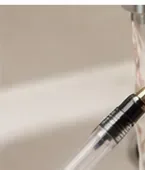
For fountain pens, water flushing is a normal maintenance procedure. Parker’s current care guide says to remove the cartridge or converter and flush the nib and gripping section with cool water. Parker also says a clogged nib section can be soaked in cool water for up to 24 hours because its fountain-pen ink is water-soluble. LAMY similarly recommends plain water for dried fountain-pen ink and specifically says not to add soap or detergent. See Parker’s fountain pen care guide and LAMY’s fountain pen cleaning FAQ.
For a fountain pen, flush the nib and gripping section with plain cool water as directed by the manufacturer.
Cross also recommends rinsing a fountain-pen nib with lukewarm water, drying it completely, avoiding harsh chemicals, and checking alignment when reassembling. Its guidance is available in the Cross Help Center.
Step 6: Dry a fountain pen before refilling
After the water runs clear, remove excess water gently and let the nib section dry. Parker recommends drying the nib and gripping section with a lint-free soft cloth. Do not use direct flame, a heat gun, or very hot air to speed this up.
Let the fountain-pen nib and gripping section dry after flushing before installing fresh ink.
Once dry, reinstall the correct cartridge or converter and test on clean paper. If ink still does not flow after proper cleaning, the problem may involve the nib, feed alignment, damaged parts, or a defective cartridge, and professional service may be the better choice.
Step 7: Verify the result instead of repeating aggressive fixes
A successful repair is easy to recognize: the pen starts promptly, the line remains continuous through several sentences, and there is no ink leaking around the tip or barrel. If a fresh compatible refill still will not write in a ballpoint or rollerball body, inspect the mechanism rather than modifying the refill. If a cleaned fountain pen still skips, stop before bending the nib or inserting a needle into the feed.
Repeatedly forcing the pen can hide the real problem. A refill that is empty, a click mechanism that does not extend the tip fully, or a damaged fountain-pen nib requires a different fix than dried ink.
Step 8: Store the pen so the problem is less likely to return
Cap pens that use a cap and retract retractable tips when they are not in use. For fountain pens, Parker recommends storing the nib point-up when the pen is not being used, which helps ink drain back toward the cartridge or converter and reduces drying or clogging at the nib.
Cap or retract pens when they are not in use. For fountain pens, follow the manufacturer’s storage guidance for the nib position.
If a fountain pen will sit unused for a long period, cleaning out the ink before storage is a sensible manufacturer-supported practice. Montblanc, for example, recommends removing ink and cleaning with water before extended storage; Parker likewise emphasizes regular cleaning and point-up storage.
What not to do when ink will not come out
Do not hold the tip over a flame. Heat can deform plastic parts, change ink behavior, or create leaks.
Do not boil or soak sealed ballpoint or gel refills. Manufacturer care pages focus on replacing these refill units, not opening or washing their reservoirs.
Do not push a sewing needle into a pen tip or fountain feed. You can damage the ball socket, feed channels, or nib alignment.
Do not add soap, detergent, or random solvents to fountain-pen rinse water. LAMY explicitly recommends plain water for soaking and says not to add soap or detergent.
Do not mix refill types just because they look similar. Cross notes that ballpoint and rollerball refills are generally not interchangeable.
How to tell whether the refill is simply empty
Transparent refills sometimes make this obvious, but not all refills show the remaining ink. If the pen stopped gradually after a long period of normal use, the tip is clean, the mechanism works, and testing produces no ink, a spent refill is more likely than a clog. Replacing it is faster and safer than trying to extract or thin the ink.
For a valuable or sentimental pen, use the manufacturer’s refill finder or support page before buying a replacement. A correct refill should fit without forcing, extend to the proper writing position, and retract normally.
Final self-check
Before you call the job finished, write a full paragraph rather than a single line. The pen should start without hard pressure, produce an even line, and stay dry around the barrel and grip. A fountain pen should not leak after reassembly, and a retractable pen should extend and retract smoothly.
If those checks pass, you have restored normal ink flow without resorting to risky shortcuts. If they do not, the next step is usually a compatible refill for a ballpoint, gel pen, or rollerball, or manufacturer service for a fountain pen with a persistent nib or feed problem.