Home
» INTERNET
»
How to Get Permanent Marker Off a Dry-Erase Board Without Damaging It
How to Get Permanent Marker Off a Dry-Erase Board Without Damaging It
The first method to try is surprisingly simple: cover the permanent marker completely with a fresh dry-erase marker, wait briefly, then wipe both inks away with a clean microfiber cloth. Quartet, MooreCo, and Polyvision all publish versions of this technique for dry-erase surfaces. It is a better first move than immediately reaching for abrasive scrubbers or strong household chemicals because it is designed around the writing surface itself.
If the mark does not fully disappear, the next step depends on the board. Porcelain or ceramic-steel boards usually tolerate more aggressive cleaning than painted steel or melamine boards, while some specialty surfaces have completely different instructions. The goal is not just to remove the black line; it is to preserve the smooth surface that lets future dry-erase ink erase cleanly.
Quick answer: the safest four-step method
Cover the permanent mark with a fresh black dry-erase marker.
Wait a few seconds to a few minutes, depending on the board manufacturer's instructions.
Wipe the area with a clean microfiber or lint-free cloth.
Clean the surface with a board-safe cleaner, then dry it completely.
Quartet's current product FAQ specifically recommends tracing over permanent marker with a fresh Quartet dry-erase marker, waiting a few minutes, and wiping the ink away. MooreCo gives the same basic process for porcelain steel and specifies letting the overlaid dry-erase ink dry for about five seconds before wiping.
Step 1: confirm that you really have a dry-erase surface
Not every white, glossy-looking panel is the same. Common dry-erase surfaces include porcelain-coated steel, ceramic steel, painted steel, melamine, glass, dry-erase laminate, and adhesive whiteboard film. Their resistance to solvents and abrasion differs.
If you know the brand or model, check its care instructions before using anything beyond a dry-erase marker and the manufacturer's recommended cleaner. This matters most with inexpensive melamine boards, painted surfaces, resurfacing films, and specialty coatings, which may be more sensitive than porcelain or glass.
Example: a traditional Quartet porcelain, melamine, or painted-steel marker board can use Quartet's standard board cleaner according to the company's board-maintenance instructions. By contrast, 3M's Post-it Easy Erase Permanent Marker Whiteboard Surface is a special product specifically designed so permanent marker can be removed with water and a cloth. Do not assume that unusual behavior applies to every whiteboard.
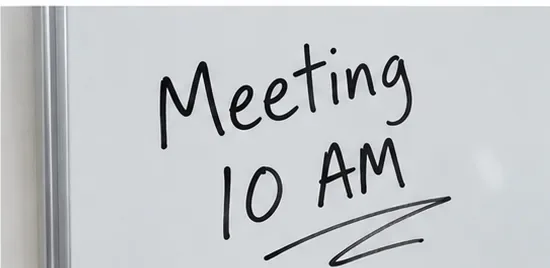
A permanent-marker message on a standard-looking whiteboard. Before using solvents, identify the board type if possible because porcelain, painted steel, melamine, glass, and specialty films can have different care limits.
Step 2: write directly over the permanent marker with dry-erase ink
Use a fresh, dark dry-erase marker and completely trace or color over the permanent ink. Black is a practical choice because it makes it easy to see whether you have covered the original mark.
This method is not just an internet trick. Quartet says the permanent ink binds with the dry-erase ink so the combined mark can be erased. MooreCo's official care instructions for porcelain-steel whiteboards likewise tell users to draw over the entire permanent mark with a high-quality dry-erase marker before wiping.
Do not scrub while you are drawing over the mark. You only need a complete wet layer of dry-erase ink. If the permanent line is several days old, you may need to repeat the process more than once.
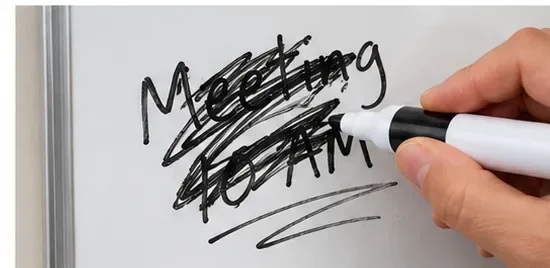
Cover the permanent ink completely with fresh dry-erase ink. This is the first removal method recommended by multiple whiteboard manufacturers.
Step 3: wipe with a clean microfiber cloth
After the short wait recommended for your board, wipe the area with a clean microfiber or lint-free cloth. MooreCo specifies about five seconds for its porcelain-steel instructions; Quartet says to wait a few minutes. The exact delay is less important than following the board maker's directions and using fresh dry-erase ink.
If a faint mark remains, repeat the overlay-and-wipe process rather than immediately increasing abrasion. Old permanent ink may take two or three passes.
Use a clean cloth. An eraser loaded with old dry-erase dust can smear residue back across the surface and make the result look worse. Quartet's maintenance guidance notes that dirty erasers can spread residue and recommends washing or replacing them when needed.
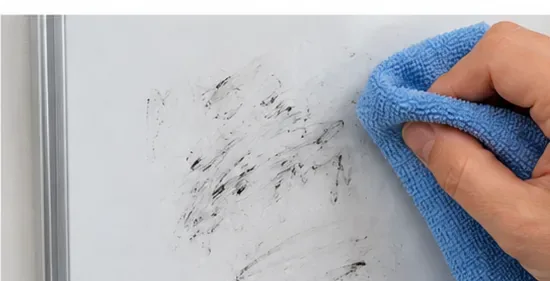
Wipe the overlaid inks away with a clean microfiber or lint-free cloth. Repeat the marker-over-marker step if a faint outline remains instead of immediately using an abrasive scrubber.
Step 4: clean and dry the board completely
Once the permanent ink is gone, clean the treated area with a cleaner approved for your board. Quartet recommends its board cleaner for standard whiteboards and stresses drying the surface fully afterward. Cleaner residue can mix with marker ink during the next use and make future erasing harder.
If you used a wet cleaner, wipe with a second dry towel until the board is completely dry. On porcelain or ceramic-steel products whose manufacturer specifically allows it, isopropyl alcohol can be an escalation option for stubborn permanent ink. Polyvision's ceramic-steel specifications test permanent-marker removability with alcohol, and Claridge's porcelain-board care instructions use isopropyl alcohol followed by a clean-water rinse and drying.
That does not mean alcohol is the universal next step for every inexpensive melamine or painted board. If the surface type is unknown, use a whiteboard cleaner approved for the product or test any stronger cleaner in a small inconspicuous corner first.
The cleaned board should be free of visible marker residue and cleaner film. Let the surface dry completely before writing on it again.
When should you use rubbing alcohol?
Use it only when the board manufacturer allows it. On high-quality porcelain or ceramic-steel surfaces, manufacturer documentation often supports alcohol-based cleaning. Polyvision's ceramic-steel specification states that permanent marker can be removed with alcohol, and MooreCo lists alcohol-based cleaners among acceptable choices for its porcelain-steel whiteboards.
For painted steel, melamine, coated film, and unknown surfaces, a board-specific cleaner is the safer default. Strong solvents can change gloss, soften a coating, leave haze, or alter future erasability even when they remove the marker.
If alcohol is approved, put a small amount on a clean cloth rather than pouring it onto the board. Wipe the stain, then follow the board maker's rinse-and-dry instructions.
Should you use a Magic Eraser, toothpaste, baking soda, or abrasive powder?
They are not good first-line choices. Many of these methods work by abrasion. A melamine foam sponge, for example, acts as a very fine abrasive even though it feels soft. On a durable porcelain surface, light use may not cause obvious damage, but on softer coatings it can change the sheen or roughen the writing surface.
Manufacturer guidance reviewed for this article consistently emphasizes soft cloths, whiteboard cleaners, marker-over-marker removal, or approved solvents. MooreCo explicitly says to avoid caustic or abrasive cleaners, and Ghent warns against abrasive towels or cleaning cloths that can scratch surfaces.
If you are tempted to scrub because a ghost remains, identify the board first. A permanent reduction in gloss or coating quality can make future dry-erase marks harder to erase than the original stain.
What if the permanent marker has been on the board for days?
Start with the same dry-erase-marker method. MooreCo says older permanent marks may require the process to be repeated several times while applying steady pressure with a microfiber cloth.
After two or three passes, move to the cleaner recommended for the board. On manufacturer-approved porcelain or ceramic-steel surfaces, that may include isopropyl alcohol. On lower-cost painted or melamine surfaces, stop before experimenting with stronger solvents unless the manufacturer confirms compatibility.
What if the mark is gone but a shadow remains?
A faint outline after cleaning is often called ghosting. Ghosting can come from residual ink, cleaner film, or ink trapped in a more porous or worn surface. Quartet explains that traditional whiteboards can retain dry-ink dust below the visible surface, which is why complete cleaning and drying matter.
First clean the whole affected area with the proper whiteboard cleaner, not just the outline. Then rinse if the manufacturer calls for it and dry thoroughly. If the ghost remains on an old melamine board after correct cleaning, the writing surface itself may be worn.
Surface-specific decision table
Board surface
Best first method
If permanent ink remains
Porcelain steel / ceramic steel
Dry-erase marker over permanent marker, then wipe
Manufacturer-approved cleaner; alcohol is supported by several porcelain/ceramic-steel makers
Painted steel
Dry-erase overlay, soft cloth, board cleaner
Use only cleaners approved for that board; test stronger products first
Melamine
Dry-erase overlay and board cleaner
Be conservative; worn melamine is more prone to staining and ghosting
Glass
Follow the glassboard maker's cleaner instructions
Use the manufacturer-approved glassboard cleaner or solvent
3M Post-it Easy Erase Permanent Marker Surface
Water and the provided/soft cloth
This specialty surface is designed for permanent-marker removal with water
Unknown coating or whiteboard film
Dry-erase overlay, then gentle board cleaner
Identify the product before using alcohol or abrasives
Common mistakes to avoid
Using a permanent marker to “test” another corner
If you are unsure what the surface is, do not create a second permanent stain. Test a cleaner in an inconspicuous area with no added ink.
Scrubbing with paper towels or abrasive pads
Ghent specifically advises against abrasive cleaning cloths because they can scratch writing surfaces. Microfiber is a better default.
Leaving cleaner residue behind
Quartet warns that cleaner left on the board can combine with marker ink and make future erasing more difficult. A final dry towel is not optional maintenance; it helps restore predictable erasability.
Assuming every whiteboard tolerates alcohol
Porcelain and ceramic steel are highly durable, but lower-cost and specialty coatings vary. Use the care instructions for the exact product rather than transferring a solvent recommendation from a different board type.
How to keep permanent-marker accidents from happening again
Store permanent markers in a different container from dry-erase markers.
Use clearly labeled dry-erase markers near the board.
Erase normal dry-erase writing regularly instead of leaving it for long periods.
Clean the board periodically with the manufacturer-approved cleaner.
Wash or replace dirty erasers so they do not spread residue.
Keep a fresh black dry-erase marker nearby for accidental permanent-marker cleanup.
Bottom line
For a normal dry-erase board, the best first answer is: cover the permanent marker with fresh dry-erase ink, wait briefly, wipe it off with a microfiber cloth, then clean and dry the board. That method is directly supported by major whiteboard manufacturers and avoids unnecessary abrasion.
If the stain survives, the board material decides what comes next. Porcelain and ceramic-steel surfaces often tolerate manufacturer-approved alcohol cleaning; melamine, painted steel, films, and unknown coatings deserve a more conservative approach. The safest result is a clean board that still erases properly tomorrow—not simply a board with today's black line scrubbed away.