Home
» INTERNET
»
How to Get Rust Off Golf Clubs Without Damaging the Finish
How to Get Rust Off Golf Clubs Without Damaging the Finish
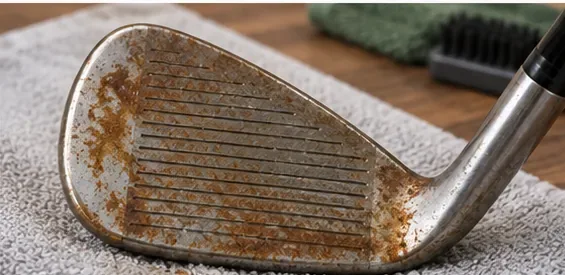
Rust on a golf club is not one problem with one universal fix. A few orange freckles on a plated iron, a deliberately rusting raw wedge face, and deep corrosion around a shaft or hosel call for different decisions. The best result is not simply “make every brown mark disappear.” It is to remove loose surface corrosion where that is appropriate, preserve the club’s finish and grooves, and stop before cleaning becomes damage.
Manufacturer guidance supports that conservative approach. Titleist recommends mild soap and water for its clubs, followed by thorough drying with a soft cotton cloth, and warns that storing clubs in wet headcovers can lead to rust and corrosion. Its Vokey staff also advises a medium-soft brush, light soap, and warm water, while cautioning that harsh chemicals can alter a finish. See the Titleist club care guidance and Vokey club-care guidance.
What a Good Rust-Removal Result Should Look Like
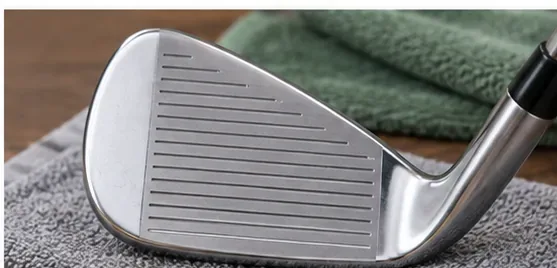
For a conventional plated or finished iron, a successful cleaning usually means the loose orange film is gone or greatly reduced, the grooves are free of dirt and corrosion residue, and the surrounding finish still looks even. You should not finish with fresh scratches, a newly bright patch that looks different from the rest of the face, peeling chrome, rounded groove edges, or a rough crater where metal has already been lost.
For a raw or non-plated wedge, the target may be different. Some manufacturers intentionally leave part of the clubhead unplated so it can oxidize. Callaway, for example, states that rust on the raw face of its Jaws Raw wedges is normal and does not impair playability. Titleist likewise notes that some raw Vokey finishes are designed to rust. Before trying to return a raw wedge to a mirror-bright appearance, confirm whether rust is part of the intended finish. See Callaway's Jaws Raw product guidance.
First, Identify the Finish You Are Working On
Club or finish
Reasonable goal
How cautious to be
Chrome-plated or polished iron
Remove dirt and loose surface rust without cutting through the plating
Very cautious with abrasives
Raw or non-plated wedge
Reduce loose rust if you want a cleaner look, while accepting that oxidation can return
Manufacturer-approved synthetic pads may be appropriate
Black, painted, coated, or specialty finish
Clean without changing color, gloss, or coating texture
Avoid improvised chemicals and aggressive pads unless the maker approves them
Putter with a specialty or plated finish
Preserve the original surface
Use the maker's care instructions or professional service when uncertain
Unknown finish
Clean gently and identify the model before escalating
Do not guess
If you cannot tell whether a club is plated or raw, look up the exact model and finish before using anything more aggressive than mild soap, warm water, and a soft brush. That small check can prevent a cosmetic cleanup from becoming a refinishing job.
What You Need
Warm water, not boiling water
A small amount of mild dish soap or another mild soap
A soft or medium-soft nylon brush
A soft cotton or microfiber cloth
A clean towel for drying
For a raw or non-plated club only, an optional synthetic scouring pad if the club maker recommends that type of care
For a non-plated surface only, an optional lubricant-cleaner if the manufacturer says it is compatible
Callaway's customer-service guidance for certain raw Vintage wedges specifically recommends a synthetic scouring pad and says a lubricant-cleaner can help limit rust on non-plated surfaces after the club is cleaned and dried. That advice is useful because it is finish-specific; it should not be treated as permission to scrub every chrome-plated or coated club the same way. See Callaway customer-service guidance.
Step 1: Remove Dirt and Decide Whether the Rust Is Superficial
Inspect the face before cleaning. Surface staining can often be improved, but deep pits, flaking plating, and lost metal cannot be restored by scrubbing.
Start with the club dry. Brush away grass, sand, and loose dirt so you can see the metal itself. Then look at the rust under good light. Light surface rust often appears as a thin orange or brown film. More serious corrosion shows pits, rough cavities, blistered or lifting plating, or dark areas that remain visibly lower than the surrounding surface.
This inspection sets your stopping rule. If the club has only surface discoloration, gentle cleaning is reasonable. If the metal is pitted, the plating is lifting, or the shaft has visible corrosion with flaking or thinning, cleaning can improve appearance but cannot replace missing metal. That is the point to consider a club technician or the manufacturer rather than escalating to harder abrasives.
Step 2: Wash the Clubhead With Mild Soap and Warm Water
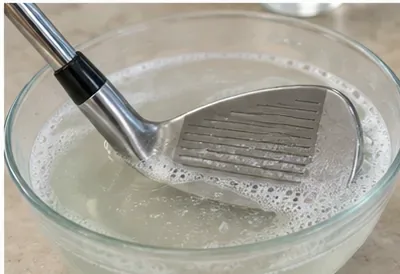
Use warm water and mild soap as the first cleaning stage. The goal is to soften residue without attacking the finish.
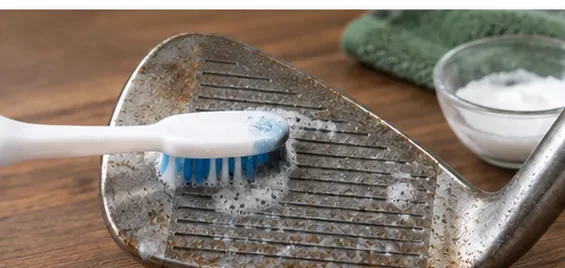
Mix a small amount of mild soap into warm water. Wet the clubhead and work the solution over the face, sole, back, and grooves with a soft or medium-soft nylon brush. You do not need a powerful chemical bath to learn whether the rust is superficial. The soap-and-water stage also removes dirt that can otherwise act like grit under a more abrasive pad.
Pay particular attention to the grooves, but do not file, sharpen, or aggressively scrape their edges. The USGA Equipment Rules tightly control groove dimensions and edge geometry; deliberate alteration of face markings can create a rules issue as well as permanently changing the club. The relevant specifications are in the USGA Equipment Rules for the club face.
After brushing, rinse the clubhead and wipe it dry. Now evaluate it. If most of the orange residue is gone and the finish looks intact, you may already be done. If rust remains, the next step depends on the finish.
Step 3: Escalate Only as Far as the Finish Allows
Use light pressure and inspect frequently. More pressure is not automatically a better result, especially on plated or coated finishes.
For raw or non-plated wedges
If the manufacturer confirms that the surface is raw or non-plated, a synthetic scouring pad may be an acceptable way to reduce loose oxidation. Work gently and stop often to inspect the surface. Your goal is an even, cleaner face—not a highly polished patch. Callaway's guidance for certain raw wedges specifically mentions a synthetic scouring pad; that is stronger support than relying on improvised internet recipes.
Expect rust to return on a raw surface. Removing it changes the appearance for a while, but it does not convert raw carbon steel into a plated clubhead. If repeated rust removal is becoming a chore, the better long-term answer may simply be accepting the intended patina or choosing a plated finish next time.
For chrome-plated, coated, black, or unknown finishes
If rust remains after soap and brushing, do not automatically reach for steel wool, a wire wheel, an overnight acid soak, or a strong rust remover. The finish is now the limiting factor. Titleist specifically cautions that harsh chemicals may alter club finishes and does not recommend abrasive chemicals or buffing wheels for its raw wedges. On plated clubs, visible rust can also mean moisture has reached steel through a scratch or defect in the plating. Aggressive polishing may remove the rust color while enlarging the damaged area.
At this stage, switch from “remove more” to “protect the club.” Check the manufacturer's instructions for the exact model, or take the club to a qualified repair shop if the spot is stubborn, valuable, or located on a specialty finish.
Step 4: Rinse, Dry Completely, and Protect the Surface
A good endpoint is a clean, dry face with intact grooves and an even finish, not necessarily a brand-new appearance.
Rinse away soap and loosened residue, then dry the clubhead immediately with a soft cloth. Dry around the grooves, hosel, ferrule area, and any recesses where water can sit. Do not put a damp club into a headcover or a closed golf bag. Titleist specifically advises that clubs and headcovers be completely dry before storage because wet headcovers can promote rust and corrosion.
If the club is raw or non-plated and its manufacturer permits it, a light wipe with a compatible lubricant-cleaner can help slow new oxidation. Wipe off excess rather than leaving a greasy film on the hitting surface. For plated, painted, or specialty finishes, use only a product the maker says is compatible.
How to Judge Whether You Are Finished
A good home result can be evaluated by a few practical signs:
Surface rust is gone or clearly reduced. A faint stain may remain where oxidation has etched the metal, but loose orange residue should not keep transferring heavily to a clean cloth.
The grooves are clean. Dirt and corrosion residue should no longer fill them.
The finish is still uniform. Stop if you create a brighter, duller, or scratched patch that is becoming more obvious than the rust was.
No plating is lifting. Blisters, flakes, or sharp edges around a rust spot suggest finish failure rather than simple surface contamination.
The club is fully dry. Moisture left in grooves, headcovers, or the bottom of the bag sets up the same problem again.
When to Change Approach
Change course if gentle cleaning produces little improvement after the dirt and loose oxide are gone. That usually means you are no longer dealing with something that can be solved by more scrubbing alone. Deep pits are missing metal. Peeling chrome is failed plating. A groove edge changed by abrasion cannot be restored by polishing. A rusted steel shaft with pitting or flaking deserves professional inspection because appearance is not the only concern.
For a valuable putter, collectible club, black or plated finish, or club still under warranty, professional advice is often cheaper than trying to undo a damaged finish. Titleist notes that third-party repairs can affect club integrity and warranty service, another reason to check the maker before refinishing.
Methods to Avoid as a Default
Wire wheels and power buffing: fast material removal makes it easy to alter a finish or soften edges.
Unverified acid soaks: household acids may remove oxidation but can also change finishes or attack exposed metal. Use them only when the manufacturer of that exact finish approves the method.
Coarse steel wool or aggressive sandpaper: they can replace rust with permanent scratching and can cut through plating.
Groove sharpeners and files: these can deliberately alter groove geometry; the USGA regulates groove width, depth, spacing, and edge shape.
Putting clubs away damp: this directly works against the cleaning you just completed.
What Rust Removal Cannot Fix
Home cleaning can remove dirt, residue, and some surface oxidation. It cannot rebuild metal lost to pitting, restore chrome that has peeled away, return worn grooves to factory geometry, or permanently stop a raw carbon-steel surface from oxidizing. A club can look much better after cleaning and still show dark specks or shallow scars where corrosion has etched the surface. That is not necessarily a failed cleaning job; it may simply be the physical limit of what remains.
It is also normal for some raw wedges to rust again. Callaway explicitly describes rusting as normal on the unplated face of certain raw wedges, while Titleist says some raw finishes are designed to rust. In those cases, the most realistic goal is controlled cleanliness and dryness, not permanent rust elimination.
How to Keep Rust From Returning
Wipe clubs clean and dry after wet rounds or practice sessions.
Let headcovers dry fully before putting them back on.
Do not leave wet clubs sealed in a trunk or damp bag.
Clean mud and fertilizer residue from faces and soles promptly.
For raw or non-plated surfaces, use only a manufacturer-approved protective lubricant or cleaner.
Inspect small scratches and rust spots early, before corrosion has time to deepen.
The Bottom Line
The safest way to get rust off golf clubs is to work from least aggressive to more specialized methods. Start with mild soap, warm water, a soft brush, and complete drying. If the club is a confirmed raw or non-plated model, manufacturer-approved synthetic scouring can help reduce loose rust. If the club is plated, coated, valuable, deeply pitted, or still rusty after gentle cleaning, the quality move is often to stop rather than scrub harder.
Judge the job by the condition of the club after cleaning: less loose rust, clear grooves, an intact finish, no new scratches, and a completely dry surface. That outcome protects both appearance and function without promising that corrosion damage already present can be erased.