Home
» INTERNET
»
How to Remove Nail Glue From Clothes Without Damaging the Fabric
How to Remove Nail Glue From Clothes Without Damaging the Fabric
Most nail glue is based on cyanoacrylate, the same fast-bonding adhesive family used in many super glues. That matters because removing it is different from treating an ordinary cosmetic stain: you are dealing with a hardened adhesive that may need to be loosened mechanically or with a compatible solvent before normal laundry detergent can finish the job.
The beginner-friendly rule is: handle fresh spills safely, let dried glue harden before scraping, check the care label, test any solvent in a hidden area, and keep the garment out of the dryer until the glue is gone. Guidance in this article was checked against current manufacturer and textile-care sources in September 2026.
First: is the glue still wet and touching your skin?
This is the one situation where stain removal is not the first priority. Cyanoacrylate cures by polymerization, a chemical process in which small molecules rapidly link into a solid plastic-like adhesive. That reaction releases heat. Poison Control notes that large exposures can cause burns, and published medical reports document significant burns when nail glue reacts with cotton clothing.
If fresh nail glue spills onto clothing you are wearing and the area feels hot, stings, smokes, or bonds the fabric to your skin, do not yank the fabric away. Cool the area with water, separate the garment only if it releases easily, and seek medical guidance for a burn or a large exposure. Poison Control's cyanoacrylate safety guidance specifically warns against pulling bonded skin apart. KISS also identifies ethyl cyanoacrylate as the main adhesive in several current nail-glue products and warns that it bonds skin and eyes within seconds; see the KISS PowerFlex Nail Glue product page.
Once the garment is off your body and there is no injury issue, you can focus on saving the fabric.
What should a beginner prepare?
A dull spoon, butter knife, or plastic card for lifting cured glue
Clean white cloths or paper towels
Liquid laundry detergent
Cold or lukewarm water
Optional: pure acetone, but only for fabrics that can safely tolerate it
A cotton swab or small white cloth for a hidden colorfastness test
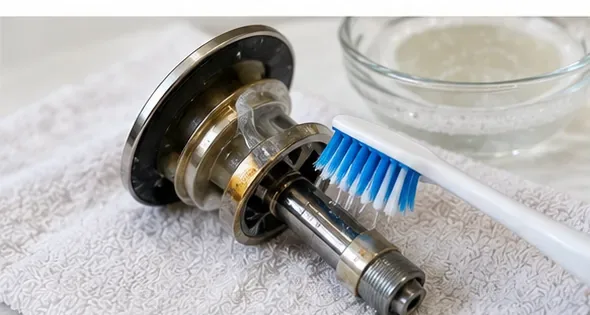
A soft toothbrush for the no-acetone fallback method
Do not assume nail-polish remover is automatically safer than pure acetone. University of Georgia textile-care guidance notes that nail-polish removers can contain additional ingredients that may worsen a stain, and it specifically says acetone must not be used on acetate fabrics. Its fiber guide states that acetone can destroy acetate on contact. Because triacetate is also vulnerable to acetone in the university's stain-removal guidance, avoid acetone on both acetate and triacetate. See the University of Georgia textile-care solvent guidance and fiber-care reference.
Step 1: Let cured nail glue harden before scraping
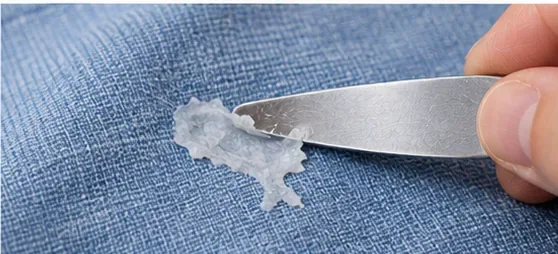
If the spill is on an unworn garment and there is no active heat reaction, let the glue cure fully before trying to pick it off. Loctite's fabric guidance recommends allowing super glue to dry before removal, then carefully lifting larger chunks with a spoon or other dull edge.
Lay the garment flat. Hold the fabric steady without stretching it, then slide the dull edge under the hardened glue. Remove only what releases with gentle pressure. Do not dig the tool into the fibers.
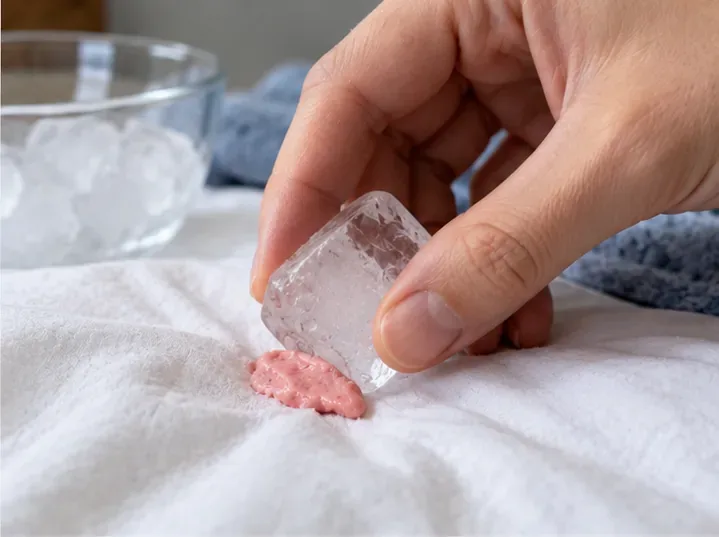
Start with cured glue. Gently lift the hardened adhesive with a dull spoon or similar edge instead of scraping aggressively into the fabric.
Common beginner mistake: rubbing a fresh or partially softened glue blob back and forth. That can spread the adhesive into a larger area and push it deeper between yarns.
Step 2: Check the care label before choosing acetone
Acetone can soften cyanoacrylate, which is why it appears in super-glue and nail-glue removal instructions. But it is a conditional tool, not a universal one. Tide's current nail-glue guide recommends testing acetone in an inconspicuous location before treating the stain. Loctite also warns that acetone can discolor or damage some fabrics.
Do not use acetone when the care label lists acetate or triacetate. Also be cautious with delicate garments, specialty coatings, prints, bonded decorations, and unknown blends. Even when the base fiber tolerates acetone, a dye or surface finish may not.
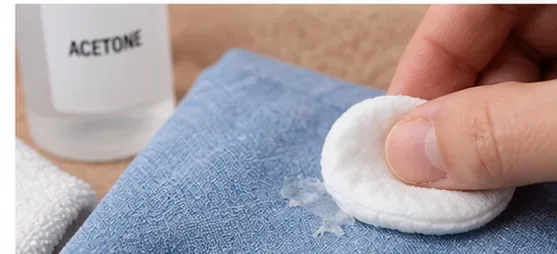
For an acetone-safe garment, put a clean white towel beneath the glue stain. Test one small hidden area first. If no color transfer, softening, whitening, or texture change occurs, lightly dampen a cotton swab or white cloth with acetone and dab the cured glue rather than saturating the garment. Work from the outer edge toward the center and move the towel underneath to a clean area as the softened adhesive transfers.
If the care label and hidden test show that acetone is safe, use a small amount and dab rather than soak the fabric. Stop immediately if dye or texture changes.
Use acetone only with good ventilation and away from flames, sparks, cigarettes, space heaters, dryers, and other ignition sources. University of Georgia textile guidance describes acetone as flammable and rapidly evaporating.
Step 3: If acetone is unsafe, use the cold soapy-water fallback
You do not have to use acetone. Tide's nail-glue instructions provide a fallback for fabrics that cannot tolerate it: soak the affected area in cold soapy water, then work gently at the softened residue with a toothbrush. Loctite likewise recommends cold-water soaking and detergent in its fabric-glue guidance.
For a beginner, this slower method has an important advantage: it is less chemically aggressive. Its limitation is time. Fully cured cyanoacrylate may not release in one round, especially when it has penetrated a thick weave.
Soak the stained section rather than an entire structured or dry-clean-only garment. After soaking, place the item on a flat surface and use a soft toothbrush to lift residue with short, gentle strokes. If the fabric begins to fuzz, stretch, or lose color, stop.
Step 4: Pretreat with detergent, rinse, and wash according to the label
Once the hard adhesive has been removed or substantially loosened, apply a small amount of liquid laundry detergent to the remaining mark. Loctite recommends pretreating residual glue and laundering normally after the adhesive bond has been broken.
Rinse out solvent and loosened adhesive before machine washing. Then wash the garment using the temperature and cycle permitted by its care label. Do not override the garment's care instructions just because another guide mentions warm water; the garment label is the more specific instruction for that textile.
After the hardened glue has loosened, remove residue gently, pretreat the area with liquid laundry detergent, and wash only as the garment's care label permits.
If the label says dry clean only: do not improvise a home soak. Lift only the dried surface glue that comes away without stressing the textile, then show the stain to a professional cleaner and explain that it is cyanoacrylate nail glue.
Step 5: Air-dry and inspect before using a dryer
Do not assume the stain is gone just because the garment has completed a wash cycle. Loctite advises making sure the glue is fully removed before high-heat drying. Air-dry the garment, inspect the fibers in good light, and feel the area for a stiff or glossy patch.
If residue remains, repeat the least aggressive treatment that was safe for the fabric. That may mean another detergent soak, another careful scraping pass, or another tiny acetone treatment on a fabric that already passed the hidden test.
Air-dry and inspect the treated area before using heat. Repeat treatment if the fabric still feels stiff or shows a shiny adhesive residue.
Quick decision table
Situation
Best next step
Fresh glue on clothing against skin, with heat or burning
Prioritize cooling and skin safety; do not rip bonded fabric away
Dried glue on sturdy washable cotton or polyester
Scrape gently; hidden-test acetone; then pretreat and wash if the test is safe
Acetate or triacetate
Do not use acetone; use the gentler soapy-water route or professional care
Delicate, embellished, printed, coated, vintage, or unknown fabric
Skip solvent experimentation and consult a professional cleaner
Dry-clean-only garment
Remove only loose cured glue and take the item to a cleaner
Glue remains after washing
Air-dry, reassess, and repeat before using a heated dryer
Beginner mistakes to avoid
Trying acetone before reading the fiber label
This is the biggest preventable error. Acetone may dissolve the glue and the fabric at the same time if the garment contains acetate. Always identify the textile first.
Using a cotton ball on fresh liquid cyanoacrylate against the body
Cotton can accelerate cyanoacrylate polymerization and release heat. Poison Control specifically warns that cyanoacrylate can react with cotton or wool strongly enough to cause burns. For a fresh spill on clothing you are wearing, treat it as a safety problem first, not a stain-removal experiment.
Pulling or peeling hard enough to distort the weave
A cured glue disk can grip several yarns at once. If it does not lift with a dull edge, soften it with a fabric-safe method rather than forcing it.
Putting the garment in the dryer too soon
Heat is unnecessary until you know the stain is gone. Air-drying gives you a chance to inspect and repeat treatment without making the cleanup harder.
Why nail glue behaves differently from ordinary glue
A current KISS nail-glue formula lists ethyl cyanoacrylate as its first ingredient, and Tide notes that most nail glues use cyanoacrylate chemistry similar to super glue. Cyanoacrylate cures rapidly in the presence of moisture, forming a rigid polymer. That is why water alone does not always wash a cured blob away—and why the right sequence is mechanical removal first, then a compatible solvent or soak, then ordinary laundering.
For more detailed removal steps, see Tide's glue-stain guide and Loctite's super-glue-on-clothes guide. Loctite's separate super-glue removal reference is more conservative about acetone on fabrics, which reinforces the practical rule used here: acetone is optional, must be tested, and is not appropriate for every textile.
Bottom line
For most washable, acetone-safe clothes, the safest beginner sequence is: let the glue cure, scrape gently, hidden-test acetone, dab only if safe, pretreat with detergent, wash by the care label, and air-dry before checking the result. If acetone is unsafe, switch to cold soapy water and gentle brushing. If the fabric is delicate, dry-clean-only, acetate/triacetate, heavily decorated, or simply too valuable to risk, professional cleaning is the better choice.