Home
» INTERNET
»
How to Season Gas Grill Grates: First Check What They’re Made Of
How to Season Gas Grill Grates: First Check What They’re Made Of
Before you oil and heat gas grill grates, check what they are made of. That single step prevents the most common seasoning mistake: treating every grate as if it were bare cast iron.
Manufacturers do not give one universal rule. Weber states that its porcelain-enameled cast-iron grates do not need seasoning because the enamel is already a durable protective surface. Char-Broil likewise says porcelain grates do not require seasoning, while it recommends seasoning for its stainless-steel and cast-iron grates. Napoleon publishes seasoning procedures for both stainless-steel and cast-iron cooking grids. In other words, the grate material and the instructions for your exact grill matter more than any one-size-fits-all internet rule.
Illustrative Example: A New Set of Bare Cast-Iron Grates
This is a hypothetical example, not a real test or customer result. Imagine that Maya has replaced the cooking grates on a three-burner gas grill. The new grates are bare cast iron, and her grill manual says they should be seasoned before regular use. She wants to protect them from rust and reduce sticking without leaving a thick, gummy oil coating.
Maya’s situation is useful because raw cast iron is the grate type that most clearly benefits from an oil-and-heat seasoning layer. “Seasoning” means applying a very thin film of cooking oil and heating it so the oil bonds to the metal and forms a protective coating. Napoleon describes this as polymerization: heat changes the oil into a more durable layer on the metal surface.
Do Your Gas Grill Grates Actually Need Seasoning?
Grate type
General approach
What to do first
Bare cast iron
Usually benefits from seasoning for rust protection and easier food release.
Follow the grill maker’s cast-iron procedure.
Porcelain-enameled cast iron
Often does not need traditional seasoning. Weber specifically says its porcelain-enameled cast iron never needs seasoning.
Do not assume bare-cast-iron care applies. Check the manual.
Porcelain-coated steel or porcelain grates
Char-Broil says porcelain grates do not require seasoning.
Use the manufacturer’s cleaning instructions instead of building an oil layer.
Stainless steel
Depends on the manufacturer. Char-Broil and Napoleon both publish oiling or seasoning guidance for some stainless-steel grids.
Check your model’s manual before treating seasoning as mandatory.
If Maya had porcelain-enameled grates instead of bare cast iron, the correct action might be to stop here and simply clean them according to the manufacturer’s instructions. The rest of this process applies when the grate maker recommends seasoning.
What You Need
A grill brush or cleaning tool suitable for your grate material
Warm water and mild dish soap if the manufacturer calls for washing before seasoning
Clean towels or lint-free cloths
A silicone basting brush or other safe oil applicator
A neutral cooking oil suitable for high-heat grill use, such as canola or vegetable oil
Heat-resistant grill gloves for handling hot components only when necessary
Your grill’s owner manual
Napoleon lists high-temperature oils such as canola, vegetable oil, shortening, and other suitable fats in its seasoning guidance. It also warns against salted fats such as butter or margarine. Whatever oil you choose, use only a thin coating. More oil does not create better seasoning; excess oil can remain sticky or burn unevenly.
How to Season Gas Grill Grates Step by Step
1. Start With Cool Grates and Remove Loose Debris
Maya begins with the grill completely cool and the burners off. She removes loose food residue, dust, and surface debris before adding any oil. If the grates are brand-new, she checks the manual for first-use washing instructions. If they are used, she removes carbonized food so the seasoning layer bonds to the metal rather than to old residue.
This is also the point to inspect for rust. Small rust spots on bare cast iron can usually be removed according to the grill maker’s maintenance instructions before re-seasoning. Deeply flaking or structurally damaged grates may need replacement rather than another coat of oil.
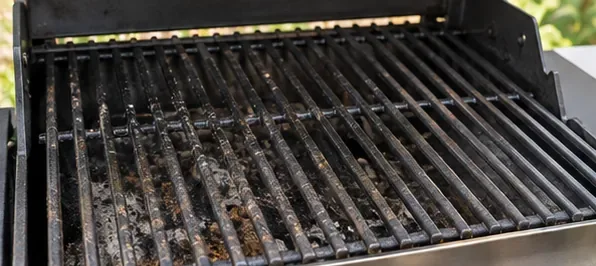
Begin with the grill off and cool. Remove loose debris before washing, drying, or applying oil.
2. Clean the Grates Thoroughly
For a new or heavily cleaned set of cast-iron grates, Napoleon instructs owners to wash with warm soapy water and a soft cloth, then dry completely before seasoning. For routine maintenance, your grill maker may specify brushing rather than a full soap-and-water wash every time.
Maya follows the instructions for her replacement grates rather than assuming the same brush is safe for every finish. This matters because an aggressive tool that is appropriate for one uncoated metal surface may damage another type of grate coating.
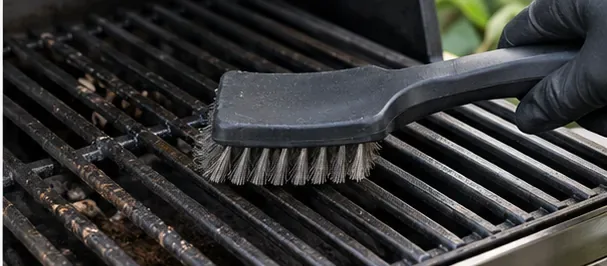
Clean away residue with a tool approved for your grate material so the oil reaches the metal surface evenly.
3. Dry the Grates Completely
Water and bare cast iron are a poor combination because lingering moisture encourages rust. Maya towels the grates dry and lets any remaining moisture evaporate before oiling.
If your manual instructs you to use low grill heat to finish drying, follow that model-specific direction. Otherwise, do not rush directly from rinsing to oiling while water is still trapped in seams or corners.
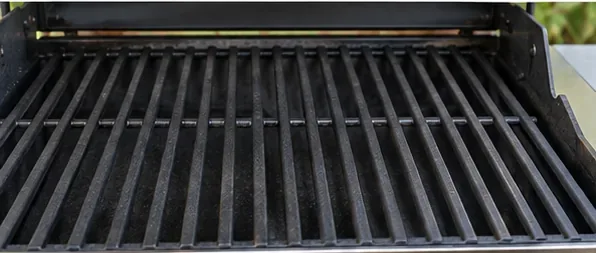
The grate surface should be clean and fully dry before the seasoning oil goes on.
4. Apply a Very Thin, Even Film of Oil
With the grill still off and the grates cool, Maya coats the cooking surfaces lightly. For cast iron, the manufacturer may direct you to cover both sides, corners, and grooves. Napoleon specifically tells owners to coat cast-iron grids completely on both sides.
The key word is thin. Wipe or brush away visible excess. Napoleon’s cast-iron care guidance says the surface should look matte rather than glossy or greasy after excess oil is removed. A thick coating can become tacky instead of forming a clean protective layer.
Do not spray aerosol cooking oil into a lit grill or toward an ignition source. Apply oil while the grill is off and cool unless your specific manufacturer explicitly instructs otherwise.
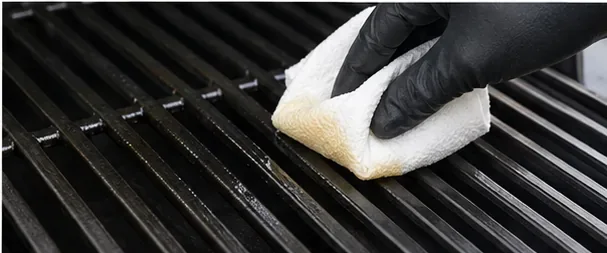
Apply only a thin, even coat. Excess oil should be removed rather than left pooling on the grate.
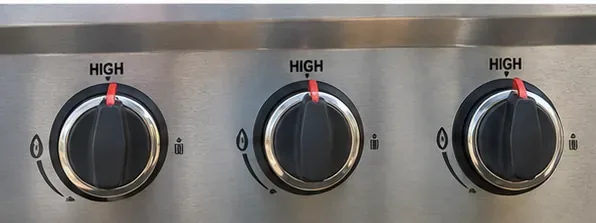
5. Heat the Grill According to the Manufacturer’s Procedure
This is where model-specific instructions differ enough that a single temperature and time would be misleading. Char-Broil’s general seasoning page says to ignite the grill and heat for about 16 minutes, until the oil burns off or the grates begin to smoke. Napoleon’s cast-iron guide gives a different method: roughly 350–400°F for 30–60 minutes for first-time seasoning.
Therefore, Maya uses the temperature and burner setting in the manual for her grates rather than copying a number from another brand. She lights the gas grill normally, closes the lid if instructed, and stays nearby while the oil heats.
Use the heat setting specified for your grill and grate material; manufacturer seasoning procedures vary.
6. Let the Oil Complete the Heating Cycle
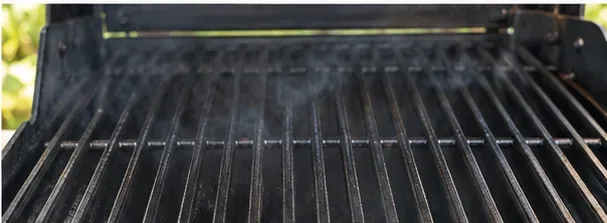
As the oil heats, some visible smoke can occur. The goal is not to flood the grill with smoke; it is to let the thin oil film complete the heating cycle specified by the manufacturer. Stay with the grill, keep the lid and burner settings where the manual calls for them, and keep combustible materials away from the appliance.
If flames appear where they should not, shut the grill down according to its safety instructions rather than treating flare-ups as part of seasoning.
A light haze may appear as the thin oil film heats; follow the grill manual for the required time and burner setting.
7. Turn Off the Grill, Cool, and Inspect
When the prescribed heating period ends, Maya turns the burners off and lets the grill cool. She does not grab hot grates or apply another layer while they are dangerously hot.
Whether to repeat the coat depends on the manufacturer. Some Napoleon instructions call for another coat during a full seasoning routine, while Char-Broil’s general procedure describes a single heating cycle followed by a light protective coat after cooling. That difference is why “repeat three times” should not be presented as a universal rule.
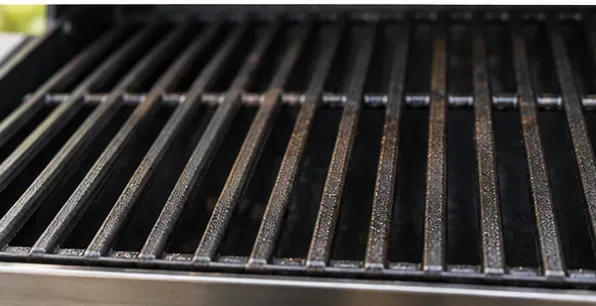
Once cool, a properly treated cast-iron surface should have an even, dry-looking finish rather than wet oil patches. Uneven glossy spots usually mean too much oil was left behind.
After cooling, inspect the grate for a dry, even finish instead of sticky or visibly pooled oil.
8. Cook, Clean, and Maintain the Protective Layer
Maya’s grates are now ready for normal cooking if the manufacturer’s seasoning procedure is complete. After grilling, she removes food residue using the recommended cleaning method and keeps the grates dry.
Maintenance intervals differ by brand. Char-Broil recommends a light coat of oil after the grill cools and describes seasoning as an ongoing practice for its cast-iron and stainless-steel grates. Napoleon recommends periodic re-seasoning and additional maintenance when rust appears. Follow the schedule for your exact grill rather than creating unnecessary heavy layers of oil after every cook if the maker does not call for them.
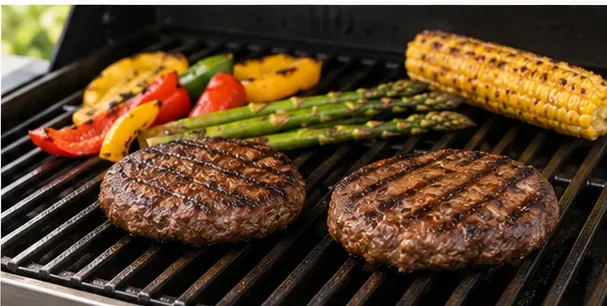
Once the manufacturer’s seasoning cycle is complete, use the grates normally and maintain them according to the grill’s care instructions.
Which Oil Should You Use?
A practical choice is a neutral cooking oil that the grill manufacturer identifies as suitable for high-temperature seasoning. Char-Broil specifically mentions cooking oil and high-heat oils such as canola in its grate-care guidance. Napoleon lists canola, vegetable oil, shortening, and other high-temperature options in its seasoning instructions.
Avoid assuming that the oil with the highest advertised smoke point is automatically best for every grill. Seasoning instructions are designed around a specific heating procedure. The important combination is a very thin coat, an oil approved for the task, and the temperature/time stated by the grill maker.
Common Mistakes to Avoid
Seasoning Porcelain-Enamel Grates That Do Not Need It
This is the biggest misconception. A cast-iron core does not automatically mean the surface should be seasoned. Weber explicitly says its porcelain-enameled cast-iron cooking grates do not need seasoning because the enamel already protects the iron.
Leaving the Grates Greasy
Seasoning is not a wet oil coating. If the grate looks heavily glossy, wipe off excess before heating. A thin film bonds more evenly and is less likely to become sticky.
Using Butter or Margarine
Napoleon advises against salted fats such as butter and margarine for cast-iron seasoning. Use an appropriate cooking oil or fat recommended in your grill documentation instead.
Oiling Over an Open Flame
Do not spray or pour cooking oil into an operating gas grill. Apply the oil when the grates are cool unless the manufacturer gives a different controlled procedure, and keep oil containers away from burners and ignition sources.
Copying Another Brand’s Temperature and Timing
Official instructions differ substantially. Char-Broil gives a short high-heat cycle in its general seasoning guide, while Napoleon publishes longer, temperature-controlled cast-iron procedures. Treat those as evidence that your owner manual should be the final authority.
Ignoring Rust or Chipped Coatings
Surface rust on bare cast iron may be removable before re-seasoning, but a damaged porcelain coating is a different problem. Do not grind through intact enamel in an attempt to “season the cast iron underneath.” Check the manufacturer’s replacement or care guidance for damaged coated grates.
Quick Decision Checklist
Identify the grate material before applying oil.
Check whether your manufacturer actually calls for seasoning.
Clean the grate with a tool safe for that material.
Dry bare cast iron completely.
Use a thin, even coat of approved cooking oil.
Never leave pooled oil on the surface.
Follow your model’s burner setting, temperature, and time.
Let the grill cool before handling or inspecting the grates.
Repeat only if the manufacturer’s procedure calls for another coat.
Keep the grates clean and dry between uses.
The Practical Takeaway
In the hypothetical example, Maya’s bare cast-iron grates are a good candidate for seasoning, so cleaning, drying, lightly oiling, heating, cooling, and maintaining them makes sense. If she had porcelain-enameled grates, the correct process could be completely different and might skip seasoning altogether.
That is the most useful rule to remember: season the grate you actually own, not the grate a generic tutorial assumes you own. Identify the material first, then use the grill maker’s care instructions for the final temperature, timing, oil choice, and maintenance interval.