Home
» INTERNET
»
How to Wash a North Face Puffer Jacket Without Ruining the Loft
How to Wash a North Face Puffer Jacket Without Ruining the Loft
As of September 2026, The North Face does not give one universal wash recipe for every puffer jacket. Its U.S. product-care page tells owners to follow the garment’s sewn-in care label and recommends professional cleaning by a service that specializes in down for down jackets. At the same time, current product-specific pages for down styles such as the 1996 Retro Nuptse provide detailed home-washing directions: use a front-loading washer, warm water, a liquid detergent made for down, a gentle cycle and low spin, followed by thorough rinsing and low-temperature tumble drying. That difference matters because “North Face puffer” can mean several constructions, fills, shell fabrics, and finishes.
The safest approach is therefore not to copy a single internet recipe. First identify what you own, then choose the cleaning method that matches its label. The current The North Face U.S. product-care guidance is the best starting point, while the care instructions on your specific product page can add model-level detail.
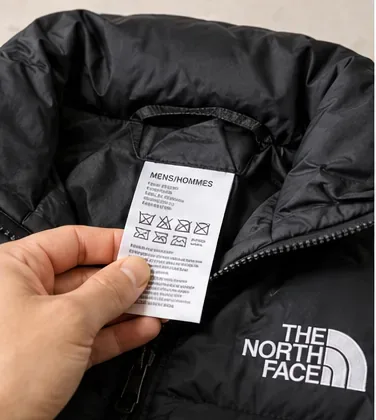
Start with the sewn-in label. It is more specific to your jacket than a generic puffer-cleaning rule.
First decision: is your puffer down or synthetic?
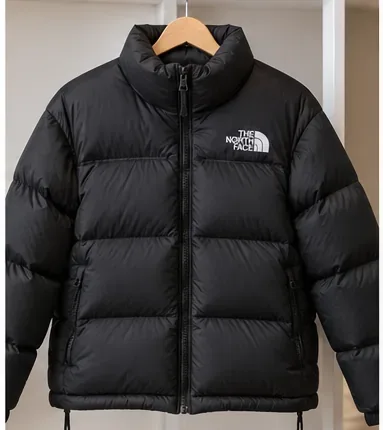
Do not assume every quilted North Face jacket is filled with down. For example, current Nuptse models use down insulation, while models such as the Quest Synthetic Jacket use HEATSEEKER synthetic insulation. The fill type affects the biggest risks during washing and drying: down can clump badly if detergent remains or drying is incomplete, while synthetic insulation may tolerate moisture differently but still needs the exact temperature and cycle stated on its label.
What you have
Best starting point
Main tradeoff
Down puffer with home-wash instructions
Follow the label and model-specific down directions
Home washing is convenient, but drying takes time and poor handling can reduce loft
Down puffer with unclear instructions or no suitable washer/dryer
Use a professional service experienced with down
Costs more, but avoids forcing a bulky down garment into unsuitable equipment
Synthetic puffer
Follow the sewn-in label for that model
Do not automatically apply down-specific detergent or drying advice
Jacket with a waterproof/breathable shell or special finish
Follow both the garment label and the relevant TNF fabric-care guidance
Cleaning choices can affect water repellency as well as insulation
Useful action: find the insulation line on the product page or garment tag before choosing detergent or dryer settings. The current Quest Synthetic Jacket page is a good example of how The North Face explicitly identifies synthetic fill.
Home wash or professional cleaning?
For down, this is a real choice rather than a simple “always machine wash” answer. The North Face U.S. help page recommends having down jackets professionally cleaned by a service that specializes in down. Current regional product pages, however, also describe a valid home-wash method when the garment label allows it and you have the right equipment.
A professional down specialist is the safer choice if your jacket is unusually bulky, your washer has a center agitator, your dryer is too small, or the care label is unclear. “Professional cleaning” should not be confused with automatically choosing conventional solvent dry cleaning: regional TNF care guidance notes that dry cleaning can reduce down loft or damage the fill. Ask the cleaner whether they specifically handle down garments.
Useful action: if you cannot give the jacket room to move in both the washer and dryer, stop before washing and use a down-care specialist instead.
How to wash a North Face down puffer at home
1. Read the care label and check the exact model
The care label wins over a generic guide. Look for wash temperature, cycle, bleach restrictions, tumble-dry instructions, and any special shell treatment. If you know the style number, compare it with the current product page. The 1996 Retro Nuptse care instructions, for example, call for a front-loading machine, warm water, down-specific liquid detergent, a gentle cycle and low spin.
Common misconception: “All puffers should be washed cold.” That is not universally true. Some current TNF down-product instructions specify warm water. Action: use the temperature printed for your jacket rather than choosing cold or warm by habit.
2. Empty, close, and prepare the jacket
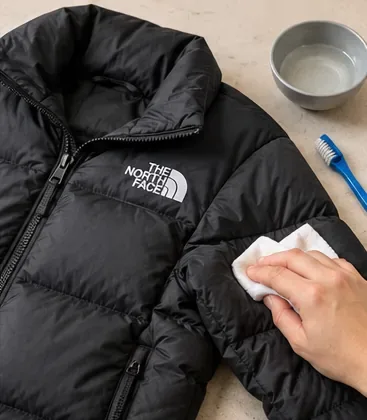
Empty every pocket. Close zippers and hook-and-loop fasteners so hardware is less likely to snag the shell. Current TNF down-product pages also instruct users to turn the garment inside out before cleaning. If there is loose surface dirt, brush or wipe it away before the jacket enters the machine.
Remove loose soil and deal with small dirty areas before the full wash, without aggressively scrubbing the lightweight shell.
If your puffer includes a DryVent or other technical outer fabric, be conservative with stain treatments. The North Face’s regional product-care guidance specifically advises against stain removers on DryVent garments. Action: check the fabric technology on your model before applying a concentrated pre-treatment.
3. Use a washer that will not stress the baffles
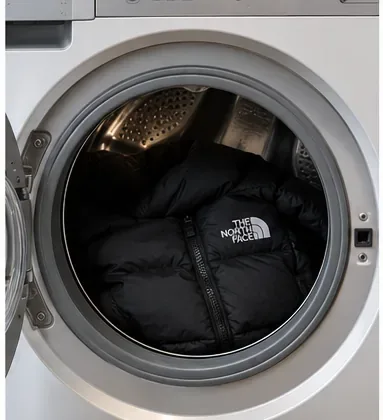
For the current down instructions cited above, The North Face specifies a front-loading washing machine. Its regional care page warns that a top-loading machine with a center agitator may damage the internal construction. The tradeoff is simple: a smaller or more aggressive machine may save a trip to a laundromat, but it gives a wet, heavy down jacket less room and more mechanical stress.
A roomy front-loading drum is the preferred setup in current TNF home-wash directions for down products.
Action: if your only washer is an agitator-style top loader, use a suitable front-loader elsewhere or choose professional down cleaning.
4. Pick the detergent based on the fill and care instructions
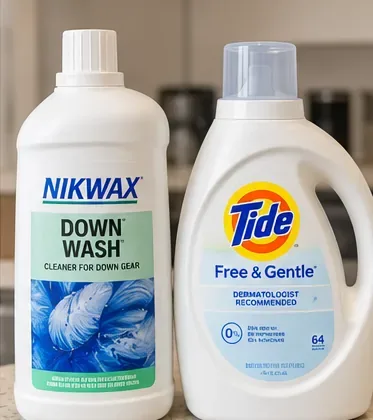
For current Nuptse care instructions, The North Face specifies a liquid detergent made specifically for down and states that it should not contain bleach. That is more specific than the older idea that any mild laundry soap is automatically equivalent. Down-cleaning products are designed around rinsability and the needs of down fill; the exact dose should come from the cleaner’s label and your washing machine.
For a down puffer, current model-specific TNF guidance favors a liquid detergent made for down rather than treating every laundry detergent as interchangeable.
Action: for a down model, use a down-specific liquid cleaner when the care label or product page calls for it. For a synthetic model, use the detergent type specified on that garment’s own label rather than assuming the down rule applies.
5. Wash gently, then rinse thoroughly
Current TNF down-product instructions call for a gentle cycle with low spin. They also suggest repeating the rinse cycle to remove soap residue, followed by an extra spin to remove excess water. This is one place where a slightly longer laundry process is worth it: residual detergent can interfere with loft, while removing more water in a controlled spin reduces the burden on the wet jacket during transfer and drying.
Action: after the wash, run the additional rinse recommended by the product instructions if you see suds or if the label/model guidance calls for it.
6. Support the jacket when you remove it
Wet down becomes heavy. Current TNF instructions say not to lift the product from the washer by one section; instead, scoop it from underneath. This reduces concentrated stress on baffles, seams, and the shell.
Action: use both hands and support the jacket’s weight as a bundle when moving it into the dryer.
7. Dry low and slowly; restore the loft as you go
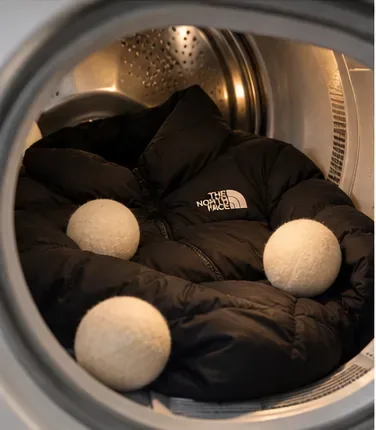
Drying is the part of the process that most directly affects loft. Current TNF product pages recommend tumble drying down over a long period on a low setting, washing and drying the item by itself, and adding tennis balls or tumble-dryer balls to help prevent clumping. The benefit of dryer balls is mechanical separation of damp down clusters; the tradeoff is that the process still takes patience and repeated checks.
Low-temperature tumble drying with dryer or tennis balls helps separate damp down clusters while the jacket dries.Pause periodically to break up remaining clumps and redistribute the fill instead of assuming one dryer cycle is enough.
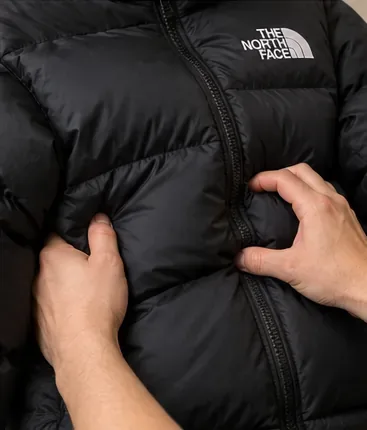
Common misconception: “If the shell feels dry, the jacket is finished.” The inside of a down cluster can remain damp after the face fabric feels dry. Action: continue low-temperature drying and gentle clump-breaking until the insulation feels evenly lofty with no cool, dense, or damp areas.
8. Do not store it until it is completely dry
Once the jacket is dry, let it cool and inspect the baffles. They should feel evenly filled rather than hard or matted. Avoid compressing or storing a jacket that is still damp. If you do not have a suitable tumble dryer, current TNF guidance is not uniform across every region and model; for a valuable down puffer, professional down cleaning is the lower-risk choice rather than improvising with high heat.
After low-temperature drying, check that the jacket has regained even loft before putting it away.
What if your North Face puffer has synthetic insulation?
Synthetic fill changes the decision. The North Face currently sells insulated jackets using HEATSEEKER and other synthetic fills, so a Nuptse-style down wash routine should not be treated as universal. The exact synthetic-jacket care label may specify a different detergent, temperature, or drying method. TNF’s general guidance for synthetic insulated sleeping bags uses a front-loading machine, mild detergent, repeated rinsing, and very low or no-heat drying, but a sleeping-bag instruction is not a substitute for your jacket’s sewn-in label.
Action: use the synthetic fill information to identify the category, then follow the garment-specific wash symbols and text. If the label is missing or unreadable, contact The North Face with the style number before guessing.
Machine drying vs. air drying: which is better?
Method
Advantages
Limitations
Best fit
Low tumble drying
Helps restore down loft; dryer balls can break up clumps
Takes time; heat must stay within the label’s limit
Down jackets whose care instructions permit tumble drying
Air drying
No dryer heat
Down can remain clumped or damp internally for a long time; some TNF down pages specifically advise against hang drying
Only when the garment label explicitly permits it or as a brief finishing stage after proper tumble drying
Professional down service
Useful when home equipment is unsuitable
Costs more and requires finding a cleaner experienced with down
Bulky, expensive, unclear-label, or difficult-to-dry down jackets
What about water repellency after washing?
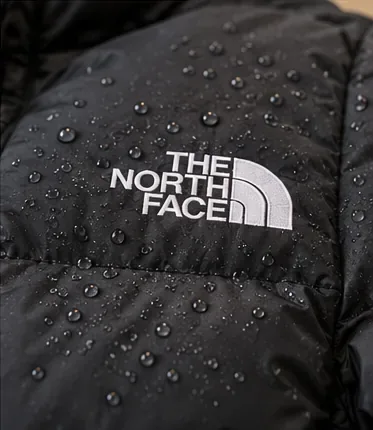
Some North Face insulated jackets use a durable water-repellent (DWR) finish on the outer fabric. Cleaning can sometimes help a dirty DWR surface perform better, but water beading after a wash is not proof that the insulation is dry, and a lack of beading does not mean the jacket should automatically receive a random aftermarket treatment. The North Face’s product-care page advises following the garment’s cleaning instructions for DWR-equipped outerwear.
Water beading can be a useful shell-performance check, but it does not tell you whether the insulation inside is fully dry.
Action: if your jacket has a DWR finish and water no longer beads after cleaning, consult the exact model’s care instructions before adding a wash-in or spray-on treatment.
Quick checklist before you press Start
Confirm whether the fill is down or synthetic.
Read the sewn-in care label and, if possible, the current product page for your style number.
For down models whose current instructions match the Nuptse guidance, use a roomy front-loading washer.
Close zippers and hook-and-loop fasteners and turn the garment inside out when instructed.
Use the detergent type stated for your fill; current Nuptse pages call for a down-specific liquid detergent without bleach.
Use the labeled temperature, gentle cycle, and low spin.
Rinse thoroughly; add an extra rinse/spin when the model guidance calls for it.
Support the whole jacket when moving it wet.
Tumble dry down slowly on low when permitted, using dryer or tennis balls and breaking up clumps periodically.
Store the jacket only after the insulation is completely dry and evenly lofted.