Home
» INTERNET
»
How to Wash a Wool Coat: Hand Wash, Machine Wash, or Dry Clean?
How to Wash a Wool Coat: Hand Wash, Machine Wash, or Dry Clean?
A wool coat can be washable, hand-wash-only, or dry-clean-only, and the fiber content by itself does not tell you which method is safe. A tailored coat may combine wool with lining, interfacing, shoulder structure, adhesives, trim, and buttons that react differently to water and agitation. The first decision is therefore not “Which wash cycle should I use?” but “What cleaning method does this particular coat permit?”
As of September 2026, the U.S. Federal Trade Commission's care-label guidance states that manufacturers need a reasonable basis for care instructions and warnings. A “Dry Clean Only” warning is supposed to mean that washing would harm the garment. That makes the sewn-in care label more useful than a blanket rule based only on “100% wool.” See the FTC's Care Labeling Rule guidance.
Which cleaning method should you choose?
What the coat says or needs
Best starting choice
Main tradeoff
“Dry Clean Only”
Professional dry cleaning
Higher cost, but lower risk of water-related distortion for a coat specifically labeled against washing.
“Hand Wash”
Gentle hand washing with wool-safe detergent
More control over agitation, but the wet coat is heavy and requires careful handling and drying.
“Machine Wash” or a permitted wool cycle
Wool/delicate cycle exactly as the label specifies
Convenient and repeatable, but only appropriate when the finished garment—not just the wool fiber—is machine-washable.
No readable label, vintage construction, bonded/interfaced tailoring, valuable trim, or uncertain dye stability
Professional cleaner
Costs more than home care, but avoids guessing with a garment whose construction is unknown.
Only light dust or a minor surface mark
Brush, air, or spot-treat only if the care instructions allow it
Avoids unnecessary full washing, but will not solve deep or widespread soil.
Woolmark notes that wool is naturally resistant to odors, creasing, and many stains, so wool garments often need less frequent washing than people assume. There is no universal “wash your coat every X wears” rule that fits every climate, coat, or usage pattern. If the coat is not visibly dirty and does not retain odor, brushing and airing may be enough between deeper cleanings. See Woolmark's wool-washing guidance.
Before washing: read the label, not just the fiber content
A coat labeled 100% wool can still be unsuitable for water washing because the whole garment includes more than the shell fabric. Conversely, a wool coat whose label explicitly permits hand or machine washing has been given a washing method by the manufacturer.
If the label says “Do Not Wash” or “Dry Clean Only,” stop there. Woolmark's care-symbol guidance states that “Do Not Wash” items may be sensitive to wet treatment or unsuitable for domestic washing, while the FTC explains that “Dry Clean Only” is a warning against washing.
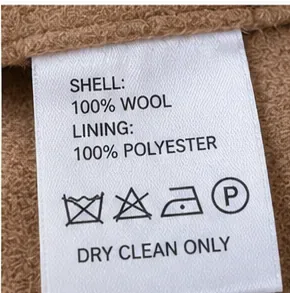
This example care label says “Dry Clean Only.” A coat with this instruction should go to a professional cleaner rather than being hand-washed at home.
If the label permits washing, empty every pocket, close or secure loose fasteners as appropriate, and brush off lint, dust, dried mud, and hair before adding water. Inspect high-soil areas such as cuffs, collar edges, and pocket openings. Treat stains only with methods compatible with wool and the coat's care instructions; aggressive rubbing can roughen the surface and distort the fabric.
Five steps for washing a washable wool coat
1. Choose hand wash or machine wash from the care label
Choose hand washing when the label calls for it or when hand washing is explicitly permitted and you want maximum control over agitation. Woolmark's hand-wash guidance uses clean lukewarm water around 30°C with a mild wool detergent, followed by gentle soaking and careful rinsing. It specifically warns against rubbing, pulling, or wringing.
Choose machine washing only when the coat's label allows it. Woolmark says machine-washable wool garments can use a wool setting; when a machine lacks a wool program, a cold or delicate cycle may be appropriate for garments whose care claim permits that treatment. The care label's temperature and cycle remain the controlling instructions.
Recommendation by need: if you want maximum control and do not mind the work, hand washing is the gentler-feeling process to manage manually. If the label clearly permits machine washing and your washer has a suitable wool cycle, the machine is the more convenient option. If the label does not authorize either method, convenience is not a good reason to experiment.
2. Use a mild wool detergent and minimize agitation
For hand washing, dissolve a small amount of neutral, mild wool detergent in lukewarm water before adding the coat. Lower the coat into the bath and gently move it through the water rather than scrubbing it against itself. Woolmark's general hand-wash method allows a short soak of about 10 minutes before rinsing, but if your coat's own instructions specify something different, follow the coat.
For machine washing, avoid overloading the drum. Use the amount of wool-safe detergent recommended for your washer and product. Woolmark advises neutral, mild detergent and cautions against heavy-duty detergents, enzyme-containing “bio” detergents, and bleaches for wool. See Woolmark's detergent guidance.
When the care label permits hand washing, move the coat gently through lukewarm water with wool-safe detergent. Avoid rubbing, twisting, or wringing the fabric.
Tradeoff: stronger detergents and harder agitation may remove soil faster, but wool care is not only about soil removal. You are also trying to preserve surface texture, dimensions, seams, and tailoring. For a lightly soiled wool coat, more aggressive chemistry is rarely the sensible default.
3. Rinse without twisting, then remove water gently
After hand washing, drain the wash water and rinse as directed by the garment's care instructions. Woolmark recommends rinsing thoroughly and pressing excess water out carefully rather than wringing the garment.
A wet coat can be surprisingly heavy. Support the body of the coat as you lift it; do not hold a saturated coat by one shoulder or sleeve. Lay it on a clean, light-colored towel and press or roll the towel around the coat to absorb water. The goal is to reduce water weight without twisting the fibers or pulling the coat out of shape.
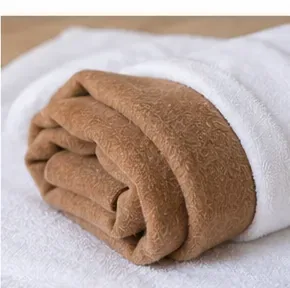
Pressing or rolling a washable wool coat in a clean towel removes excess water without wringing. Support the coat evenly while it is wet.
Recommendation by need: if you have limited drying space, removing more moisture with towels can shorten air-drying time. The tradeoff is extra handling, so use broad, gentle pressure rather than squeezing individual sections.
4. Reshape and air-dry away from direct heat
Drying can be as important as washing. Woolmark recommends air drying wool away from direct sunlight and direct heat. It also distinguishes between garment constructions: knitwear is generally best dried flat, while woven tailored pieces such as jackets can sometimes be hung on a hanger to dry. See Woolmark's wool-drying guidance.
For a heavy washable coat, a flat drying rack or clean towel gives the wet garment broad support and reduces strain on the shoulders. If the coat is a woven tailored style and its care instructions permit hanging, use a sturdy, broad, padded hanger that supports the shoulder shape. Do not put a damp wool coat over a radiator or near concentrated heat.
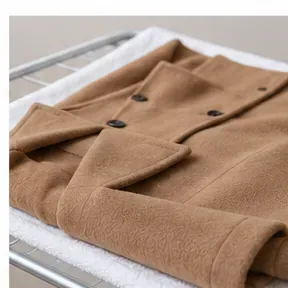
A washable wool coat drying flat on a towel-covered rack. Keep it away from direct sunlight, radiators, and other concentrated heat sources.
Tradeoff: hanging can improve airflow and preserve a tailored silhouette when the coat is designed for it, but a very wet, heavy coat can place more stress on the shoulders. Flat drying uses more horizontal space but distributes the weight more evenly.
5. Finish only after the coat is completely dry
Once dry, check the coat's shape, nap, buttons, seams, lining, and collar. A soft clothes brush can restore the surface after washing. If the coat needs wrinkle removal, follow its ironing or steaming symbols rather than applying high heat automatically. The FTC care-label rules require warnings where ordinary procedures would harm the garment, so “Do Not Iron,” temperature limits, or other finishing instructions matter.
Store the coat clean and fully dry on a sturdy hanger with enough room that it is not crushed by neighboring garments. Avoid sealing a coat away while damp, since retained moisture is not a safe storage strategy for any natural-fiber outerwear.
Hand wash vs. machine wash vs. dry clean: practical tradeoffs
Hand washing
Best for: coats whose labels say “Hand Wash,” or washable coats where you prefer direct control over movement.
Advantages: you control water temperature and agitation; no spin cycle unless you choose another method to remove water.
Disadvantages: a coat is bulky, heavy when saturated, and awkward to rinse evenly. Handling a wet structured garment can itself cause distortion if you support it poorly.
Machine washing
Best for: coats explicitly labeled machine-washable and washers with a suitable wool/delicate cycle.
Advantages: easy, consistent rinsing and less manual handling.
Disadvantages: the wrong cycle, temperature, detergent, spin intensity, or an overcrowded drum can create unnecessary mechanical stress. “My washer has a wool button” does not override a “Dry Clean Only” coat label.
Professional dry cleaning
Best for: “Dry Clean Only” coats, sharply tailored or structured coats, valuable vintage pieces, uncertain construction, and garments with trims or components that make home washing risky.
Advantages: follows the garment's specified professional-care route and avoids immersing a water-sensitive construction.
Disadvantages: costs more and requires a trip to a cleaner. It also is not necessary for every wool garment; Woolmark notes that many wool products are safely washable when their care claims say so. See Woolmark's dry-cleaning guidance.
Can you wash a 100% wool coat at home?
Sometimes. “100% wool” describes the shell fiber, not the complete cleaning specification. If the care label permits hand washing or machine washing, home washing can be appropriate. If it says “Dry Clean Only,” do not treat the fiber percentage as permission to ignore that warning.
This distinction matters especially for coats because tailoring components may behave differently from the wool shell. The FTC specifically notes that care instructions have to account for the finished garment and its components, not merely a fabric sample.
What if the care label is missing?
There is no reliable way to reconstruct the manufacturer's original care testing from appearance alone. You can identify obvious clues—dense tailoring, shoulder pads, fused fronts, contrasting lining, leather trim—but those clues do not prove a safe wash method.
If the coat is inexpensive and you accept the risk, you could consult the brand for archived care instructions using the exact model or fabric composition. If the coat is valuable, vintage, irreplaceable, or sharply tailored, a reputable professional cleaner is the lower-risk choice.
Should you use a tumble dryer?
Only if the care label explicitly permits tumble drying. Woolmark states that some wool garments are designed for low-heat or wool-setting tumble drying, but if the garment does not say it can be tumble dried, air drying is the safer default. See Woolmark's tumble-drying guidance.
For many coats, direct heat is a poor shortcut because you are not just drying loose wool fibers—you are drying a finished, shaped garment. When in doubt, give the coat more time rather than more heat.
The simplest decision rule
If your coat says Dry Clean Only, use a professional cleaner. If it says Hand Wash, use lukewarm water, mild wool detergent, minimal agitation, no wringing, and careful air drying. If it explicitly allows Machine Wash, use the specified wool/delicate program and temperature. If the label is missing or the coat has complex tailoring, choose the lower-risk professional option rather than guessing.
There is no single best cleaning method for every wool coat. The practical goal is to remove soil while preserving size, surface, lining, structure, and shape. The care label tells you which tradeoffs the garment was designed to tolerate.