Home
» INTERNET
»
How to Wash HOKA Sneakers Without Damaging the Foam or Upper
How to Wash HOKA Sneakers Without Damaging the Foam or Upper
Your HOKA sneakers look fine after a normal road run, then one wet outing leaves the mesh gray, the outsole packed with dirt, and the inside smelling less than fresh. The tempting fix is to throw the shoes into the washing machine. HOKA's own care guidance points in a different direction: hand wash with mild soap or detergent and cool water, then let the shoes dry naturally away from direct heat or sunlight.
That approach takes a little more time, but it gives you much more control over the upper, foam, adhesives, and shape of the shoe. HOKA also advises against putting the shoes themselves in a washing machine or dryer because those methods can damage materials, fastenings, or glue. The guidance below is based on HOKA's official care pages checked September 13, 2026, including HOKA Care & Cleaning and the brand's trail-shoe cleaning guide.
What you should know before washing HOKA sneakers
Most HOKA running shoes combine soft cushioning foams with engineered mesh, woven textile, rubber, adhesives, and molded components. Some models also use suede, nubuck, leather, or GORE-TEX materials. Those materials do not all respond the same way to water and scrubbing, so the safest general method is gentle hand cleaning rather than soaking.
For ordinary road or trail shoes with synthetic uppers, your goal is simple: remove loose dirt first, use only enough soapy water to lift the remaining grime, wipe away the soap without saturating the shoe, and allow every part to dry fully before reassembly.
What you need
A soft-bristle shoe brush or clean toothbrush
A microfiber cloth or soft rag
Cool water; lukewarm water is also used in HOKA's current trail-shoe guidance
A small amount of mild detergent, mild dish soap, or sneaker cleaner
A dry towel
Absorbent paper or a small clean towel for stuffing the shoes while they dry
Avoid hot water, strong solvents, abrasive cleaners, stiff scrubbing on delicate mesh, and direct heat. If your pair contains suede, nubuck, leather, or a waterproof membrane, read the material-specific section later in this guide before getting the shoe wet.
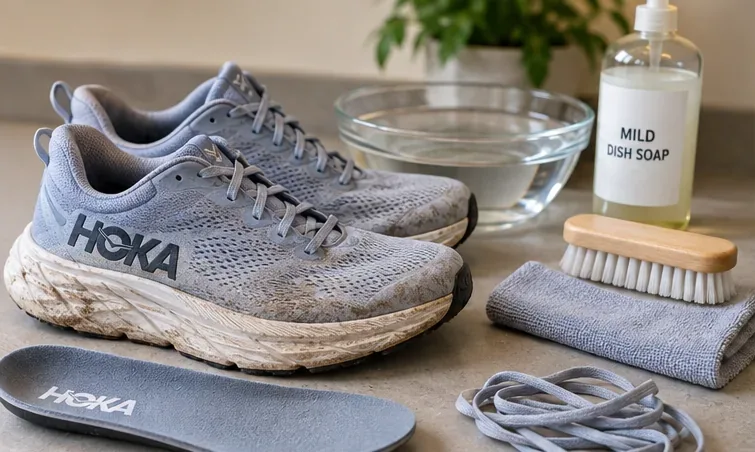
Set up before washing: remove the laces and insoles, and keep a soft brush, clean cloth, cool water, and a small amount of mild soap nearby.
Step 1: Remove the laces and insoles, then brush off dry dirt
Take the laces and removable insoles out before cleaning. Separating them opens the shoe so dirt and moisture are easier to reach, and it also helps all three parts dry more evenly afterward.
If the shoes are muddy, do not immediately soak the mud. HOKA recommends removing excess dirt while it is dry; heavily caked mud can be easier to knock or brush off after it has dried. Tap the soles together outdoors, then use a dry brush to loosen soil from the outsole, midsole edges, toe area, and upper.
Be gentler on mesh than on the rubber outsole. HOKA's general care guide warns that mesh can fray under harsh scrubbing, so use light repetitive brushing or dabbing rather than forcing stiff bristles into the fabric.
The laces can be cleaned separately. HOKA's general care page says laces may be washed on a cold laundry setting with regular detergent if they are secured so they do not tangle, but they should be removed before anything goes into a dryer. If you prefer the simplest method, hand wash the laces in the same mild detergent solution used for the shoes.
Brush off loose dirt before adding water. This reduces the amount of mud that gets worked deeper into the upper during hand washing.
Step 2: Hand wash with a small amount of mild detergent
Mix a small amount of mild detergent or soap into a bowl or basin of cool water. For trail shoes, HOKA currently specifies lukewarm water with a small amount of mild detergent or shoe cleaner. The important point is to avoid hot water and an overly concentrated cleaning solution.
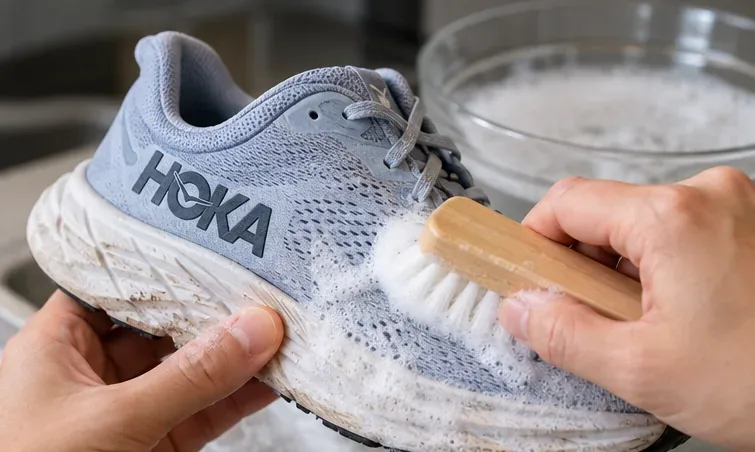
Dip the brush, sponge, or cloth into the solution instead of pouring detergent directly onto the shoe. Gently work on stained areas, the midsole sidewalls, the upper, and the outsole. Use just enough moisture to create a light lather and loosen the dirt.
On breathable mesh, use minimal pressure. A stain that has soaked into the fibers may not disappear completely, and scrubbing harder is not always the right answer. If the surface begins to fuzz, the weave looks stressed, or the color starts transferring to the cloth, stop and switch to a gentler dabbing motion.
Clean removable insoles separately with the same mild solution. Do not twist or aggressively wring them, because deformation can change how they sit inside the shoe.
Use light pressure and a soft brush or cloth with diluted mild detergent, concentrating on visibly dirty areas instead of aggressively scrubbing the entire shoe.
Step 3: Wipe away soap instead of soaking the shoes
Once the dirt has lifted, switch to a clean cloth dampened with cool water. Wipe away the remaining foam and dirty solution. Rinse the cloth as needed, wring it out, and repeat until it no longer picks up obvious soap.
This is an important point in HOKA's current trail-shoe guidance: “rinse, don't soak.” The brand specifically recommends a damp cloth rather than dunking the shoes under running water or fully submerging them. If a small patch of soap is difficult to remove, a light spray of water is preferable to flooding the shoe.
Why be conservative with water? A running shoe is a bonded structure rather than a single piece of fabric. The upper, foam, rubber, reinforcement pieces, and adhesives all have to dry together. Less unnecessary saturation means less water to remove and less temptation to use damaging heat later.
Step 4: Blot, stuff, and air-dry completely
Press a dry towel against the shoes to remove surface moisture. Do not twist them. Then place absorbent paper or a small clean towel inside each shoe. The stuffing absorbs moisture and helps the upper hold its shape as it dries.
Keep the insoles and laces separate. Put everything in a shaded, well-ventilated indoor area and let it dry naturally. HOKA advises against direct sunlight and direct heat. That means no radiator, space heater, hair dryer, hot-air vent, or high-heat dryer.
Drying time depends on how wet the shoes became, the room humidity, and the materials. HOKA's general guide suggests that properly blotted and stuffed shoes can be left to dry overnight. Very wet shoes may take longer. Replace damp stuffing with dry material if necessary.
Do not put the insoles and laces back in until both the shoes and removable parts feel fully dry. Running in shoes that are still damp can prolong odor and slow the remaining drying process.
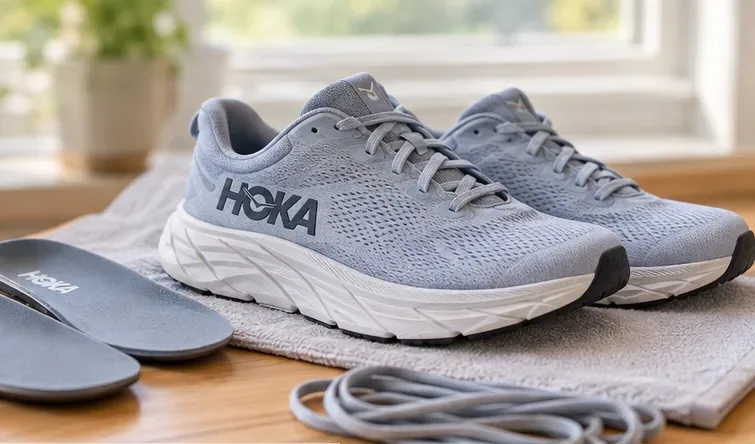
Let the shoes, insoles, and laces dry separately in a shaded, ventilated place away from heaters, hair dryers, and direct sunlight.
Can you wash HOKA sneakers in a washing machine?
For routine care, the answer from HOKA is no. Its current care guidance says it does not recommend running the shoes through a washing machine or dryer because doing so can damage the materials. HOKA Australia likewise advises avoiding machine washing because it can damage fastenings and glue.
That is different from washing the removable laces. HOKA's own general guide permits cold-machine washing of laces, provided they are secured and removed before the dryer. The shoe itself is the part that should be hand washed.
HOKA's broader care article does describe emergency shortcuts when shoes absolutely must be dried quickly, but those are exceptions rather than the recommended cleaning routine. If your goal is to preserve the shoe rather than meet an urgent deadline, stick to hand washing and natural air drying.
How to clean different HOKA materials
Mesh and woven synthetic uppers
Use a soft brush, mild solution, and very light pressure. HOKA specifically notes that mesh is vulnerable to fraying when scrubbed harshly. Dabbing or short gentle strokes are safer than aggressive back-and-forth scrubbing.
Suede or nubuck
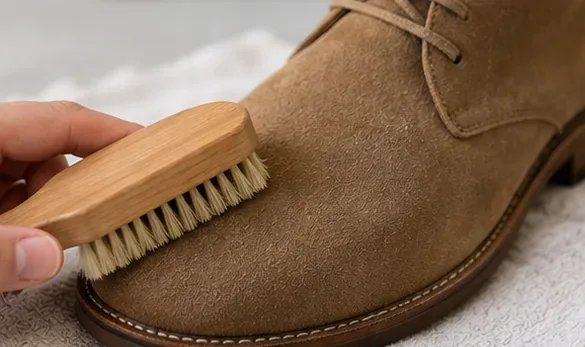
Do not treat suede or nubuck like ordinary mesh. HOKA's care guidance recommends letting these materials dry, blotting them, brushing dry dirt away, and using a stain treatment intended for suede or nubuck when needed. Because these materials are moisture-sensitive, a dry or material-specific method is preferable to a full wet wash.
Leather
HOKA says standard leather can generally follow the basic cleaning method, but the surface should be wiped down afterward and allowed to dry naturally. Do not use an abrasive brush that can mark the finish.
GORE-TEX footwear
HOKA's general care page uses lukewarm water and mild detergent for GORE-TEX products and recommends air drying. Once dry, check whether water still beads and rolls off the outer material. If the durable water-repellent finish no longer performs as expected, HOKA advises reapplying a suitable DWR treatment according to the product instructions.
What if the shoes still smell after washing?
First make sure the shoes are actually dry. Trapped moisture can make odor return quickly. HOKA's care guidance suggests a light dusting of baking soda for odor control, including in dry shoes or with the absorbent material used during drying.
If you use baking soda, keep the amount modest and remove the loose powder before wearing the shoes. Persistent odor can also remain in old insoles even when the upper is clean, so inspect and clean the insoles separately.
What to do with stubborn stains
A dark mark that remains after one gentle cleaning cycle does not automatically justify stronger chemicals or harder scrubbing. Let the shoe dry first and reassess the stain. Dried residue can look different once the fabric is no longer wet.
If the stain remains, identify the material. A sneaker cleaner appropriate for synthetic mesh may not be appropriate for suede, nubuck, or leather. For premium materials, use a cleaner designed for that material rather than escalating to bleach or a harsh household cleaner.
Cosmetic staining can also become permanent without affecting how the shoe runs. If removing the last trace of a stain would require enough force to damage the fibers, accepting a small discoloration is the safer tradeoff.
Common mistakes to avoid
Putting the whole shoe in a washing machine: HOKA recommends hand washing instead.
Using a dryer or heater: heat can warp materials, affect bonding, and alter fit.
Soaking the shoes unnecessarily: HOKA's current trail guidance favors wiping soap away with a damp cloth.
Scrubbing mesh aggressively: harsh brushing can fray delicate fibers.
Using hot water: HOKA's guidance calls for cold or lukewarm water depending on the shoe and cleaning situation.
Reassembling while damp: keep laces and insoles out until every part has dried.
Using the same method on suede or nubuck: moisture-sensitive materials need a different approach.
Self-check: are your HOKA sneakers ready to wear again?
Before you lace them back up, check four things. The upper should feel dry rather than cool and damp. The insole should be dry on both sides. There should be no slippery or foamy soap residue when you press a clean damp cloth against the surface. Finally, the shoe should retain its normal shape without obvious heat distortion or separation at bonded areas.
If the shoes are clean but still wet, give them more time. If they are dry but a stain remains, change to a material-specific cleaning method instead of repeating aggressive scrubbing. If you notice delamination, torn mesh, a damaged outsole, or another structural issue, cleaning will not repair it; treat that as a footwear-condition problem rather than a washing problem.
For most everyday HOKA sneakers, the reliable routine is uncomplicated: remove the removable parts, brush away dry dirt, hand wash gently, wipe off the soap without soaking, and air-dry away from heat. It is slower than a washing machine, but it is much closer to the care method HOKA itself recommends.