Home
» INTERNET
»
How to Wash Mesh Sneakers Without Damaging the Fabric or Shape
How to Wash Mesh Sneakers Without Damaging the Fabric or Shape
Mesh sneakers are easy to stain because the same open structure that makes them breathable also catches dust, mud, and road grime. The safest general approach is not to soak the whole shoe or throw it straight into a washing machine. Instead, remove dry dirt first, take out the laces and removable insoles, hand-clean the mesh with mild soap and cool-to-lukewarm water, wipe away the soap, and air-dry the shoes away from heat.
That method lines up with current manufacturer guidance. Nike's mesh and Flyknit cleaning guidance recommends hand washing, mild soap, a soft brush, and air drying, and says not to machine-wash the shoes. ASICS' running-shoe care guidance also recommends gentle cleaning and warns against fully submerging uppers, while adidas' shoe-cleaning guide emphasizes separate cleaning of the outsole, upper, and laces followed by room-temperature air drying.
Checked September 13, 2026: brand instructions still vary by model and material. If your sneakers have suede, leather, nubuck, waterproof membranes, glued decorative pieces, electronics, lights, or a care label that gives different instructions, follow the shoe-specific guidance instead of the generic mesh method below.
Quick reference: the safest default for mesh sneakers
Question
Practical answer
Hand wash or machine wash?
Hand washing is the safest cross-brand default. Nike specifically advises against machine-washing its mesh and Flyknit shoes.
Water temperature?
Use cool or lukewarm water. Avoid hot water because heat can affect dyes, adhesives, foams, and shape.
Cleaner?
Use a small amount of mild laundry detergent, mild soap, or a shoe cleaner approved for the material.
Brush?
Use a soft-bristle shoe brush or clean toothbrush on the mesh. Save firmer brushing for durable rubber outsoles.
Can the whole shoe soak?
Usually avoid full submersion unless the manufacturer specifically permits it.
Dryer?
No. Air-dry at room temperature away from direct heat and strong sun.
What you need
A soft-bristle shoe brush or clean toothbrush
A microfiber cloth or soft sponge
A small bowl of cool or lukewarm water
A small amount of mild detergent or mild soap
Clean water for wiping or rinsing
Paper towels, plain absorbent paper, or a shoe tree to support the shape
A towel to protect the work surface
Skip bleach and harsh household cleaners unless the shoe manufacturer specifically approves them for that exact material. Nike warns that harsh chemicals and bleach can damage knit or mesh footwear, and ASICS recommends material-specific cleaners for suede, nubuck, leather, and waterproof breathable uppers.
How to wash mesh sneakers by hand
1. Check the materials, then remove the laces
Before the shoe gets wet, look at the upper closely. A sneaker described as “mesh” may also contain synthetic overlays, leather trim, suede panels, printed films, or bonded decorations. If one of those materials needs special care, clean that section according to its own instructions.
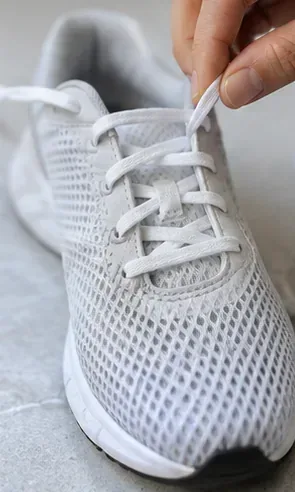
Remove the laces so you can clean the tongue, eyelets, and mesh underneath them. Taking the laces out also prevents dirty lace edges from rubbing grime back into a freshly cleaned upper.
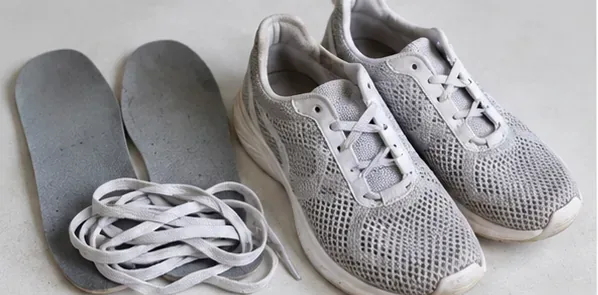
Remove the laces first so you can reach the tongue, eyelets, and mesh around the throat of the shoe without stretching the upper.
2. Remove removable insoles, but do not assume they should be soaked
Pull out the insoles only if they are designed to be removable. Foam sockliners can lose shape or take a long time to dry when saturated, so a lightly damp sponge or soft brush with mild soapy water is usually a safer starting point.
ASICS specifically advises cleaning sockliners separately and avoiding unnecessary soaking because water can affect the foam and shape. If the insole is glued in place, leave it inside the shoe and clean only the exposed surface.
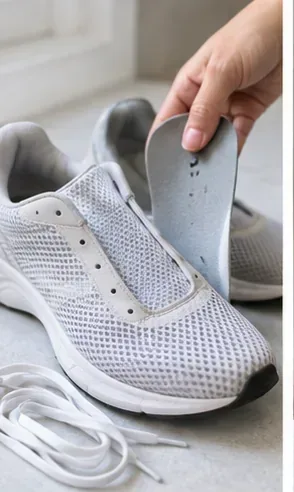
Take out removable insoles before cleaning the shoe. Clean them separately and avoid soaking foam insoles unless the manufacturer specifically allows it.
3. Brush away dry mud and loose grit
If the shoes are muddy, let the mud dry first. Then use a soft brush to remove loose dirt from the mesh and a slightly firmer brush, if appropriate, for the rubber outsole. Tap the soles together outdoors or over a sink to release dirt trapped in the tread.
This dry-cleaning pass matters. Adding water to a layer of loose soil turns it into slurry, which can spread across light-colored mesh and settle deeper into the openings.
Brush dry dirt away before adding water. This reduces muddy smearing and helps keep grit from being worked deeper into the mesh.
4. Wash the laces separately
Mix a small amount of mild detergent into cool or lukewarm water. Massage the laces gently in the solution, paying attention to the sections that pass through the eyelets, then rinse until the water runs clear.
Nike allows laces to be hand-washed separately, and its guidance notes that laces should be air-dried rather than placed in a dryer. Do not reinstall damp laces; moisture trapped against the tongue and eyelets slows the shoe's drying time.
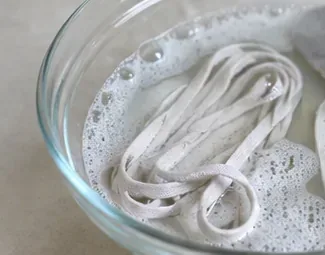
Wash removable laces separately in mild soapy water, then rinse them and let them air-dry completely.
5. Clean the mesh upper gently
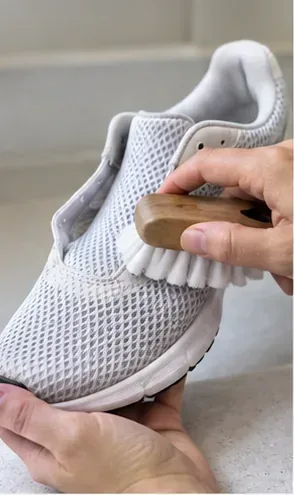
Make a fresh mild-soap solution. Dip the soft brush or sponge into it, then shake or squeeze out excess water so the tool is damp rather than dripping. Work across the mesh in small sections.
For knit-style uppers, Nike recommends brushing in the direction of the knit pattern and avoiding harsh scrubbing that can snag yarn. For ordinary engineered mesh, the same gentle approach is sensible: let repeated light passes do the work instead of pressing hard enough to deform the fabric.
Do not leave the shoe sitting in a bucket of water. ASICS' running-shoe guidance specifically cautions against fully submerging uppers because saturation can affect the materials and construction.
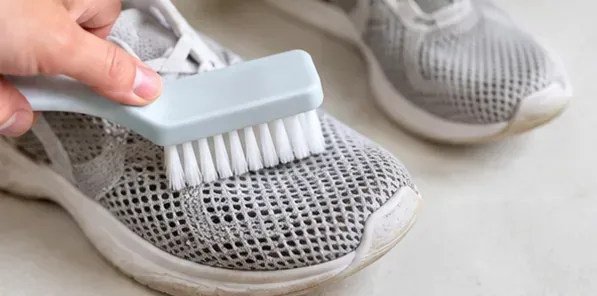
Use a soft brush or sponge on the mesh upper and work gently so the yarns are not snagged or abraded.
6. Clean the sole separately, then remove the soap from the upper
The outsole can usually tolerate more brushing than the mesh upper. Use the brush to work dirt out of tread grooves, but avoid dragging dirty outsole foam back across the fabric. For the midsole, use a soft cloth or brush and mild soap rather than an abrasive pad.
Once the upper looks clean, wipe it repeatedly with a clean damp cloth or sponge to lift away detergent. You do not need to flood the shoe under a faucet to remove soap. The goal is to leave the mesh clean without saturating the midsole, adhesives, and internal padding.
7. Blot, reshape, and air-dry
Press a clean towel against wet areas instead of twisting or wringing the shoe. Place plain paper towels or other absorbent, non-dyed paper loosely inside the toe box, or use a shoe tree, to help hold the shape as the shoe dries. Replace wet paper if necessary.
Let the sneakers dry at room temperature in moving air. Keep them away from a clothes dryer, radiator, heater, hair dryer, or other concentrated heat source. Nike and ASICS both warn that heat can damage shoe materials, and ASICS notes that high temperatures can compromise glues and alter shape. adidas likewise recommends air drying at room temperature away from direct sunlight.
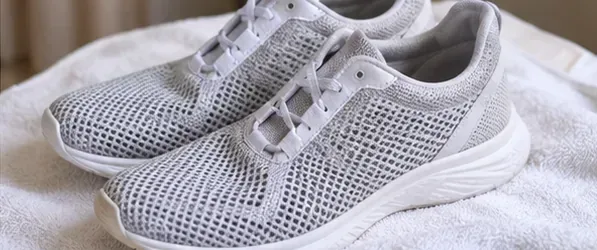
After wiping away soap and excess moisture, place the sneakers on a towel in a ventilated room and keep them away from dryers, radiators, and direct heat.
8. Reassemble only when everything is dry
Feel inside the toe box and around the heel padding before putting the insoles and laces back. Mesh may feel dry on the surface while internal foam remains damp. Reassembling too early can trap moisture and odor.
Once the shoes, laces, and removable insoles are dry, reinstall the insoles and lace the shoes normally. Check that the upper has returned to its usual shape and that no soap residue has left the mesh stiff or tacky.
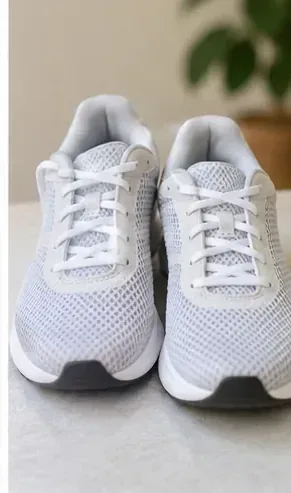
Reinstall dry insoles and laces only after the shoes are dry inside and out.
A final visual check should show an even mesh texture, clean tread edges, and no chalky detergent marks. Minor permanent discoloration can remain after the dirt is gone; repeated aggressive scrubbing is more likely to damage mesh than to erase a stain that has already set into the fiber.
The finished pair should be dry, evenly shaped, free of soap residue, and ready to wear without a stiff or distorted mesh upper.
How to handle common mesh-sneaker problems
White mesh that still looks dingy
Start by repeating the mild-soap method rather than immediately switching to bleach. Nike's mesh-care guidance offers a baking-soda-and-water paste as an optional treatment for white mesh: apply it gently with a soft brush, following the direction of the mesh or knit, then remove it with a damp cloth. Because finishes vary, test any optional treatment on a small inconspicuous area first.
Mud in deep mesh openings
Let the shoe dry, brush away as much soil as possible, and then use the damp-cleaning method. If you wet thick mud first, you are more likely to push fine particles through the mesh and into the lining.
Odor inside the shoe
Clean removable insoles separately and make sure the shoe dries completely. Persistent odor often lives in the insole and interior lining rather than on the visible mesh. Avoid masking a damp shoe with fragrance; trapped moisture needs drying time.
Suede, nubuck, leather, or waterproof sections
Do not treat those areas as ordinary mesh. ASICS recommends specialized cleaners for leather, suede, and nubuck and a cleaner intended for breathable waterproof materials such as GORE-TEX. If the sneaker mixes materials, use the gentlest suitable method on each section.
Can you put mesh sneakers in the washing machine?
Do not assume that “mesh” means machine washable. Nike says not to machine-wash its Flyknit or other shoes because the washer can damage delicate materials, and its product-care guidance recommends hand washing instead. ASICS also publishes detailed running-shoe guidance that favors hand cleaning and warns that full soaking can harm fabric and adhesives.
At the same time, some brand pages for specific categories may allow a delicate cycle as a fallback. That is exactly why the care label or model-specific instructions should decide. If the manufacturer does not clearly permit machine washing, hand washing is the lower-risk choice.
Cleaning mistakes to avoid
Soaking the entire shoe: unnecessary saturation can affect foam, adhesives, padding, and shape.
Scrubbing mesh with a stiff brush: stiff bristles can fuzz, snag, or distort the fibers.
Using hot water: heat can affect dyes, adhesives, and molded components.
Using bleach by default: harsh chemicals can discolor or weaken materials.
Putting wet sneakers in a dryer: concentrated heat can warp the shoe or compromise glued construction.
Drying in intense direct sun: strong heat and UV exposure can fade or distort some materials.
Relacing while the interior is damp: trapped moisture encourages odor and slows complete drying.
Final checklist
The mesh is clean without fuzzy or stretched fibers.
No soap film remains on the upper or midsole.
The outsole grooves are free of loose mud and grit.
The shoe is dry inside, not just on the surface.
The insole and laces are completely dry before reinstallation.
The sneaker has kept its normal shape and feels the same when flexed by hand.
If those checks pass, the shoes are ready to wear. If the upper has changed color, the adhesive is lifting, the mesh is separating from an overlay, or the shoe feels misshapen after drying, stop cleaning and follow the manufacturer's support guidance for that model.