Blue roses in Animal Crossing: New Horizons come from a specific chain of rose crosses. The beginner-friendly four-step route starts with seed-grown white roses, produces a purple rose, then uses a special pink and red hybrid before the final cross. The last pair has only about a 1.56% chance to produce a blue rose per offspring, so expect to water and wait rather than finish in one day.
Before you start: use seed-grown roses
Get white, red, and yellow rose seed bags from Nook’s Cranny or Leif when he visits. Start with seeds even if your island already has roses. Roses of the same visible color can carry different hidden genes, and the game does not show those genes. Seed-grown flowers give you known starting parents; keep each generation separate and track where every flower came from. The flower-breeding mechanics reference explains why color alone is not enough to identify a rose’s genetics.
Make a small garden with open spaces next to each pair. Keep unrelated roses out of the plot so you can identify each offspring by its parents. Label the areas with paths or fencing, and use a shovel to move offspring to the next stage.
Step 1: Breed seed-white roses into purple
Plant two white roses grown from seed close together, leaving an open tile beside them for a new flower. Water the pair and check the plot on later days. Keep a purple rose that came directly from two seed-white parents; white offspring and extra white flowers are not the target. This seed-white cross produces purple about 25% of the time, so you may need to wait for several offspring.
Do not mix this purple with flowers from other plots. The route depends on its parentage, not just the fact that it looks purple.
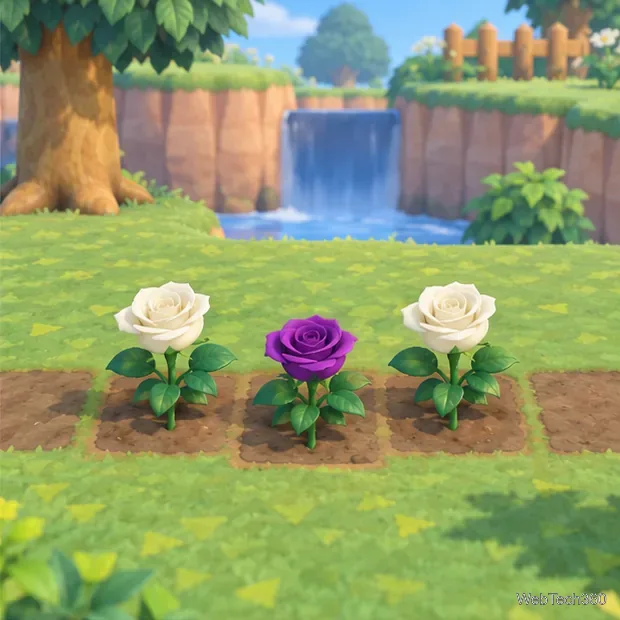
Step 2: Cross the purple rose with a seed-red rose
Move one purple rose from Step 1 beside a red rose grown from a seed bag. Leave room for offspring, water the pair, and keep the pink rose that appears from this exact cross. This is the special pink used in the next stage; a pink rose from a different recipe may have different genes and can lead to the wrong result.
Because the genetics are hidden, preserve the pink rose’s lineage. If the pair produces other colors, do not move them into the next breeding area. A tidy, isolated plot makes it much easier to avoid mixing up similar-looking flowers.
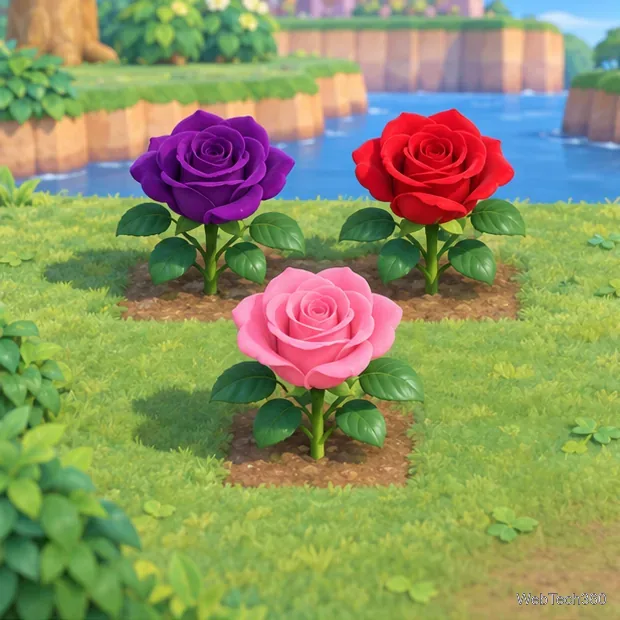
Step 3: Use the special pink with a seed-yellow rose
Pair the pink rose from Step 2 with a yellow rose grown from a seed bag. Water them and keep only red offspring from this pair. That red is the hybrid needed for the final step. The target appears roughly 12.5% of the time in this cross, so you may see several non-red offspring first.
Keep these red hybrids together in their own labeled patch. Do not replace them with shop-bought red roses or red roses from another cross. The game gives every red rose the same appearance, but the hidden gene combination is what determines whether it can produce blue.
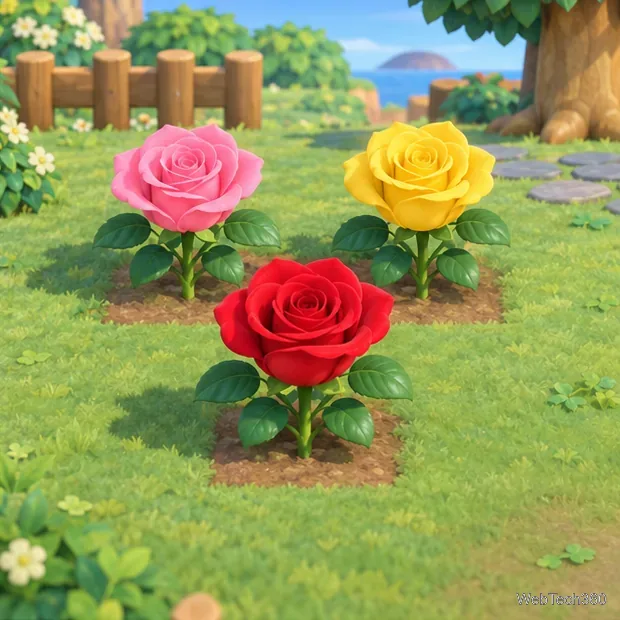
Step 4: Breed two matching red hybrids for blue
Place two red roses from Step 3 beside each other with open space for new flowers. Water them and check the plot each day. This exact red-hybrid pair has about a 1-in-64 chance (1.56%) to produce a blue rose each time it creates an offspring. That is the chance per offspring, not a promise that one will appear within 64 days; the game may produce no offspring on many days.
Once a blue rose appears, move it away from the red breeding plot. Blue roses can reproduce with another blue rose, so a blue pair can grow your collection without repeating the long seed-to-hybrid chain.
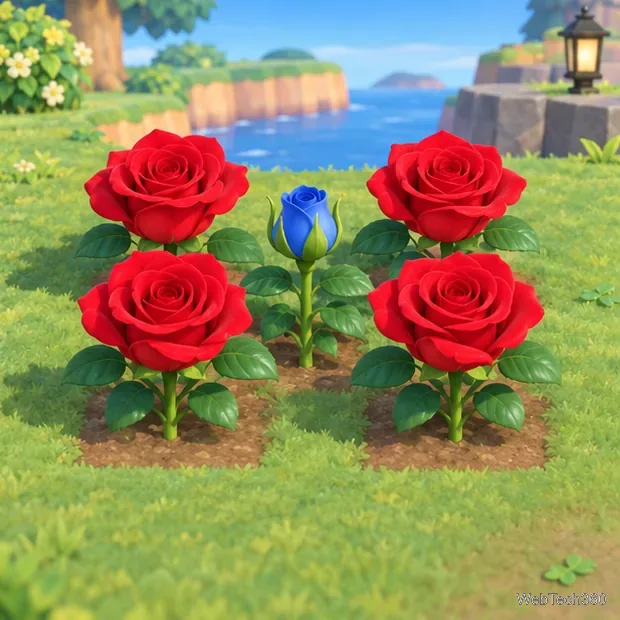
Watering, spacing, and common setbacks
- Water consistently. Water the fully grown roses after they bloom, or let rain do it. Watering helps the flowers reproduce; it does not guarantee a hybrid that day. Visitors watering your garden can improve breeding odds, but it is optional.
- Leave room for offspring. A flower needs an empty neighboring tile for a new plant to appear. Keep each pair away from other roses so you know which parents produced a result.
- Follow parentage, not color. A purple, pink, or red rose from the wrong cross can look identical to the needed rose and still carry different genes. If you lose track of a flower’s source, restart that line from seed bags.
- Give the final step time. The 1.56% figure applies only after you have the correct red hybrids and an offspring is produced. This is a low-odds beginner path, not the fastest route.
If you would rather trade a few extra stages for better odds at the final cross, Joey’s detailed flower guide lays out a longer method whose final hybrid-red pairing has a 25% blue-rose chance. For a comparison of beginner, fast, and more involved routes, see Yue’s blue-rose methods guide. These are community research resources based on the game’s flower data; they are useful when you want exact breeding probabilities and layouts.
Sources