Home
» GAMING
»
Minecraft Nether Biomes: What They Are and Why They Matter
Minecraft Nether Biomes: What They Are and Why They Matter
The Nether has five distinct biomes, and knowing which one you have entered can make a major difference to your survival plan. Each biome changes the terrain, available blocks, and the mobs you are likely to encounter. Some are useful for gathering building materials or gold; others offer valuable resources but make travel especially risky.
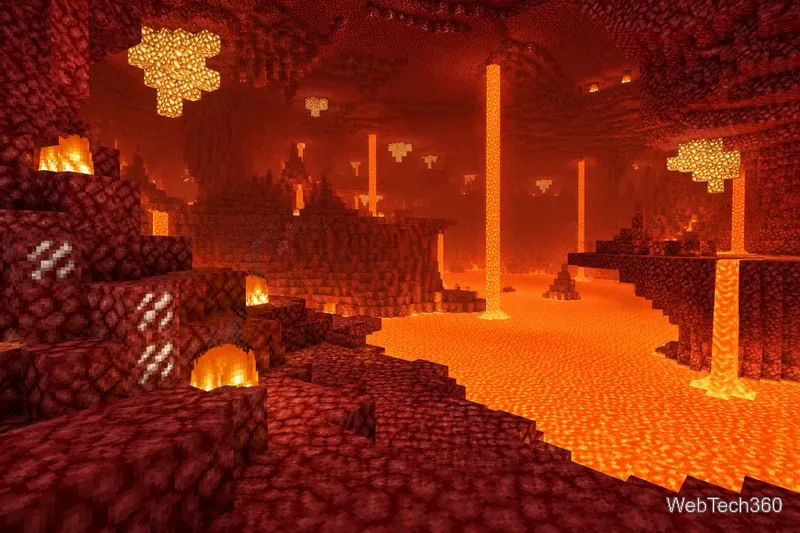
Nether Wastes: red netherrack cliffs overlooking a broad lava lake with glowing mineral clusters.
What is a Nether biome?
The Nether is one of Minecraft's dimensions, alongside the Overworld and the End. You normally reach it through a Nether portal built with obsidian. It is a dangerous environment filled with lava, fire, hostile mobs, and unusual blocks. Unlike the Overworld, it has no ordinary water-based landscape to rely on, so falls and exposed lava can be unforgiving.
A Nether biome is a region with its own characteristic terrain, colors, vegetation, and mob-spawning rules. The five standard Nether biomes are Nether Wastes, Soul Sand Valley, Warped Forest, Crimson Forest, and Basalt Deltas. Their differences are more than cosmetic: they influence what you can collect and how safely you can move around.
The five Minecraft Nether biomes
1. Nether Wastes
Nether Wastes is the classic Nether landscape: broad red netherrack formations, exposed lava, fire, and glowstone clusters. It is a useful place to look for Nether quartz, Nether gold ore, gravel, blackstone, mushrooms, and ancient debris, although the availability of a particular block depends on world generation and where you search.
Ghasts can attack across open spaces, and zombified piglins, magma cubes, and other Nether mobs may appear. Nether fortresses and bastion remnants can generate in this biome, but neither is guaranteed nearby. Keep a ranged weapon ready and avoid crossing wide lava lakes without a secure route.
2. Soul Sand Valley
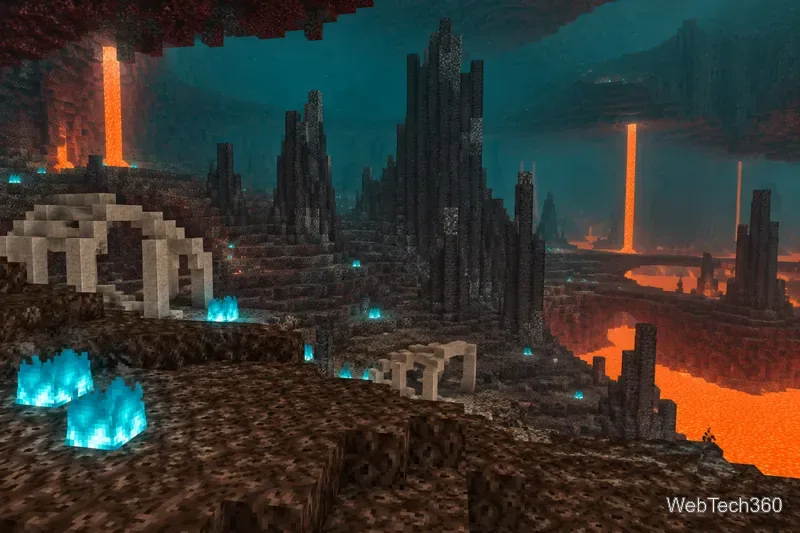
Soul Sand Valley landscape with blue soul fire, pale fossil arches, dark soul soil, basalt pillars, and lava in the distance.
This open, eerie biome is recognizable by its pale soul sand and soul soil, basalt pillars, fossil-like bone structures, blue soul fire, and drifting ash. Soul sand slows movement, which can make a retreat difficult. Skeletons and ghasts are key threats, especially when the terrain gives them a clear line of sight.
The biome is worth visiting for soul sand and soul soil. Soul soil can be used to make soul torches and soul campfires, and it is one of the blocks used when building a Wither. The open ground may make navigation easier to read, but it also leaves you exposed to ranged attacks.
3. Warped Forest
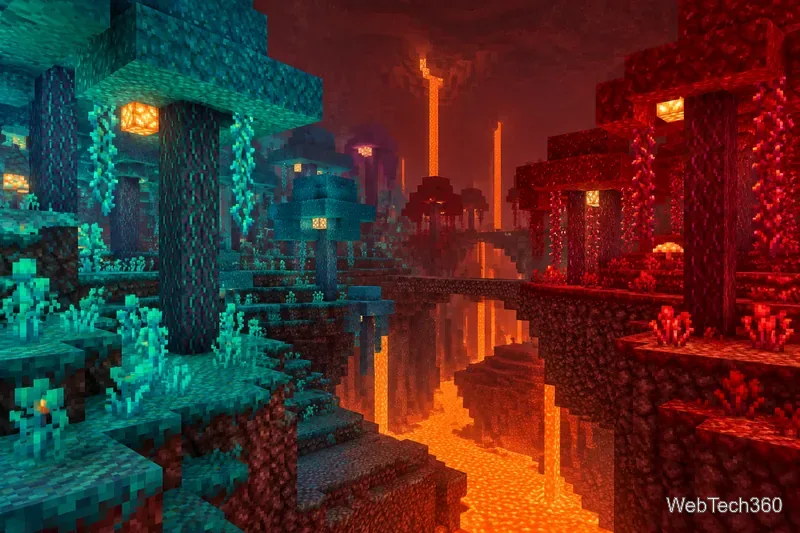
The Warped Forest stands out with cyan and teal colors, warped fungi, warped stems, warped nylium, twisting vines, warped wart blocks, and shroomlights. Its distinctive vegetation provides useful wood-like building materials in a dimension where ordinary Overworld trees do not grow.
It is often considered one of the less hostile Nether biomes because endermen are its characteristic naturally spawning hostile mobs. Still, endermen can be dangerous if provoked, and lava remains a constant environmental hazard. Look at the ground while moving, and avoid staring directly at an enderman.
4. Crimson Forest
Contrasting Warped Forest and Crimson Forest landscapes with cyan and red giant fungi above a lava ravine.
Crimson Forests are dense, red fungal woodlands built from crimson stems, crimson nylium, crimson roots, crimson fungi, nether wart blocks, shroomlights, and weeping vines. Crimson stems are especially useful for crafting and building, so this biome can be valuable when you need renewable Nether materials.
Watch for piglins and hoglins. Piglins may barter when you give them gold ingots, but wearing at least one piece of gold armor helps prevent ordinary piglins from becoming hostile under normal circumstances. Hoglins can charge and deal heavy damage. Warped fungus can repel hoglins, making it useful for controlling encounters.
5. Basalt Deltas
Basalt Deltas resemble a rugged volcanic field, with jagged basalt columns, blackstone, gravel, netherrack, magma blocks, ash particles, and pockets of lava. Basalt and blackstone are valuable building materials, but the uneven terrain and frequent magma cubes can make this biome awkward to cross.
Move slowly, watch for gaps between blocks, and build bridges with fire-resistant blocks when possible. The cluttered landscape can interrupt your view, so check ledges before jumping and keep an escape route in mind.
Which biome should you look for?
For general exploration: Nether Wastes offers familiar terrain and access to several common Nether resources, but open lava and ghasts make it dangerous.
For wood-like blocks: visit either forest; choose Warped Forest for teal materials or Crimson Forest for red materials.
For soul-related crafting: search a Soul Sand Valley for soul sand and soul soil.
For dark stone building blocks: Basalt Deltas are a strong source of basalt and blackstone, though travel is hazardous.
For structure loot: search carefully for Nether fortresses and bastion remnants. Structures can appear in multiple Nether biomes, but not every trip will reveal one nearby.
Before you explore
Bring a reliable weapon, a pickaxe, food, blocks for bridging, and a bow or other ranged option.
Wear at least one piece of gold armor when approaching piglins, and do not open containers near them casually.
Mark your route with recognizable blocks or coordinates so you can find your portal again.
Carry only gear you can afford to risk, and avoid mining directly above or below unknown terrain when lava may be present.
Remember that a death in the Nether can leave your items in a dangerous or inaccessible spot; prepare an escape route before taking on a fortress or bastion.
Why Nether biomes matter
Learning to recognize Nether biomes helps you choose the right destination instead of wandering blindly. Their blocks support building and crafting, their mobs create different risks, and their terrain can determine whether a route is manageable or a costly mistake. For official background, see Minecraft's guides to the Nether Wastes, Soul Sand Valley, and Basalt Deltas. With a little preparation, each biome becomes a place to gather specific resources rather than just another hazard to survive.