Home
» GAMING
»
What Does Jockey Mean in FIFA? How to Defend With It
What Does Jockey Mean in FIFA? How to Defend With It
Jockeying in FIFA is a defensive movement that keeps your player between the ball carrier and goal while matching the attacker’s direction. On a standard PlayStation controller, hold L2; on Xbox, hold LT and steer with the left stick. Bindings can vary by edition, platform, or custom preset, so check the in-game control list for your setup.
Players still use “FIFA” as shorthand for EA’s soccer games, including EA SPORTS FC. Jockeying helps delay an attack and control space; it does not guarantee a tackle or lock your defender onto an opponent.
What jockeying does
Your defender faces the dribbler and moves sideways or backward in a balanced stance. This lets you stay goal-side and guide the attacker toward less dangerous space, such as the touchline, instead of rushing straight at the ball. The pause can give teammates time to recover or leave the attacker with a less useful pass. A skilled dribbler can still get past, so watch the ball and nearby runners.
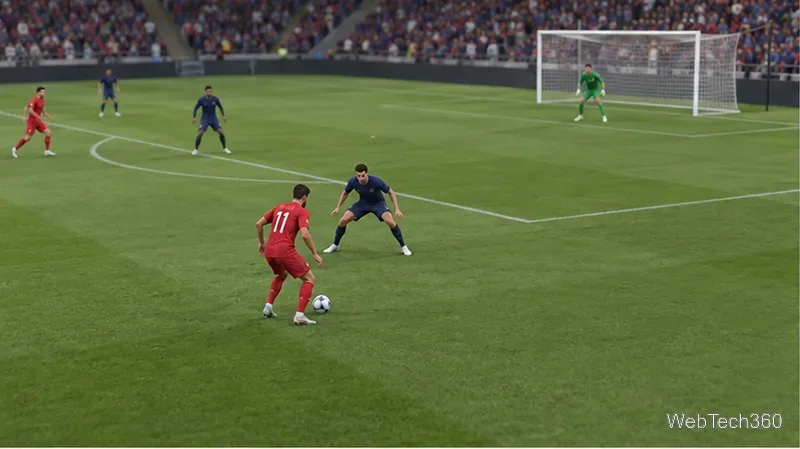
Stay goal-side while tracking the ball carrier.
How to jockey in a 1-on-1
Pick a defender who protects the middle. Switch to a player between the ball and goal. Avoid pulling a center back out if a fullback or midfielder can delay the attack.
Approach under control. Move toward the attacker, then ease off sprint before reaching tackling distance. This helps prevent overshooting.
Hold jockey and mirror the dribbler. Use L2 on PlayStation or LT on Xbox with the left stick. Make small sideways adjustments and keep the direct route to goal covered.
Tackle when the ball is exposed. Look for a longer touch or a turn away from goal. If the attacker keeps close control, stay patient instead of repeatedly pressing tackle.
Recover if beaten. Turn and sprint toward goal to cover the route; jockeying from behind is unlikely to stop the run.
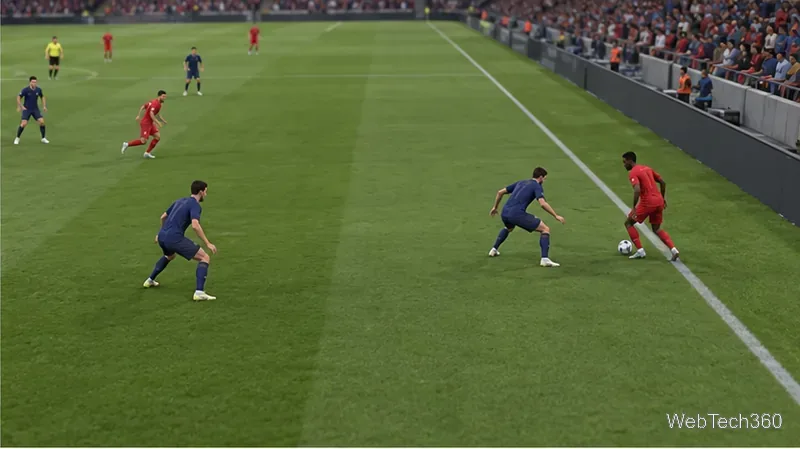
Angle the attacker wide while a teammate protects the middle.
What to do when outnumbered
In a 2-on-1, delay the ball carrier and protect the most dangerous passing lane, often the one into the middle. Stay between the attackers and goal, and angle your approach to reduce the inside pass. Do not chase the ball so far that the second runner has a clear path. Once a teammate recovers, press the ball or switch to cover the receiver.
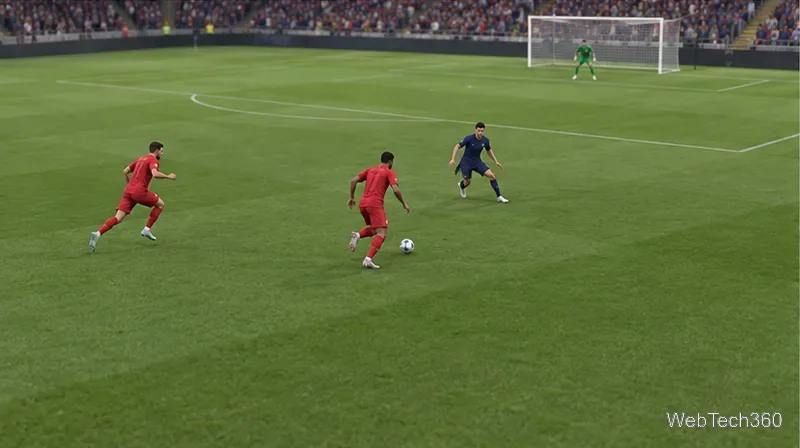
When outnumbered, delay the ball and screen the central route.
Jockeying vs. tackling
Jockey: Stay in front, match movement, and shape the attacker’s route.
Stand tackle: Try to win possession when the ball is within reach or exposed.
Slide tackle: A committed challenge that can remove your defender from play or concede a foul if it misses.
Teammate pressure: Ask another defender to close the ball while you control your player. Use it briefly and monitor the space you leave.
Jockeying is the positioning phase before a challenge. It is not player lock and does not select your defender for you.
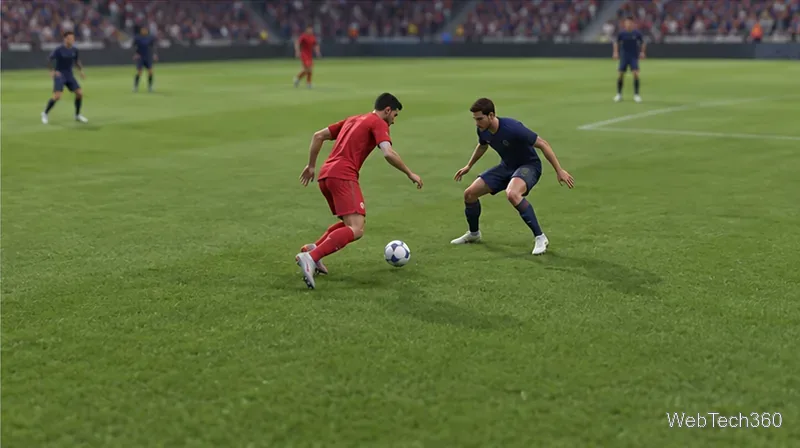
A loose touch can open a safer chance to stand tackle.
Assisted vs. manual jockey
EA’s current EA SPORTS FC 27 accessibility reference lists Jockey as Assisted by default or Manual. Assisted adjusts player speed to help you stay near an opponent; Manual leaves positioning and speed to you. Assisted jockeying is therefore a supported setting in FC 27, not a removed glitch.
Options vary among editions and modes. Look for Jockey in the gameplay defending-assist settings. Start with the default, then try Manual if you want direct control over the defender’s spacing.
Common mistakes and practice
Do not hold tackle while closing in; wait until the ball is exposed.
Slow down before reaching the dribbler so you do not run past them.
Do not back straight toward goal if a sideways angle can protect the center.
Track supporting attackers as well as the ball to avoid opening a passing lane.
To confirm your buttons, pause a match, open Settings, and select Basic Controls. EA also directs players to Button Help in the practice area. Practice approaching, jockeying for a few seconds, then tackling only after a loose touch. Try both central and wide approaches so you learn to delay the attack without giving up a clear shot.