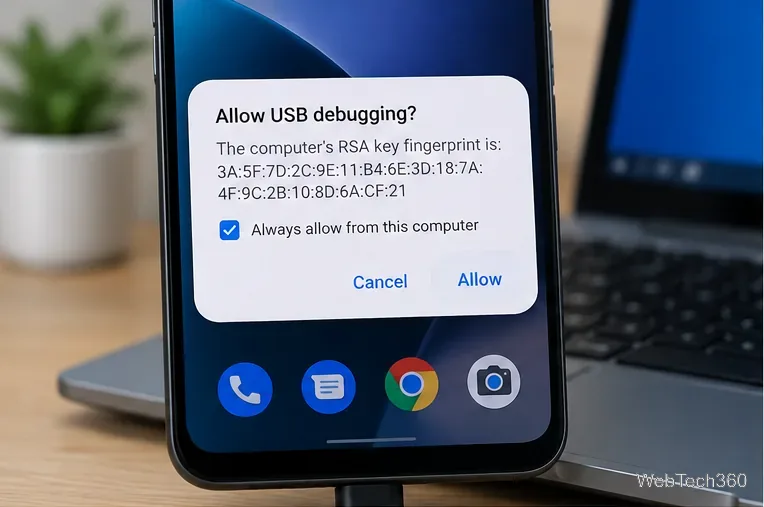
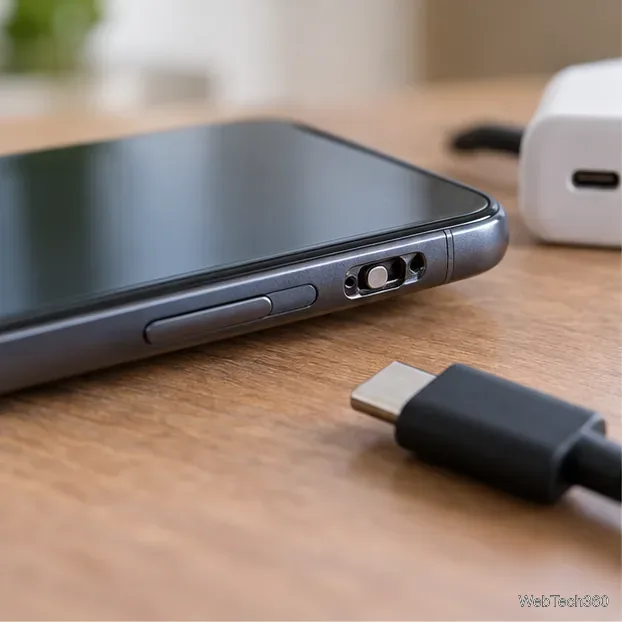
How to Enable the Android Power Button Bug Report Shortcut
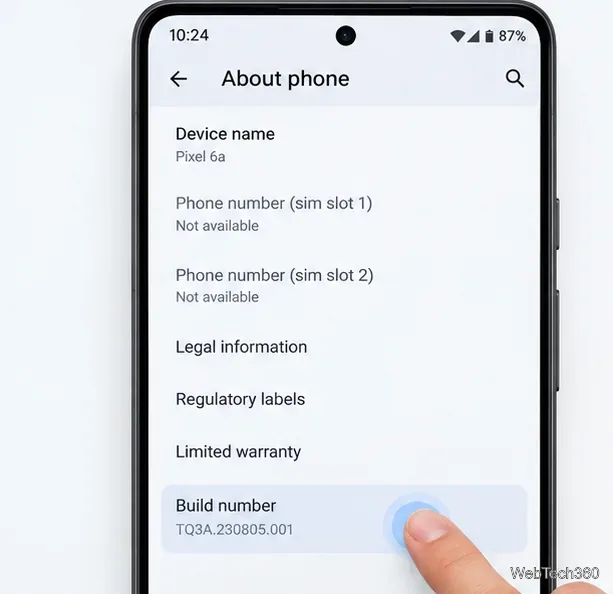
Enable Android’s power-menu bug report shortcut, capture a diagnostic report on your phone, and share it safely without relying on a desktop computer.
The most believable Galaxy S27 Ultra camera story is not “more megapixels everywhere.” It is a more balanced system: a better main sensor, a much stronger telephoto path, brighter low-light capture, faster computational photography, and a more mature pro-video stack. That distinction matters because, as of September 14, 2026, Samsung has not published an official Galaxy S27 Ultra camera specification sheet. The current official reference point is the Galaxy S26 Ultra, which Samsung lists with a 200MP F1.4 wide camera, a 50MP F1.9 ultra-wide, a 50MP F2.9 5x telephoto, and a 10MP F2.4 3x telephoto. Samsung's Galaxy S26 Ultra camera page provides that baseline.
To make the rumors useful rather than abstract, consider a clearly hypothetical example. Imagine a traveler named Jordan spending one long weekend photographing a sunrise overlook, a fast-moving dog in a park, a distant concert stage, a dim restaurant, and a short travel film at night. Jordan is not a real reviewer and these are not test results. The scenario simply gives us five situations in which a future S27 Ultra upgrade would either make a meaningful difference or turn out to be marketing noise.
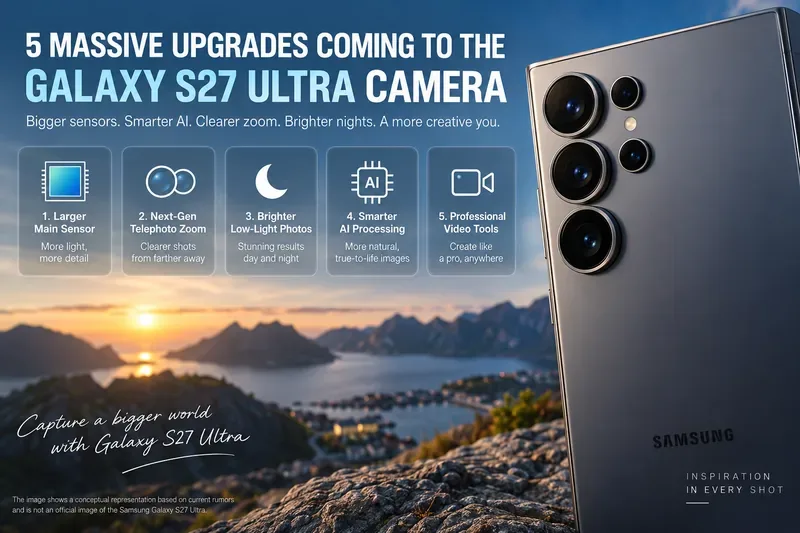
Samsung's own sensor roadmap makes several upgrades technically credible, but credibility is not the same as confirmation. Samsung Semiconductor already offers 200MP sensors designed for both wide and telephoto use, has demonstrated faster end-to-end remosaic processing, and has developed a brighter folded-telephoto architecture called ALoP. On the software side, the S26 Ultra already supports Samsung Log plus hardware-dependent APV video. Those facts give us a solid foundation for evaluating the five biggest S27 Ultra camera rumors without pretending Samsung has announced the phone.
| Potential upgrade | Why it is believable | Confidence today |
|---|---|---|
| New or more light-efficient 200MP main camera | Samsung continues to invest in 200MP pixel, HDR, autofocus, and remosaic technology | Medium |
| Higher-resolution telephoto system | Samsung's HP5 and HP9 families explicitly target high-resolution telephoto use | Medium to high as a direction; unconfirmed for S27 Ultra |
| Brighter long-range camera with a more compact optical path | Samsung's ALoP architecture is designed to make telephoto modules brighter and smaller | Medium |
| Faster AI zoom, subject tracking, and full-resolution processing | Zoom Anyplace and E2E AI Remosaic already demonstrate the required building blocks | High as a technology direction |
| Expanded pro-video workflow | S26 Ultra already has hardware-backed APV, Log, LUT preview, and manual video tools | High as a software direction; exact S27 features unknown |
Jordan's first shot is a sunrise landscape with a bright sky and dark foreground. In that situation, another jump in headline resolution would matter less than better light capture, cleaner shadows, faster autofocus, and stronger HDR. That is why the most sensible S27 Ultra main-camera rumor is a new or revised 200MP sensor rather than a wild megapixel escalation.
Samsung's current 200MP flagship-class sensor technology already shows the direction. The ISOCELL HP2 uses a 1/1.3-inch optical format, pixel binning, Super QPD autofocus, and HDR techniques intended to improve both bright highlights and dim scenes. Samsung's newer sensor work continues to emphasize pixel efficiency and processing rather than megapixel count alone. See Samsung Semiconductor's ISOCELL HP2 technical announcement.
What would make this upgrade “massive” in practice? If Jordan can expose the sunrise without blowing out the sky while still retaining texture in the foreground, that matters more than whether the file says 200MP or 250MP. A physically larger sensor, a more light-efficient pixel structure, improved full-well capacity, or better HDR readout could all produce that result. However, no official Samsung source currently confirms that the S27 Ultra will use a larger main sensor, so this remains one of the less certain hardware rumors.
Later, Jordan is far from a concert stage. This is where the S26 Ultra's current camera hierarchy becomes important: the phone already has a 50MP 5x telephoto, but its shorter 3x telephoto is still 10MP. A future Ultra could gain more from upgrading the telephoto chain than from adding still more resolution to the main camera.
Samsung has already built the underlying sensor technology. The ISOCELL HP5 is a 200MP sensor in a compact 1/1.56-inch format that Samsung explicitly describes as suitable for telephoto systems. It supports multiple pixel-binning modes and up to 4x in-sensor zoom. Samsung has also marketed the earlier HP9 as a 200MP sensor specifically engineered for telephoto use. The key point is not that the S27 Ultra is confirmed to receive either sensor; it is that a 200MP-class telephoto is no longer a science-fiction idea. Samsung already has the component technology. See the official ISOCELL HP5 product page.
For Jordan, the payoff would be cleaner crops, better intermediate zoom levels, and less of a quality cliff when the framing falls between fixed optical focal lengths. This upgrade would be especially relevant to concert shooters, parents photographing field sports, travelers shooting architecture from across a river, and anyone who uses 3x to 10x more often than 1x.
Jordan's next challenge is a dim restaurant and then a night street scene. Telephoto cameras usually struggle here because long focal lengths and compact folded optics make it difficult to gather as much light as the main camera. One of Samsung's most interesting answers is ALoP, short for All Lenses on Prism.
Samsung Semiconductor describes ALoP as a folded-telephoto architecture that places the lens array on top of the prism rather than behind it. The goal is to reduce module size while enabling a brighter aperture. In plain English, it is designed to attack two competing problems at once: better low-light telephoto performance and less internal space consumed by the zoom module. Samsung explains the architecture in its official ALoP telephoto technology overview.
If some form of ALoP reaches a future Ultra, Jordan could get a brighter zoomed portrait at dinner or a cleaner night shot of a distant building without needing an enormous rear camera island. That is the attractive part of this rumor: it matches a real engineering trade-off Samsung is already trying to solve. What is still unknown is whether S27 Ultra will adopt ALoP specifically, and at which focal length.
The dog in Jordan's hypothetical trip suddenly runs across the park. A camera that produces huge files but takes too long to process them is not useful in that moment. This is why faster computational photography could be one of the most important S27 Ultra upgrades even if it never appears as a bold number on a spec sheet.
Samsung's E2E AI Remosaic changes the processing pipeline for high-resolution sensors by allowing remosaic and image-signal processing to work in parallel instead of strictly one after another. Samsung says this can cut remosaic latency substantially, helping high-resolution shots finish faster. Its Zoom Anyplace technology also demonstrates subject tracking and the ability to use 200MP sensor data for high-resolution zoomed video while retaining a wider view. Samsung details both technologies in its Zoom Anyplace and E2E AI Remosaic announcement.
For Jordan, this could mean a shorter delay between pressing the shutter and reviewing a full-resolution image, more reliable tracking of moving subjects, and smoother quality as the camera changes zoom levels. This is also the rumor category with the strongest underlying evidence because Samsung has publicly demonstrated the processing concepts. The uncertainty is not whether the technology exists; it is exactly how much of it Samsung will package into the S27 Ultra camera app and hardware pipeline.
The final part of Jordan's weekend is a short travel film captured after sunset. Here, the most believable S27 Ultra upgrade may be evolutionary rather than flashy: expanding the professional video system Samsung already built into the S26 Ultra.
Samsung currently documents Log recording across supported Galaxy flagships, and its developer documentation says One UI 8.5 adds APV codec support on the S26 Ultra along with LUT preview and Log-video editing features. Samsung also notes that APV support on the S26 Ultra depends on hardware, which is important: future video improvements can involve more than a software toggle. See the official Samsung Log Video developer documentation.
A realistic S27 Ultra video upgrade could therefore combine faster processing, better thermal headroom, more consistent color between lenses, smarter subject tracking, stronger stabilization, and richer APV/Log workflows. What should not be assumed is a specific new codec, frame rate, or resolution until Samsung publishes it.
The hypothetical weekend makes the priorities clearer. A landscape shooter benefits most from a better main sensor and HDR pipeline. A concert or wildlife shooter should care far more about telephoto resolution, aperture, and stabilization. Parents and pet owners gain more from fast autofocus, tracking, and low processing latency than from giant still-image files. Mobile filmmakers are the audience most likely to notice APV, Log, LUT, and lens-matching improvements.
That also means a rumor can sound enormous while being irrelevant to your use. If you mostly take 1x daylight photos for messaging and social media, a 200MP telephoto would not transform your experience. If you regularly shoot distant subjects or edit video in post, it could be one of the biggest practical changes Samsung could make.
The safe conclusion is that Samsung has the technology to deliver all five categories of improvement, but the Galaxy S27 Ultra itself remains unannounced. The strongest clues come from Samsung's shipping S26 Ultra camera system and from technologies Samsung Semiconductor has already disclosed: high-resolution telephoto sensors, ALoP optics, 200MP remosaic acceleration, in-sensor zoom, and advanced video workflows.
What you should not treat as confirmed yet are exact S27 Ultra sensor model numbers, sensor sizes, zoom ratios, apertures, or recording modes. Those details can change late in product development, and Samsung has not published them as of September 14, 2026.
If Samsung turns even three of these five directions into production hardware, the S27 Ultra camera story could be substantial without relying on a gimmicky megapixel race. For Jordan's hypothetical weekend, the real win would be simple: fewer situations where switching from 1x to zoom, daylight to night, stills to motion, or automatic to pro video feels like stepping down in quality. That kind of consistency would be a genuinely massive upgrade.
Enable Android’s power-menu bug report shortcut, capture a diagnostic report on your phone, and share it safely without relying on a desktop computer.
Fix the ADB device unauthorized error by reauthorizing USB debugging, restarting the ADB server, and checking Platform-Tools, cables, and drivers.
If your Android power button is broken, try charging, a volume-key USB boot, or Fastboot. Learn what works when the phone is fully off and why ADB often won’t.
Is BlueStacks safe and legal? Learn what the official installer, privacy policy, antivirus behavior, game rules, and system requirements mean for you.
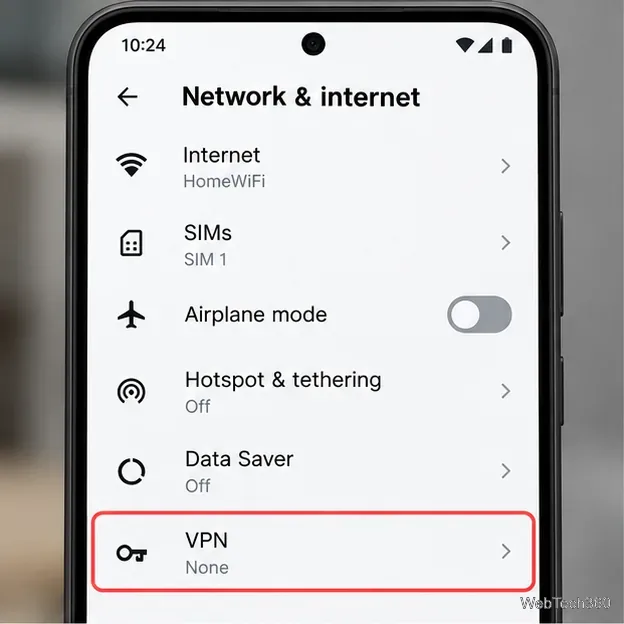
Learn three practical ways to hide your IP address on Android: a VPN, Tor Browser, or a trusted Wi-Fi proxy, with current setup steps and limits.
Join a FaceTime call on Android through Chrome or Edge. Get the link, set browser permissions, wait for the host, and fix common connection issues.
Galaxy S27 Ultra is unannounced, but Samsung and Microsoft already show the path: Phone Link, File Explorer, Quick Share, app streaming, and smarter handoff.
Samsung has not announced Galaxy S27 Ultra pricing. Here’s what the S22–S26 Ultra price history suggests, what is still unknown, and how to budget.
Samsung has not announced Galaxy S27 Ultra gaming specs. Here is what it would need to beat 2027 rivals, based on the confirmed S26 Ultra baseline.
Which Galaxy S27 Ultra rumors deserve attention? We rank battery, camera, chipset, display, charging, S Pen, and AI claims against Samsung’s confirmed 2026 hardware.