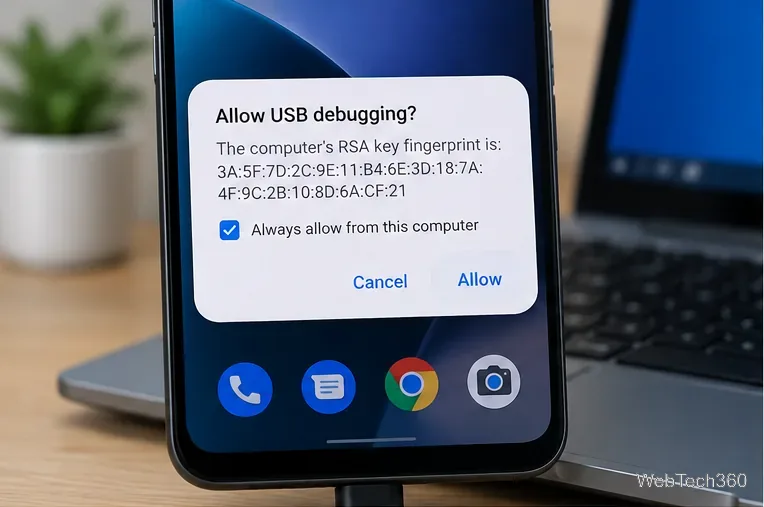
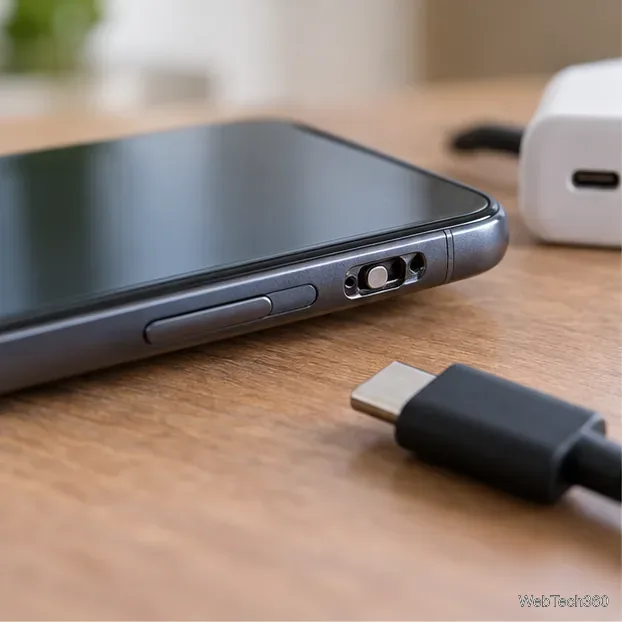
How to Enable the Android Power Button Bug Report Shortcut
Enable Android’s power-menu bug report shortcut, capture a diagnostic report on your phone, and share it safely without relying on a desktop computer.
Short answer: Samsung is much closer to the front of the flagship charging pack than it was a year ago, but the Galaxy S27 Ultra would need more than a bigger wattage number to prove it has fully caught up. As of September 14, 2026, Samsung has not announced Galaxy S27 Ultra charging specifications. The latest official Ultra baseline is the Galaxy S26 Ultra: up to 60W wired charging, up to 75% in around 30 minutes, and up to 25W wireless charging.
That is a meaningful jump from the Galaxy S25 Ultra, which Samsung rated for up to 65% in around 30 minutes using a 45W adapter. But “catching up” should be judged by the result you get at the outlet: useful battery recovered in a short stop, charging consistency when the phone is warm, wireless convenience, and how easily third-party USB-C chargers can deliver the advertised speed.
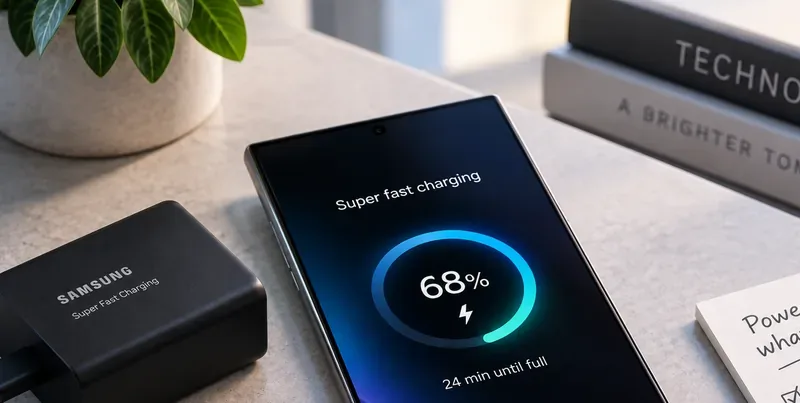
If Samsung announces the Galaxy S27 Ultra with 60W, 65W, 80W, or another headline number, the first question should be: how much charge does the phone actually gain in 20 or 30 minutes? Peak wattage is only one part of the charging curve. Phones usually accept their highest power when the battery is relatively low, then reduce power as the battery fills or temperature rises.
A good outcome for a premium phone is simple: a short coffee break or airport stop should add enough energy to remove battery anxiety for several hours. Samsung already claims the Galaxy S26 Ultra can reach up to 75% in around 30 minutes from empty with the required 60W charger. That is the number any S27 Ultra charging upgrade should clearly beat or achieve under easier, more broadly compatible conditions.
Sign that Samsung has genuinely improved: the company publishes a noticeably better 30-minute percentage, a shorter time to a practical threshold such as 80%, or maintains similar speed with a larger battery.
Sign that the upgrade is mostly marketing: the maximum wattage rises but Samsung’s own 30-minute charge figure barely changes.
The Galaxy S26 Ultra marked Samsung’s first major Ultra charging increase in several generations. Samsung’s official U.S. product page lists Super Fast Charging 3.0 up to 60W and says the phone can reach up to 75% in around 30 minutes. It also supports Super Fast Wireless Charging up to 25W. Samsung notes that the 60W adapter is sold separately and that actual speed depends on battery level and other conditions. See the official Galaxy S26 Ultra product page and Samsung’s Galaxy S26 launch specifications.
For context, Samsung listed the Galaxy S25 Ultra at up to 65% in around 30 minutes with a 45W adapter. Its battery capacity was the same 5,000mAh typical capacity Samsung lists for the S26 Ultra. That makes the S26 improvement easier to interpret: Samsung increased both the peak input and the amount of charge recovered in the same published 30-minute window. The official Galaxy S25 series announcement provides the earlier figure.
| Samsung Ultra generation | Official wired charging claim | Official wireless figure | What changed |
|---|---|---|---|
| Galaxy S25 Ultra | 45W adapter; up to 65% in around 30 minutes | Fast Wireless Charging 2.0 | Long-standing 45W wired ceiling |
| Galaxy S26 Ultra | Up to 60W; up to 75% in around 30 minutes | Up to 25W | Higher peak power and a better 30-minute result |
| Galaxy S27 Ultra | Not announced | Not announced | Any exact figure today is unconfirmed |
It depends on which competitor you mean. Against mainstream U.S. flagships that emphasize battery management and standard USB-C charging rather than extreme wattage, Samsung is now competitive. Against Android flagships built around aggressive fast charging, it still trails on paper.
Google rates the Pixel 10 Pro XL for up to 70% in about 30 minutes with a 45W USB-C PPS charger or higher, plus Qi2 wireless charging up to 25W. Samsung’s S26 Ultra claim of 75% in around 30 minutes is therefore in the same practical range and slightly higher by the manufacturers’ own published percentages, though the phones have different battery capacities and test conditions. Check Google’s official Pixel 10 Pro specifications.
Apple takes another approach. Apple says the iPhone 17 Pro and 17 Pro Max can reach up to 50% in 20 minutes with a 40W-or-higher adapter. That result cannot be converted directly into a Samsung-equivalent wattage because Apple does not present charging the same way and battery sizes differ, but it shows why time-to-percentage matters more than peak watts. See the official iPhone 17 Pro specifications.
On the faster end of Android, Samsung still has ground to cover. OnePlus lists the OnePlus 15 at up to 80W wired charging in the U.S. and Canada, with 50W AIRVOOC wireless charging. Xiaomi lists the Xiaomi 17 Ultra at up to 90W wired and 50W wireless charging. Those are manufacturer-rated peaks, not proof that every charging session is proportionally faster, but they show that Samsung’s 60W/25W ceiling is no longer near the top of the spec sheet. See the official OnePlus 15 page and official Xiaomi 17 Ultra specifications.
Instead of asking whether Samsung reaches 80W or 100W, use four outcome-based tests when the S27 Ultra is officially announced and independently measured.
This is the most useful everyday metric. A phone that adds roughly three-quarters of a charge in half an hour already covers many real-world emergencies. If the S27 Ultra keeps a similar battery size and Samsung pushes the 30-minute figure materially above the S26 Ultra’s 75%, that would be a clear improvement.
If Samsung increases battery capacity but keeps the 75% figure, that can also be a meaningful advance because more actual energy would be entering the battery in the same period. Percentage alone should therefore be read together with battery capacity.
Peak charging power can be brief. Heat, state of charge, ambient temperature, screen use, and battery protection settings can all change the curve. A well-tuned 60W system that holds useful power longer may outperform a higher-wattage rival that rapidly throttles.
What to watch: third-party charging tests that log power over the full session, not just the highest number seen for a few seconds. Samsung’s own published figures are useful for the official baseline, but they are not substitutes for cross-device testing under identical conditions.
Charging convenience matters almost as much as charging speed. Samsung’s current support material recommends approved adapters and cables, and the S26 Ultra’s 60W maximum requires the appropriate charger. The best S27 outcome would be high performance through broadly available USB-C Power Delivery/PPS hardware rather than a narrow proprietary accessory requirement.
Good result: you can use one high-quality USB-C charger for your phone, tablet, and laptop while still getting near the phone’s top charging performance.
When to change your setup: if a charger consistently produces a much longer estimated charge time than Samsung’s supported charger, verify its PPS profile, cable current rating, battery temperature, and charging settings before assuming the phone is defective.
The S26 Ultra’s official 25W wireless figure already matches the Pixel 10 Pro XL’s rated Qi2 wireless peak. It remains well below the 50W wireless systems advertised by OnePlus and Xiaomi on some flagships. But wireless speed is especially sensitive to coil alignment and heat.
An S27 Ultra improvement would be more convincing if Samsung raises wireless power while preserving reliable alignment, accessory compatibility, and reasonable temperature. A higher number that spends much of a real session throttled would offer less practical value.
A 60W S27 Ultra would not automatically be disappointing. If Samsung increases battery capacity, improves the charging curve, reduces heat, or broadens charger compatibility, the phone could charge more usefully without changing the headline wattage. This is why a rumored “60W again” figure is not enough to conclude that Samsung has stopped improving.
On the other hand, if battery capacity, 30-minute percentage, wireless speed, and charger requirements all remain effectively unchanged, then charging would be one of the weaker reasons to upgrade from the S26 Ultra.
For an S26 Ultra owner: wait for measured charging curves before upgrading for power delivery alone.
For an S24 or S25 Ultra owner: even a 60W S27 could represent a noticeable upgrade because Samsung has already moved beyond the older 45W ceiling.
An 80W rating would look better beside OnePlus and other fast-charging Android flagships, but it would still need to produce a better real result. For example, if Samsung could combine a larger battery with a clearly shorter 10–80% time and sensible temperature control, that would be more meaningful than simply adding “80W” to the specification sheet.
There is also a point of diminishing returns. The final portion of a lithium-ion charging session is intentionally slower because the phone must manage voltage, temperature, and battery stress. A jump in peak wattage may dramatically improve the early part of the curve while doing much less for the last 10–20%.
For most buyers, the best outcome is therefore not “full charge as fast as physically possible.” It is enough charge quickly, predictable thermal behavior, and healthy long-term battery management.
When Samsung publishes the Galaxy S27 Ultra specifications, check the following before deciding that the company has caught up:
If your current phone routinely ends the day with plenty of battery and can recover enough power during a 20–30 minute charge, moving from 60W to 80W may have little impact on your routine. In that case, battery endurance, camera quality, software support, or device weight may matter more.
Faster charging matters most for people who regularly leave home with a low battery, travel frequently, use navigation or hotspot features heavily, record long videos, play demanding games, or depend on short opportunities to recharge.
There is also no single published manufacturer metric that proves one charging system is “best.” Different companies use different battery sizes, laboratory conditions, charger standards, thermal strategies, and percentage targets. Cross-brand numbers are useful orientation, not a controlled scientific comparison.
Samsung has already started catching up. Moving the Galaxy S26 Ultra from 45W to 60W, raising its official 30-minute result from the S25 Ultra’s 65% to 75%, and adding 25W wireless charging closed a meaningful part of the gap.
The Galaxy S27 Ultra does not need a three-digit wattage number to finish the job. It needs a better result: more usable battery in a short stop, sustained charging without excessive throttling, strong wireless performance, and broad USB-C charger compatibility. If Samsung improves those outcomes, even a modest wattage increase could matter. If only the number changes, the upgrade will be much harder to justify.
Until Samsung officially announces the Galaxy S27 Ultra, any exact S27 charging specification should be treated as unconfirmed. The S26 Ultra’s 60W wired, 75%-in-30-minutes, and 25W wireless figures are the reliable benchmark to beat.
Enable Android’s power-menu bug report shortcut, capture a diagnostic report on your phone, and share it safely without relying on a desktop computer.
Fix the ADB device unauthorized error by reauthorizing USB debugging, restarting the ADB server, and checking Platform-Tools, cables, and drivers.
If your Android power button is broken, try charging, a volume-key USB boot, or Fastboot. Learn what works when the phone is fully off and why ADB often won’t.
Is BlueStacks safe and legal? Learn what the official installer, privacy policy, antivirus behavior, game rules, and system requirements mean for you.
Learn three practical ways to hide your IP address on Android: a VPN, Tor Browser, or a trusted Wi-Fi proxy, with current setup steps and limits.
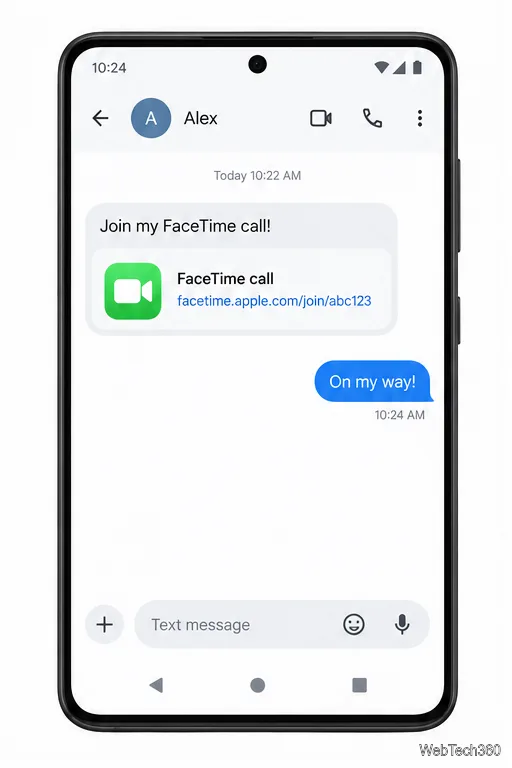
Join a FaceTime call on Android through Chrome or Edge. Get the link, set browser permissions, wait for the host, and fix common connection issues.
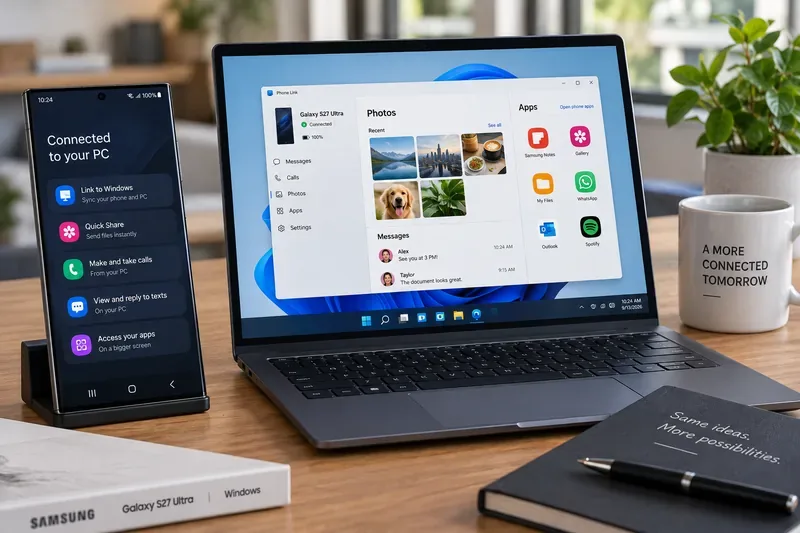
Galaxy S27 Ultra is unannounced, but Samsung and Microsoft already show the path: Phone Link, File Explorer, Quick Share, app streaming, and smarter handoff.
Samsung has not announced Galaxy S27 Ultra pricing. Here’s what the S22–S26 Ultra price history suggests, what is still unknown, and how to budget.
Samsung has not announced Galaxy S27 Ultra gaming specs. Here is what it would need to beat 2027 rivals, based on the confirmed S26 Ultra baseline.
Which Galaxy S27 Ultra rumors deserve attention? We rank battery, camera, chipset, display, charging, S Pen, and AI claims against Samsung’s confirmed 2026 hardware.