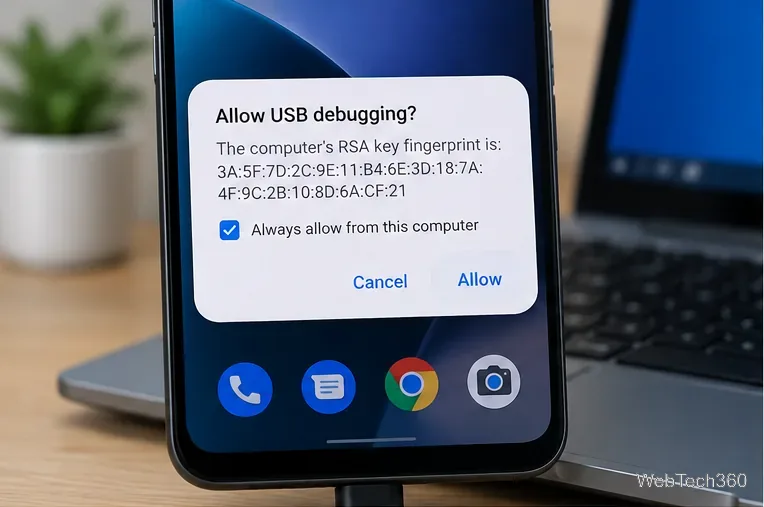
How to Enable the Android Power Button Bug Report Shortcut
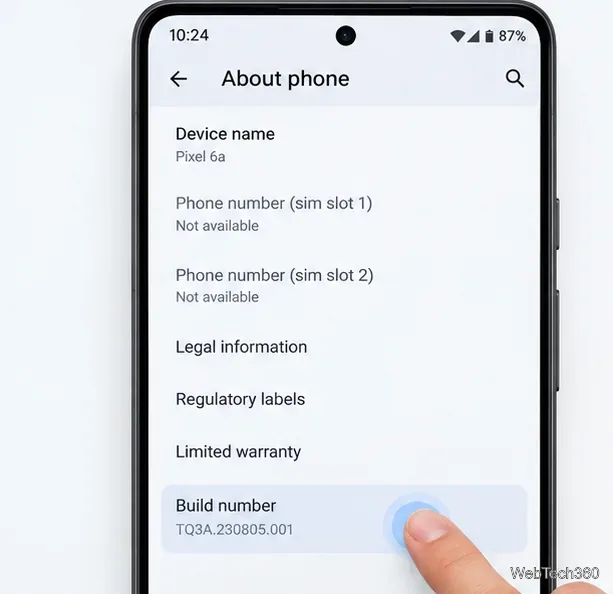
Enable Android’s power-menu bug report shortcut, capture a diagnostic report on your phone, and share it safely without relying on a desktop computer.
The Galaxy S27 Ultra is already being discussed as a potential 2027 gaming powerhouse, but there is an important distinction to make before comparing frame rates, cooling systems, or battery life: Samsung has not announced the Galaxy S27 Ultra's official specifications. As of September 14, 2026, the company's current Ultra flagship is the Galaxy S26 Ultra. That means any claim about a confirmed S27 Ultra processor, battery size, refresh rate, cooling design, or release configuration would be premature.
A more useful question is this: what would Samsung actually need to improve for a future Galaxy S27 Ultra to lead mobile gaming in 2027? The answer starts with the verified Galaxy S26 Ultra baseline, then moves to the areas that matter during real play: sustained performance, frame-time stability, thermal behavior, display responsiveness, battery drain, charging recovery, game optimization, and network consistency.
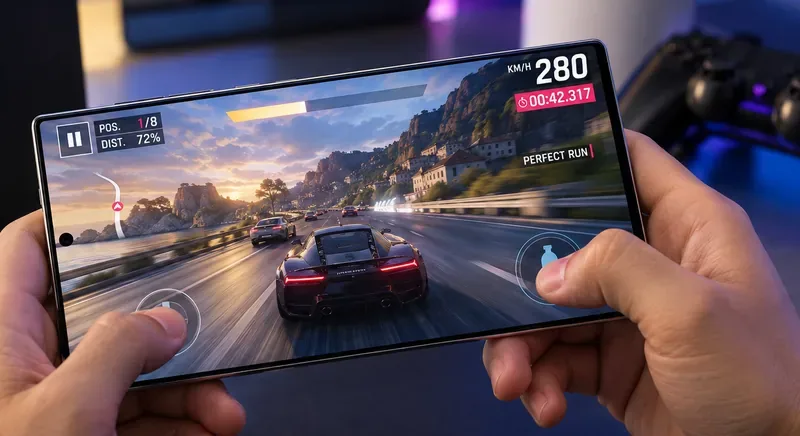
No. Samsung has not published an official Galaxy S27 Ultra specification sheet, launch announcement, or gaming performance claim. For that reason, this article does not treat rumored processors, battery capacities, display refresh rates, or cooling upgrades as facts.
The strongest verified reference point is the Galaxy S26 Ultra. Samsung's official launch materials list a 6.9-inch QHD+ Dynamic AMOLED 2X display with an adaptive 1-120Hz refresh rate, Snapdragon 8 Elite Gen 5 for Galaxy, a 5,000mAh battery, and up to 60W wired charging. Samsung also says the S26 Ultra uses a redesigned vapor chamber with a multi-channel structure and tailored thermal interface material. You can check the official specifications in the Samsung Galaxy S26 Series announcement.
Samsung's product page further states that the S26 Ultra delivers 24% higher GPU performance, 19% faster CPU performance, and 21% greater thermal performance than the S25 Ultra under Samsung's stated test comparisons. Those figures are useful as a generational baseline, not as evidence of future S27 Ultra gains. See the official Galaxy S26 Ultra product page.
| Gaming factor | Confirmed Galaxy S26 Ultra baseline | What a 2027 leader would need to prove |
|---|---|---|
| Display | 6.9-inch QHD+ Dynamic AMOLED 2X, adaptive 1-120Hz | Low-latency response and stable high-refresh gaming, not simply a higher headline refresh rate |
| Processor | Snapdragon 8 Elite Gen 5 for Galaxy | Meaningfully better sustained GPU performance in demanding games |
| Cooling | Multi-channel vapor chamber plus tailored thermal interface material | Less throttling during 30-60 minute sessions |
| Battery | 5,000mAh typical capacity | Longer gaming time per charge through capacity, efficiency, or both |
| Charging | Up to 60W wired; Samsung says up to 75% in around 30 minutes under stated conditions | Fast recovery without excessive temperature rise during repeated gaming cycles |
| Game controls | Game Booster supports per-game performance, FPS, resolution, and frame-booster settings on supported software | More predictable automatic tuning and broader game-by-game optimization |
No. Peak benchmark performance is only one part of gaming quality. A phone can post an excellent short benchmark score and still lose performance after heat builds up. What matters during a long session is how consistently the device holds its target frame rate.
For a future S27 Ultra to make a strong gaming case, independent testing would need to show stable frame times after 20, 30, and 60 minutes in demanding titles. A useful test should report more than average frames per second. It should also show 1% low frame rates, frame-time graphs, surface temperature, power draw, and whether the processor reduces clocks as the chassis heats up.
The practical sign of success is simple: a game that starts near 60, 90, or 120 fps should remain close to that target without obvious stutter, aggressive brightness reduction, or uncomfortable heat. If performance falls sharply after the first few minutes, a higher peak score is not enough.
Potentially. Cooling is one of the clearest areas where Samsung has already emphasized gaming on the S26 Ultra. The company says its current vapor chamber uses a new multi-channel structure and that the overall thermal system provides 21% greater thermal performance than the prior Ultra generation under its stated comparison.
A 2027 successor should be judged by sustained results rather than chamber size alone. A larger or redesigned vapor chamber only matters if it delays throttling, keeps the frame-time curve flatter, and maintains usable hand temperatures.
That creates a straightforward test for the S27 Ultra if it arrives: run the same graphically demanding game at the same resolution and frame-rate target for at least 30 minutes, then compare the first five minutes with the final five. If the performance gap is small and the device remains comfortable to hold, the cooling system is doing useful work. If the frame rate drops substantially, the thermal design is still the limiting factor.
Not necessarily. The S26 Ultra already reaches 120Hz, which aligns with the upper frame-rate targets available in many mobile games. Raising the panel ceiling can sound impressive, but a 144Hz or higher display has limited value if popular games remain capped below that level or if the phone cannot sustain the required rendering performance.
For gaming, responsiveness is broader than refresh rate. Touch latency, frame pacing, brightness consistency, outdoor visibility, resolution scaling, and power consumption all affect the experience. A future S27 Ultra could feel more responsive at the same 120Hz ceiling if Samsung improves input handling and reduces end-to-end latency.
The useful buying check is therefore not “Does it have 144Hz?” but “Which games can actually run above 120 fps, and does input latency improve in measured testing?” If the answer is unclear, the higher refresh-rate number should not drive the purchase decision.
Both can help, but efficiency is usually the more important gaming metric. The S26 Ultra uses a 5,000mAh battery, so a larger future cell would be welcome if it does not make the device excessively heavy or thick. Still, battery capacity by itself cannot predict gaming endurance.
A more efficient CPU, GPU, display pipeline, memory subsystem, and modem can extend play time without increasing battery size. Better efficiency also reduces heat, which in turn can help preserve performance. This is why a smaller power draw at a fixed frame rate can be more valuable than a modest capacity increase.
When S27 Ultra tests eventually exist, look for battery drain measured in percentage points per hour while running a repeatable game workload at a fixed brightness, resolution, and frame-rate cap. That is much more informative than a generic “all-day battery” claim.
Charging recovery also matters. Samsung lists up to 60W wired charging for the S26 Ultra and says it can reach up to 75% in around 30 minutes under specified conditions. A future model does not necessarily need a dramatically higher wattage if it can recover quickly while keeping heat under control. Gaming immediately after or during fast charging can raise temperatures, so sustained performance should be tested separately from ideal charging-speed demonstrations.
Yes, especially if Samsung makes performance tuning more transparent and predictable. Samsung's March 2026 support documentation says current Game Booster software can customize individual games with options for optimization level, frames per second, screen resolution, and frame-booster settings. Samsung also exposes a high-performance mode. The exact options can vary by device, region, and software version; Samsung notes those limitations in its official Game Booster support guide.
For the S27 Ultra, the best outcome would not simply be more toggles. It would be better automatic decisions. A useful gaming mode should know when to prioritize sustained frame rate, when to reduce resolution slightly to prevent throttling, and when to favor battery life. It should also make those tradeoffs visible to the user.
Frame generation and upscaling can help, but they need careful evaluation. Qualcomm documents technologies such as Snapdragon Game Super Resolution, Adreno Frame Motion Engine, hardware-accelerated ray tracing, and advanced Unreal Engine 5 support for its Snapdragon 8 Elite Gen 5 platform. These are platform capabilities, not guarantees that every game uses them. The implementation depends on the device and the game developer. See Qualcomm's Snapdragon 8 Elite Gen 5 documentation.
Only part of it. A powerful phone can reduce rendering and input delay, but online gaming latency also depends on Wi-Fi conditions, the router, mobile-network quality, geographic distance to the server, congestion, and the game's netcode.
This is an important limit when judging any 2027 “low-latency gaming” claim. A newer modem or wireless subsystem may improve connection efficiency and consistency, but it cannot eliminate a slow route to a distant server.
A useful review should report ping and jitter across multiple network conditions rather than one ideal test. It should also distinguish touch-to-display latency from network latency. They are different problems and need different measurements.
For many people, yes—but only if Samsung balances gaming with the broader flagship experience. A Galaxy Ultra is expected to be a premium camera phone, productivity device, stylus-capable handset, and everyday flagship as well as a gaming device. Dedicated gaming phones can devote more space to cooling, physical controls, charging-bypass features, or aggressive performance modes because they make fewer mainstream-design compromises.
The S27 Ultra would not need to copy every gaming-phone feature to compete effectively. It would need to deliver strong sustained performance without making owners give up camera quality, software support, premium display quality, or everyday usability.
The strongest result would be a phone that can run demanding games smoothly for long periods while still behaving like a normal flagship: manageable heat, reliable battery life, comfortable ergonomics, and no need to constantly adjust settings.
Once Samsung officially announces the device and independent tests become available, prioritize evidence in this order:
If a future S27 Ultra performs well across those tests, Samsung would have a credible case for one of the strongest mainstream gaming phones of 2027. If it mainly improves short benchmark numbers while sustained frame rates, thermals, and battery drain remain similar, the generational upgrade would be harder to justify for gamers.
The Galaxy S27 Ultra may become a major mobile gaming device in 2027, but there is no official S27 Ultra gaming specification to evaluate yet. The verified S26 Ultra already gives Samsung a strong foundation: a 120Hz QHD+ display, a customized Snapdragon flagship chip, a redesigned vapor chamber, a 5,000mAh battery, 60W charging, and per-game Game Booster controls.
The next step is not simply “more power.” Samsung would need to turn extra performance into longer sustained frame rates, lower heat, better efficiency, dependable per-game optimization, and consistently low input latency. Those are measurable outcomes, and they are the standards worth using when the S27 Ultra is eventually announced and tested.
This article uses currently available first-party sources and does not treat unannounced Galaxy S27 Ultra rumors as specifications. Reference points include Samsung's Galaxy S26 Series launch announcement, the Galaxy S26 Ultra product page, Samsung's Game Booster support documentation updated in March 2026, and Qualcomm's Snapdragon 8 Elite Gen 5 platform documentation.
Enable Android’s power-menu bug report shortcut, capture a diagnostic report on your phone, and share it safely without relying on a desktop computer.
Fix the ADB device unauthorized error by reauthorizing USB debugging, restarting the ADB server, and checking Platform-Tools, cables, and drivers.
If your Android power button is broken, try charging, a volume-key USB boot, or Fastboot. Learn what works when the phone is fully off and why ADB often won’t.
Is BlueStacks safe and legal? Learn what the official installer, privacy policy, antivirus behavior, game rules, and system requirements mean for you.
Learn three practical ways to hide your IP address on Android: a VPN, Tor Browser, or a trusted Wi-Fi proxy, with current setup steps and limits.
Join a FaceTime call on Android through Chrome or Edge. Get the link, set browser permissions, wait for the host, and fix common connection issues.
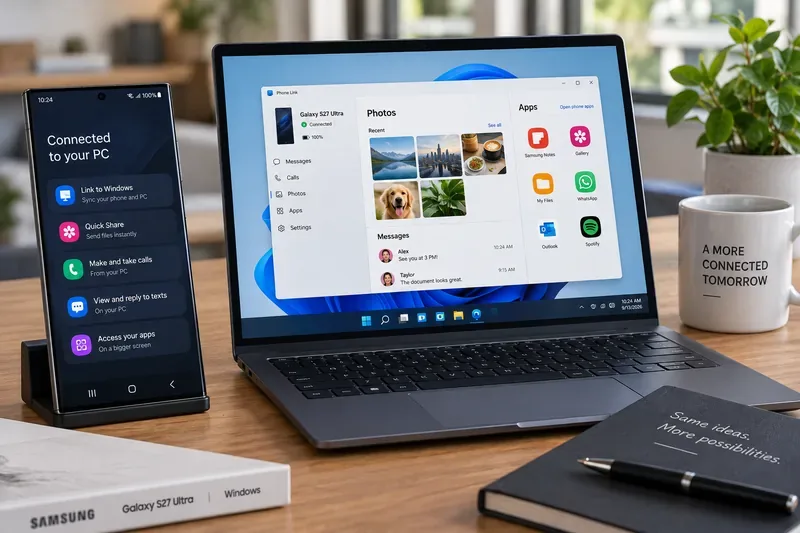
Galaxy S27 Ultra is unannounced, but Samsung and Microsoft already show the path: Phone Link, File Explorer, Quick Share, app streaming, and smarter handoff.
Samsung has not announced Galaxy S27 Ultra pricing. Here’s what the S22–S26 Ultra price history suggests, what is still unknown, and how to budget.
Samsung has not announced Galaxy S27 Ultra gaming specs. Here is what it would need to beat 2027 rivals, based on the confirmed S26 Ultra baseline.
Which Galaxy S27 Ultra rumors deserve attention? We rank battery, camera, chipset, display, charging, S Pen, and AI claims against Samsung’s confirmed 2026 hardware.