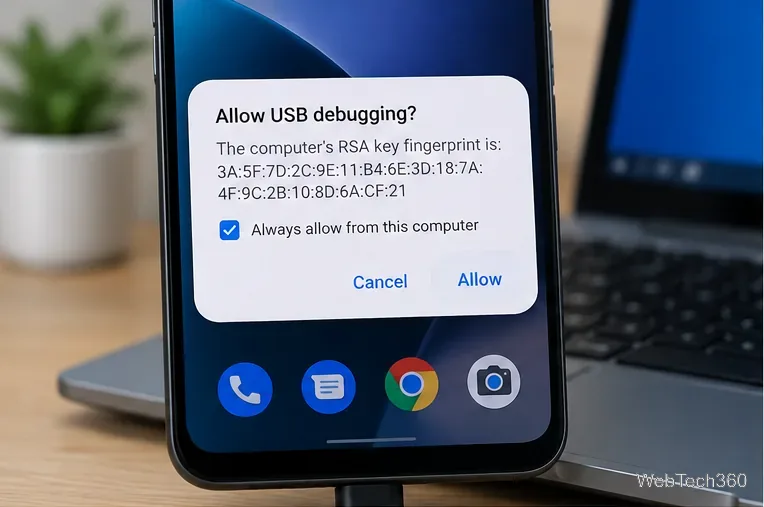
How to Enable the Android Power Button Bug Report Shortcut
Enable Android’s power-menu bug report shortcut, capture a diagnostic report on your phone, and share it safely without relying on a desktop computer.
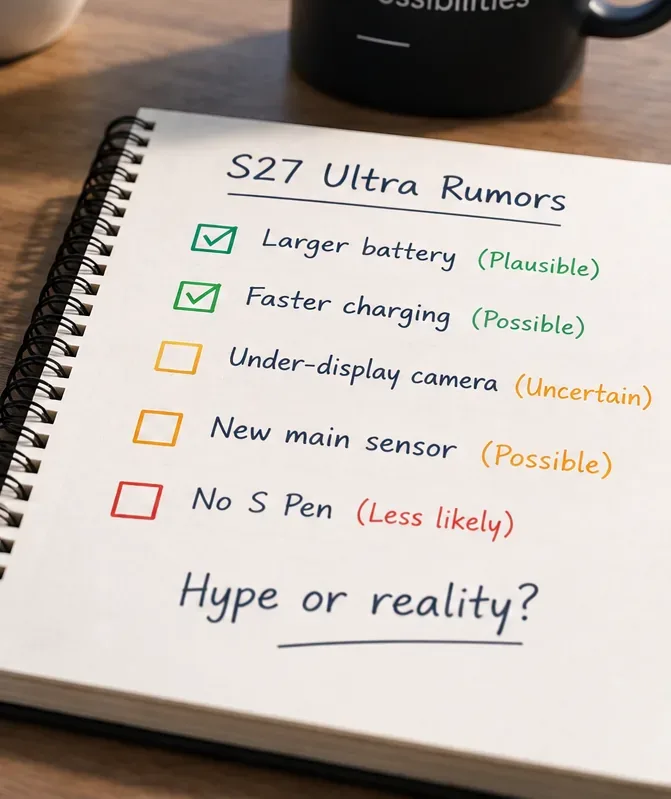
If you are deciding whether to wait for the Samsung Galaxy S27 Ultra, the phrase “completely flat display” sounds more dramatic than it may actually be. Samsung has already moved the Ultra line away from the old waterfall-style curved edges. The real question for 2027 is not whether Samsung suddenly discovers flat screens, but whether it removes the last subtle curves where the cover glass, bezel, and frame meet.
As of September 14, 2026, Samsung has not announced the Galaxy S27 Ultra or confirmed its display shape. Any claim that the S27 Ultra will have a completely flat front should therefore be treated as a rumor, not a specification. What we can do is compare Samsung’s documented design direction from the Galaxy S24 Ultra through the S26 Ultra and identify what a “flatter” S27 Ultra would realistically change.
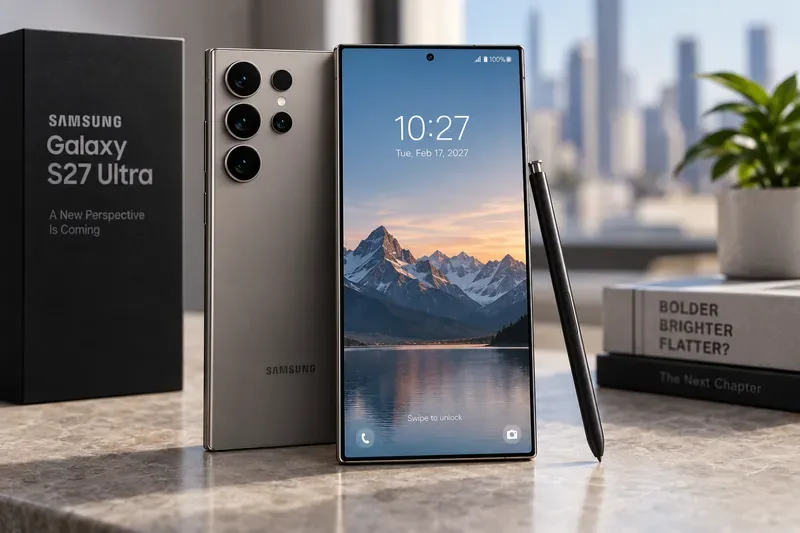
No. Samsung has not published an S27 Ultra product page, specification sheet, design story, or launch announcement. That means there is currently no official basis for claiming that the phone will use a completely flat display, a new cover-glass profile, thinner bezels, or a different frame shape.
This distinction matters because “flat display” rumors can describe several different things. One report may mean the OLED panel itself is flat. Another may mean the protective glass no longer bends at the edges. A third may simply describe a flatter transition between the front glass and the metal frame.
Until Samsung publishes the device, those are separate possibilities rather than one confirmed design.
Yes, to a large extent. Samsung explicitly described the Galaxy S24 Ultra as having a flat 6.8-inch display. On its official product page, Samsung called it a “flat 6.8-inch display,” marking a clear break from earlier Ultra generations that used visibly curved side edges. See Samsung’s official Galaxy S24 Ultra product page.
The Galaxy S25 Ultra then focused on a different kind of curvature: the phone’s outer shape. Samsung said the S25 Ultra used a more rounded edge for a more comfortable grip while retaining a large 6.9-inch QHD+ Dynamic AMOLED 2X display. The company’s Galaxy S25 series launch announcement describes that move as part of a broader design refinement, not a return to a waterfall display.
With the Galaxy S26 Ultra, Samsung pushed the rounded-body approach further. Its official design story says all three S26 models share the same corner radius and explains that there is subtle curvature in the transition from the front and back surfaces to make the slimmer phone feel more natural in the hand. Samsung’s Galaxy S26 Series Design Story is especially useful here because it separates corner radius and grip design from the display technology itself.
So if the S27 Ultra becomes “completely flat,” the likely change is refinement rather than revolution.
| Design element | What “flatter” could mean | Why users would notice |
|---|---|---|
| OLED panel | No visible bending near the left and right edges | Less edge distortion and a more uniform drawing surface |
| Cover glass | Glass remains planar almost all the way to the bezel | Easier screen-protector alignment and fewer reflections from curved edges |
| Frame transition | Less rounding where the glass meets the side frame | A sharper, more slab-like look |
| Corners | Could remain rounded even with a flat display | Rounded corners affect grip and silhouette, not whether the screen surface is flat |
| Bezels | Could become thinner or more uniform, but that is a separate change | Affects perceived screen-to-body ratio more than surface flatness |
This is the most important concept to keep in mind when reading S27 Ultra rumors. A phone can have a completely flat viewing surface and still have rounded corners, a softly curved frame, or a slightly rounded glass edge outside the active display area.
Potentially, but the improvement may be small compared with the jump Samsung already made on the S24 Ultra. The main advantage of a flat writing surface is predictability near the edges. With older curved displays, the stylus could approach a sloped glass area where the angle between the pen tip and panel changed.
A flatter cover glass can also make UI elements near the edge easier to tap with the pen because the surface remains physically consistent. That matters for drawing, handwriting, selecting small controls, and cropping images.
However, buyers should not assume a rumored S27 Ultra automatically produces better pen accuracy. Digitizer calibration, pen latency, palm rejection, software smoothing, and the physical S Pen tip all matter. Display geometry is only one part of the experience.
Probably, if the cover glass is truly flatter at the edges. Flat glass tends to be easier for rigid tempered-glass protectors because the protector can sit on a single plane rather than trying to follow a curved edge.
That does not guarantee perfect fit. Rounded screen corners, camera cutouts, case tolerances, adhesive design, and the exact border around the glass still affect installation. A “completely flat display” rumor should not be interpreted as confirmation that every S26 or S25 protector will fit the S27.
If screen-protector compatibility matters to you, wait for the final dimensions and accessory listings rather than buying based on renders.
Yes. Flatness creates a tradeoff between visual precision and physical comfort. Samsung’s S26 design team specifically discussed the risk of a slim device feeling sharp. The company said it spent time tuning corner radius and subtle curvature so the phone still looked thin while wrapping more naturally into the hand.
That means Samsung has a reason not to make every surface geometrically flat. A perfectly vertical frame with sharp transitions can look clean and industrial, but it can also create pressure points during one-handed use or long reading sessions.
The better S27 Ultra design would therefore be flat where flatness helps—the active display and cover-glass surface—while retaining enough rounding in the frame and corners to remain comfortable.
Not automatically. Shape is only one factor in drop and scratch resistance. The glass material, frame stiffness, internal support structure, edge exposure, case design, and the angle of impact all matter.
Samsung has already paired its flat-display direction with increasingly durable cover materials. For the S25 Ultra, Samsung and Corning announced Gorilla Armor 2, an anti-reflective glass ceramic designed to improve durability and clarity. Corning’s official Gorilla Armor 2 announcement confirms the material used on that generation.
A flatter S27 front could reduce some of the practical vulnerability associated with strongly exposed curved edges, but durability should still be judged from the actual cover material and independent drop testing after launch.
A flatter surface can reduce the unusual edge reflections associated with strongly curved glass, but it does not determine total screen reflectivity. Anti-reflective coatings and cover materials can have a larger effect.
Samsung already made anti-reflection a major Ultra feature. The S24 Ultra used Gorilla Armor, and the S25 Ultra moved to Gorilla Armor 2. The S26 Ultra continues to emphasize an anti-reflective 6.9-inch display alongside its new Privacy Display technology on Samsung’s official Galaxy S26 Ultra page.
If the S27 Ultra becomes flatter, the ideal outcome would be to keep or improve that anti-reflective performance rather than trading display quality for a different shape.
That is possible, but it is a separate rumor. Flat cover glass does not guarantee equal bezel thickness on all four sides. Bezel symmetry depends on panel routing, display drivers, frame structure, the camera hole, and manufacturing tolerances.
Samsung’s current S26 Ultra specification still describes a 6.9-inch display measured as a full rectangle, with a smaller effective measurement when accounting for rounded corners. The specification also notes that the actual viewable area is reduced by the rounded corners and camera hole. See Samsung’s official S26 launch specification table.
That is why a leaked image with apparently tiny bezels should not be treated as proof of the final production geometry.
No. These are independent design decisions. Samsung’s recent direction has been the opposite: softer external corners.
The S25 Ultra introduced more rounded outer edges for comfort. The S26 Ultra then adopted the same corner radius as the S26 and S26+, creating a unified family silhouette. Samsung’s own S26 versus S25 comparison page says the Ultra was updated with rounded edges matching the rest of the S26 series.
That means the most plausible combination for a future Ultra is a flat display surface inside a rounded overall body—not a return to the extremely boxy silhouette of older Ultra designs.
Only if display geometry is genuinely one of your main frustrations. If you are using an older Galaxy Ultra with strongly curved edges and you dislike reflections, accidental touches, protector fit, or S Pen behavior near the edge, waiting for confirmed S27 details can make sense.
If you already use an S24 Ultra, S25 Ultra, or S26 Ultra, the rumored change is less likely to transform the experience. Those generations already represent Samsung’s move away from the dramatic curved-edge design that defined earlier Ultras.
| Your current situation | Is the flat-display rumor a good reason to wait? |
|---|---|
| Using an older curved-edge Galaxy Ultra | Possibly; the ergonomic and accessory benefits could be noticeable |
| Using an S24 Ultra | Probably not by itself; S24 already has a flat display |
| Using an S25 Ultra | Probably not by itself; focus on the full S27 feature set |
| Using an S26 Ultra | Unlikely; wait for confirmed camera, battery, performance, and display changes together |
| Buying mainly for S Pen work | Wait for actual pen and digitizer testing, not just flatness claims |
Start with Samsung’s official product page and specification table. Confirm the physical dimensions, display size, refresh rate, cover material, corner measurements, and any design language Samsung uses to describe the front surface.
Then compare real production units rather than renders. A useful review should show the screen from the side under reflected light, demonstrate a rigid screen protector, test S Pen input near the bezel, and compare how the frame feels during one-handed use.
Finally, keep three separate questions in mind:
If a leak answers only one of those questions, it does not prove the entire phone is “completely flat.”
We do not know yet. Samsung has not confirmed the Galaxy S27 Ultra design as of September 14, 2026. What is clear is the broader direction: Samsung officially moved the Ultra line to a flat display with the S24 Ultra, softened the body shape with the S25 Ultra, and unified the rounded corner geometry across the S26 family.
That history makes a further flattening of the cover-glass and frame transition plausible, but it would be an evolution of an existing design trend rather than a sudden switch from curved to flat. For buyers, the practical test is not whether Samsung can advertise the word “flat.” It is whether the final phone improves writing near the edges, protector fit, reflections, grip comfort, and visual symmetry without creating sharper edges or sacrificing durability.
Until Samsung publishes the S27 Ultra specifications, treat “completely flat display” as a useful design question—not a confirmed feature.
Enable Android’s power-menu bug report shortcut, capture a diagnostic report on your phone, and share it safely without relying on a desktop computer.
Fix the ADB device unauthorized error by reauthorizing USB debugging, restarting the ADB server, and checking Platform-Tools, cables, and drivers.
If your Android power button is broken, try charging, a volume-key USB boot, or Fastboot. Learn what works when the phone is fully off and why ADB often won’t.
Is BlueStacks safe and legal? Learn what the official installer, privacy policy, antivirus behavior, game rules, and system requirements mean for you.
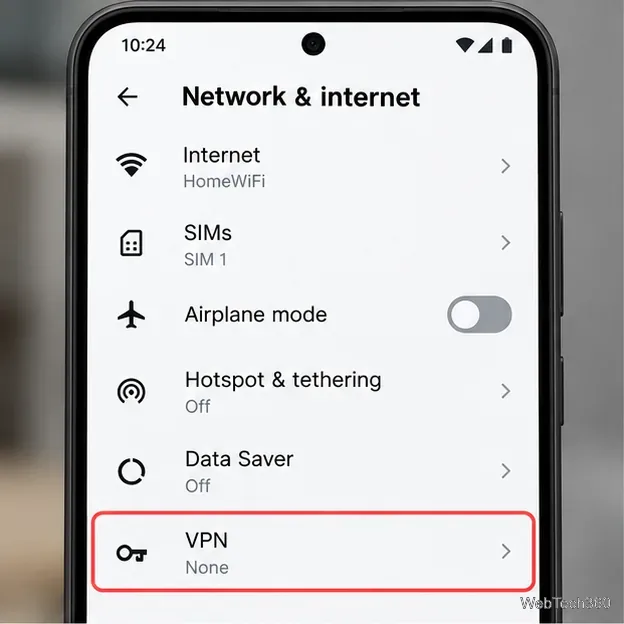
Learn three practical ways to hide your IP address on Android: a VPN, Tor Browser, or a trusted Wi-Fi proxy, with current setup steps and limits.
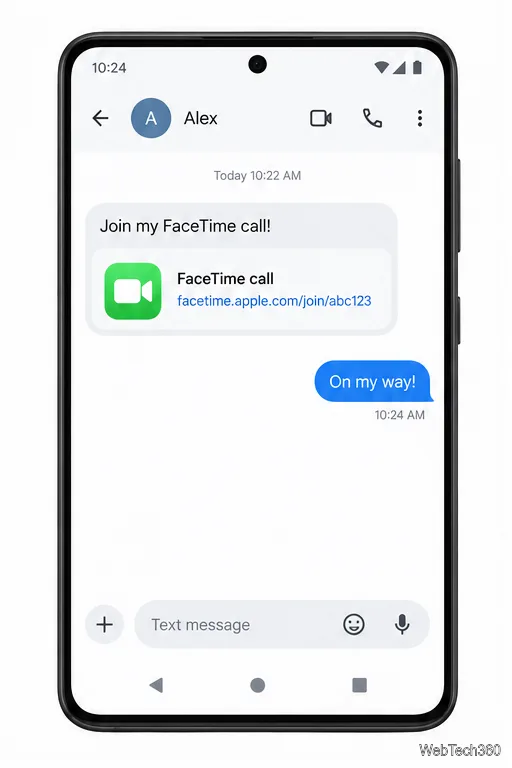
Join a FaceTime call on Android through Chrome or Edge. Get the link, set browser permissions, wait for the host, and fix common connection issues.
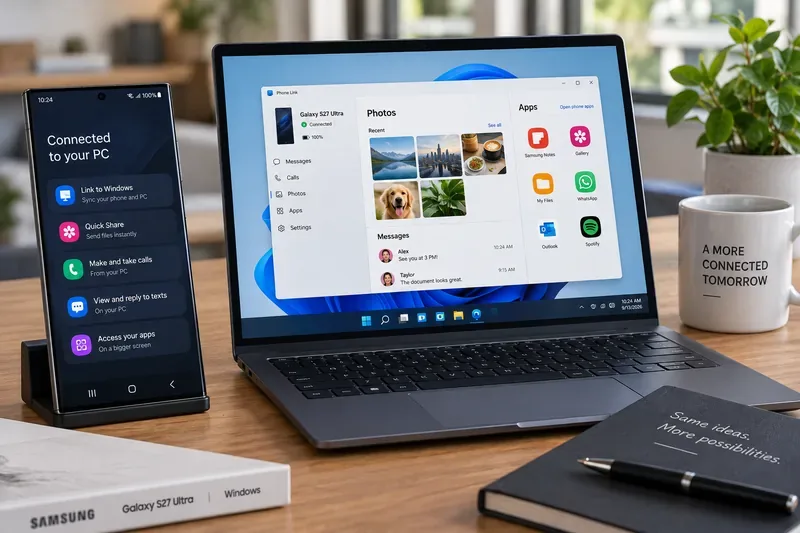
Galaxy S27 Ultra is unannounced, but Samsung and Microsoft already show the path: Phone Link, File Explorer, Quick Share, app streaming, and smarter handoff.
Samsung has not announced Galaxy S27 Ultra pricing. Here’s what the S22–S26 Ultra price history suggests, what is still unknown, and how to budget.
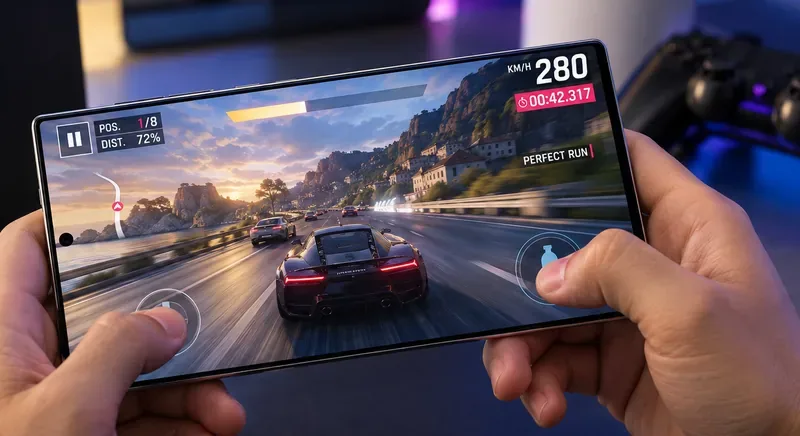
Samsung has not announced Galaxy S27 Ultra gaming specs. Here is what it would need to beat 2027 rivals, based on the confirmed S26 Ultra baseline.
Which Galaxy S27 Ultra rumors deserve attention? We rank battery, camera, chipset, display, charging, S Pen, and AI claims against Samsung’s confirmed 2026 hardware.