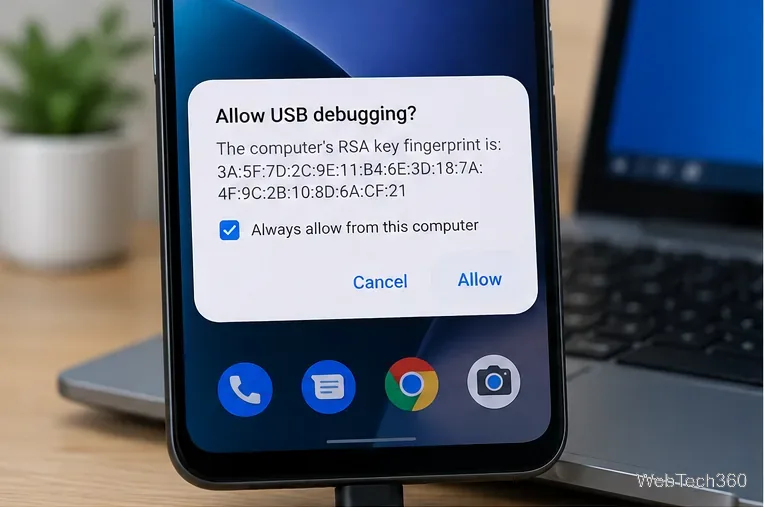
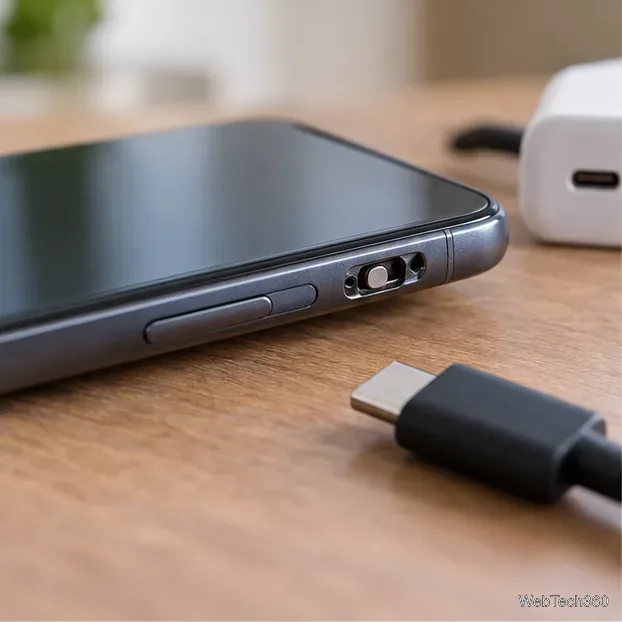
How to Enable the Android Power Button Bug Report Shortcut
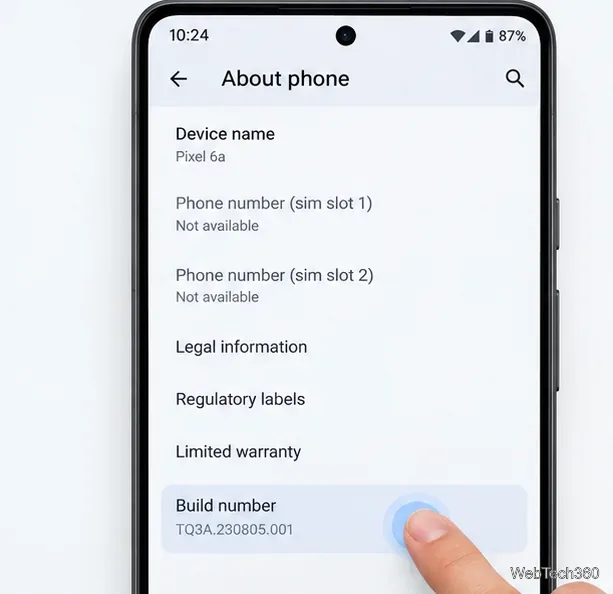
Enable Android’s power-menu bug report shortcut, capture a diagnostic report on your phone, and share it safely without relying on a desktop computer.
The Samsung Galaxy S27 Ultra is already generating camera rumors long before Samsung has published a final specification sheet. The most eye-catching claim is a supposed 300MP main camera. For a new buyer, that number can sound like a straightforward upgrade from 200MP. The reality is more complicated: as of September 14, 2026, Samsung has not officially announced a 300MP camera for the Galaxy S27 Ultra, and the strongest publicly verifiable evidence still points to Samsung focusing on better 200MP sensor technology rather than simply increasing the megapixel count.
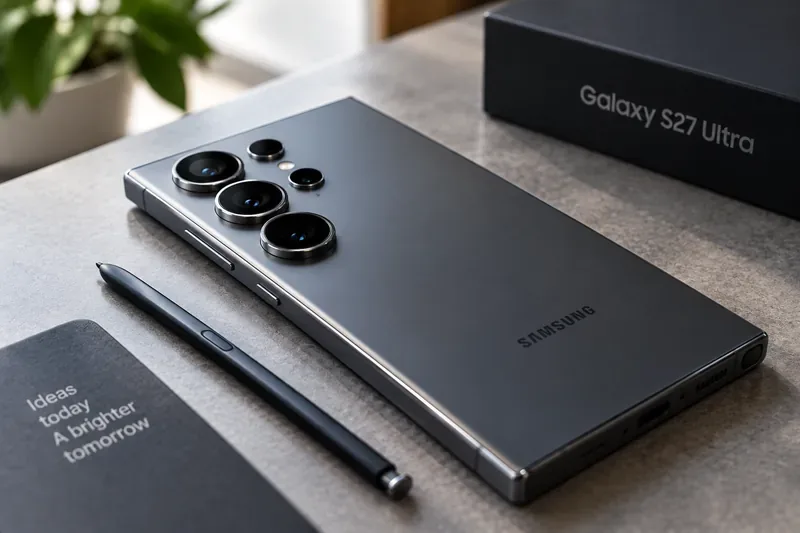
There is no official confirmation. Samsung has not announced the Galaxy S27 Ultra camera system, has not published a 300MP Galaxy camera specification, and has not tied any 300MP image sensor to the phone. In contrast, Samsung's current Galaxy S26 Ultra uses a 200MP wide camera, according to the company's official Galaxy S26 Ultra product page.
Samsung's semiconductor division is also still actively developing 200MP mobile sensors. Its current ISOCELL HPC product page describes a 200MP sensor with a new DeepPix pixel architecture, improved light handling, single-frame 16-bit HDR, and HDR support across several in-sensor zoom ratios. That is important because it shows Samsung can improve camera performance without moving from 200MP to 300MP.
So the sensible conclusion is not that a 300MP S27 Ultra is impossible. It is that the claim is unverified and currently less well supported than continued 200MP development.
MP means megapixels, or millions of image pixels. A 300MP sensor can theoretically record more spatial detail than a 200MP sensor when both are used at full resolution under ideal conditions. That can help with aggressive cropping, large prints, or in-sensor zoom.
But megapixel count is only one part of image quality. Beginners should also know four other terms:
Samsung's official ISOCELL HP2 documentation is a useful real-world example. The 200MP HP2 can combine pixels and operate in 50MP or 12.5MP modes depending on lighting conditions. That is why a phone advertised with a 200MP camera does not necessarily save every everyday photo as a 200MP file.
| Claim | Status as of September 14, 2026 | What it means |
|---|---|---|
| Galaxy S26 Ultra has a 200MP main camera | Confirmed by Samsung | This is the current official baseline for the Ultra line. |
| Samsung is developing newer 200MP sensor technology | Confirmed by Samsung | ISOCELL HPC shows that Samsung is prioritizing HDR, light capture, zoom quality, and pixel architecture as well as resolution. |
| Galaxy S27 Ultra will use a 300MP main camera | Not confirmed | Treat it as a rumor, not a buying specification. |
| Galaxy S27 Ultra will definitely stay at 200MP | Not confirmed | Current leaks often point toward 200MP, but Samsung has not announced the final phone. |
| Samsung wants image sensors beyond today's resolutions | Confirmed as a long-term technology ambition | It does not prove a 300MP Galaxy S27 Ultra. |
The final row is one reason exaggerated rumors can seem believable. In 2020, Samsung publicly discussed a long-term ambition of developing sensors that could eventually reach or exceed the perceived resolution of the human eye, including a stated aim toward 600MP-class technology. You can read that original statement in Samsung's image-sensor technology editorial. It was a research and technology direction, not a promise that a specific Galaxy phone would ship with 300MP, 440MP, or 600MP.
The 300MP claim has been amplified by concept videos, speculative specification lists, social posts, and articles that mix older sensor-development rumors with expectations for Samsung's 2027 flagship. Some concept videos explicitly label their material as concepts or rumors, but screenshots and short clips often circulate later without that context.
There is also a natural pattern of extrapolation: Samsung moved its Ultra line from 108MP to 200MP, so people assume the next major jump must be 300MP or more. That is not how product development always works. A manufacturer can keep the same nominal resolution for several generations while improving sensor architecture, aperture, autofocus, readout speed, HDR, lens quality, or processing.
The official evidence in 2026 supports that second path. Samsung's ISOCELL HPC remains a 200MP-class design, yet Samsung says DeepPix increases single-pixel full-well capacity by 60% compared with the previous generation. Full-well capacity is the amount of electrical charge a pixel can hold before bright areas saturate. More capacity can improve highlight handling and dynamic range without adding more pixels.
You do not need insider knowledge. Use a simple evidence ladder.
A claim is stronger when it identifies a specific sensor rather than saying only “300MP AI camera.” Then check whether that sensor exists on Samsung Semiconductor's official mobile image sensor catalog. An unreleased model can still be real, but the absence of an official listing means you should keep the confidence level low.
Samsung Electronics sells Galaxy phones, while Samsung Semiconductor develops components used by many manufacturers. A new ISOCELL sensor does not automatically mean Samsung Mobile will use it in the next Ultra. This is one of the most common mistakes in camera-rumor coverage.
If a leak mentions only resolution, it is incomplete. More useful information includes sensor format, pixel size, lens aperture, autofocus method, telephoto focal length, optical zoom, video modes, and whether high-resolution capture is available at full speed.
Early prototypes change. Camera modules may be tested and abandoned. A more credible picture usually appears when several independent supply-chain reports, firmware references, regulatory documents, accessory dimensions, and official teasers begin to agree. Even then, final launch specifications remain the standard.
For a purchase decision, the official product page and launch materials matter more than a leak from months earlier. Samsung's S26 Ultra page, for example, gives exact camera resolutions, apertures, zoom ranges, and the final retail configuration. Expect the same level of confirmation only when the S27 Ultra is officially unveiled.
Potentially, but not automatically. A 300MP sensor could provide more crop latitude in bright light and could support more flexible in-sensor zoom. It could also create larger files, demand more processing power, increase readout complexity, and require very small pixels if the physical sensor size does not grow.
That tradeoff explains why modern smartphone camera development is not a simple megapixel race. Samsung's own 200MP roadmap emphasizes pixel binning, HDR, autofocus, remosaic processing, and light efficiency. A better 200MP sensor with a stronger lens and faster processing could easily produce more useful photographs than a poorly optimized 300MP sensor.
For everyday users, differences in night photography, moving subjects, skin tones, zoom consistency, shutter response, and video stability are usually more noticeable than the jump from one very high still-photo resolution to another.
The first mistake is treating a concept render as a leaked product photo. A polished image can be made long before final hardware exists. The second is assuming that a rumored sensor under development is guaranteed to appear in a Galaxy phone. The third is reading Samsung's long-term research goals as a product roadmap.
Another common mistake is assuming that “more megapixels” always means “better camera.” Once resolution is already extremely high, improvements in light collection, optics, autofocus, dynamic range, processing, and zoom coverage can produce bigger real-world gains.
Finally, do not confuse maximum capture resolution with default photo resolution. Samsung's own 200MP sensors use pixel binning precisely because a lower-resolution output can be better suited to everyday lighting and file-size constraints.
The 300MP Samsung Galaxy S27 Ultra camera rumor is not confirmed. As of September 14, 2026, Samsung's official information supports a 200MP camera on the current Galaxy S26 Ultra and continued investment in advanced 200MP ISOCELL sensors. Samsung has also openly discussed much higher resolutions as a long-term research direction, which helps explain why 300MP rumors sound plausible, but that is not evidence of a shipping S27 Ultra specification.
For now, the best approach is to treat 300MP as speculation and watch for the things that matter more: the final sensor model, physical sensor size, aperture, telephoto design, HDR performance, autofocus, processing, and actual photo samples. If Samsung eventually confirms 300MP, the real question will not be “Is 300 bigger than 200?” It will be whether the entire camera system turns those extra pixels into better pictures.
Enable Android’s power-menu bug report shortcut, capture a diagnostic report on your phone, and share it safely without relying on a desktop computer.
Fix the ADB device unauthorized error by reauthorizing USB debugging, restarting the ADB server, and checking Platform-Tools, cables, and drivers.
If your Android power button is broken, try charging, a volume-key USB boot, or Fastboot. Learn what works when the phone is fully off and why ADB often won’t.
Is BlueStacks safe and legal? Learn what the official installer, privacy policy, antivirus behavior, game rules, and system requirements mean for you.
Learn three practical ways to hide your IP address on Android: a VPN, Tor Browser, or a trusted Wi-Fi proxy, with current setup steps and limits.
Join a FaceTime call on Android through Chrome or Edge. Get the link, set browser permissions, wait for the host, and fix common connection issues.
Galaxy S27 Ultra is unannounced, but Samsung and Microsoft already show the path: Phone Link, File Explorer, Quick Share, app streaming, and smarter handoff.
Samsung has not announced Galaxy S27 Ultra pricing. Here’s what the S22–S26 Ultra price history suggests, what is still unknown, and how to budget.
Samsung has not announced Galaxy S27 Ultra gaming specs. Here is what it would need to beat 2027 rivals, based on the confirmed S26 Ultra baseline.
Which Galaxy S27 Ultra rumors deserve attention? We rank battery, camera, chipset, display, charging, S Pen, and AI claims against Samsung’s confirmed 2026 hardware.