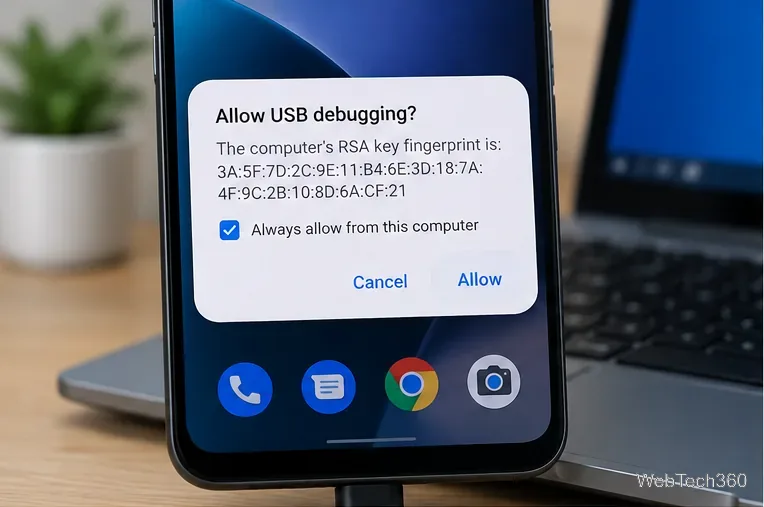
How to Enable the Android Power Button Bug Report Shortcut
Enable Android’s power-menu bug report shortcut, capture a diagnostic report on your phone, and share it safely without relying on a desktop computer.
The most important answer is this: a titanium frame would not automatically make the Galaxy S27 Ultra thinner, lighter, and stronger all at once. It could help Samsung improve rigidity or premium feel, and clever engineering could still reduce thickness or total weight, but the material alone does not guarantee any of those outcomes.
That distinction matters because Samsung’s current Ultra tells a surprisingly useful story. The Galaxy S26 Ultra uses an Armor Aluminum frame, not titanium, yet Samsung lists it at 7.9 mm thick and 214 g. The previous Galaxy S25 Ultra used titanium and measured 8.2 mm and 218 g. In other words, Samsung has already shown that a lighter metal can be part of a thinner, lighter flagship.
As of September 14, 2026, Samsung has not announced Galaxy S27 Ultra specifications. This article therefore treats a titanium S27 Ultra frame as an unconfirmed possibility, not a final product fact.
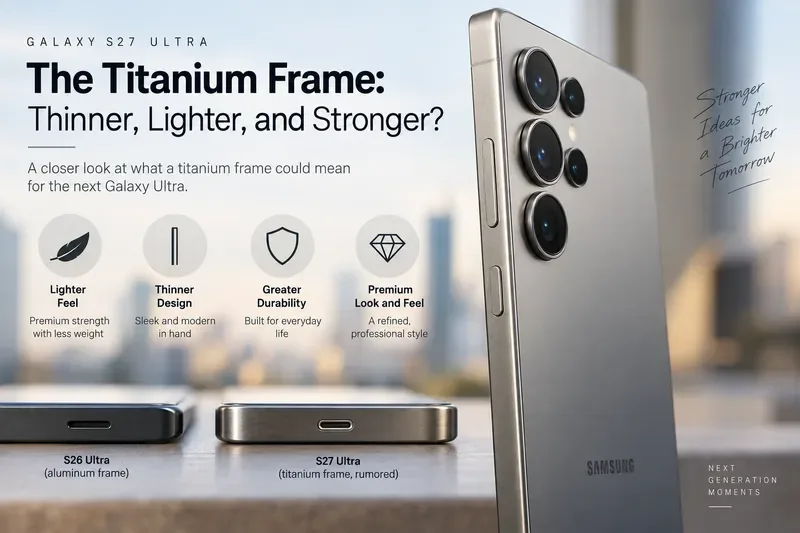
No. Samsung’s official Galaxy S26 Ultra materials describe the current flagship as using an Armor Aluminum frame, and Samsung has not published S27 Ultra dimensions, weight, frame material, or durability claims at the time of writing.
That makes the wording important. It is reasonable to discuss what a titanium return could enable because Samsung has used titanium before, but it is not accurate to say Samsung has already promised it for S27 Ultra.
Samsung first introduced titanium to the Galaxy S line with the S24 Ultra. In its Galaxy S24 launch announcement, the company said the S24 Ultra was the first Galaxy phone with a titanium frame and linked the change to durability and longevity. Samsung continued using titanium on the S25 Ultra before moving the S26 Ultra back to Armor Aluminum.
Not by itself. This is the biggest misconception to clear up before judging the rumor.
At the material level, titanium is denser than aluminum. The U.S. Geological Survey describes titanium as having a high strength-to-weight ratio, but also notes that titanium is about 60% heavier than aluminum for a comparable volume. NIST’s reference data lists pure titanium at about 4.54 g/cm³ and pure aluminum at about 2.70 g/cm³. You can review the underlying values on the NIST titanium page and NIST aluminum page.
That does not mean a titanium phone must be heavier. Engineers can use less material, alter the frame geometry, change internal supports, reduce glass mass, redesign the camera structure, or save grams elsewhere. But a simple material swap from aluminum to an equally sized piece of titanium would not be a weight-saving move.
| Model | Frame material | Thickness | Weight | What it shows |
|---|---|---|---|---|
| Galaxy S25 Ultra | Titanium | 8.2 mm | 218 g | Titanium can coexist with a relatively slim flagship. |
| Galaxy S26 Ultra | Armor Aluminum | 7.9 mm | 214 g | Samsung achieved a thinner, lighter Ultra after switching away from titanium. |
| Galaxy S27 Ultra | Unconfirmed | Unconfirmed | Unconfirmed | The outcome depends on the complete chassis, not the metal name alone. |
If your priority is one-hand comfort, the number to watch is the final device weight, not whether the marketing page says titanium. A 210 g aluminum phone will feel lighter than a 220 g titanium phone every time.
Possibly, but only if Samsung uses titanium’s strength strategically. A stronger structural material can sometimes allow thinner sections while maintaining acceptable stiffness. That is the engineering argument in titanium’s favor.
The U.S. Geological Survey notes titanium’s high strength-to-weight ratio and corrosion resistance in its titanium fact sheet. Those qualities help explain why titanium appears in aerospace, medical, and high-performance consumer applications.
However, smartphone thickness is constrained by much more than the side rails. The camera stack, battery thickness, display assembly, vapor chamber, wireless charging hardware, antennas, speakers, USB-C port, and the Ultra line’s integrated S Pen all compete for internal space. A thinner frame does not automatically mean a thinner phone if one of those systems remains the limiting component.
The S26 Ultra is a good reality check. Samsung calls it the slimmest Ultra yet and lists a 7.9 mm body while using Armor Aluminum. So if an S27 Ultra with titanium were also thinner, the improvement would likely come from a broader internal redesign rather than titanium alone.
This is the most believable potential benefit, but “stronger” needs a definition.
Titanium can provide excellent strength relative to its mass, and Samsung has previously connected titanium with durability. But phone durability is a system property. The side frame is only one part of the structure.
A real drop can load the corner, front glass, rear glass, camera rings, internal mounting points, adhesive joints, and display stack at the same time. A stronger frame may resist bending better, yet the phone can still suffer cracked glass or internal damage. Conversely, a well-designed aluminum frame with appropriate geometry can protect the device effectively while keeping weight down.
Samsung’s current S26 Ultra page says its Armor Aluminum frame protects internal components and exterior edges without adding excessive bulk. That is a useful reminder that the company is already solving durability through geometry and material selection rather than relying on titanium as a mandatory ingredient.
Until Samsung publishes S27-specific testing or engineering details, none of those outcomes should be assumed simply because titanium is mentioned in a rumor.
There are several plausible reasons, though none has been confirmed for S27 Ultra.
First, titanium has a strong premium-material identity. Samsung used it to distinguish the S24 Ultra and S25 Ultra from lower-tier models. Bringing it back could restore a visible material distinction at the top of the Galaxy S lineup.
Second, a future chassis might need additional stiffness if Samsung changes internal packaging, camera hardware, screen structure, or overall dimensions. In that case titanium could be chosen to meet a structural target rather than simply for branding.
Third, manufacturing methods can evolve. A future titanium frame does not have to repeat the exact construction used on S24 or S25. The percentage of titanium, alloy grade, bonding method, internal reinforcement, and machining strategy all affect the finished result. Without Samsung disclosing those details, comparing phones purely by the word “titanium” is too simplistic.
A titanium return would matter most to buyers who use the phone without a bulky case, keep devices for several years, care about frame rigidity, or simply value the tactile feel of a premium metal. For those users, material choice can influence how the phone feels every time it is picked up.
It matters less if you immediately install a thick protective case. In that situation, total weight, dimensions, camera protrusion, battery life, repairability, and the quality of the case itself will probably affect daily use more than the exposed frame material.
There is also a practical threshold. If Samsung announced a titanium S27 Ultra that was several grams heavier than S26 Ultra, people sensitive to hand fatigue might reasonably prefer the lighter aluminum design. If Samsung managed to keep weight near or below 214 g while improving stiffness, the titanium story would become much more compelling.
Do not judge the S27 Ultra chassis from the material name alone. Four pieces of information will tell you much more:
If Samsung only says “titanium” but the phone becomes thicker or heavier, the change may be mainly about premium feel or rigidity. If it ships below 214 g and below 7.9 mm while maintaining or improving structural durability, then Samsung would have evidence that the new chassis is delivering multiple benefits at once.
Stronger is plausible. Thinner is possible. Lighter is not guaranteed. That is the most defensible answer before Samsung announces the Galaxy S27 Ultra.
Titanium has real engineering advantages, especially strength-to-weight ratio and corrosion resistance. But it is also denser than aluminum, and Samsung’s own S25-to-S26 transition shows that an Armor Aluminum Ultra can be both thinner and lighter than a titanium predecessor.
The most interesting S27 Ultra story, therefore, is not whether Samsung can put titanium back on the spec sheet. It is whether the company can use that material as part of a complete chassis redesign that improves the numbers people actually feel every day: weight, thickness, rigidity, grip, and long-term durability.
Enable Android’s power-menu bug report shortcut, capture a diagnostic report on your phone, and share it safely without relying on a desktop computer.
Fix the ADB device unauthorized error by reauthorizing USB debugging, restarting the ADB server, and checking Platform-Tools, cables, and drivers.
If your Android power button is broken, try charging, a volume-key USB boot, or Fastboot. Learn what works when the phone is fully off and why ADB often won’t.
Is BlueStacks safe and legal? Learn what the official installer, privacy policy, antivirus behavior, game rules, and system requirements mean for you.
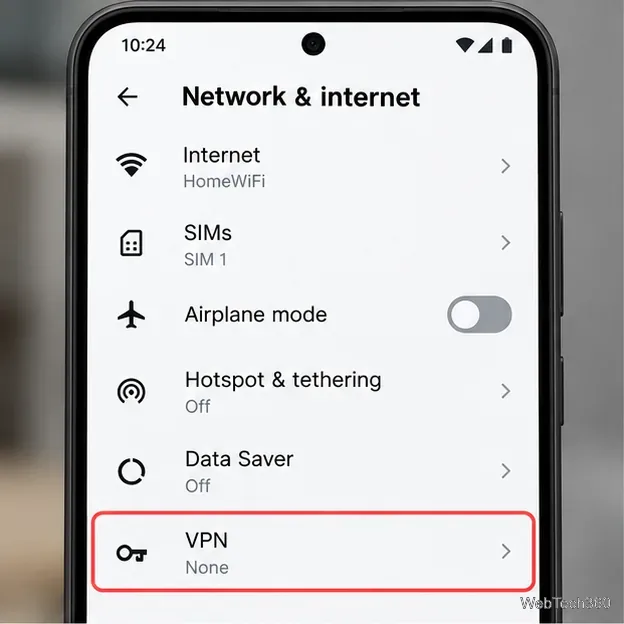
Learn three practical ways to hide your IP address on Android: a VPN, Tor Browser, or a trusted Wi-Fi proxy, with current setup steps and limits.
Join a FaceTime call on Android through Chrome or Edge. Get the link, set browser permissions, wait for the host, and fix common connection issues.
Galaxy S27 Ultra is unannounced, but Samsung and Microsoft already show the path: Phone Link, File Explorer, Quick Share, app streaming, and smarter handoff.
Samsung has not announced Galaxy S27 Ultra pricing. Here’s what the S22–S26 Ultra price history suggests, what is still unknown, and how to budget.
Samsung has not announced Galaxy S27 Ultra gaming specs. Here is what it would need to beat 2027 rivals, based on the confirmed S26 Ultra baseline.
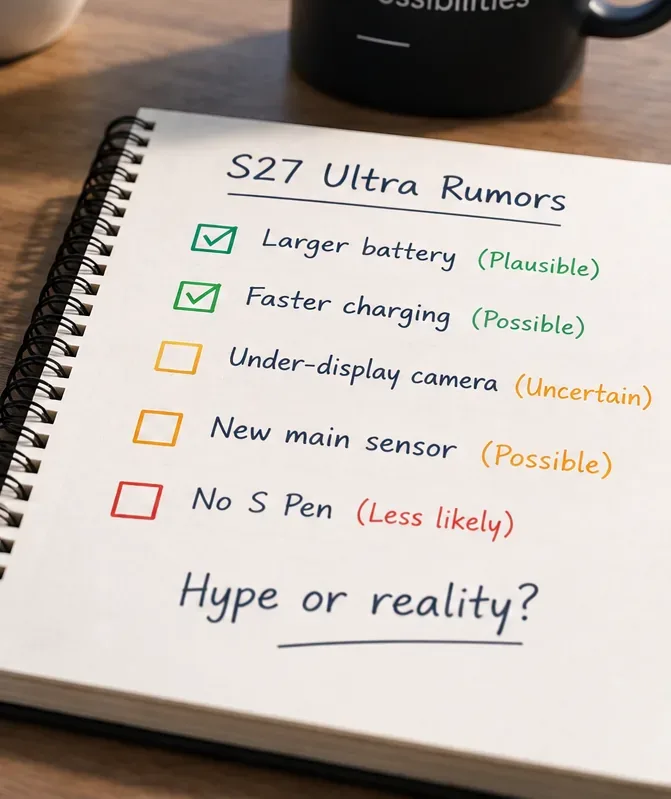
Which Galaxy S27 Ultra rumors deserve attention? We rank battery, camera, chipset, display, charging, S Pen, and AI claims against Samsung’s confirmed 2026 hardware.