How to Enable the Android Power Button Bug Report Shortcut
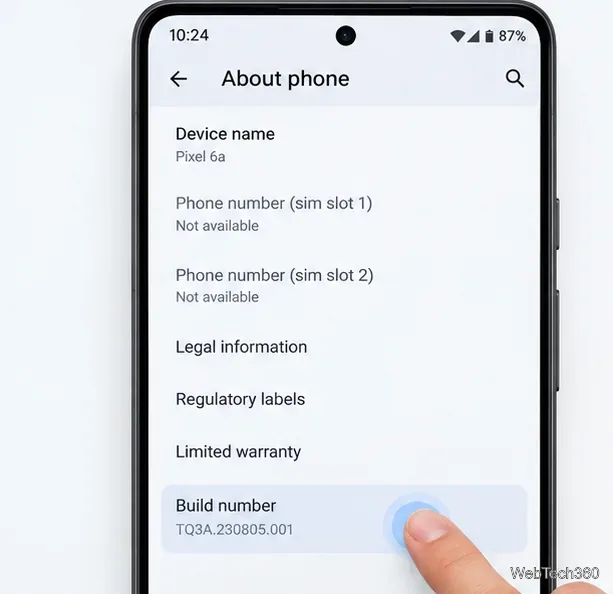
Enable Android’s power-menu bug report shortcut, capture a diagnostic report on your phone, and share it safely without relying on a desktop computer.
The Galaxy S27 Ultra is still an unannounced phone as of September 14, 2026, so the most useful way to discuss it is not to turn leaks into facts. Instead, this wish list starts with what Samsung officially ships on the Galaxy S26 Ultra and asks a harder question: which upgrades would materially improve the result for people who actually use an Ultra phone for photography, work, gaming, travel, and long days away from a charger?
Samsung’s current Ultra already sets a high baseline. The company lists a 5,000 mAh battery, up to 60W wired charging, up to 25W wireless charging, a 6.9-inch 1–120Hz Dynamic AMOLED 2X display, a 200MP main camera, 3x and 5x optical telephoto cameras, an integrated S Pen, Wi-Fi 7, and seven generations of OS upgrades with seven years of security updates. Those are the verified reference points—not S27 Ultra specifications. See Samsung’s official Galaxy S26 series announcement and Galaxy S26 Ultra product page.
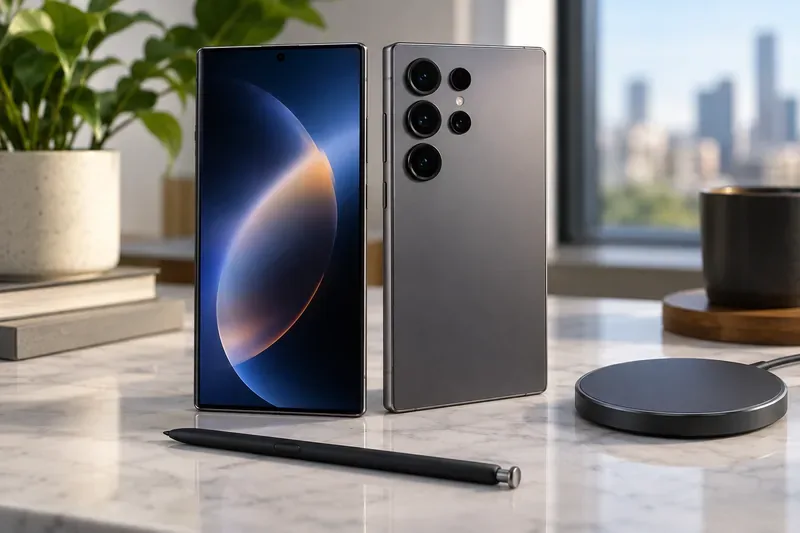
A bigger number is not automatically a better result. A higher charging wattage can be disappointing if the phone throttles quickly. More camera megapixels can add little if autofocus, motion capture, or color matching gets worse. A larger battery can be offset by a heavier chassis. For each feature below, the useful test is therefore outcome-based: what should improve, how could a buyer recognize the improvement, and what trade-off would make the feature less valuable?
| Area | Verified S26 Ultra baseline | What would make S27 Ultra meaningfully better |
|---|---|---|
| Battery | 5,000 mAh; Samsung rates up to 31 hours of video playback | Longer mixed-use endurance without a major weight increase |
| Charging | Up to 60W wired; up to 25W wireless | Faster real top-ups with controlled heat, not just a higher peak wattage |
| Camera | 200MP main, 50MP 5x telephoto, 10MP 3x telephoto, 50MP ultrawide | Better motion capture, intermediate zoom, and consistency across lenses |
| S Pen | Built in; no Bluetooth Low Energy or Air Actions | Remote control features return without harming writing quality or battery life |
| Software life | Seven OS generations and seven years of security updates | Keep the long support window while making more AI functions useful on-device |
The S26 Ultra retains a 5,000 mAh typical battery, while Samsung advertises up to 31 hours of video playback. For the S27 Ultra, the most valuable battery upgrade would be one users can see during mixed workloads: navigation, 5G, photography, messaging, streaming, hotspot use, and high-brightness outdoor viewing.
What good looks like: a clearly longer day under the same settings and workload, with less need for a late-afternoon top-up. A larger cell would help, but efficiency from the processor, modem, display, and software matters just as much.
When to change the evaluation: if a bigger battery makes the phone noticeably heavier or thicker, compare total endurance per gram rather than capacity alone. The best outcome is more usable time without making an already large phone harder to carry.
Samsung rates the S26 Ultra for up to 60W wired charging and up to 75% in around 30 minutes under its stated test conditions. That is a substantial step over older Galaxy Ultra generations, so an S27 Ultra upgrade should be judged by more than a new peak-wattage label.
What good looks like: a faster 10%–80% refill, predictable charging speed with the screen off or lightly used, and no excessive heat that forces the phone to reduce power early. A higher peak that lasts only briefly would be a weaker improvement than a flatter, better-controlled charging curve.
Limit: battery longevity and thermal safety matter more than winning a wattage contest. Samsung should not trade long-term battery health for a headline number.
Samsung’s official S26 accessory guidance lists magnet cases that snap to magnetic accessories and support wireless charging up to 25W. That makes a straightforward S27 Ultra wish easy to define: put reliable magnetic alignment into the phone itself so users can attach compatible chargers, stands, wallets, and mounts without adding a magnetic case. See Samsung’s official S26 accessories guide.
What good looks like: accessories align consistently, charging starts without careful placement, and users can choose a thin non-magnetic case—or no case—without losing the magnetic ecosystem.
Engineering limit: Samsung also documents that magnets can interfere with S Pen recognition on some devices unless the accessory is designed correctly. Any built-in magnetic system must therefore be engineered around the digitizer rather than treated as a simple ring of magnets. Samsung’s S Pen troubleshooting guidance explains the interference risk.
The S26 Ultra S Pen supports handwriting, Air Command, Air View, S Pen to text, and other pen-first tools, but Samsung explicitly states that it does not rely on Bluetooth and does not support Air Actions. That is verified in the company’s Galaxy S26 Ultra S Pen guide.
For S27 Ultra, restoring optional Bluetooth Low Energy would make the integrated pen more versatile again. Remote camera shutter control is especially practical for group photos, tripod shots, presentations, or recording yourself from a distance.
What good looks like: remote controls return without reducing pen responsiveness, shrinking the battery, or creating reliability problems. Users who never use remote gestures should be able to leave the feature off.
The S26 Ultra uses a 10MP 3x telephoto and a 50MP 5x telephoto, alongside its 200MP main camera. The most useful S27 camera upgrade would not necessarily be “more zoom.” It would be better quality in the focal lengths people use for portraits, pets, events, food, and travel—especially between 2x and 5x.
What good looks like: more detail at 3x, faster autofocus, cleaner low-light portraits, and fewer visible quality jumps as the camera app moves between sensors. A higher-resolution 3x module is one possible route, but it is not the only one; sensor size, optics, stabilization, and processing all affect the final image.
When to change the approach: if Samsung can deliver the same or better intermediate-zoom quality with a different optical layout, the result matters more than keeping four rear cameras for its own sake.
Samsung already emphasizes brighter low-light capture on the S26 Ultra, including a wider F1.4 aperture on the 200MP wide camera and a wider F2.9 aperture on the 5x telephoto. The next quality target should be consistency rather than another isolated specification.
What good looks like: similar white balance and contrast when switching between ultrawide, main, 3x, and 5x cameras; faster capture of children, pets, and street scenes; and fewer cases where a subject moves between the moment the shutter is tapped and the frame is recorded.
Limit: aggressive sharpening or heavy noise reduction can make a photo look superficially detailed while erasing texture. The ideal S27 Ultra camera should give users a natural-looking default and preserve useful manual or Pro controls for those who want more input.
The S26 Ultra has a 6.9-inch Dynamic AMOLED 2X panel with an adaptive 1–120Hz refresh rate, a stated 2,600-nit peak brightness, anti-reflective treatment, and Samsung’s built-in Privacy Display. That is already a sophisticated panel. For S27 Ultra, efficiency is the bigger opportunity than chasing brightness alone.
What good looks like: excellent readability outdoors at lower power, stable color at low brightness, smooth adaptive refresh behavior, and a privacy mode that remains easy to read head-on while drawing minimal extra power.
When another metric matters more: once a display is readable in direct sunlight, an even higher peak-nit figure is less useful than lower energy consumption and better sustained brightness during navigation, video recording, or gaming.
Samsung says the S26 Ultra uses Snapdragon 8 Elite Gen 5 for Galaxy and an enhanced cooling design that improves thermal performance compared with the previous generation. That gives the S27 Ultra a clear challenge: keep improving sustained performance, not just short benchmark bursts.
What good looks like: frame rates remain steadier during a long game, 4K or 8K video sessions do not cause abrupt slowdowns, and demanding on-device AI tasks can run repeatedly without the phone becoming uncomfortable to hold.
Limit: no passively cooled phone can maintain desktop-class peak power indefinitely. A successful design balances speed, surface temperature, battery drain, and acoustics—there is no fan to hide poor thermal efficiency.
Samsung lists 12GB of RAM on the S26 Ultra’s 256GB and 512GB versions and 16GB on the 1TB version. For an Ultra phone increasingly built around local AI, multitasking, photo editing, and long software support, 16GB across more storage tiers would be a welcome quality-of-life improvement.
The software side matters just as much. Samsung’s S26 announcement describes the Personal Data Engine, Knox Enhanced Encrypted Protection, and Knox Vault as parts of its privacy architecture for contextual and on-device AI. The S27 Ultra should expand the set of tasks that can run locally while keeping clear controls over when cloud processing is used.
What good looks like: fewer app reloads during heavy multitasking, larger local AI models where they genuinely improve usefulness, and transparent settings that tell users whether a feature is processed on-device or online.
Limit: more RAM by itself does not guarantee faster AI. Model design, memory bandwidth, NPU capability, storage speed, and software optimization determine whether the extra capacity produces a visible benefit.
The S26 Ultra is officially listed at 214 grams and 7.9 mm thick, which is already lighter and thinner than several earlier Ultra generations. The S27 Ultra should continue that direction carefully rather than pursuing thinness at any cost.
What good looks like: less hand fatigue, rounded pressure points, balanced weight around the camera area, durable materials, IP68 water and dust resistance, and no loss of the integrated S Pen.
When to reject the trade-off: a thinner body is not an upgrade if it forces a smaller battery, worsens thermal performance, makes the camera bump awkward on a table, or weakens structural durability. Comfort is an outcome, not a millimeter race.
When official specifications arrive, compare them against the outcomes above rather than asking whether every wish came true. Start with battery endurance, charging time, camera consistency, thermal behavior, pen functions, and ergonomics. Those are the areas where an upgrade can change daily use most clearly.
Then separate specifications into three buckets: confirmed by Samsung, measurable only after independent testing, and still unknown. Battery capacity and camera hardware can be confirmed at launch. Sustained performance, charging heat, motion capture, real-world endurance, and whether new AI functions are genuinely useful require testing. Rumors should stay in the unknown bucket until Samsung publishes the product.
For current buyers, the S26 Ultra remains the only official reference point in this comparison. Samsung’s own materials confirm a strong baseline: 60W wired charging, 25W wireless charging, the built-in Privacy Display, a four-camera rear system, integrated S Pen, and long software support. The S27 Ultra will be worth waiting for only if its final package improves enough of the outcomes that matter to your use—not simply because its model number is newer.
The most wanted Galaxy S27 Ultra features are not exotic concepts. They are practical improvements: longer battery life, better sustained charging, native magnetic accessories, a more capable S Pen, stronger intermediate zoom, more consistent cameras, a more efficient display, cooler sustained performance, more headroom for on-device AI, and a lighter ergonomic design. If Samsung can move several of those areas forward without giving up battery health, durability, S Pen integration, or long software support, the S27 Ultra would have a strong case as a meaningful Ultra upgrade.
Status note: This article is a feature wish list based on Samsung’s official Galaxy S26 Ultra documentation available on September 14, 2026. It does not present rumored Galaxy S27 Ultra specifications as confirmed facts.
Enable Android’s power-menu bug report shortcut, capture a diagnostic report on your phone, and share it safely without relying on a desktop computer.
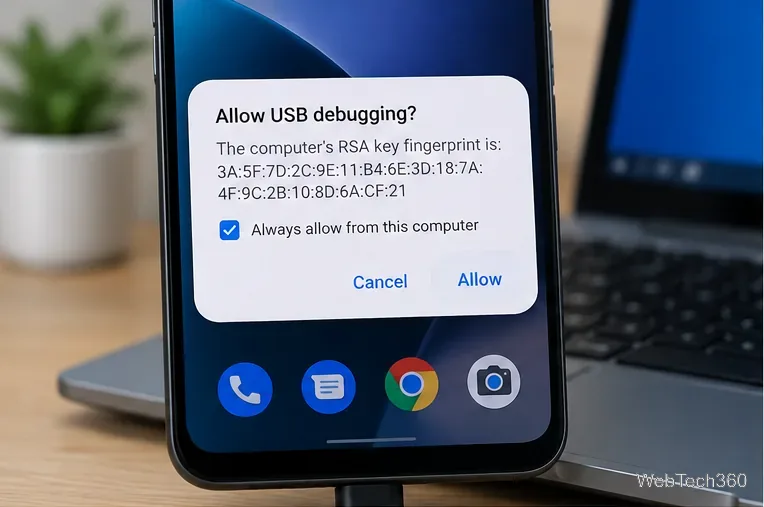
Fix the ADB device unauthorized error by reauthorizing USB debugging, restarting the ADB server, and checking Platform-Tools, cables, and drivers.
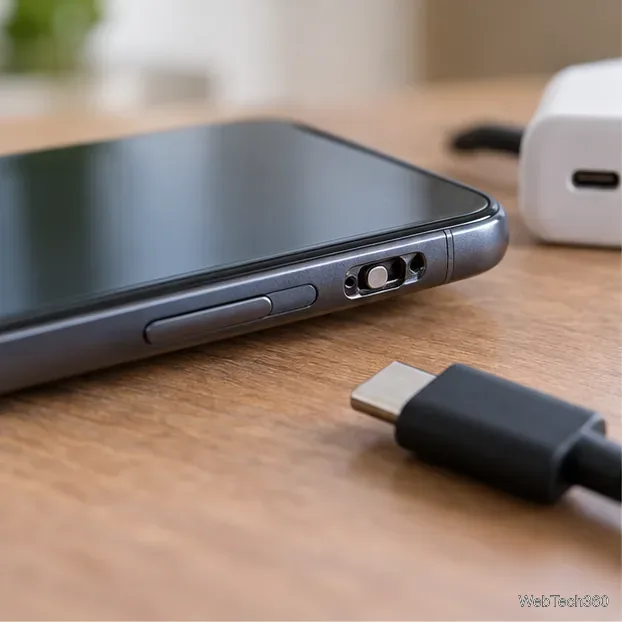
If your Android power button is broken, try charging, a volume-key USB boot, or Fastboot. Learn what works when the phone is fully off and why ADB often won’t.
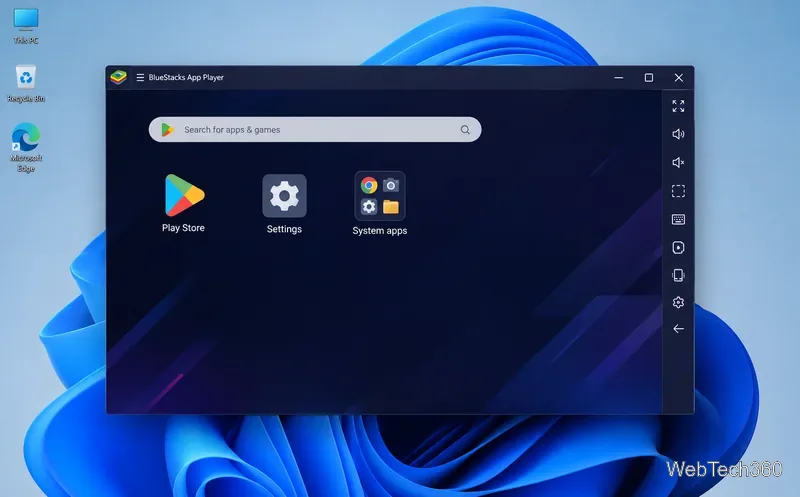
Is BlueStacks safe and legal? Learn what the official installer, privacy policy, antivirus behavior, game rules, and system requirements mean for you.
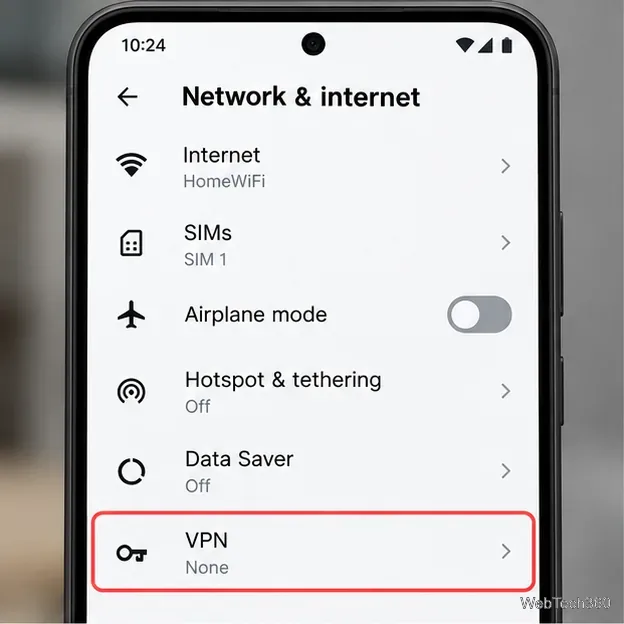
Learn three practical ways to hide your IP address on Android: a VPN, Tor Browser, or a trusted Wi-Fi proxy, with current setup steps and limits.
Join a FaceTime call on Android through Chrome or Edge. Get the link, set browser permissions, wait for the host, and fix common connection issues.
Galaxy S27 Ultra is unannounced, but Samsung and Microsoft already show the path: Phone Link, File Explorer, Quick Share, app streaming, and smarter handoff.
Samsung has not announced Galaxy S27 Ultra pricing. Here’s what the S22–S26 Ultra price history suggests, what is still unknown, and how to budget.
Samsung has not announced Galaxy S27 Ultra gaming specs. Here is what it would need to beat 2027 rivals, based on the confirmed S26 Ultra baseline.
Which Galaxy S27 Ultra rumors deserve attention? We rank battery, camera, chipset, display, charging, S Pen, and AI claims against Samsung’s confirmed 2026 hardware.