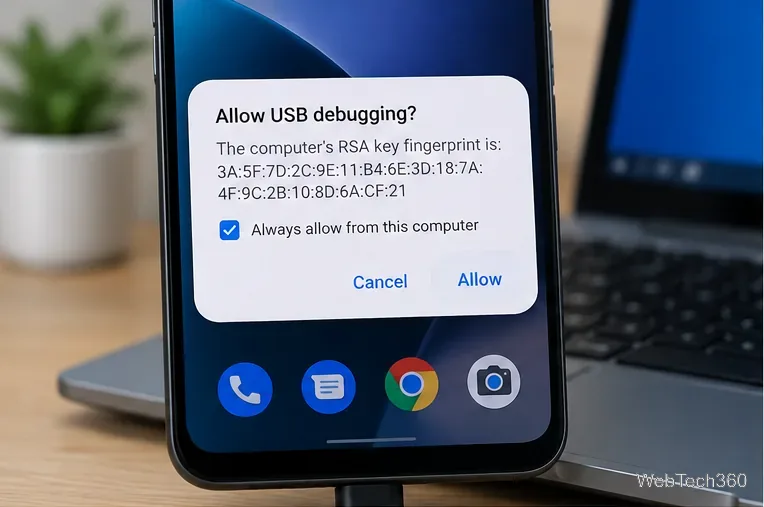
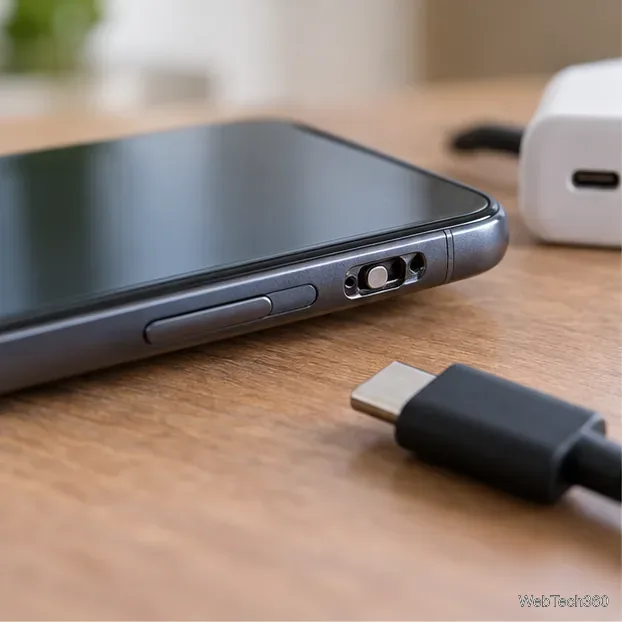
How to Enable the Android Power Button Bug Report Shortcut
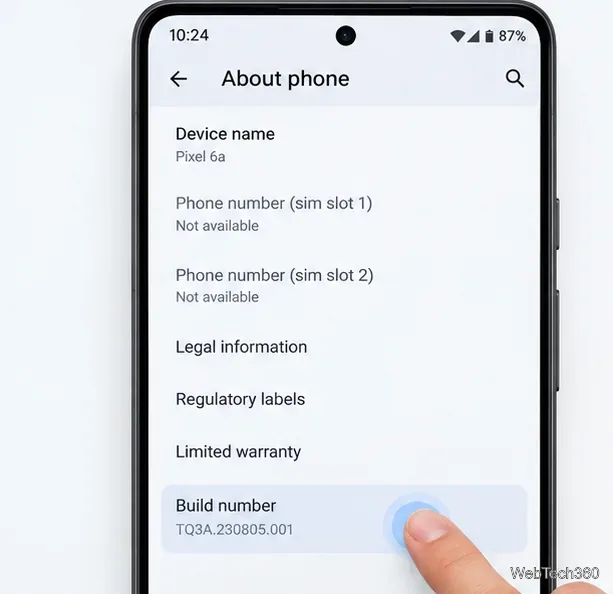
Enable Android’s power-menu bug report shortcut, capture a diagnostic report on your phone, and share it safely without relying on a desktop computer.
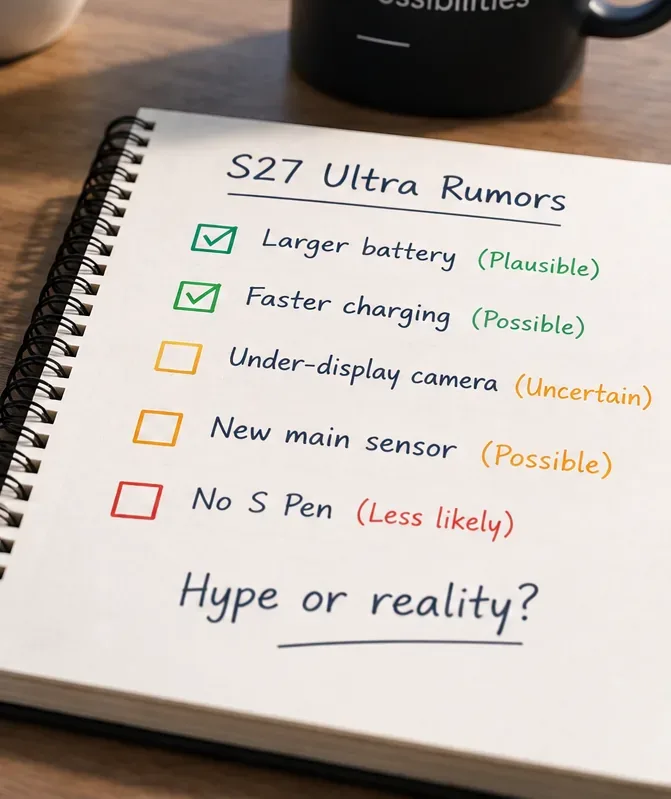
The Galaxy S27 Ultra is still an unannounced phone, so any claim about its battery life needs a large asterisk. As of September 14, 2026, Samsung has not published official Galaxy S27 Ultra battery capacity, charging, processor, or endurance figures. What has changed is the rumor picture: several recent reports have converged on the possibility of a meaningfully larger battery than the 5,000 mAh cell in the current Galaxy S26 Ultra, with estimates commonly landing around 5,700 to 6,000 mAh.
If that range survives into the shipping phone, the upgrade could matter. But a larger battery alone would not prove that the S27 Ultra “crushes” anything. The questions that matter are simpler: How much additional energy would the phone actually carry? How efficiently would the display, modem, processor, cameras, and background software use it? And would the improvement hold up in independent mixed-use testing rather than one manufacturer’s playback claim?
The confirmed baseline is the Galaxy S26 Ultra. Samsung lists a typical 5,000 mAh battery, up to 31 hours of video playback, and Super Fast Charging 3.0 that can reach about 75% in around 30 minutes under the company’s stated conditions. You can check those figures on the official Samsung Galaxy S26 Ultra page and in Samsung’s Galaxy S26 launch specifications.
The S27 Ultra is different: there is no official Samsung specification sheet yet. The widely discussed 5,700-to-6,000 mAh range should therefore be treated as pre-release information, not as a purchase fact. Even the chemistry is unsettled in public reporting. A prototype capacity, supplier test, or engineering target can change before mass production.
| Question | What we know as of Sept. 14, 2026 |
|---|---|
| Is the Galaxy S27 Ultra official? | No. Samsung has not announced final specifications. |
| Is a battery larger than 5,000 mAh plausible? | Yes, based on repeated pre-release reports, but it is not confirmed. |
| Is 5,700–6,000 mAh guaranteed? | No. Treat that as a rumor range, not a shipping specification. |
| Can battery capacity alone predict endurance? | No. Efficiency, software, radios, display behavior, thermals, and workload all matter. |
On paper, yes. Relative to the S26 Ultra’s 5,000 mAh rating, a 5,700 mAh battery would represent roughly 14% more nominal capacity, while 6,000 mAh would represent roughly 20% more. That is large enough to be meaningful if the rest of the phone does not become substantially more power-hungry.
But do not convert that percentage directly into “14% to 20% longer battery life.” A phone can spend extra energy on a brighter display, faster processor clocks, more background AI, heavier camera processing, stronger radios, or less aggressive power management. Conversely, a more efficient chip and display can stretch a modest battery much further than its capacity suggests.
The useful way to interpret the rumor is this: a larger battery would give Samsung more headroom. It would make it easier to improve endurance while still pushing performance and camera features. It would not guarantee the final result.
Samsung’s current flagship already shows why this matters. The Galaxy S26 Ultra uses the Snapdragon 8 Elite Gen 5 for Galaxy. Qualcomm says the standard Snapdragon 8 Elite Gen 5 platform improves CPU power efficiency by 35%, GPU power efficiency by 20%, and overall SoC power savings by up to 16% versus its previous generation. Those are Qualcomm’s platform comparisons, not a promise for S27 Ultra, but they illustrate the scale of gains that silicon can contribute. See Qualcomm’s official Snapdragon 8 Elite Gen 5 specifications.
The S27 Ultra’s processor has not been confirmed, so it would be premature to assign those gains—or any next-generation gains—to the phone. Still, the principle is important. Battery life comes from the whole power budget, including:
The competition moved forward in 2026, so Samsung’s target is not static. Apple now advertises up to 45 hours of video playback on the U.S. eSIM-only iPhone 18 Pro Max, along with up to 30 hours of typical use under Apple’s new usage model. Those figures are available on the official iPhone 18 Pro technical specifications. Google lists the Pixel 11 Pro XL with a typical 5,115 mAh battery and “30+ hour” battery life on the official Google Store specifications.
Those numbers are useful context, but they are not a clean cross-brand benchmark. Samsung’s “video playback,” Apple’s “video playback” and “typical use,” and Google’s “30+ hour battery life” are based on different test methods, software, network assumptions, and workloads. A higher manufacturer number does not automatically mean a phone lasts longer in your day.
| Current flagship | Official battery claim | What the number can tell you |
|---|---|---|
| Galaxy S26 Ultra | 5,000 mAh; up to 31 hours video playback | Useful as Samsung’s current baseline. |
| iPhone 18 Pro Max | Up to 45 hours video playback on U.S. eSIM-only models; up to 30 hours typical use | Shows how high the endurance bar has become, but Apple uses its own test methodology. |
| Pixel 11 Pro XL | 5,115 mAh; 30+ hour battery life | Shows that capacity and claimed runtime are not the same metric. |
It could, but only under a stricter definition than “has a bigger battery.” To deserve that description, the retail S27 Ultra would need to show a repeatable advantage in the tasks that drain premium phones fastest: 5G browsing, camera use, navigation, high-refresh-rate screen time, video calls, gaming, streaming, and long standby periods.
A convincing result would look like this: independent tests from multiple reviewers show the S27 Ultra finishing a full heavy day with materially more charge remaining than rival flagships, while maintaining comparable performance and display settings. Ideally, it would also avoid a major tradeoff in weight, thickness, charging temperature, or battery health.
If the final battery lands near 5,700–6,000 mAh and Samsung also improves system efficiency, that combination has more competitive potential than either change alone. A 14% to 20% nominal capacity increase plus lower energy use could be a meaningful step. But adding those percentages together would be misleading; real-world gains must be measured on the finished hardware.
If your current phone is unreliable, damaged, or cannot last through your workday, waiting months for an unannounced device may not be rational. The S26 Ultra already has documented battery and charging behavior, and its real-world strengths and weaknesses are easier to evaluate today.
If endurance is the deciding factor, wait for final battery specifications and independent mixed-use tests. If camera behavior, S Pen support, size, weight, or price matter just as much, a battery rumor should not dominate the decision.
More stored energy has to fit somewhere. Higher energy density can reduce the physical penalty, but until Samsung publishes dimensions and weight, nobody can promise a larger cell with zero ergonomic cost. For a phone used one-handed or carried all day, that tradeoff can matter more than an extra hour or two.
Endurance and charging are separate advantages. Samsung’s current S26 Ultra can reach about 75% in around 30 minutes under its stated conditions. Google advertises the same approximate 75% in 30 minutes for Pixel 11 Pro XL with a compatible 45W USB-C PPS charger. Apple says iPhone 18 Pro models can reach up to 50% in around 15 minutes with a compatible adapter. The best setup depends on whether you value fewer charging sessions or faster short top-ups.
There are four checkpoints worth waiting for. First, Samsung needs to publish the final battery capacity. Second, the company needs to identify the processor and charging system. Third, official endurance claims should show a clear improvement over the S26 Ultra rather than just a larger mAh figure. Fourth, independent reviewers need to reproduce the advantage across mixed workloads.
Until those four pieces line up, the right conclusion is “promising, not proven.” The rumored capacity increase is large enough to justify attention, especially because the S26 Ultra remains at 5,000 mAh. But the 2026 competition is already strong, and Apple’s current Pro Max endurance claim makes the bar particularly high.
The Galaxy S27 Ultra’s rumored battery upgrade could become one of its most important changes if Samsung really moves into the roughly 5,700-to-6,000 mAh range and pairs that capacity with better system efficiency. That would give the phone considerably more energy headroom than the S26 Ultra and could improve gaming, travel, camera use, and heavy 5G days.
Still, “could crush the competition” should be read as a scenario to verify, not a result that already exists. For now, the smartest signal to watch is not the rumored mAh number by itself. Watch for the final battery specification, the processor, the device’s weight and charging behavior, and—most importantly—repeatable real-world endurance after launch. That is the point when a promising rumor becomes a buying reason.
Enable Android’s power-menu bug report shortcut, capture a diagnostic report on your phone, and share it safely without relying on a desktop computer.
Fix the ADB device unauthorized error by reauthorizing USB debugging, restarting the ADB server, and checking Platform-Tools, cables, and drivers.
If your Android power button is broken, try charging, a volume-key USB boot, or Fastboot. Learn what works when the phone is fully off and why ADB often won’t.
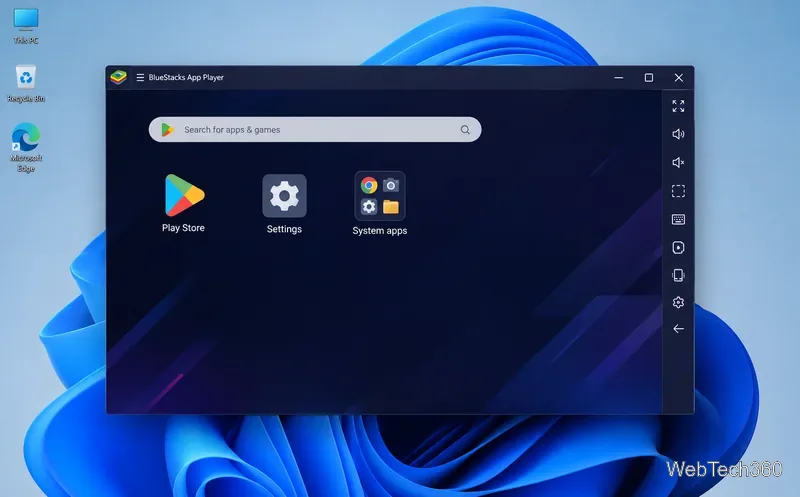
Is BlueStacks safe and legal? Learn what the official installer, privacy policy, antivirus behavior, game rules, and system requirements mean for you.
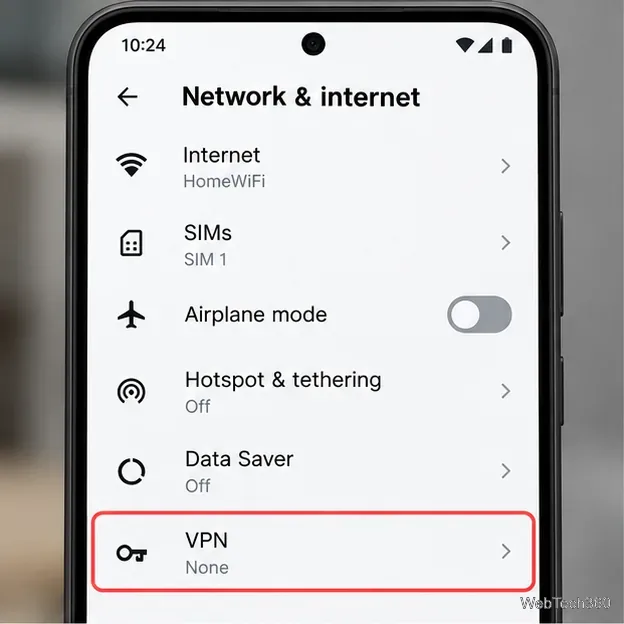
Learn three practical ways to hide your IP address on Android: a VPN, Tor Browser, or a trusted Wi-Fi proxy, with current setup steps and limits.
Join a FaceTime call on Android through Chrome or Edge. Get the link, set browser permissions, wait for the host, and fix common connection issues.
Galaxy S27 Ultra is unannounced, but Samsung and Microsoft already show the path: Phone Link, File Explorer, Quick Share, app streaming, and smarter handoff.
Samsung has not announced Galaxy S27 Ultra pricing. Here’s what the S22–S26 Ultra price history suggests, what is still unknown, and how to budget.
Samsung has not announced Galaxy S27 Ultra gaming specs. Here is what it would need to beat 2027 rivals, based on the confirmed S26 Ultra baseline.
Which Galaxy S27 Ultra rumors deserve attention? We rank battery, camera, chipset, display, charging, S Pen, and AI claims against Samsung’s confirmed 2026 hardware.