Home
» IOS
»
iPhone 18 vs. iPhone 17: Is the Upgrade Actually Worth Your Money?
iPhone 18 vs. iPhone 17: Is the Upgrade Actually Worth Your Money?
Short answer: for most iPhone 17 owners, no—the 2026 upgrade is not automatically worth the money. The important catch is that, as of September 14, 2026, Apple has not announced a standard iPhone 18. The new model Apple has announced is the iPhone 18 Pro, so the only fact-based version of an “iPhone 18 vs. iPhone 17” buying decision today is really iPhone 18 Pro vs. iPhone 17.
That distinction matters because Apple’s current U.S. store lists the iPhone 18 Pro from $1,199 and the iPhone 17 from $899, a $300 gap before tax, trade-in, carrier incentives, or storage upgrades. The iPhone 18 Pro earns that premium with a much more capable rear camera system, longer Apple-rated battery life, faster USB data transfer, more storage options, and the A20 Pro chip. But the iPhone 17 already has a 6.3-inch 120Hz ProMotion display, Apple Intelligence and Siri AI support, Wi-Fi 7, Bluetooth 6, a strong 48MP dual-camera system, and up to 30 hours of video playback. For everyday messaging, social media, web browsing, photos, navigation, and streaming, the cheaper phone remains the better-value choice for many people.
This assessment is based on Apple’s official specifications and pricing available on September 14, 2026. Apple says iPhone 18 Pro availability begins September 18, so there is not yet a broad base of long-term, real-world owner data to use for battery aging, thermal behavior, camera reliability, or durability. See Apple’s iPhone 18 Pro announcement and Apple’s current iPhone store.
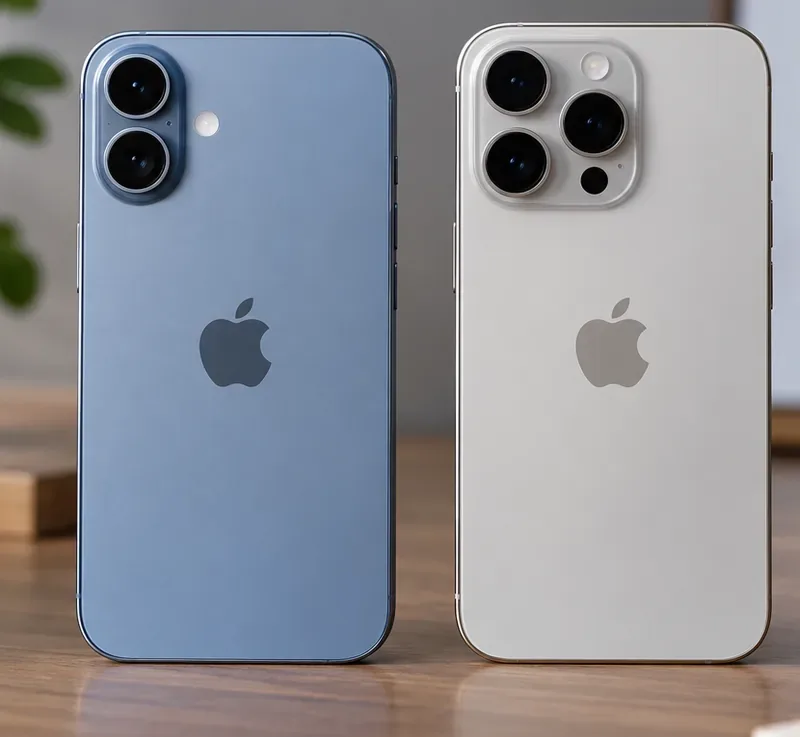
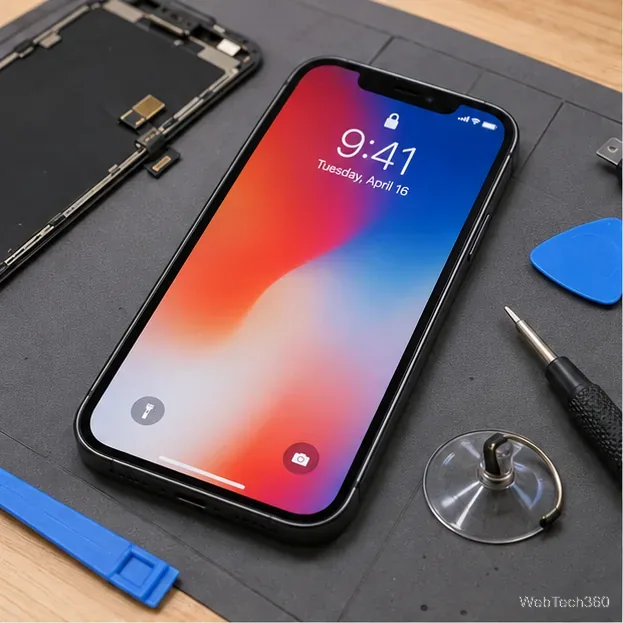
A side-by-side editorial visual of a dual-camera iPhone and a triple-camera Pro-style iPhone. Use Apple’s official specification pages for exact finishes, dimensions, and hardware details.
The buying decision in one table
What matters
iPhone 17
iPhone 18 Pro
Who benefits most
Current U.S. Apple price
From $899
From $1,199
iPhone 17 if value is the priority
Display
6.3-inch OLED, ProMotion up to 120Hz, up to 3,000 nits outdoors
6.3-inch OLED, ProMotion up to 120Hz, up to 3,000 nits outdoors
No major reason to upgrade for the screen alone
Chip
A19, 6-core CPU, 5-core GPU
A20 Pro, 6-core CPU, 7-core GPU
Heavy gaming, creative workloads, longer performance headroom
Rear cameras
48MP Main + 48MP Ultra Wide; 2x optical-quality telephoto from the main sensor
48MP Main with variable aperture + 48MP Ultra Wide + 48MP 4x Telephoto; also 8x optical-quality telephoto
Travel, events, portraits, video, and serious mobile photography
Apple-rated video playback
Up to 30 hours
Up to 36 hours
Heavy all-day use and frequent travel
USB data
USB 2, up to 480Mb/s
USB 3, up to 10Gb/s
People moving large ProRes, photo, or project files by cable
Why the iPhone 17 is still the smarter buy for many people
The strongest argument for keeping or buying an iPhone 17 is that several headline experiences are already very close to the new Pro model. Both phones have a 6.3-inch Super Retina XDR OLED panel with the same listed 2622-by-1206 resolution, ProMotion up to 120Hz, Always-On display support, and 3,000-nit peak outdoor brightness. If your main reason for upgrading is “I want a smoother, brighter screen,” the iPhone 17 already checks that box.
The same logic applies to wireless connectivity. Apple lists Wi-Fi 7 with 2x2 MIMO, Bluetooth 6, Thread networking, 5G, and the Apple N1 wireless networking chip on both models. The iPhone 18 Pro adds Apple’s C2 cellular modem, but the basic connectivity feature list is already modern on the iPhone 17. Buying the Pro only because you expect a completely different Wi-Fi experience would be difficult to justify from the published specifications alone.
Software overlap is another reason not to rush. Apple’s current iPhone 17 specifications include the next generation of Apple Intelligence and Siri AI. In other words, the new AI software direction is not exclusive to the iPhone 18 Pro. If your primary motivation is access to Apple’s latest AI features, keeping the iPhone 17 can make more financial sense.
There is also a physical comfort advantage. The iPhone 17 weighs 177 grams, while iPhone 18 Pro weighs 211 grams. That 34-gram difference is easy to dismiss on a specification sheet, but it can matter if you hold your phone one-handed for long periods, use it for reading in bed, or carry it in light clothing. The iPhone 17 is also thinner at 7.95 mm compared with 8.75 mm for the 18 Pro.
When paying more for the iPhone 18 Pro makes sense
You care about camera versatility, not just megapixels
This is the clearest reason to spend more. The iPhone 17 already has a capable 48MP Main camera and 48MP Ultra Wide camera, plus a 2x optical-quality telephoto option derived from the main camera. For family photos, food, pets, everyday travel, and social media, that is a strong setup.
The iPhone 18 Pro goes much further. Apple lists a 48MP Main camera with variable aperture options of ƒ/1.48, ƒ/1.8, ƒ/2.8, and ƒ/4.0, a 48MP Ultra Wide, and a dedicated 48MP 4x Telephoto that also enables an 8x optical-quality telephoto view. It also adds Pro controls, ProRAW, ProRes RAW, Apple Log 2, and higher-end video options. If you regularly shoot concerts, sports, distant subjects, portraits, client content, or travel scenes where focal-length flexibility matters, this is the upgrade that can change what you are able to capture.
A concrete example: someone who mostly photographs children at home and takes vacation snapshots is unlikely to get $300 of value from the camera upgrade alone. Someone who frequently shoots stage performances from the audience, records product video, or wants long telephoto reach without carrying another camera has a much stronger case for the Pro.
You regularly finish the day with very little battery left
Apple rates iPhone 17 for up to 30 hours of video playback and 27 hours of streamed video playback. The iPhone 18 Pro is rated for up to 36 hours and 33 hours respectively. Those figures are controlled Apple test results rather than a guarantee of your personal runtime, but they show a meaningful six-hour advantage in both listed video tests.
If your iPhone 17 already gets through a normal day comfortably, that difference may not change your life. If you travel frequently, use navigation for hours, shoot lots of video, tether a laptop, or routinely reach the evening in the red, the extra battery headroom is more relevant.
You move large files by cable or need more than 512GB
This is a practical difference that can save real time. The iPhone 17’s USB-C port supports USB 2 transfer speeds up to 480Mb/s. Apple lists USB 3 up to 10Gb/s on iPhone 18 Pro. People who routinely transfer large video clips, RAW photos, or project files to a Mac or external storage can benefit immediately. If you mostly use iCloud, AirDrop, or small files, you may never notice the difference.
Storage is similarly straightforward: iPhone 17 tops out at 512GB, while iPhone 18 Pro offers 1TB and 2TB options in addition to 256GB and 512GB. The higher capacities matter to creators and offline-media-heavy users, but they do not add value if you currently use only a fraction of 256GB.
What about performance?
Apple equips the iPhone 17 with the A19, a 6-core CPU and 5-core GPU. The iPhone 18 Pro moves to A20 Pro with a 6-core CPU, 7-core GPU, and dual 16-core Neural Engine. Apple also describes a next-generation vapor chamber in the 18 Pro for sustained performance. On paper, that is a meaningful hardware step.
But “faster” and “worth upgrading” are different questions. If your iPhone 17 already launches apps quickly and handles your games, editing, and multitasking without friction, additional performance may remain mostly invisible. The Pro is easier to justify for demanding gaming, video workflows, on-device creative tasks, or buyers who plan to keep the phone for several years and want maximum performance headroom.
Should an iPhone 17 owner upgrade?
Keep the iPhone 17 if your battery still lasts the day, you are satisfied with 2x telephoto reach, 512GB or less is enough, and you do not regularly transfer large files over USB. You already have the same display size and refresh-rate class, modern Wi-Fi and Bluetooth, Apple Intelligence support, and a much lighter chassis.
Consider iPhone 18 Pro if at least one of these is central to how you use your phone: dedicated 4x and 8x telephoto reach, variable-aperture camera control, ProRAW/ProRes workflows, materially longer Apple-rated battery life, USB 3 transfers, 1TB or 2TB local storage, or the fastest available Pro-class processor.
The upgrade becomes easier to justify if a trade-in or carrier offer reduces the effective cost substantially. Apple’s store currently advertises trade-in and carrier promotions, but the value depends on model, condition, carrier, plan, and eligibility, so compare the actual checkout total rather than the headline maximum credit.
Should a new buyer choose iPhone 17 or iPhone 18 Pro?
For a new buyer spending their own money, the iPhone 17 is the better default recommendation. The $300 difference buys genuine Pro capabilities, but many of them are specialized. If you want an excellent screen, modern connectivity, strong cameras, current AI features, and lower weight, the iPhone 17 covers the fundamentals without paying for tools you may rarely use.
The iPhone 18 Pro is the better choice when you can name the specific Pro feature you will use. “I need the 4x/8x camera for travel,” “I shoot ProRes and transfer files by cable,” “I need more than 512GB,” or “battery life is a recurring problem” are strong reasons. “It is the newest one” is a much weaker reason when the iPhone 17 already shares so many core features.
Bottom line
As of September 14, 2026, there is no standard iPhone 18 from Apple to compare directly with the standard iPhone 17. The real current choice is iPhone 17 versus iPhone 18 Pro. For most iPhone 17 owners, the upgrade is not worth $300 or more solely for the newer generation. The 17 remains unusually competitive because its display, wireless features, software support, and everyday camera quality are already strong.
The iPhone 18 Pro becomes worth the extra money when its Pro-specific advantages solve a real need: substantially more telephoto flexibility, variable aperture, professional photo/video formats, longer rated battery life, faster wired transfer, higher storage ceilings, or maximum performance. If none of those changes your daily use, keep the iPhone 17 and your money.