How to Check for Open Ports on Windows Server
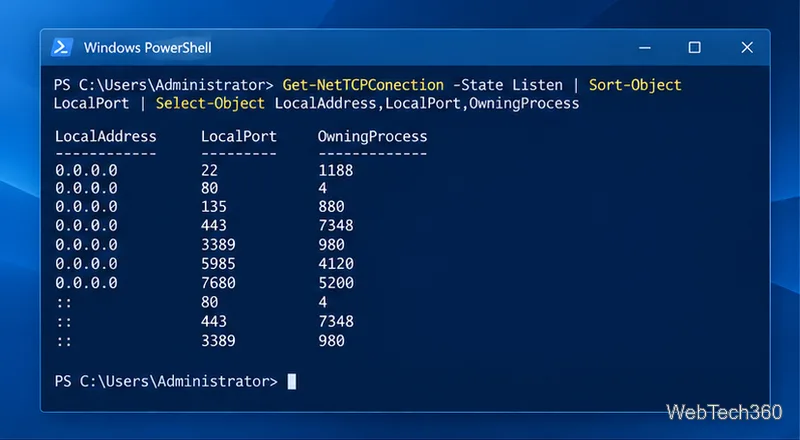
Find local TCP listeners, identify the process using a port, and test whether a Windows Server port is reachable with PowerShell, PortQry, or Nmap.
Are you stuck with an old MBR partition style on your drive, limiting your Windows 11 experience? 😊 Upgrading to GPT can unlock faster boot times, larger storage support, and full UEFI compatibility—without losing a single file. In this concise guide, we'll walk you through converting MBR to GPT without data loss in Windows 11, using reliable, built-in tools. No tech wizardry required; just follow along for a smooth transition that keeps your data safe.
Before diving in, let's quickly cover the basics. MBR (Master Boot Record) is the legacy partitioning scheme from the 1980s, capping disks at 2TB and sticking to BIOS booting. GPT (GUID Partition Table), on the other hand, supports massive drives up to 9.4 zettabytes and enables modern UEFI firmware for quicker startups and better security features like Secure Boot.
Windows 11 demands UEFI for optimal performance, so if your system is booting in Legacy mode, converting MBR to GPT is essential. The best part? You can do this without data loss using Microsoft's own DiskPart utility or trusted third-party tools. This upgrade future-proofs your setup, especially for multi-drive configurations or if you're eyeing SSD expansions.
Ready to proceed? Let's ensure you're set up for success.
To avoid hiccups, prepare your system:
msinfo32, and hit Enter. Under "BIOS Mode," if it says "Legacy," you're on MBR—time to convert.With these in place, you're golden. Now, onto the main event!
Windows 11's built-in DiskPart tool shines here, allowing converting MBR to GPT without data loss on most setups. This method works best for system drives but requires your disk to have free space or be non-system for simplicity. For boot drives, we'll use a clever workaround.
Step-by-Step Guide:
diskpart and press Enter. You'll see the DISKPART> prompt.list disk. Identify your target drive by size (e.g., Disk 0). Note: Be extremely careful—wrong disk means data wipe!select disk X (replace X with your disk number).convert gpt. If it's a simple volume without partitions, this runs smoothly without data loss. For complex setups, proceed to the next steps.For bootable drives with existing partitions, DiskPart might resist. Don't worry—use the MBR2GPT tool, Microsoft's official converter for this exact scenario.
MBR2GPT is a command-line wizard designed for Windows 11 MBR to GPT conversion on boot volumes. It's non-destructive and validates your setup first.
mbr2gpt /validate /allowFullOS to check compatibility. If it passes, run mbr2gpt /convert /allowFullOS.This process typically takes 5-10 minutes and preserves all partitions intact. If validation fails, it might be due to too many partitions (GPT limits to 128)—consider merging some via Disk Management first.
If DiskPart feels too hands-on, free tools like EaseUS Partition Master or MiniTool Partition Wizard offer GUI-based MBR to GPT without data loss options. These scan your drive, back up sectors, and convert seamlessly.
Quick Steps with EaseUS (Free Edition):
Why choose this? It's visual, beginner-friendly, and includes extras like partition resizing. Just ensure you download from trusted sources to avoid malware.
No guide is complete without troubleshooting. Here's a handy table of common issues during converting MBR to GPT in Windows 11:
| Issue | Cause | Solution |
|---|---|---|
| Conversion Fails with Error | Drive in use or invalid partitions | Boot from Windows USB and run commands offline |
| Boot Loop After Conversion | BIOS still in Legacy mode | Enter UEFI settings and enable Secure Boot |
| Data Seems Lost | Rare sector error | Restore from backup; re-run with CHKDSK first |
| Can't Convert Dynamic Disk | MBR dynamic volumes unsupported | Convert to basic first via Disk Management |
Run chkdsk C: /f beforehand to fix errors, and always validate with MBR2GPT's check option. If you're dealing with dual-boot setups (e.g., Linux), test in a VM first to avoid GRUB issues.
Congrats on the upgrade! Now, leverage GPT's power:
For advanced users, GPT shines in RAID setups or with NVMe SSDs, boosting Windows 11's already snappy performance. If you hit a snag, Microsoft's support docs are gold: Check their official guide on MBR2GPT for the latest tweaks.
Converting MBR to GPT without data loss in Windows 11 is simpler than ever, opening doors to a more efficient, secure computing life. Whether you're a casual user or power user, this switch pays off immediately with better compatibility and speed. Follow these steps, and you'll wonder why you waited. Got questions? Drop a comment below—we're here to help you thrive in the modern Windows world! 🚀
Find local TCP listeners, identify the process using a port, and test whether a Windows Server port is reachable with PowerShell, PortQry, or Nmap.
Map a shared folder as a drive letter in Windows 10, reconnect it at sign-in, confirm access, and fix common path, credential, and network discovery issues.
Hear your microphone through Windows 10 speakers with the Listen to this device setting. Choose the right input and output, test the route, and prevent feedback.
Change icon size on Windows 10 with desktop, taskbar, and File Explorer controls. Learn when display scaling helps and how to fix unexpected size changes.
Map an NFS share to a Windows 11 drive letter with the built-in Client for NFS. Check protocol compatibility, mount the export, and troubleshoot access issues.
Install Universal Media Server on Windows Server, share selected folders, set LAN-only firewall access, and test DLNA playback from a TV or browser.
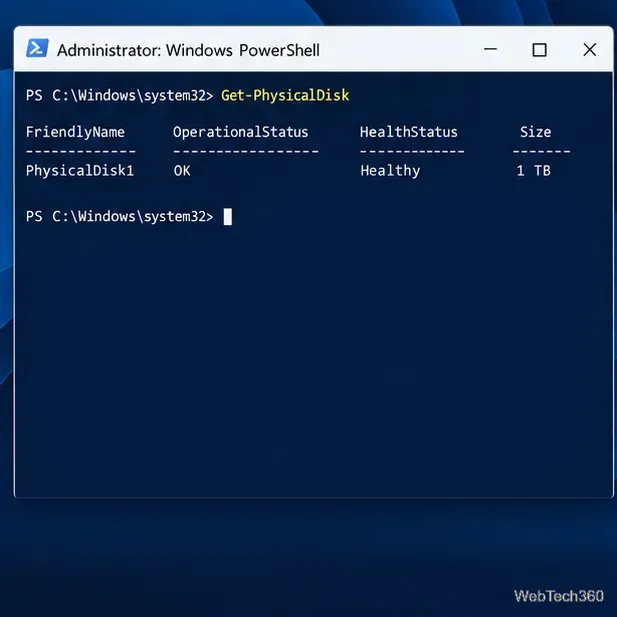
Check Windows Server disk status and reliability counters, verify SMART data when available, and separate hardware warnings from NTFS errors.
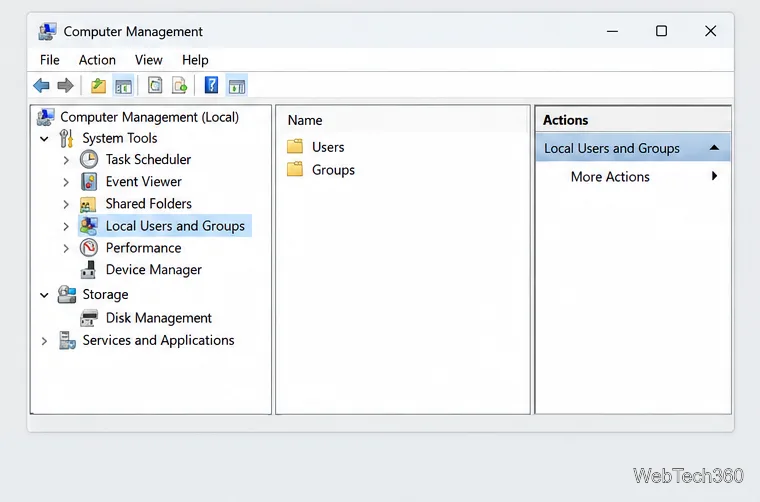
Create, grant admin rights to, disable, or remove local Windows Server users with Computer Management or PowerShell. Learn when to use Active Directory instead.
Install Serviio on Windows Server, share local or NAS media folders, and test DLNA playback. Learn how to check the Windows service, firewall, and Pro-only browser features.
Convert PNG, JPG, or BMP files to Windows ICO with GIMP. Prepare a square image, keep transparency when needed, add standard sizes, and check the export.